China Approves the World’s First CAR-T Therapy for Solid Tumors: Satricabtagene Autoleucel for CLDN18.2-Positive Advanced Gastric Cancer
On June 22, 2026, China’s National Medical Products Administration (NMPA) approved Satricabtagene Autoleucel (Kailimei®), developed by CARsgen Therapeutics, for the treatment of patients with CLDN18.2-positive, HER2-negative advanced gastric cancer or gastroesophageal junction (GEJ) adenocarcinoma who have failed at least two prior lines of therapy.
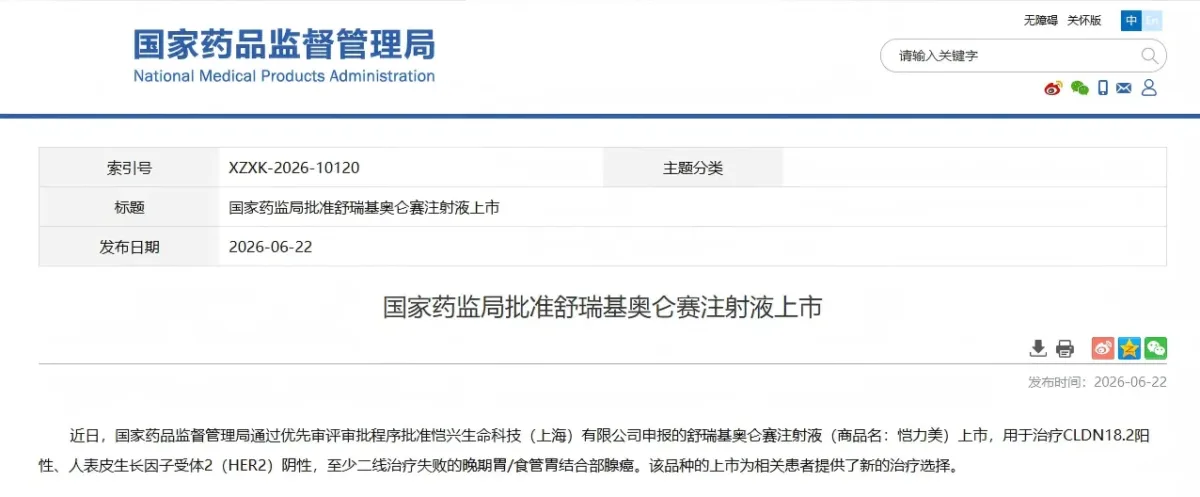
✨ This approval marks a historic milestone as China approves the world’s first CAR-T therapy for solid tumors, bringing CAR-T cell therapy beyond hematologic malignancies and into the field of solid tumor treatment for the first time.
China pharmaceutical wholesaler DengYueMed presents an overview of Satricabtagene Autoleucel, including its development background, mechanism of action, key clinical data, and the significance of becoming the world’s first approved CAR-T therapy for solid tumors.
What Does It Mean That China Approves the World’s First CAR-T Therapy for Solid Tumors?
CAR-T cell therapy has long been regarded as one of the most transformative advances in cancer immunotherapy.
However, all previously approved CAR-T products have primarily been used to treat hematologic cancers, including acute lymphoblastic leukemia (ALL), multiple myeloma, and lymphoma.
In contrast, solid tumors have remained one of the most challenging frontiers for CAR-T development.
Major barriers include:
- A highly complex tumor microenvironment
- Strong immunosuppressive mechanisms
- Limited T-cell infiltration into tumor tissues
- Difficulty identifying ideal therapeutic targets
- Greater safety concerns
The fact that China approves the world’s first CAR-T therapy for solid tumors signifies that CAR-T technology has finally broken through one of oncology’s most difficult barriers. It also demonstrates China’s growing leadership in the field of cellular immunotherapy. 🐱🏍
For the global oncology industry, this is more than a new drug approval—it signals the beginning of the commercial era of solid tumor CAR-T therapy.
👉 If you want to learn more about CAR-T therapies approved in China, feel free to read our related articles: https://dengyuemed.com/blog/approved-cell-and-gene-therapy-drugs-in-china/
Satricabtagene Autoleucel: The World’s First Approved CAR-T Therapy for Solid Tumors
Satricabtagene Autoleucel is an autologous, humanized CAR-T cell therapy developed by CARsgen Therapeutics that targets Claudin18.2 (CLDN18.2), and it is currently the world’s first solid tumor CAR-T product to achieve commercial approval.
CLDN18.2 is a tight junction protein with limited expression in normal tissues but high expression in multiple gastrointestinal malignancies, including gastric cancer, gastroesophageal junction cancer, and pancreatic cancer.
As a result, it has become one of the most actively pursued targets in oncology drug development.
Current therapeutic approaches targeting CLDN18.2 include: 🔽
The successful approval of Satricabtagene Autoleucel establishes CAR-T therapy as the second therapeutic modality, following monoclonal antibodies, to achieve commercial success against the CLDN18.2 target.
Mechanism of Action and Treatment Process of Satricabtagene Autoleucel
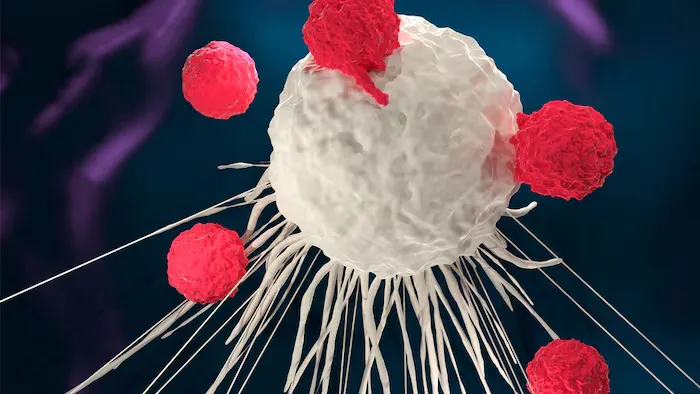
Satricabtagene Autoleucel is an autologous CAR-T cell therapy designed to target CLDN18.2-positive tumor cells.
The treatment process includes five key steps:
Step 1: Collection of the Patient’s T Cells
T cells are collected from the patient through leukapheresis.
Step 2: Genetic Engineering
The harvested T cells are genetically modified in the laboratory to express a chimeric antigen receptor (CAR) capable of recognizing CLDN18.2.
Step 3: Cell Expansion
The engineered CAR-T cells are expanded to achieve sufficient therapeutic quantities.
Step 4: Infusion Back into the Patient
The modified CAR-T cells are infused back into the patient following the preparative treatment process.
Step 5: Targeted Tumor Cell Elimination
Once infused, the CAR-T cells recognize CLDN18.2-positive tumor cells and initiate a targeted immune response to destroy them.
🎯 This highly targeted approach is one of the key reasons why China approves the world’s first CAR-T therapy for solid tumors, demonstrating the feasibility of CAR-T technology in treating solid malignancies.
Pivotal Phase II Study Supports Approval: Improvements in Both PFS and OS
The approval of Satricabtagene Autoleucel was primarily supported by the pivotal confirmatory Phase II study CT041-ST-01 (NCT04581473).
The study results were published in The Lancet and presented as an oral presentation at the 2025 American Society of Clinical Oncology (ASCO) Annual Meeting.
Eligible patients included:
- CLDN18.2-positive tumors
- HER2-negative disease
- Failure of standard treatment
- Advanced gastric cancer or gastroesophageal junction adenocarcinoma
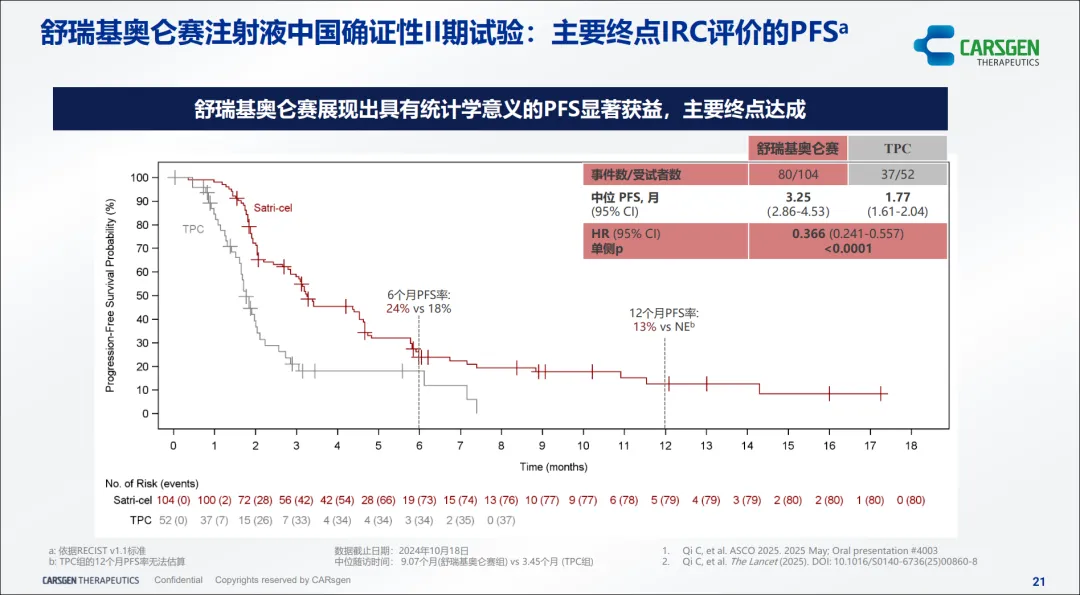
Significant Improvement in Progression-Free Survival (PFS)
Among the intention-to-treat (ITT) population:
- Median PFS (mPFS): 3.25 months in the CT041 group
- Median PFS (mPFS): 1.77 months in the control group
- Hazard Ratio (HR): 0.366
These results demonstrated an approximately 63% reduction in the risk of disease progression or death.
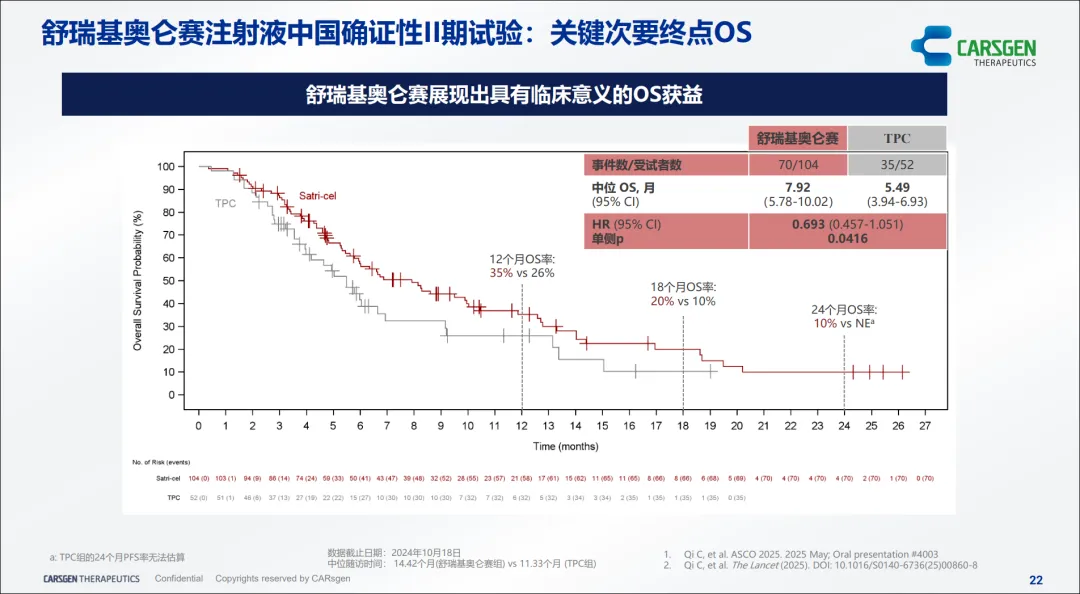
Overall Survival (OS) Showed a Positive Trend
In the ITT population:
- Median OS (mOS): 7.92 months in the CT041 group
- Median OS (mOS): 5.49 months in the control group
- Hazard Ratio (HR): 0.693
The risk of death was reduced by approximately 31%.
Greater Benefit Observed in Treated Patients
Among the modified intention-to-treat (mITT) population who actually received cell infusion, treatment outcomes were even more encouraging.
✅ Progression-Free Survival
- CT041 group: 4.37 months
- Control group: 1.84 months
- HR: 0.304
The risk of disease progression or death was reduced by approximately 70%.
✅ Overall Survival
- CT041 group: 8.61 months
- Control group: 5.49 months
- HR: 0.601
The risk of death was reduced by approximately 40%.
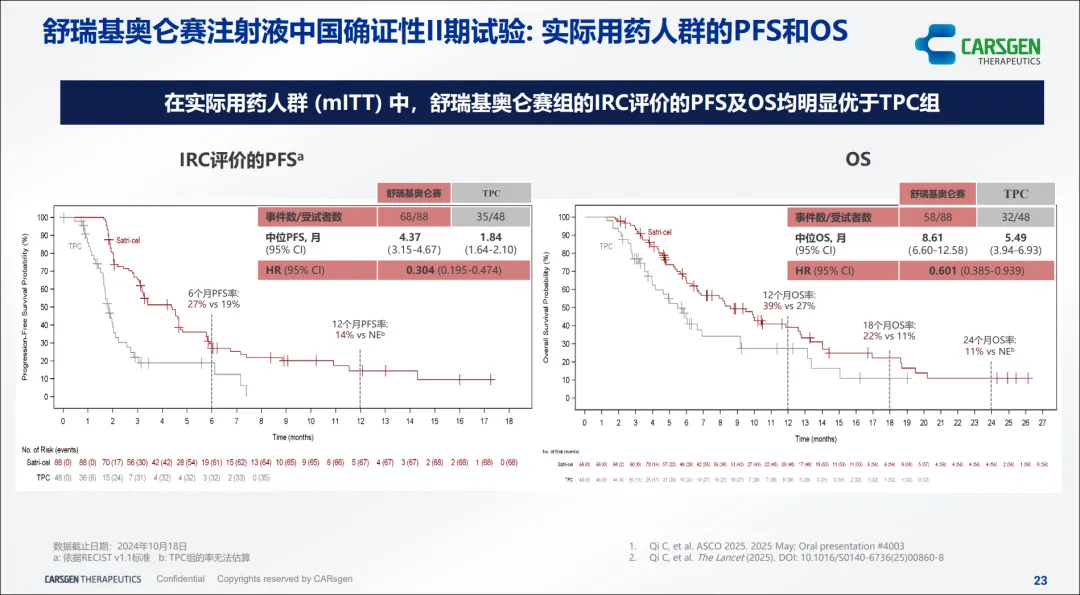
These clinical outcomes provide strong evidence supporting the landmark approval in which China approves the world’s first CAR-T therapy for solid tumors, highlighting the therapeutic potential of CLDN18.2-targeted CAR-T therapy in advanced gastric cancer.
Safety Profile: Manageable CRS Risk and No ICANS Observed
Safety remains one of the most important considerations for CAR-T cell therapies.
According to the study findings:
- Only four patients experienced Grade 3 cytokine release syndrome (CRS)
- No Grade 4 or Grade 5 CRS events were reported
- No immune effector cell-associated neurotoxicity syndrome (ICANS) was observed
- No new safety signals were identified
Overall, Satricabtagene Autoleucel demonstrated a favorable safety profile while maintaining meaningful clinical efficacy.
The manageable safety outcomes further support the significance of the achievement whereby China approves the world’s first CAR-T therapy for solid tumors, overcoming one of the major concerns historically associated with CAR-T treatment in solid tumors.
What’s Next for Solid Tumor CAR-T Therapy Beyond Gastric Cancer?
Beyond gastric cancer, Satricabtagene Autoleucel has also demonstrated encouraging results in pancreatic cancer.
At the 2025 European Society for Medical Oncology (ESMO) Congress, CARsgen presented findings from the CT041-ST-05 study.
As of April 11, 2025:
- Six patients had received treatment
- Only one patient experienced disease recurrence
- The 9-month disease-free survival (DFS) rate reached 83.3%
- Median DFS and median OS had not yet been reached
In addition: 83.3% of patients experienced substantial reductions in CA19-9 levels
These findings suggest that Satricabtagene Autoleucel may have significant potential for expansion into pancreatic cancer adjuvant therapy and other CLDN18.2-positive solid tumors.
China’s Innovative Drug Industry Achieves Another Global First
Satricabtagene Autoleucel is not only an innovative therapy but also a reflection of China’s growing strength in biopharmaceutical innovation and cell therapy development.
Following the historic moment in which China approves the world’s first CAR-T therapy for solid tumors, CARsgen Therapeutics is actively expanding the clinical development of CT041 into earlier treatment settings.
Current development programs include: 👇
- Postoperative consolidation therapy for gastric cancer and gastroesophageal junction cancer
- Sequential treatment following first-line therapy for advanced gastric cancer
- Next-generation allogeneic CAR-T cell therapy programs
At the same time, the company is investing in expanded manufacturing capacity to support future commercialization and broader patient access.
From the approval of the first solid tumor CAR-T therapy to the advancement of next-generation allogeneic CAR-T platforms, China’s cell therapy industry is entering a new stage of development.
Conclusion
The fact that China approves the world’s first CAR-T therapy for solid tumors marks a major milestone not only for CARsgen Therapeutics and Satricabtagene Autoleucel, but also for the global cancer treatment landscape.
For patients with CLDN18.2-positive advanced gastric cancer, this approval provides a promising new treatment option where limited therapies have historically been available.
As research continues to advance, solid tumor CAR-T therapies may emerge as another transformative treatment platform alongside immune checkpoint inhibitors, antibody-drug conjugates (ADCs), and bispecific antibodies.
As a China-based pharmaceutical wholesaler focused on innovative medicines, DengYueMed will continue to follow advances in CAR-T, bispecific antibodies, and ADCs, helping connect global healthcare stakeholders with China’s latest oncology innovations.
FAQ about China Approves the World’s First CAR-T Therapy for Solid Tumors
Can CAR-T be used for solid tumors?
Yes. CAR-T therapy can be used for solid tumors, and this was first proven when China approves the world’s first CAR-T therapy for solid tumors, with Satricabtagene Autoleucel for CLDN18.2-positive advanced gastric cancer marking this breakthrough.
What are the cell therapies for solid tumors?
Cell therapies for solid tumors include CAR-T cell therapy, TCR-T cell therapy, tumor-infiltrating lymphocyte (TIL) therapy, and NK cell therapy. These approaches use engineered or expanded immune cells to specifically recognize and destroy cancer cells.
What is the newest treatment for stomach cancer?
The newest treatment for stomach cancer includes targeted therapies and immunotherapy, especially CLDN18.2-directed treatments such as CAR-T therapy. A key breakthrough is Satricabtagene Autoleucel, which represents a new option for patients with advanced gastric cancer.
Can CAR-T be used for stomach cancer?
Yes. CAR-T therapy can be used for stomach cancer, and in China it has already been approved with Satricabtagene Autoleucel for CLDN18.2-positive advanced gastric cancer.