Recibokibart Approved for GPP: China-Developed IL-36R Antibody Brings a New Treatment Option for Generalized Pustular Psoriasis
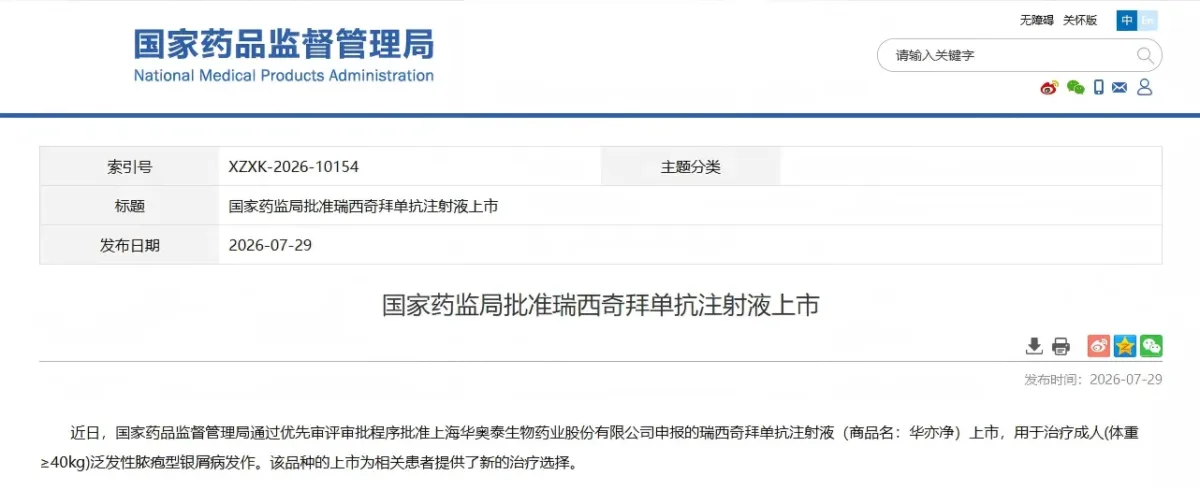
Recibokibart approved for GPP marks a major milestone in Generalized Pustular Psoriasis (GPP) treatment. Developed by Shanghai Huaota Biopharmaceutical Co., Ltd., this IL-36R monoclonal antibody was approved by the NMPA on July 29, 2026, for adult patients with acute GPP flares.
Clinical studies have demonstrated that Recibokibart can rapidly improve pustular skin lesions while maintaining a favorable safety profile.
Recibokibart is the first IL-36R antibody independently developed and approved in China. It is also the second IL-36R-targeted therapy approved in China for Generalized Pustular Psoriasis, following Spesolimab.
In this article, DengYueMed reviews the basic information, mechanism of action, clinical evidence, regulatory approval, and clinical significance of Recibokibart approved for GPP, helping international partners better understand the latest advances in this innovative IL-36R-targeted therapy.
What Is Recibokibart?
Recibokibart is a humanized IgG1 monoclonal antibody targeting the interleukin-36 receptor (IL-36R), developed by Shanghai Huaota Biopharmaceutical Co., Ltd. It is indicated for the treatment of acute flares of Generalized Pustular Psoriasis (GPP) in adults weighing 40 kg or more.
As an IL-36 receptor inhibitor, Recibokibart blocks IL-36 signaling, suppresses inflammatory cascades, and helps rapidly control disease symptoms during acute GPP flares.
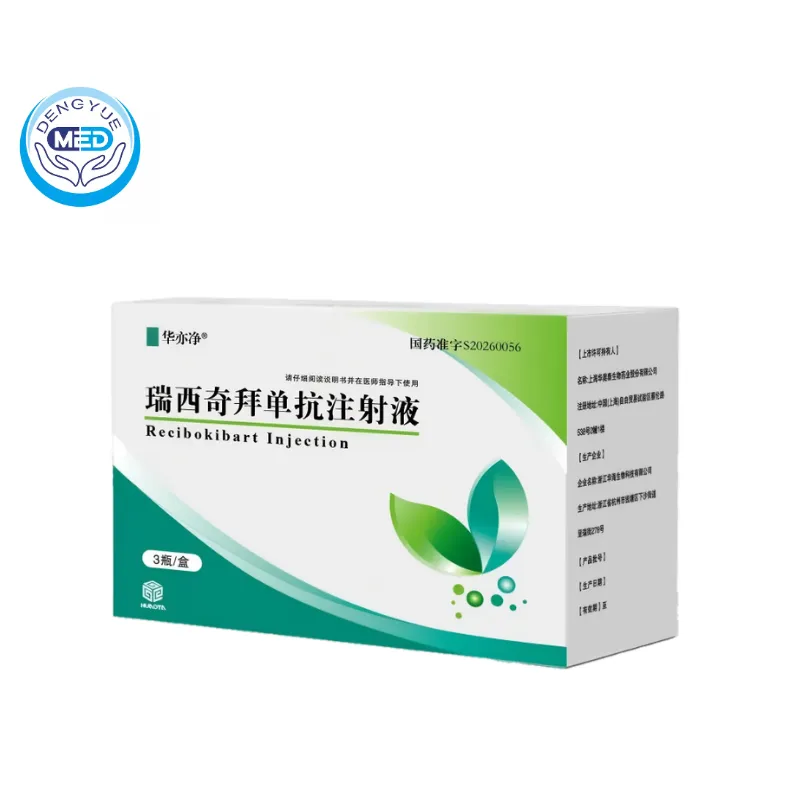
Recibokibart at a Glance
| Item | Information |
|---|---|
| Generic Name | Recibokibart |
| Chinese Name | 瑞西奇拜单抗 |
| Brand Name | 华亦净 |
| Development Code | HB0034 |
| Drug Class | Humanized IgG1 Monoclonal Antibody |
| Target | IL-36 Receptor (IL-36R) |
| Mechanism of Action | Blocks IL-36α, IL-36β, and IL-36γ from binding to IL-36R, inhibiting IL-36 signaling and reducing inflammatory cytokine release |
| Approval Date | July 29, 2026 |
| Regulatory Authority | National Medical Products Administration (NMPA), China |
| Approved Indication | Acute flares of Generalized Pustular Psoriasis (GPP) in adults weighing ≥40 kg |
| Developer | Shanghai Huaota Biopharmaceutical Co., Ltd. |
| Administration | Intravenous infusion |
| FDA Status | Granted Orphan Drug Designation; not yet FDA approved |
| Clinical Development | Pivotal Phase II trial met the primary endpoint and all key secondary endpoints |
| Therapeutic Area | Autoinflammatory diseases and rare diseases |
What Is Generalized Pustular Psoriasis (GPP)?
Generalized Pustular Psoriasis (GPP) is a rare but potentially life-threatening autoinflammatory skin disease. Unlike plaque psoriasis, GPP is characterized by sudden and severe systemic inflammatory episodes that require prompt medical intervention.
Common symptoms include:
- Widespread erythema
- Rapidly spreading sterile pustules
- Persistent high fever
- Joint and muscle pain
- Elevated white blood cell count and C-reactive protein (CRP)
- Systemic inflammation
Severe cases may progress to infection, sepsis, multiple organ failure, and even death, making rapid control of acute flares essential.
According to publicly available data, approximately 20,000 patients in China are affected by GPP. In 2023, GPP was officially included in China’s Second National Rare Disease List, increasing awareness among healthcare professionals and policymakers.

How Does Recibokibart Work?
Growing evidence has identified the IL-36 signaling pathway as one of the key drivers of GPP pathogenesis.
Under normal physiological conditions, IL-36 participates in immune regulation. However, in patients with GPP, excessive IL-36 signaling continuously stimulates inflammatory cells, leading to massive cytokine release, skin inflammation, and pustule formation.
The Recibokibart mechanism of action can be summarized as follows: 🔽
IL-36α/β/γ release → IL-36 receptor activation → Amplified inflammatory cascade → Skin erythema, pustules, and systemic inflammation → Recibokibart binds IL-36R and blocks signaling → Inflammation is suppressed and symptoms improve.
By targeting the core inflammatory pathway, Recibokibart approved for GPP represents a more precise therapeutic approach capable of rapidly controlling acute disease activity.
Clinical Trial Results: Pivotal Phase II Study Met Primary Endpoint
The pivotal Phase II Recibokibart clinical trial was a multicenter, randomized, double-blind, placebo-controlled study evaluating the efficacy and safety of the drug in patients experiencing moderate-to-severe acute GPP flares.
In March 2025, Huahai Pharmaceutical announced the following results:
| Study Item | Result |
|---|---|
| Clinical Phase | Pivotal Phase II |
| Population | Patients with moderate-to-severe acute GPP flares |
| Primary Endpoint | Achieved |
| Key Secondary Endpoints | All achieved |
| Efficacy | Significant clearance of pustules within one week after a single intravenous infusion |
| Safety | No new safety signals observed |
Although the full clinical data have not yet been published, current findings indicate that Recibokibart approved for GPP can rapidly improve acute symptoms while demonstrating a favorable safety profile.
Recibokibart vs. Spesolimab: What Are the Differences?
Globally, only a limited number of IL-36R antibodies have been approved for the treatment of GPP.
| Comparison | Recibokibart | Spesolimab |
|---|---|---|
| Target | IL-36R | IL-36R |
| Drug Type | Humanized IgG1 monoclonal antibody | Humanized IgG1 monoclonal antibody |
| Developer | Shanghai Huaota Biopharmaceutical Co., Ltd. | Boehringer Ingelheim |
| China Approval | Approved | Approved |
| Key Feature | First China-developed IL-36R antibody | First IL-36R antibody approved globally |
Both therapies reduce inflammation by blocking IL-36 receptor signaling. The approval of a domestically developed biologic provides physicians and patients with more treatment options and may improve long-term drug accessibility.
What Does Recibokibart Approved for GPP Mean?
The approval carries several important implications.
First, Recibokibart approved for GPP makes it the first China-developed IL-36R monoclonal antibody to reach the market, filling an important gap in China’s innovative biologics landscape.
Second, the drug progressed from first-in-human clinical studies to regulatory approval in less than five years, demonstrating the growing efficiency of China’s innovative drug development ecosystem.
In addition, it represents the first independently developed innovative drug approved for marketing by Huahai Pharmaceutical, marking a significant milestone in the company’s innovation strategy.
For patients, the availability of another GPP treatment developed in China may improve drug accessibility and provide additional therapeutic choices.
IL-36R-Targeted Therapy Continues to Evolve
IL-36R remains a relatively new therapeutic target worldwide.
Besides Spesolimab and Recibokibart approved for GPP, only a limited number of IL-36R-targeted therapies are currently in clinical development, including Imsidolimab developed by AnaptysBio and TQH2929, which is being advanced by a Chinese biotechnology company.
Meanwhile, Shanghai Huaota is also developing HB1734, a bispecific antibody targeting both IL-17A and IL-36R, highlighting the continued potential of IL-36-related inflammatory pathways.
As more clinical studies progress, IL-36R-targeted therapies may expand into additional autoinflammatory diseases and offer new precision treatment strategies for patients.
Conclusion
The approval of Recibokibart provides a new treatment for Generalized Pustular Psoriasis (GPP) while showcasing the rapid progress of China’s innovative biologic drug development.
With continued advances in IL-36R-targeted therapy, more innovative treatments are expected to benefit patients living with rare and autoinflammatory diseases worldwide.
As a China-based pharmaceutical wholesaler, DengYueMed continues to share insights on innovative and specialty medicines, global drug development, rare disease therapies, regulatory approvals, and international pharmaceutical market trends for healthcare professionals, global partners, and industry readers.
FAQ about Recibokibart Approved for GPP
What is Recibokibart used for?
Recibokibart is approved for treating acute flares of Generalized Pustular Psoriasis (GPP) in adults weighing 40 kg or more by targeting the IL-36 receptor.
How does Recibokibart work?
Recibokibart is an IL-36R monoclonal antibody that blocks IL-36 signaling to reduce inflammation and rapidly control GPP flare symptoms.
Is Recibokibart approved for GPP?
Yes. Recibokibart was approved by China’s NMPA on July 29, 2026, for the treatment of acute GPP flares in adults.
What is the difference between Recibokibart and Spesolimab?
Both drugs target IL-36R for GPP treatment, but Recibokibart is the first IL-36R antibody developed in China, while Spesolimab was the first approved globally.
Is Recibokibart approved by the FDA?
No. Recibokibart has received FDA Orphan Drug Designation but has not yet been approved by the U.S. FDA.