
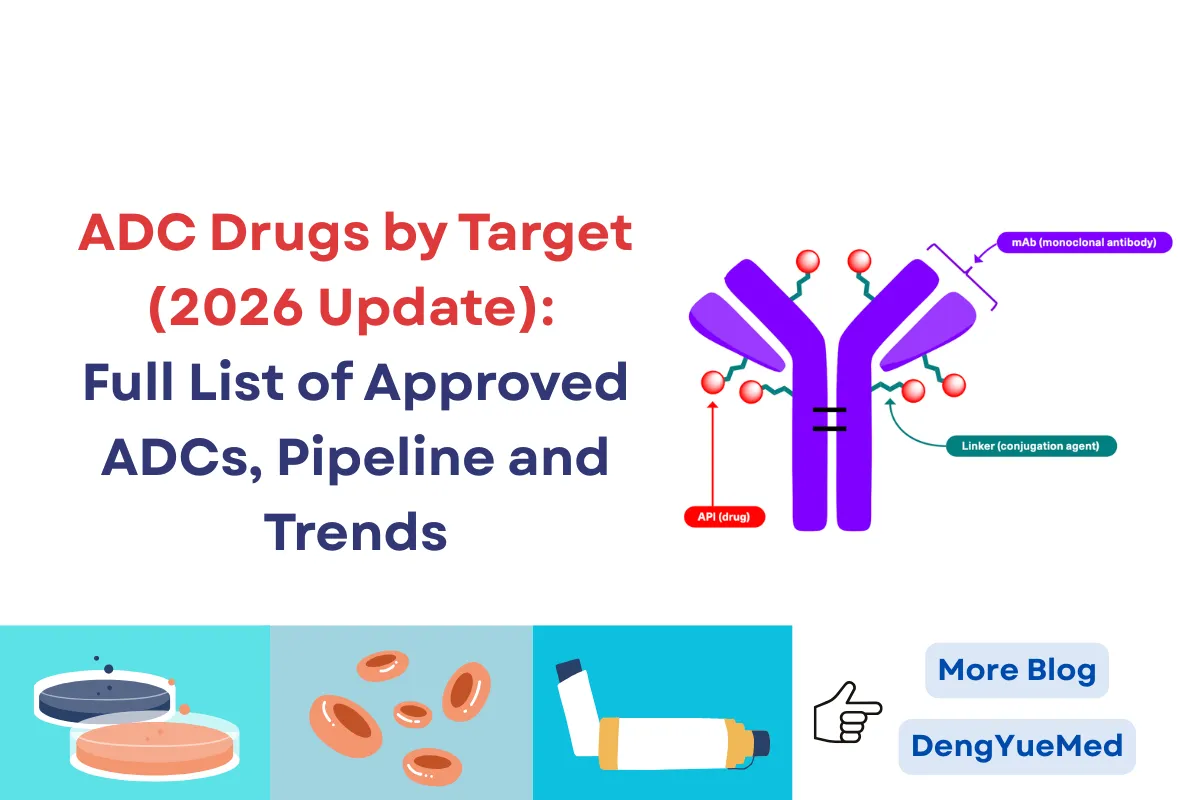
ADC Drugs by Target (2026 Update): Full List of Approved ADCs, Pipeline and Trends
Antibody-drug conjugates (ADCs) are one of the fastest-growing classes of therapies in precision oncology. In this guide to adc drugs by target, we provide a comprehensive and updated overview of approved antibody-drug conjugates, together with their classification based on tumor targets.
🚀 As of March 2026, approximately 21 ADC drugs have been approved worldwide, targeting multiple tumor antigens such as HER2, TROP2, CD antigens, EGFR, BCMA, and Nectin-4. These ADC drugs play critical roles in the treatment of breast cancer, lung cancer, lymphoma, urothelial carcinoma, ovarian cancer, and multiple myeloma.
This guide not only lists ADC drugs by target in 2026, but also highlights key development trends and clinical insights shaping the next generation of ADC therapies.
DengYueMed, a global pharmaceutical distributor, provides a systematic overview of these therapies through a structured analysis of ADC drugs by target in 2026.
I. Overview of ADC Drugs
Understanding adc drugs by target starts with their core structure and mechanism of action.
Core Components
- Monoclonal Antibody (Antibody)
Responsible for recognizing specific antigens on tumor cell surfaces, enabling precise targeting. - Linker
Connects the antibody to the payload, remaining stable in circulation and releasing the drug inside tumor cells. - Cytotoxic Payload (Payload)
Typically consists of highly potent microtubule inhibitors or DNA-damaging agents.
Mechanism of Action
- The antibody binds to a tumor-specific antigen
- The ADC is internalized into tumor cells
- The linker is cleaved
- The payload is released, damaging DNA or microtubules and inducing cell death
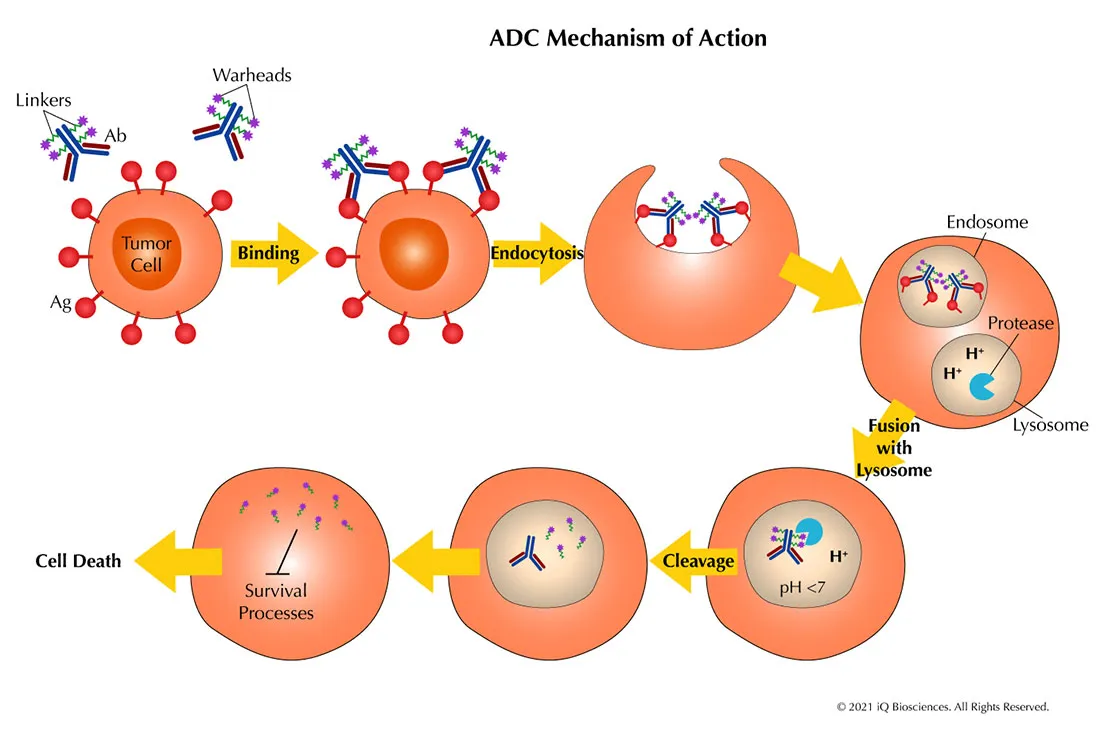
This mechanism underpins the classification of adc drugs by target, combining the advantages of targeted therapy and chemotherapy.
II. Global List of Approved ADC Drugs
As of March 2026, approximately 21 ADC drugs have been approved by the U.S. Food and Drug Administration (FDA) and other global regulatory authorities.
Key details are summarized below:
| Drug | Brand Name | Company | First Approval | Target | Main Indication |
|---|---|---|---|---|---|
| Gemtuzumab ozogamicin | Mylotarg | Pfizer | 2000 | CD33 | Acute Myeloid Leukemia |
| Brentuximab vedotin | Adcetris | Seagen/Takeda | 2011 | CD30 | Hodgkin Lymphoma |
| Trastuzumab emtansine | Kadcyla | Roche | 2013 | HER2 | HER2+ Breast Cancer |
| Inotuzumab ozogamicin | Besponsa | Pfizer | 2017 | CD22 | Acute Lymphoblastic Leukemia |
| Moxetumomab pasudotox | Lumoxiti | AstraZeneca / MedImmune | 2018 | CD22 | Hairy Cell Leukemia |
| Polatuzumab vedotin | Polivy | Roche | 2019 | CD79b | DLBCL |
| Enfortumab vedotin | Padcev | Astellas/Seagen | 2019 | Nectin-4 | Urothelial Cancer |
| Trastuzumab deruxtecan | Enhertu | Daiichi Sankyo | 2019 | HER2 | Breast Cancer, Lung Cancer |
| Sacituzumab govitecan | Trodelvy | Gilead | 2020 | TROP2 | TNBC |
| Belantamab mafodotin | Blenrep | GSK | 2020 | BCMA | Multiple Myeloma |
| Cetuximab sarotalocan | Akalux | Rakuten | 2020 | EGFR | Head and Neck Cancer |
| Loncastuximab tesirine | Zynlonta | ADC Therapeutics | 2021 | CD19 | Lymphoma |
| Disitamab vedotin | Aidixi | RemeGen | 2021 | HER2 | Gastric Cancer |
| Tisotumab vedotin | Tivdak | Seagen | 2021 | Tissue Factor | Cervical Cancer |
| Mirvetuximab soravtansine | Elahere | ImmunoGen | 2022 | FRα | Ovarian Cancer |
| Sacituzumab tirumotecan | Jiataile | Kelun-Biotech | 2024 | TROP2 | TNBC, NSCLC |
| Datopotamab deruxtecan | Datroway | AstraZeneca | 2024 | TROP2 | Breast Cancer |
| Telisotuzumab vedotin | Emrelis | AbbVie | 2025 | c-MET | NSCLC |
| Trastuzumab rezetecan | Aiweida | Hengrui | 2025 | HER2 | NSCLC |
| Trastuzumab botidotin | Shutailai | Kelun | 2025 | HER2 | Breast Cancer |
| Becotatug vedotin | Meiyouheng | Lepu | 2025 | EGFR | Nasopharyngeal Cancer |
III. ADC Drugs by Target in 2026 (Target-Based Classification)
A target-based framework provides a clearer understanding of how different ADC drugs are positioned clinically.
1. HER2-Targeted ADC Drugs
HER2 is one of the most established targets in ADC development and remains central to the discussion of adc drugs by target.
It plays a critical role in tumor proliferation and signaling pathways in breast cancer, gastric cancer, and lung cancer.
Representative drugs include:
● Trastuzumab emtansine (Kadcyla)
● Trastuzumab deruxtecan (Enhertu)
● Disitamab vedotin (Aidixi)
● Trastuzumab rezetecan (Aiweida)
● Trastuzumab botidotin (Shutailai)
👉 Insight: HER2-targeted ADCs have expanded into HER2-low populations, significantly broadening their clinical impact.
2. TROP2-Targeted ADC Drugs
TROP2 is a highly expressed antigen in multiple epithelial tumors and has become a major focus in adc targets research.
Representative drugs:
● Sacituzumab govitecan (Trodelvy)
● Sacituzumab tirumotecan (Jiataile)
● Datopotamab deruxtecan (Datroway)
👉 Insight: TROP2 ADCs are rapidly gaining momentum in breast cancer and NSCLC.
3. CD-Targeted ADC Drugs
CD antigens are widely expressed on immune cells and are key targets in hematologic malignancies.
Representative drugs include:
● Gemtuzumab ozogamicin (CD33)
● Brentuximab vedotin (CD30)
● Inotuzumab ozogamicin (CD22)
● Loncastuximab tesirine (CD19)
● Polatuzumab vedotin (CD79b)
👉 Insight: This segment is clinically mature but remains highly effective.
4. EGFR-Targeted ADC Drugs
EGFR is an important oncogenic driver in multiple solid tumors.
Relevant ADC drugs:
- Cetuximab sarotalocan (Akalux)
- Becotatug vedotin (Meiyouheng)
👉 These therapies represent alternative strategies beyond traditional EGFR inhibition.
5. Tissue Factor-Targeted ADC Drugs
Tissue Factor (TF) is a transmembrane protein involved in the coagulation cascade and is highly expressed in multiple solid tumors, including cervical, ovarian, and pancreatic cancers.
Representative drug:
Tisotumab vedotin (Tivdak)
This is the first ADC approved for recurrent or metastatic cervical cancer. It delivers MMAE payload and has shown strong response rates in clinical trials.
6. BCMA-Targeted ADC Drugs
BCMA (B-cell maturation antigen) is highly expressed on multiple myeloma cells.
Representative drug:
Belantamab mafodotin (Blenrep)
It delivers MMAF payload to myeloma cells. Although withdrawn in some markets, BCMA remains a highly promising target.
7. Nectin-4-Targeted ADC Drugs
Nectin-4 is a cell adhesion molecule highly expressed in urothelial carcinoma, with expression rates exceeding 90% in advanced bladder cancer.
Representative drug:
Enfortumab vedotin (Padcev)
Padcev delivers MMAE payload and has become a standard treatment. It is also used in combination with pembrolizumab (Keytruda).
8. FRα-Targeted ADC Drugs
FRα (Folate Receptor Alpha) is highly expressed in ovarian cancer and minimally expressed in normal tissues.
Representative drug:
Mirvetuximab soravtansine (Elahere)
It delivers DM4 payload and provides a targeted treatment option for platinum-resistant ovarian cancer.
9. c-MET-Targeted ADC Drugs
c-MET is a receptor tyrosine kinase involved in tumor growth, invasion, and metastasis.
Representative drug:
Telisotuzumab vedotin (Emrelis)
This ADC delivers MMAE payload and has shown promising response rates in c-MET overexpressing NSCLC.
IV. ADC Pipeline and Emerging Targets
Beyond currently approved therapies, the adc pipeline in 2026 is expanding rapidly.
Key developments include:
- Increasing number of TROP2-based ADC candidates
- Continued innovation in HER2-targeted therapies
- Exploration of novel targets such as CLDN18.2 and DLL3
- Growth in combination therapies with immuno-oncology drugs
👉 Insight: The pipeline suggests that the number of ADC drugs will continue to increase significantly over the next few years.
V. Key Trends in ADC Targets in 2026
Beyond a simple classification of adc drugs by target in 2026, several clear trends are shaping the future direction of ADC development and clinical application.
1. HER2 and TROP2 Dominate Solid Tumor ADC Development
Among all targets, HER2 and TROP2 are the most clinically and commercially successful. HER2 ADCs, such as trastuzumab deruxtecan, have expanded into HER2-low populations, while TROP2 ADCs are rapidly advancing in breast and lung cancer with multiple late-stage candidates.
2. Hematologic Targets Remain Highly Effective but Mature
Targets such as CD19, CD22, CD30, and CD79b continue to demonstrate strong efficacy in hematologic malignancies. However, compared to solid tumor targets, these areas are relatively mature, with slower expansion in new approvals.
3. Emerging Targets Are Expanding the ADC Landscape
New targets such as Nectin-4, FRα, and c-MET are gaining attention due to their high expression in specific tumor types. These targets are opening new treatment opportunities, particularly in urothelial carcinoma, ovarian cancer, and NSCLC.
4. Payload Innovation Is Driving Clinical Differentiation
The shift from traditional payloads (e.g., MMAE/MMAF) to newer payloads such as DXd has significantly improved efficacy. ADCs with strong bystander effects are now able to treat heterogeneous tumors more effectively.
5. ADCs Are Moving Toward Earlier Lines of Therapy
Originally used in heavily pretreated patients, many ADC drugs are now being evaluated and approved in earlier treatment settings, including first-line therapy and combination regimens.
These trends indicate that adc drugs by target in 2026 are no longer just a classification system, but a rapidly evolving therapeutic strategy shaping the future of oncology.
VI. ADC Technology Development Trends
With ongoing innovation, ADCs are rapidly evolving toward improved precision, efficacy, and safety. Recent studies published in Nature Reviews Drug Discovery highlight rapid advances in ADC design and payload optimization.
Next-generation ADCs are evolving toward:
- More stable linker technology
Enhances stability in circulation and reduces premature payload release, improving safety. - More potent payloads (e.g., DXd)
Enables stronger antitumor activity and effectiveness in low-expression tumors. - Higher drug-to-antibody ratio (DAR)
Increases payload delivery while requiring optimized balance for safety and stability. - Stronger bystander effects
Allows killing of neighboring tumor cells, especially in heterogeneous solid tumors. - Broader target exploration
New targets such as TROP2 and Nectin-4 are expanding the landscape of ADC drugs.
These advancements are driving ADCs to become a cornerstone of modern cancer therapy.
Conclusion
Since the first ADC drug was approved in 2000, the field has undergone more than two decades of rapid innovation.
As of March 2026, 21 ADC drugs have been approved globally, covering multiple tumor targets and indications.
Understanding adc drugs by target in 2026 is essential for researchers, clinicians, and pharmaceutical partners.
✨ As a global distributor focusing on innovative oncology therapies, DengYueMed continues to track the development of ADC technologies and provide reliable drug information and supply support for international partners.
FAQ about ADC Drugs by Target
What are the targets of ADC drugs?
ADC drugs target specific antigens expressed on the surface of cancer cells. Common targets include HER2, TROP2, CD antigens, and BCMA, which enable precise delivery of cytotoxic agents to tumor cells.
What are the top ADC drugs?
Top ADC drugs are typically those with strong clinical efficacy and broad use across cancers. Leading examples include trastuzumab deruxtecan (Enhertu), trastuzumab emtansine (Kadcyla), sacituzumab govitecan (Trodelvy), enfortumab vedotin (Padcev), and brentuximab vedotin (Adcetris).
Which ADCs are FDA approved?
More than 10 ADCs are FDA approved for cancer treatment. Examples include trastuzumab deruxtecan (Enhertu), enfortumab vedotin (Padcev), and sacituzumab govitecan (Trodelvy), covering both solid tumors and hematologic cancers.
Is ADC a type of targeted therapy?
Yes, ADCs (antibody-drug conjugates) are a type of targeted therapy. They use antibodies to specifically bind to tumor-associated antigens and deliver cytotoxic drugs directly into cancer cells, improving precision and reducing damage to normal tissues.