Insulin Sudelidec Approved for Type 2 Diabetes in China: A New Chinese Innovation in the Long-Acting Basal Insulin Market
Insulin Sudelidec approved for type 2 diabetes in China following NMPA approval for adults with type 2 diabetes. Key Phase III studies demonstrated comparable glucose-lowering efficacy to insulin glargine, with lower hypoglycemia risks, expanding treatment options in long-acting basal insulin therapy.
On July 29, 2026, the National Medical Products Administration (NMPA) of China approved Insulin Sudelidec Injection (INS068), a long-acting basal insulin analog independently developed by Hengrui Pharmaceuticals, for the treatment of adults with type 2 diabetes.
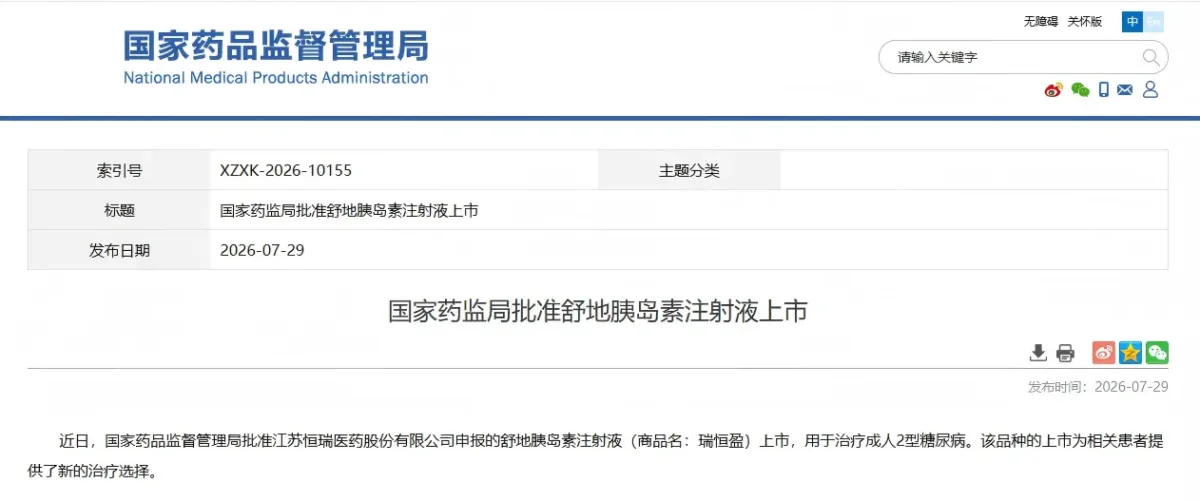
The Insulin Sudelidec approved for type 2 diabetes milestone further expands China’s long-acting basal insulin product landscape and provides a new reference point for global markets interested in China’s innovative diabetes therapies.
As a China pharmaceutical wholesaler, DengYueMed highlights the latest updates on Insulin Sudelidec approved for type 2 diabetes, including its clinical evidence, product features, and market significance for global partners.
What Is Insulin Sudelidec?
Insulin Sudelidec (INS068) is a long-acting basal insulin analog and a Class 1 therapeutic biological product independently developed by Hengrui Pharmaceuticals.
The product was designed based on desB30 human insulin and modified through side-chain attachment at the B29 lysine position. This structural modification is designed to extend the duration of action in the body, enabling stable and sustained basal insulin supplementation.
As an innovative long-acting basal insulin analog, Insulin Sudelidec was developed to provide continuous basal insulin support and improve long-term blood glucose management for patients with type 2 diabetes.
Insulin Sudelidec Quick Facts
| Item | Details |
|---|---|
| Generic Name | Insulin Sudelidec Injection |
| Chinese Name | 舒地胰岛素注射液 |
| Brand Name | 瑞恒盈® |
| Developer | Jiangsu Hengrui Pharmaceuticals Co., Ltd. |
| Drug Type | Long-acting basal insulin analog |
| Approval Date | July 29, 2026 |
| Regulatory Authority | National Medical Products Administration (NMPA), China |
| Indication | Adults with type 2 diabetes |
| Administration | Once-daily subcutaneous injection |
| Key Clinical Studies | INS068-301 and INS068-302 Phase III clinical trials |
| Comparator | Insulin Glargine |
| Market Significance | A new Chinese innovative product for the basal insulin market |
Why Does Type 2 Diabetes Require Long-Acting Basal Insulin Therapy?
Type 2 diabetes mellitus (T2DM) is a metabolic disease characterized by chronic hyperglycemia and is the most common type of diabetes worldwide.
As the disease progresses, some patients experience gradual decline in pancreatic β-cell function. When oral glucose-lowering medications are no longer sufficient to achieve optimal glycemic control, basal insulin therapy may be initiated.
Long-acting basal insulin provides a continuous and stable insulin supply to help control fasting blood glucose. With ongoing advances in insulin development, reducing hypoglycemia risk while maintaining effective glucose control has become an important goal in diabetes management.
Therefore, the development of next-generation basal insulin products with stable efficacy and improved safety profiles has become a key direction in diabetes treatment innovation.
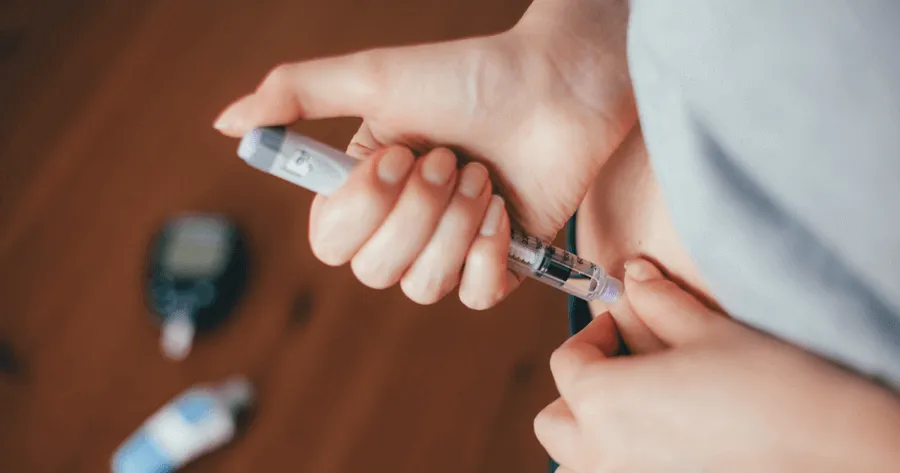
Phase III Clinical Evidence: Key Data Supporting Insulin Sudelidec Approval
The Insulin Sudelidec approved for type 2 diabetes decision was primarily supported by two key Phase III clinical trials: INS068-301 and INS068-302.
Both studies used randomized, open-label, parallel-controlled designs, with insulin glargine as the comparator, to evaluate the efficacy and safety of Insulin Sudelidec in adults with type 2 diabetes.
Results showed that Insulin Sudelidec met the primary endpoints, with comparable HbA1c reduction to insulin glargine and lower overall and nocturnal hypoglycemia risks, supporting its regulatory approval.
INS068-301 Study: Patients Previously Receiving Basal Insulin Therapy
The INS068-301 study enrolled adults with type 2 diabetes whose blood glucose remained inadequately controlled despite previous basal insulin treatment.
After 26 weeks of treatment, Insulin Sudelidec achieved the primary endpoint and demonstrated non-inferior HbA1c improvement compared with insulin glargine. In addition, the Insulin Sudelidec group showed a greater reduction in fasting plasma glucose (FPG), suggesting effective basal glucose control.
| Key Parameter | Insulin Sudelidec | Insulin Glargine |
|---|---|---|
| HbA1c Change | Non-inferior efficacy achieved | Comparator |
| Fasting Plasma Glucose (FPG) | Greater reduction | — |
| Primary Endpoint | Achieved | Comparator |
INS068-302 Study: Patients Inadequately Controlled with Oral Glucose-Lowering Drugs
The INS068-302 study mainly included adults with type 2 diabetes who had insufficient glycemic control after treatment with oral glucose-lowering medications.
The study results showed that Insulin Sudelidec achieved the primary endpoint. At week 26, HbA1c improvement was comparable to insulin glargine, with similar FPG reduction between the two groups, and glucose-lowering effects were maintained through week 52.
| Key Parameter | Insulin Sudelidec | Insulin Glargine |
|---|---|---|
| HbA1c Improvement | Non-inferior efficacy | Comparator |
| FPG Improvement | Comparable | Comparable |
| Duration of Glycemic Control | Maintained to Week 52 | Maintained to Week 52 |
Safety Profile of Insulin Sudelidec
Both Phase III studies demonstrated that Insulin Sudelidec had a favorable overall safety profile, with similar rates of adverse events compared with insulin glargine.
Importantly, clinical data showed that patients receiving Insulin Sudelidec experienced lower risks of overall hypoglycemia and nocturnal hypoglycemia compared with insulin glargine.
Nocturnal hypoglycemia remains an important concern in basal insulin therapy. Therefore, these findings provide additional support for the potential clinical value of Insulin Sudelidec in improving hypoglycemia management.
Insulin Sudelidec vs Insulin Glargine: Key Differences
| Comparison | Insulin Sudelidec | Insulin Glargine |
|---|---|---|
| Drug Class | Long-acting basal insulin analog | Long-acting basal insulin analog |
| Administration | Once daily | Once daily |
| HbA1c Improvement | Comparable | Comparable |
| Fasting Plasma Glucose | Greater reduction in some studies | Comparator |
| Overall Hypoglycemia Risk | Lower | — |
| Nocturnal Hypoglycemia Risk | Lower | — |
Current evidence suggests that both insulin products can provide effective and stable glycemic control. Compared with insulin glargine, Insulin Sudelidec has demonstrated potential advantages in hypoglycemia risk management.
However, treatment decisions should always be made by healthcare professionals based on individual patient conditions.
Impact of Insulin Sudelidec Approved for Type 2 Diabetes on the Basal Insulin Market
In recent years, Chinese pharmaceutical companies have accelerated innovation in metabolic diseases, expanding from SGLT2 inhibitors, DPP-4 inhibitors, and GLP-1 receptor agonists to next-generation insulin therapies.
The approval of Insulin Sudelidec for type 2 diabetes further enriches the long-acting basal insulin market and highlights China’s growing capabilities in innovative biologics.
Key implications include: 🔽
- More treatment options: Adding a new Chinese innovation to the long-acting basal insulin landscape.
- Commercialization progress: Demonstrating China’s transition from drug development to successful product launch.
- Global opportunities: Creating new possibilities for international sourcing and pharmaceutical collaboration.
Conclusion
Insulin Sudelidec approved for type 2 diabetes represents an important advancement in China’s long-acting basal insulin field, providing a new treatment option for adults with type 2 diabetes.
Clinical studies demonstrated that Insulin Sudelidec achieved comparable glycemic control to insulin glargine, while showing positive results in hypoglycemia risk management.
As more Chinese innovative medicines enter global markets, Insulin Sudelidec may become a product of interest for pharmaceutical companies, distributors, and healthcare partners seeking opportunities related to China’s pharmaceutical innovation.
As a pharmaceutical distributor specializing in Chinese innovative medicines, DengYueMed provides updates on drug approvals, commercialization progress, and global partnership opportunities, connecting international partners with China’s pharmaceutical innovation.
FAQ about Insulin Sudelidec Approved for Type 2 Diabetes
What is Insulin Sudelidec?
Insulin Sudelidec (INS068) is a long-acting basal insulin analog developed by Hengrui Pharmaceuticals for adults with type 2 diabetes.
Has Insulin Sudelidec been approved for type 2 diabetes in China?
Yes, Insulin Sudelidec was approved by China’s NMPA on July 29, 2026, for the treatment of adults with type 2 diabetes.
How does Insulin Sudelidec compare with insulin glargine?
Phase III studies showed that Insulin Sudelidec provided comparable HbA1c reduction to insulin glargine, with lower overall and nocturnal hypoglycemia risks.
What clinical studies supported Insulin Sudelidec approval?
The approval was supported by two Phase III clinical trials, INS068-301 and INS068-302, which evaluated efficacy and safety in adults with type 2 diabetes.
Why is Insulin Sudelidec important for the basal insulin market?
Insulin Sudelidec expands long-acting basal insulin options and represents progress in China’s innovative diabetes drug development.