FDA Approves Novel Chinese Drug Pimicotinib for Tenosynovial Giant Cell Tumor (TGCT)
On November 10, 2026, the U.S. Food and Drug Administration (FDA) approved pimicotinib (PIMJETMI®) for the treatment of adults with symptomatic tenosynovial giant cell tumor (TGCT) when surgical resection may result in functional limitations or severe complications.[1]
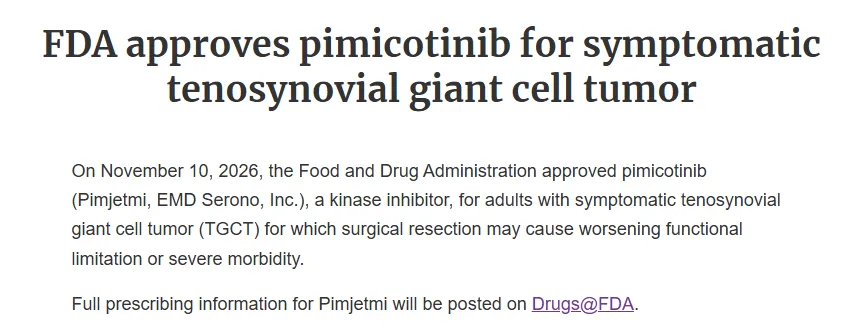
The FDA approves novel Chinese drug pimicotinib, marking another step forward in the international development of China’s independently developed innovative medicines. The approval provides a new systemic treatment option for selected patients with TGCT.
In this article, DengYueMed explores pimicotinib’s development background, mechanism of action, clinical trial results, and FDA approval, highlighting the progress and global significance of this China-developed innovative drug in TGCT treatment.
Pimicotinib Receives FDA Approval, Expanding Systemic Treatment Options for TGCT
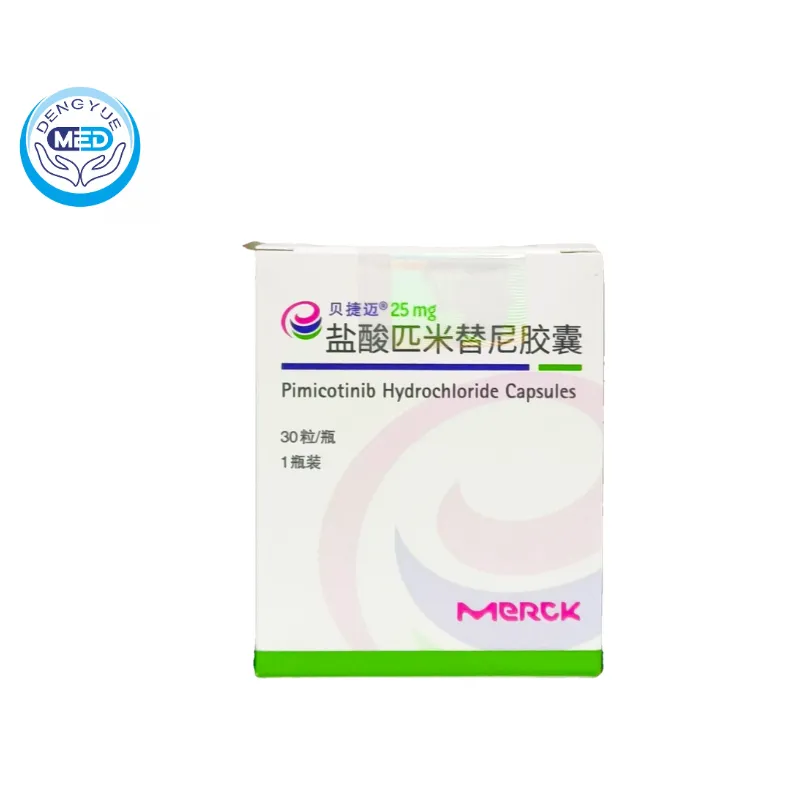
Pimicotinib is a novel, oral, highly selective, and potent small-molecule colony-stimulating factor 1 receptor (CSF-1R) inhibitor independently developed by China’s Abbisko Therapeutics.
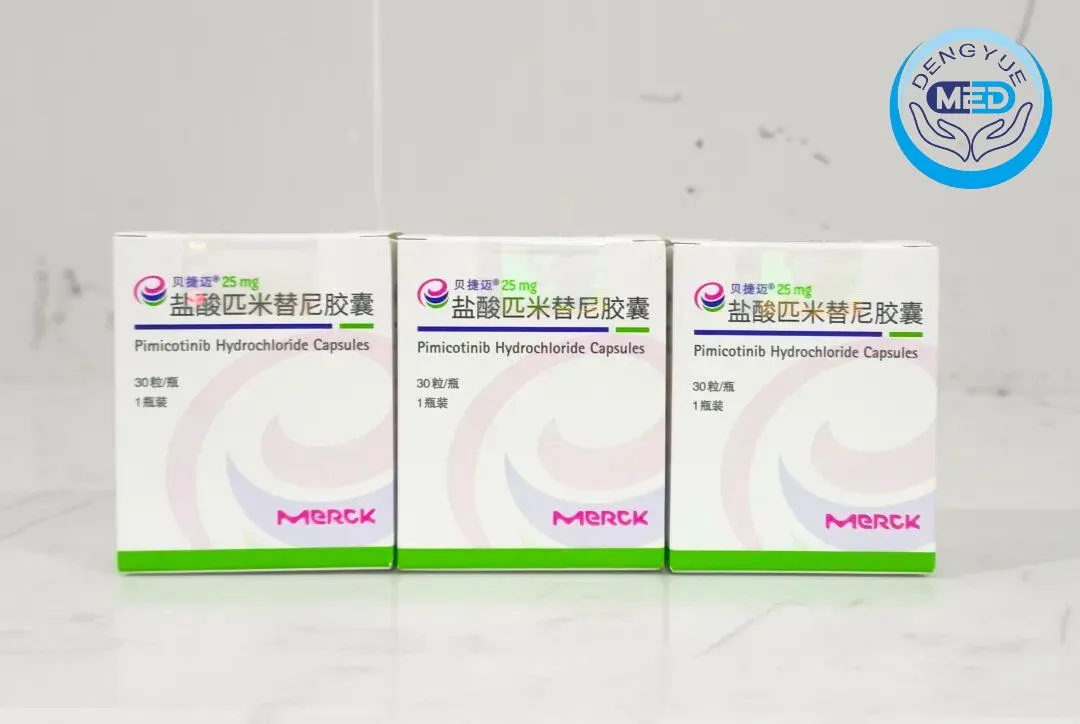
In December 2023, Abbisko Therapeutics entered into a global commercialization agreement with Merck KGaA for pimicotinib, with Merck responsible for its global commercialization.[2]
✨ In December 2025, pimicotinib received its first marketing approval from China’s National Medical Products Administration (NMPA) for adults with symptomatic TGCT when surgical resection may result in functional limitations or severe complications.
Now, the FDA approves novel Chinese drug pimicotinib for a specific patient population with symptomatic TGCT, further expanding its presence in the global market.
What Is Pimicotinib? CSF-1R Targeted Mechanism and Its Role in TGCT Treatment
| Category | Details |
|---|---|
| Generic Name | Pimicotinib |
| Brand Name | PIMJETMI® / 贝捷迈® |
| Drug Class | Oral small-molecule targeted inhibitor |
| Target | Colony-stimulating factor 1 receptor (CSF-1R) |
| Mechanism of Action | Inhibits CSF-1R-related signaling pathways and interferes with CSF-1R-mediated cell recruitment and activation in TGCT lesions, thereby suppressing tumor-related pathological processes. |
| Developer | Abbisko Therapeutics |
| Global Commercialization Partner | Merck KGaA |
| U.S. FDA Approval | November 2026 |
| China NMPA Approval | December 2025 |
| Main Indication | Selected adults with symptomatic tenosynovial giant cell tumor (TGCT) |
| Pivotal Clinical Trial | MANEUVER Phase III Trial |
MANEUVER Phase III Trial: Key Clinical Data of Pimicotinib for TGCT
The FDA approves novel Chinese drug pimicotinib based primarily on positive results from the global, multicenter, randomized, double-blind, placebo-controlled Phase III MANEUVER trial.
The study enrolled patients with symptomatic TGCT unsuitable for surgery or at risk of functional impairment or severe complications from surgery. Participants were randomized 2:1 to receive oral pimicotinib 50 mg once daily or placebo.
The primary endpoint was the objective response rate (ORR) at Week 25, assessed by a blinded independent review committee (BIRC) according to RECIST version 1.1.
Pimicotinib Significantly Increased the Objective Response Rate in TGCT
The results showed that the ORR at Week 25 was 56% in the pimicotinib group, significantly higher than the 3.2% observed in the placebo group.
| Clinical Endpoint | Pimicotinib Group | Placebo Group |
|---|---|---|
| ORR at Week 25 | 56% | 3.2% |
Longer-term follow-up showed that the median duration of response (DOR) in the pimicotinib group had not been reached.
Among patients who achieved a response, 91% maintained their response for at least 6 months, while 77% maintained their response for at least 12 months, suggesting the durability of tumor response.
Pimicotinib Improves Joint Range of Motion, Physical Function, and Pain
In addition to tumor response, the MANEUVER trial evaluated clinical outcomes closely related to patients’ daily lives, including joint range of motion (ROM), physical function, pain, and stiffness.
Compared with placebo, pimicotinib demonstrated statistically significant and clinically meaningful improvements across multiple patient-reported outcomes and functional assessment measures, including: 🔽
- Joint Range of Motion: Improvements in the range of motion of affected joints.
- Physical Function: Improvements in PROMIS Physical Function scores, reflecting better ability to perform daily activities.
- Pain: Reductions in worst pain scores.
- Stiffness: Reductions in TGCT-related joint stiffness.
These findings suggest that the clinical benefits of pimicotinib extend beyond radiographic tumor shrinkage to improvements in joint function and patients’ ability to perform everyday activities.
2026 ASCO: One-Year Efficacy Analysis of Pimicotinib
At the 2026 American Society of Clinical Oncology (ASCO) Annual Meeting, Abbisko Therapeutics presented further efficacy analyses from the MANEUVER study, providing additional insights into longer-term treatment outcomes.[3]
Building on the Phase III trial, the analysis evaluated long-term outcomes across TGCT subtypes and tumor locations, showing responses in both localized and diffuse TGCT, with generally consistent results across anatomical sites.
According to assessments by the blinded independent review committee (BIRC):
| Patient Subgroup | ORR |
|---|---|
| Localized TGCT (L-TGCT) | 87.5% |
| Diffuse TGCT (D-TGCT) | 75.5% |
| Lower-extremity tumors | 75.9% |
| Upper-extremity tumors | 77.8% |
Long-term analysis showed sustained improvements in joint mobility and physical function. By Week 49, mean knee range of motion increased by 8.9%, with improved PROMIS Physical Function scores in patients with lower-extremity tumors.
Patients also reported improvements in daily activities, including walking, climbing stairs, standing, bending, kneeling, and stooping, highlighting pimicotinib’s potential benefits beyond tumor control.
Pimicotinib Safety Profile: Common Adverse Reactions and Laboratory Abnormalities
According to FDA safety information, the most common adverse reactions associated with pimicotinib treatment, occurring in more than 20% of patients, include:
- Pruritus
- Rash
- Facial edema
- Periorbital edema
- Fatigue
- Nausea
- Headache
- Peripheral edema
Common laboratory abnormalities, occurring in more than 30% of patients, include elevated creatine phosphokinase, lactate dehydrogenase, aspartate aminotransferase, lipase, cholesterol, amylase, and alanine aminotransferase levels.
The FDA prescribing information also includes warnings and precautions concerning hepatotoxicity, embryo-fetal toxicity, and increased serum creatinine. Appropriate safety monitoring and management should follow the official prescribing information.
Conclusion: Pimicotinib Marks Another Global Regulatory Milestone for China’s Innovative Drug Industry
The FDA approves novel Chinese drug pimicotinib for tenosynovial giant cell tumor (TGCT), marking an important milestone in the global development of China-developed innovative medicines and highlighting China’s growing contribution to pharmaceutical innovation.
More China-developed medicines are entering global markets, expanding treatment options and strengthening China’s presence in the pharmaceutical industry.
Hong Kong DengYueMed provides China pharmaceutical resource access, procurement coordination, and supply chain support for global pharmaceutical companies, distributors, and healthcare institutions.

Connecting China Pharma with Global Markets
FAQ about FDA Approves Novel Chinese Drug Pimicotinib
What is pimicotinib used for?
Pimicotinib is an oral CSF-1R inhibitor approved for adults with symptomatic tenosynovial giant cell tumor (TGCT) when surgery may cause functional limitations or severe complications.
Has the FDA approved pimicotinib?
Yes, the FDA approved pimicotinib (PIMJETMI®) on November 10, 2026, for selected adults with symptomatic TGCT.
Which company developed pimicotinib?
Pimicotinib was independently developed by Abbisko Therapeutics, a China-based biopharmaceutical company.
How effective is pimicotinib for TGCT?
In the Phase III MANEUVER trial, pimicotinib achieved a 56% objective response rate (ORR) at Week 25, compared with 3.2% for placebo.
What are the common side effects of pimicotinib?
Common adverse reactions include pruritus, rash, facial edema, periorbital edema, fatigue, nausea, headache, and peripheral edema.
References
- U.S. Food and Drug Administration (FDA). FDA Approves Pimicotinib for Symptomatic Tenosynovial Giant Cell Tumor. November 10, 2026.
https://www.fda.gov/drugs/cancer-approvals/fda-approves-pimicotinib-symptomatic-tenosynovial-giant-cell-tumor - Merck KGaA. Commercialization Agreement With Abbisko for Phase III Asset, Pimicotinib. December 4, 2023.
https://www.emdgroup.com/en/news/abbisko-pimicotinib-agreement-04-12-2023.html - American Society of Clinical Oncology (ASCO). Tinoco G, et al. Effect of pimicotinib on tumor response and physical function (PF) by tumor location in patients with tenosynovial giant cell tumor (TGCT): Results from the phase 3 MANEUVER trial. Journal of Clinical Oncology. 2026;44(16_suppl):11567.
https://doi.org/10.1200/JCO.2026.44.16_suppl.11567