Lymphoma CAR-T Therapy IM19 Approved in China for Relapsed or Refractory LBCL
On November 5, 2026, China’s National Medical Products Administration (NMPA) approved lymphoma CAR-T therapy IM19, developed by Imunopharm Technology, for adults with relapsed or refractory large B-cell lymphoma (r/r LBCL) after two or more prior lines of systemic therapy.[1]
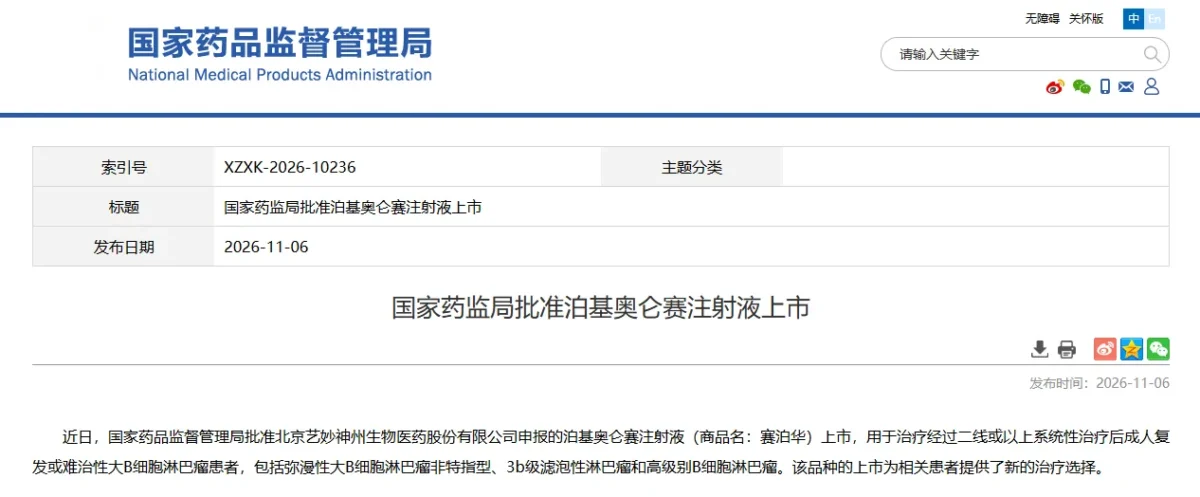
This approval marks the entry of Imunopharm’s first independently developed drug into commercialization and provides a new treatment option for patients with relapsed or refractory large B-cell lymphoma.
In this article, DengYueMed introduces the drug type, mechanism of action, key clinical study results, and clinical significance of lymphoma CAR-T therapy IM19.
What Is IM19? Drug Profile and Mechanism of Action
IM19 is a China-developed CD19-targeted CAR-T cell therapy. Its drug characteristics, therapeutic target, and cellular engineering design are important for understanding its clinical application.
IM19 Drug Profile
| Item | Information |
|---|---|
| Drug Name | 泊基奥仑赛注射液 |
| Development Code | IM19 |
| Brand Name | 赛泊华®/Saipohua® |
| Drug Type | Autologous CD19-targeted CAR-T cell therapy |
| Target | CD19 |
| Developer | Beijing Imunopharm Technology Co., Ltd. |
| Approval Authority | National Medical Products Administration (NMPA), China |
| Approval Date | November 5, 2026 |
| Approved Indication | Adult patients with relapsed or refractory large B-cell lymphoma (r/r LBCL) after two or more prior lines of systemic therapy |
| Treatment Method | Autologous CAR-T cell infusion |
Mechanism of Action of IM19
IM19 is an autologous chimeric antigen receptor T-cell (CAR-T) therapy.
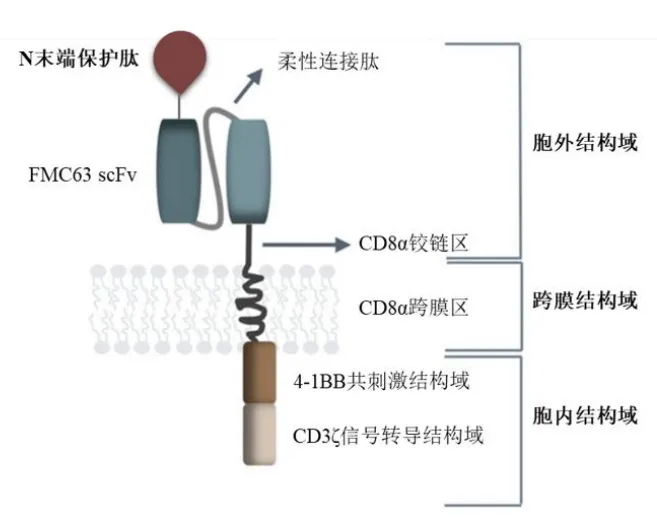
The treatment involves collecting T cells from the patient and genetically modifying them to express a chimeric antigen receptor (CAR) capable of recognizing CD19. The modified cells are subsequently infused back into the patient.
CD19 is an antigen widely expressed on B cells and the surface of various B-cell malignancies.
Following infusion, IM19 CAR-T cells recognize and bind to CD19 on tumor cells, activating T-cell signaling pathways, promoting CAR-T cell activation and proliferation, and enabling them to exert cytotoxic effects against target cells.
✨ IM19 incorporates a distinctive CAR molecular protective peptide design intended to enhance CAR-T cell cytotoxic activity and persistence in vivo, providing a technological foundation for its antitumor activity.[2]
Clinical Study: IM19 Demonstrates Antitumor Activity in Relapsed or Refractory Large B-Cell Lymphoma
The approval of lymphoma CAR-T therapy IM19 was supported by a confirmatory clinical study in patients with relapsed or refractory aggressive non-Hodgkin lymphoma.
The efficacy analysis set included 96 patients with relapsed or refractory large B-cell lymphoma who had received two or more prior lines of systemic therapy. The study results showed:
Key Efficacy Results of the IM19 Clinical Study
| Efficacy Endpoint | Study Result |
|---|---|
| Number of Patients in the Efficacy Analysis | 96 |
| 3-Month Objective Response Rate (ORR) | 58.3% |
| Best Objective Response Rate (Best ORR) | 72.9% |
| Complete Response Rate (CRR)* | 58.6% |
| Median Progression-Free Survival (mPFS) | 5.98 months |
*The complete response rate was reported for the patient population that did not receive bridging chemotherapy.
Efficacy Observations in Specific Patient Subgroups
| Patient Subgroup | Best Objective Response Rate (Best ORR) |
|---|---|
| Patients aged 65 years and older | 80.8% |
| Patients with relapse after hematopoietic stem cell transplantation | 90.0% |
These findings indicate that IM19 demonstrated antitumor activity in patients who had undergone multiple lines of treatment and in certain populations with limited benefit from previous therapies, providing a basis for further evaluation of its clinical value.
Clinical Significance: A New Treatment Option for Relapsed or Refractory Lymphoma
Large B-cell lymphoma is characterized by aggressive disease behavior and a substantial risk of relapse. Some patients progress after first- or second-line treatment, with options becoming more limited after multiple therapies.
The approval of lymphoma CAR-T therapy IM19 provides a new CD19-targeted CAR-T treatment option for adult patients with large B-cell lymphoma who remain relapsed or refractory after two or more prior lines of systemic therapy.
Unlike conventional drug therapies, CAR-T treatment uses genetically modified autologous T cells to recognize and attack malignant B cells, offering a different therapeutic approach for these patients.
The approval of IM19 further expands CD19 CAR-T treatment options in China and introduces additional treatment possibilities for older patients and those experiencing relapse after transplantation.
Conclusion
The approval of lymphoma CAR-T therapy IM19 represents further progress in the treatment of relapsed or refractory large B-cell lymphoma in China and highlights the clinical translation capabilities of China’s independently developed cell therapy products.
As China’s innovative pharmaceutical and cell therapy sectors continue to develop, international healthcare institutions, pharmaceutical distributors, and related partners are increasingly interested in Chinese pharmaceutical information and supply chain resources.
As a China pharmaceutical wholesaler, DengYueMed provides global pharmaceutical distributors and healthcare institutions with China drug information, procurement coordination, and supply chain support, with a focus on innovative medicines and specialty pharmaceuticals.

Explore China’s Innovative Pharmaceutical Resources
FAQ about Lymphoma CAR-T Therapy IM19
What is IM19 CAR-T therapy?
IM19 is a China-developed autologous CD19-targeted CAR-T cell therapy designed to treat relapsed or refractory large B-cell lymphoma (r/r LBCL).
What is the mechanism of action of IM19?
IM19 genetically modifies a patient’s T cells to recognize CD19-positive malignant B cells and destroy them through CAR-mediated immune activation.
What is the approved indication for IM19 in China?
IM19 is approved in China for adults with relapsed or refractory large B-cell lymphoma after two or more prior lines of systemic therapy.
What were the clinical results of IM19 in r/r LBCL?
The IM19 clinical study reported a best objective response rate (ORR) of 72.9% and a median progression-free survival (mPFS) of 5.98 months in the reported efficacy analysis.
When was IM19 approved in China?
China’s NMPA approved IM19 on November 5, 2026, providing a new CD19-targeted CAR-T treatment option for eligible adults with r/r LBCL.
References
- National Medical Products Administration (NMPA), China. NMPA Approves Pojikoleucel Injection for Marketing. November 6, 2026.
https://www.nmpa.gov.cn/zhuanti/cxylqx/cxypxx/20261106163047100.html - Ying Z, et al. A durable 4-1BB-based CD19 CAR-T cell for treatment of relapsed or refractory non-Hodgkin lymphoma. Chinese Journal of Cancer Research. 2022;34(1):53–62.
https://doi.org/10.21147/j.issn.1000-9604.2022.01.05