
Generic Upadacitinib Approved in China, Marking the Start of JAK Inhibitor Competition
On April 27, 2026, the National Medical Products Administration (NMPA) announced that Jiangsu Huayang Pharmaceutical’s extended-release tablets became the first generic upadacitinib approved in China after passing generic consistency evaluation.
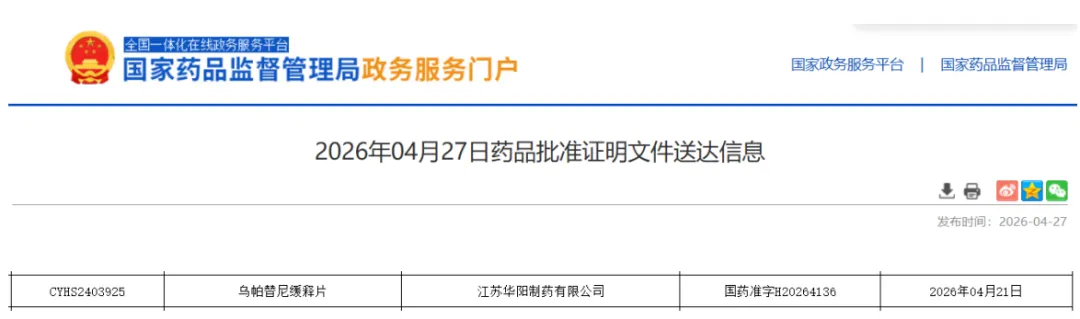
This milestone—generic upadacitinib approved in china—marks the first approved generic version of this product in China.
More importantly, it signals three simultaneous structural shifts: 👇
- The originator’s monopoly in China begins to break
- High-value JAK inhibitors enter the generic commercialization phase
- The autoimmune targeted therapy market approaches price restructuring
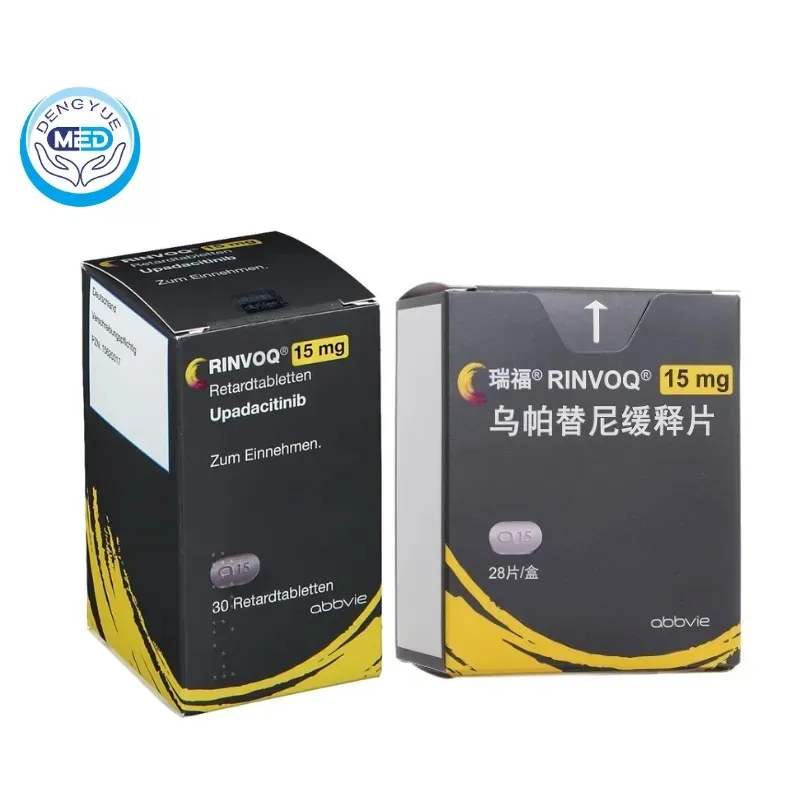
Previously, this product was exclusively supplied in China by AbbVie, maintaining a single-source structure across both clinical use and commercial distribution.
As the first generic upadacitinib is approved in China, the market is transitioning toward multi-player competition.
This shift is also drawing attention from the pharmaceutical supply chain, where China-based pharmaceutical wholesaler DengYueMed continues to monitor developments in autoimmune drug distribution and sourcing.
Why Upadacitinib Is a Blockbuster JAK1 Inhibitor
Upadacitinib is a selective JAK1 inhibitor whose value lies in combining targeted mechanism with multi-indication expansion, making it a platform therapy in autoimmune diseases.
It is widely used in: 🔽
- Rheumatoid arthritis (RA)
- Atopic dermatitis (AD)
- Psoriatic arthritis (PsA)
- Ulcerative colitis (UC)
This multi-indication coverage positions upadacitinib as a platform-level autoimmune drug, rather than a single-use therapy.
🎯 Mechanistically, JAK1 plays a central role in cytokine signaling pathways, allowing upadacitinib to regulate multiple inflammatory processes simultaneously.
Compared with biologics, it offers:
- Oral administration with improved patient adherence
- Broad anti-inflammatory pathway targeting
- Lower treatment barriers compared to injectable therapies
📈 Commercially, this scalability has made it a key successor to Humira in AbbVie’s portfolio. In 2024, global sales approached $6 billion with over 50% growth.
Following generic upadacitinib approved in china, its market positioning is entering a new competitive phase.
Upadacitinib Market Growth in China: From Introduction to Rapid Expansion
The growth of rinvoq (upadacitinib) in China follows a policy-driven and clinically driven expansion model.
Key drivers include:
- National reimbursement improving drug accessibility
- Rising diagnosis rates of autoimmune diseases
- Increasing replacement of biologics by oral JAK inhibitors
Under these conditions, the product rapidly scaled:
- 2024: Nearly RMB 300 million, +260% YoY
- 2025: Over RMB 500 million, near doubling
👉 This reflects a broader shift from traditional immunosuppressants to targeted therapies.
As generic upadacitinib approved in china, price competition is expected to further accelerate market penetration.
Generic Upadacitinib Competition in China: 40+ Companies Enter the Race
With expanding demand and weakening patent barriers, generic upadacitinib has become a key target in China.
More than 40 pharmaceutical companies have filed applications, including: 👇
- CSPC Pharmaceutical Group
- China Resources Sanjiu
- Fuyuan Pharmaceutical
- Chongqing Huabang Pharmaceutical
This landscape shows:
- High concentration among experienced generic manufacturers
- Increasing product homogeneity
Competition is shifting from R&D to regulatory execution:
- Minimal differentiation in development
- Regulatory capability becomes decisive
- Time-to-market defines early share
With generic upadacitinib approved in China, the competition has officially entered a new phase.

Why Late Entrants Can Win: Regulatory Quality Over Timing
Although some companies filed as early as 2024, Jiangsu Huayang secured approval first.
This reflects a key principle: quality outweighs timing in China’s regulatory system.
Critical factors include:
- CMC consistency and manufacturing reliability
- Bioequivalence (BE) study quality
- Efficiency in responding to regulatory reviews
In many cases, early applicants are delayed by supplementary data requests, while later entrants with stronger data achieve faster approval.
This explains why China approves first generic upadacitinib does not necessarily favor first filers.
Patent Breakthrough: Why Generic Upadacitinib Arrived Early
The early arrival of generic competition for upadacitinib is primarily driven by patent challenges.
AbbVie had established a comprehensive patent portfolio covering compound, salt forms, and usage, originally expected to extend protection until around 2030.
However, key compound patents were invalidated in China, significantly weakening the protection framework.
This has triggered several cascading effects:
- Earlier opening of the generic development window
- Simultaneous entry of multiple competitors
- Advancement of the market competition cycle
From an industry perspective, this represents a forward shift of the patent cliff.
With generic upadacitinib approved in china, the impact of this patent breakthrough is now fully materializing.
Market Impact: JAK Inhibitors Enter Pre-VBP Competition Phase
Following generic upadacitinib approved in china, the upadacitinib market in China is transitioning from a single-originator structure to a multi-player competitive landscape.
This phase is typically characterized by:
- Rapid expansion of supply
- Intensified hospital access competition
- Downward pressure on pricing
For the originator, the China market will shift from high-growth to competitive pricing. For generics, success will depend on inclusion in volume-based procurement (VBP) and supply capacity.
As China approves first generic upadacitinib, the product is entering one of the most volatile phases of its lifecycle.
Conclusion: From First Generic Approval to Market Restructuring
The approval of the first generic upadacitinib is more than a regulatory milestone—it marks a structural transformation in China’s autoimmune drug market.
From patent challenges to mass generic entry, and from monopoly to competition, this case reflects the full lifecycle evolution of a blockbuster drug.
As generic upadacitinib approved in china, stakeholders across the value chain—including China-based pharmaceutical wholesaler DengYueMed—are adapting to shifts in accessibility, pricing, and supply chain dynamics.
This approval is only the beginning of a broader transformation in the autoimmune therapeutics market.
FAQ about Generic Upadacitinib Approved in China
What is upadacitinib used for?
Upadacitinib is a selective JAK1 inhibitor used to treat autoimmune diseases such as rheumatoid arthritis, atopic dermatitis, psoriatic arthritis, and ulcerative colitis. It works by modulating inflammatory signaling pathways.
Why is generic upadacitinib important in China?
As China approves first generic upadacitinib, treatment costs are expected to decrease while patient access improves. It also accelerates competition in the China pharmaceutical market.
Why did China approve first generic upadacitinib earlier than expected?
The early approval is mainly due to successful patent challenges that weakened the originator’s protection. This allowed generic manufacturers to enter the market ahead of the original patent timeline.
Will upadacitinib be included in China’s volume-based procurement (VBP)?
With multiple generics entering the market, upadacitinib is likely to be included in future VBP rounds. This could further reduce prices and reshape market competition.