
Plozasiran Now Available in China: A Once-Every-3-Month siRNA Therapy for Familial Chylomicronemia Syndrome (FCS)
Plozasiran now available in China marks a milestone for FCS patients, offering a new APOC3-targeted siRNA therapy to help lower triglyceride (TG) levels in adults with familial chylomicronemia syndrome.
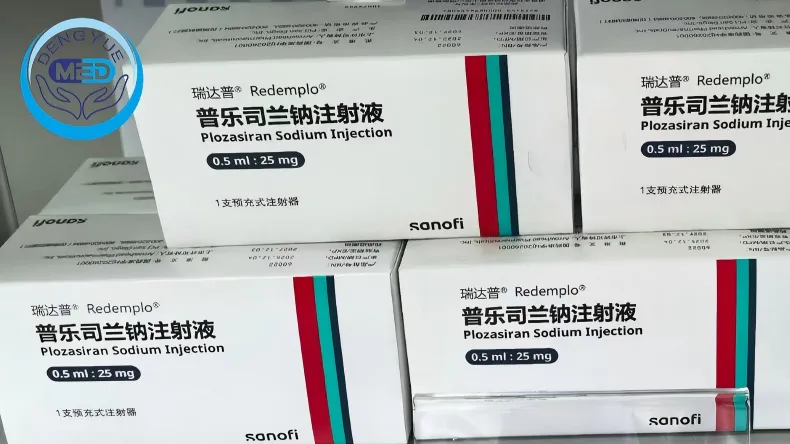
In July 2026, Sanofi announced that Plozasiran Sodium Injection (brand name: Redemplo®) officially entered commercial availability in China, marking the clinical accessibility of China’s first targeted therapy specifically developed for FCS.
As an RNA interference (RNAi) therapy, Plozasiran silences APOC3 mRNA to reduce APOC3 protein production and lower triglyceride levels. With once-every-three-month dosing, it provides a new long-term treatment option for FCS patients.
✨ Plozasiran now available in China represents not only the introduction of a new rare disease therapy but also the expanding application of RNAi technology in metabolic disorders.
In this article, DengYueMed, a China pharmaceutical wholesaler, explores Plozasiran’s mechanism of action, clinical progress, approval background, and role in FCS treatment.
What Is Plozasiran?
Plozasiran is an innovative medicine developed based on RNA interference (RNAi) technology. It targets APOC3 (apolipoprotein C-III) mRNA to reduce APOC3 protein expression, thereby promoting triglyceride metabolism and lowering blood triglyceride (TG) levels.
Unlike traditional lipid-lowering therapies that directly act on lipid metabolism enzymes, Plozasiran works by regulating gene expression and suppressing APOC3 protein production. This mechanism provides longer-lasting effects and a reduced dosing frequency.

Plozasiran Basic Information
| Item | Details |
|---|---|
| Generic Name | Plozasiran Sodium Injection |
| Chinese Name | 普乐司兰钠注射液 |
| Brand Name | Redemplo®/瑞达普® |
| Drug Type | siRNA (small interfering RNA) therapy |
| Target | APOC3 (apolipoprotein C-III) mRNA |
| Administration | Subcutaneous injection |
| Recommended Dosing Frequency | Once every 3 months |
| Approval Authority | National Medical Products Administration (NMPA), China |
| China Approval Date | January 6, 2026 |
| Commercial Availability in China | July 22, 2026 |
| Commercialization Company | Sanofi |
What Is Familial Chylomicronemia Syndrome (FCS)?
Familial chylomicronemia syndrome (FCS) is an extremely rare inherited lipid metabolism disorder, usually caused by mutations affecting lipoprotein lipase (LPL) or related genes.
These genetic abnormalities impair the breakdown of triglyceride-rich chylomicrons, leading to persistently elevated triglyceride levels in the blood.
When triglyceride levels reach or exceed 10 mmol/L, especially when accompanied by recurrent abdominal pain, a family history of hypertriglyceridemia-related pancreatitis, or previous episodes of acute pancreatitis, healthcare professionals may further evaluate whether FCS is present.
Because large amounts of chylomicrons accumulate in the bloodstream, patients with FCS may have a milky-white appearance of plasma during blood collection. This phenomenon has led to the disease being described in some regions as “milky blood” or “milk-like blood.”

Why Is FCS Difficult to Treat?
For many years, treatment options for FCS have mainly depended on strict dietary management.
Patients often need to follow a very low-fat diet over the long term to reduce chylomicron production and control triglyceride levels. However, dietary intervention alone may not be sufficient to maintain triglycerides within an ideal range.
Many patients continue to experience:
- Recurrent acute pancreatitis;
- Persistent extremely high triglyceride levels;
- Reduced quality of life;
- Potentially life-threatening complications.
Due to the extremely low prevalence of FCS, disease-specific targeted therapies have historically been limited. This has made FCS one of the challenging conditions in lipid disorder management.
The milestone of Plozasiran now available in China provides a new therapeutic approach for addressing this long-standing unmet medical need in rare disease treatment.
How Does Plozasiran Work?
APOC3 (apolipoprotein C-III) plays a key role in regulating the clearance of triglyceride-rich lipoproteins. In FCS patients, abnormal APOC3 activity contributes to persistent triglyceride elevation.
As an APOC3-targeted siRNA therapy, Plozasiran uses RNA interference technology to:
- Target APOC3 mRNA in liver cells;
- Reduce APOC3 protein production;
- Enhance triglyceride-rich lipoprotein clearance;
- Sustain lower serum triglyceride levels.
By regulating gene expression at the mRNA level, Plozasiran provides long-lasting effects with subcutaneous dosing once every three months, highlighting the potential of RNA interference technology in rare lipid disorder treatment.
What Are the Highlights of the PALISADE Phase III Study?
The approval of Plozasiran was supported by multiple international clinical studies, including the pivotal PALISADE study (NCT05089084), as well as clinical data from a Phase I study conducted in China.
PALISADE was a randomized, double-blind, placebo-controlled Phase III clinical trial evaluating the efficacy and safety of Plozasiran in adults with familial chylomicronemia syndrome.
The study enrolled 75 adult FCS patients from research centers across 18 countries. Participants were randomly assigned to receive:
- Plozasiran 25 mg;
- Plozasiran 50 mg;
- Placebo.
The study continued for 12 months, and after completion of the randomized treatment period, eligible patients could enter an open-label extension study for continued evaluation.
PALISADE Phase III Study Results
| Study Parameter | Results |
|---|---|
| Study Design | Phase III randomized, double-blind, placebo-controlled trial |
| Number of Participants | 75 patients |
| Countries Involved | 18 countries |
| Primary Endpoint | Change in triglyceride levels at Month 10 |
| TG Reduction (25 mg Group) | Median reduction of 80% |
| TG Reduction (50 mg Group) | Median reduction of 78% |
| Safety Profile | Generally well tolerated |
The PALISADE clinical trial demonstrated that Plozasiran achieved its primary endpoint and met all key secondary endpoints. Throughout the study period, patients receiving Plozasiran experienced sustained triglyceride reductions, while the overall safety profile remained favorable.
These findings provided important clinical evidence supporting Plozasiran for familial chylomicronemia syndrome (FCS). With Plozasiran now available in China, they further demonstrate the therapeutic potential of targeting APOC3 through RNA interference technology.
Why Is Plozasiran Important for FCS Treatment?
The development of Plozasiran (Redemplo®) represents an important advancement in rare disease treatment and lipid metabolism management.
✅ First, it is the world’s first APOC3-targeted siRNA medicine, demonstrating the successful clinical translation of RNA interference technology into lipid disorders.
✅ Second, Plozasiran now available in China helps address the previous lack of targeted treatment options for FCS patients in China, providing an innovative therapy based on the underlying disease mechanism.
✅ In addition, its extended dosing schedule — with administration every three months — may offer advantages in long-term disease management compared with treatment approaches requiring more frequent administration.
For the rare disease community, Plozasiran is more than a new medicine. It represents continued progress in precision medicine and highlights the growing role of RNA-based therapies in clinical practice.
The Future Potential of Plozasiran Beyond FCS
Although Plozasiran was initially developed for familial chylomicronemia syndrome, ongoing research is exploring its potential in additional lipid metabolism-related conditions.
In December 2025, the U.S. Food and Drug Administration (FDA) granted Plozasiran Breakthrough Therapy Designation for severe hypertriglyceridemia (sHTG), reflecting continued interest in its potential applications beyond rare genetic lipid disorders.
Future clinical development may further evaluate the role of Plozasiran in broader populations with elevated triglyceride levels and its potential contribution to metabolic disease and cardiovascular risk management.
The expanding research landscape around Plozasiran APOC3 siRNA therapy demonstrates how RNA interference-based medicines may provide new solutions for complex metabolic diseases.
Conclusion
Plozasiran now available in China marks a milestone for FCS patients, providing China’s first targeted therapy for this rare lipid metabolism disorder.
As the world’s first APOC3 siRNA therapy, Plozasiran regulates APOC3 expression through RNA interference technology. Its once-every-three-month dosing schedule offers a convenient long-term treatment option for eligible patients.
As a China pharmaceutical wholesaler specializing in innovative medicines, specialty therapies, and cross-border pharmaceutical services, DengYueMed continues to monitor the latest developments in Plozasiran, RNAi therapies, and other breakthrough treatments.
🤝 Through global pharmaceutical distribution, supply chain coordination, and industry information sharing, DengYueMed is committed to supporting greater accessibility of innovative medicines and strengthening cooperation among pharmaceutical distributors, healthcare institutions, and industry partners worldwide.
FAQ about Plozasiran Now Available in China
What is Plozasiran used for?
Plozasiran is used as an adjunct to dietary management to reduce triglyceride levels in adults with familial chylomicronemia syndrome (FCS), a rare genetic lipid metabolism disorder.
How does Plozasiran work?
Plozasiran is an APOC3-targeted siRNA therapy that reduces APOC3 protein production through RNA interference technology, helping improve triglyceride metabolism.
How often is Plozasiran administered?
Plozasiran is administered through a subcutaneous injection once every three months. This extended dosing interval may help improve treatment convenience and long-term adherence for eligible FCS patients.
Is Plozasiran available in China?
Yes. Plozasiran now available in China marks an important milestone for FCS treatment. Plozasiran (Redemplo®) received NMPA approval and entered commercial availability in July 2026. Contact DengYueMed for supply information.
What are the clinical benefits of Plozasiran for FCS patients?
Clinical studies, including the PALISADE Phase III trial, showed that Plozasiran significantly reduced triglyceride levels and maintained a generally favorable safety profile.