

Targeted Drugs for Thyroid Cancer by Cancer Type: Common Agents and Molecular Targets
Key Takeaways
- Differentiated thyroid cancer (DTC): Lenvatinib and sorafenib are commonly used targeted drugs for radioiodine-refractory disease. Genetic alterations involving RET, NTRK and other actionable targets may also provide opportunities for precision treatment.
- Medullary thyroid cancer (MTC): Vandetanib, cabozantinib and selective RET inhibitors are important treatment options for eligible patients.
- Anaplastic thyroid cancer (ATC): Dabrafenib combined with trametinib may be used in eligible patients with BRAF V600E-mutated disease. Certain gene fusions may also provide targets for treatment.
- The selection of targeted drugs for thyroid cancer by cancer type depends on the cancer subtype, molecular alterations, previous treatments and disease progression.
Thyroid cancer is a common endocrine malignancy. For some patients with advanced, metastatic or progressive disease, targeted therapy provides important treatment options.
Hong Kong DengYue Medicine reviews commonly used targeted drugs for thyroid cancer by cancer type, focusing on their mechanisms of action, molecular targets and clinical applications.

1. Common Targeted Drugs for Differentiated Thyroid Cancer
Differentiated thyroid cancer (DTC) mainly includes papillary and follicular thyroid cancer.
Some patients achieve good disease control following surgery and radioactive iodine (RAI) therapy. However, when tumors no longer respond adequately to radioactive iodine and continue to progress or metastasize, targeted therapy becomes an important treatment option.
1.1 Lenvatinib
Lenvatinib is a multikinase inhibitor that targets vascular endothelial growth factor receptors (VEGFRs), fibroblast growth factor receptors (FGFRs) and other signaling pathways involved in tumor angiogenesis and growth.
It is an important systemic treatment for radioiodine-refractory differentiated thyroid cancer, particularly in patients who require control of progressive disease. During treatment, adverse effects such as hypertension, proteinuria, diarrhea and fatigue require monitoring. [1]
1.2 Sorafenib
Sorafenib targets RAF kinases and several kinases involved in tumor angiogenesis. It is also used to treat radioiodine-refractory differentiated thyroid cancer.
Its target profile and adverse-effect characteristics differ from those of lenvatinib. For example, hand-foot skin reactions are an important adverse effect to monitor during sorafenib treatment.
1.3 Cabozantinib
Cabozantinib inhibits multiple targets, including VEGFR, MET and AXL.
According to the relevant US prescribing information, cabozantinib tablets (Cabometyx) are indicated for eligible patients with locally advanced or metastatic differentiated thyroid cancer that has progressed following prior VEGFR-targeted therapy. [2]
1.4 Targeted Drugs for RET and NTRK Alterations
Some thyroid cancers harbor genetic alterations that can guide treatment selection. For eligible patients, selective inhibitors may offer a more targeted approach than nonselective multikinase inhibitors.
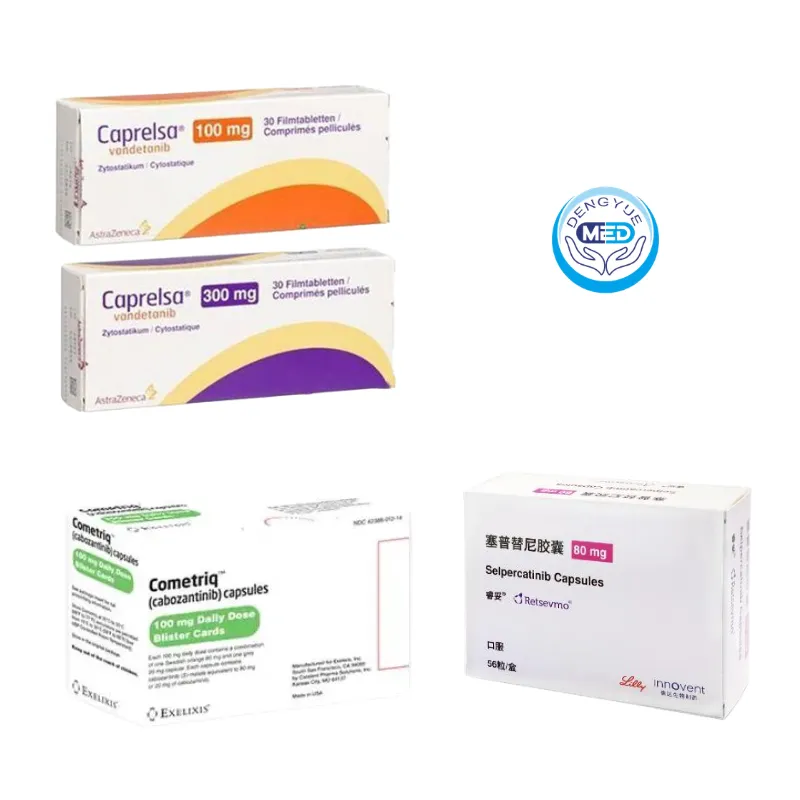
- Selpercatinib: A selective RET inhibitor that can be used for thyroid cancers associated with specific RET alterations when the relevant indication criteria are met.
- Larotrectinib and entrectinib: TRK inhibitors that may be used for eligible patients with NTRK gene fusion-positive solid tumors, including certain thyroid cancers.

2. Common Targeted Drugs for Medullary Thyroid Cancer
When reviewing targeted drugs for thyroid cancer by cancer type, medullary thyroid cancer (MTC) is an important subtype to consider. It originates from the thyroid’s parafollicular C cells, and RET testing can help guide treatment selection for patients with RET mutations.
2.1 Vandetanib
Vandetanib is a multikinase inhibitor that targets RET, VEGFR and EGFR.
It is indicated for eligible patients with locally advanced or metastatic medullary thyroid cancer. Its use depends on the clinical circumstances and whether systemic treatment is appropriate.
Important risks to monitor during treatment include diarrhea, rash, hypertension and QT interval prolongation.
2.2 Cabozantinib
Cabozantinib is used for progressive, metastatic medullary thyroid cancer. It acts on several targets, including RET, MET and VEGFR, to interfere with tumor-related signaling pathways.
An important distinction is that Cometriq, the cabozantinib capsule formulation used for medullary thyroid cancer, and Cabometyx, the tablet formulation used for eligible patients with differentiated thyroid cancer, are different products. Their indications and dosing are not interchangeable. [3]
2.3 Selpercatinib
Selpercatinib is a selective RET inhibitor that can be used for eligible patients with advanced or metastatic RET-mutant medullary thyroid cancer who require systemic therapy.
Compared with multikinase inhibitors, selpercatinib more directly targets abnormal RET signaling.
The relevant genetic alteration varies by cancer subtype:
- Medullary thyroid cancer (MTC): RET mutations.
- Other thyroid cancers: RET fusions, including in some differentiated thyroid cancers.
3. Common Targeted Drugs for Anaplastic Thyroid Cancer
Anaplastic thyroid cancer (ATC) is highly aggressive. Treatment decisions often require rapid assessment of disease extent and molecular characteristics. BRAF V600E is one of the driver mutations with established therapeutic relevance.
3.1 Dabrafenib Combined with Trametinib
Dabrafenib inhibits BRAF, while trametinib inhibits MEK. Together, they block signaling through the MAPK pathway.
This combination is an important targeted treatment option for eligible patients with BRAF V600E-mutated anaplastic thyroid cancer, particularly when satisfactory locoregional treatment options are unavailable. [4]
Identifying a BRAF V600E mutation can therefore directly influence treatment planning, especially when a systemic treatment strategy needs to be established promptly.

3.2 Targeted Drugs for RET or NTRK Alterations
Some cases of anaplastic thyroid cancer harbor RET or NTRK gene fusions. For patients with a relevant alteration who meet the applicable treatment criteria, drugs such as selpercatinib, larotrectinib or entrectinib may be considered.
These therapies are not appropriate for every patient with anaplastic thyroid cancer. For patients without an established actionable alteration, clinicians must consider other treatment approaches based on the individual clinical situation.
4. Targeted Drugs for Thyroid Cancer by Cancer Type: Drug List
The following table summarizes targeted drugs for thyroid cancer by cancer type, highlighting common molecular targets and the disease settings in which these drugs may be used.
| Drug Name | Thyroid Cancer Type | Main Molecular Targets |
|---|---|---|
| Lenvatinib | Radioiodine-refractory differentiated thyroid cancer, including papillary and follicular subtypes | VEGFR, FGFR and others |
| Sorafenib | Radioiodine-refractory differentiated thyroid cancer, including papillary and follicular subtypes | RAF, VEGFR and others |
| Cabozantinib | Differentiated thyroid cancer progressing after prior VEGFR-targeted therapy; progressive, metastatic medullary thyroid cancer | VEGFR, MET, AXL and others |
| Selpercatinib | RET-mutant medullary thyroid cancer; eligible RET fusion-positive thyroid cancers, including certain differentiated thyroid cancers | RET |
| Larotrectinib | Eligible advanced or metastatic NTRK fusion-positive thyroid cancers, including certain differentiated thyroid cancers | TRK |
| Entrectinib | Eligible advanced or metastatic NTRK fusion-positive thyroid cancers, including certain differentiated thyroid cancers | TRK and others |
| Vandetanib | Unresectable locally advanced or metastatic medullary thyroid cancer | RET, VEGFR, EGFR and others |
| Dabrafenib + trametinib | BRAF V600E-mutated locally advanced or metastatic anaplastic thyroid cancer when satisfactory locoregional treatment options are unavailable | BRAF + MEK |
Drug indications and eligibility criteria may vary by region. This article is for informational purposes only; treatment decisions should be made by qualified healthcare professionals.
Conclusion
Targeted therapy for thyroid cancer is becoming increasingly precise and individualized.
This overview of targeted drugs for thyroid cancer by cancer type highlights the importance of understanding drug mechanisms, molecular targets and approved indications when evaluating developments in thyroid cancer treatment.
Global pharmaceutical distributor DengYueMed follows oncology developments and connects pharmaceutical resources in China with international markets, supporting global supply chain collaboration.

Explore Our Pharmaceutical Solutions
FAQ about Targeted Drugs for Thyroid Cancer by Cancer Type
What are the common targeted drugs for thyroid cancer?
Common options include lenvatinib, sorafenib, cabozantinib, vandetanib, selpercatinib and dabrafenib plus trametinib, depending on the cancer subtype and molecular profile.
What targeted drugs are used for differentiated thyroid cancer?
Lenvatinib and sorafenib are used for radioiodine-refractory differentiated thyroid cancer, while cabozantinib may be used after progression on prior VEGFR-targeted therapy.
Which targeted drugs are used for medullary thyroid cancer?
Vandetanib, cabozantinib and selpercatinib are options for eligible patients, with treatment selection influenced by disease status and RET mutation testing.
Can targeted therapy treat anaplastic thyroid cancer?
Dabrafenib plus trametinib may be used for eligible patients with BRAF V600E-mutated anaplastic thyroid cancer when satisfactory locoregional treatment options are unavailable.
Why is genetic testing important for thyroid cancer targeted therapy?
Testing for alterations such as RET mutations, RET fusions, NTRK fusions and BRAF V600E can help identify patients who may benefit from specific targeted treatments.
References
[1] U.S. Food and Drug Administration (FDA). LENVIMA (lenvatinib) Capsules: Prescribing Information. Revised January 2025.
https://www.accessdata.fda.gov/drugsatfda_docs/label/2025/206947s033lbl.pdf
[2] Exelixis, Inc. CABOMETYX (cabozantinib) Tablets: Prescribing Information. U.S. Food and Drug Administration.
https://www.accessdata.fda.gov/drugsatfda_docs/label/2025/208692s018lbl.pdf
[3] Exelixis, Inc. COMETRIQ (cabozantinib) Capsules: Prescribing Information. U.S. Food and Drug Administration. Revised October 2025.
https://www.accessdata.fda.gov/drugsatfda_docs/label/2025/203756s013lbl.pdf
[4] U.S. Food and Drug Administration (FDA). TAFINLAR (dabrafenib) Capsules: Prescribing Information. 2025.
https://www.accessdata.fda.gov/drugsatfda_docs/label/2025/202806s033%2C217514s006lbl.pdf