

Nipocalimab Approved in China for Generalized Myasthenia Gravis, With Long-Term Stable Disease Control Emerging as a Key Highlight
On May 21, Johnson & Johnson announced that its FcRn antagonist Imaavy® (nipocalimab injection) received approval from China’s National Medical Products Administration (NMPA) for use in combination with standard therapy in adolescents aged 12 years and older and adults with antibody-positive generalized myasthenia gravis (gMG).
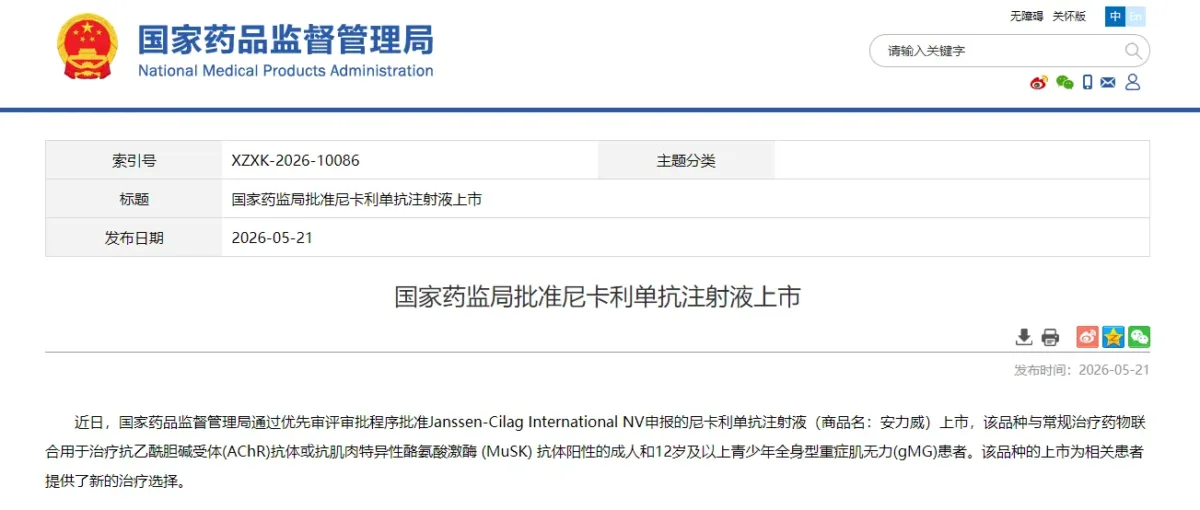
🐱🏍 The approval of nipocalimab approved in China for generalized myasthenia gravis marks another major milestone for China’s rapidly evolving autoimmune disease treatment landscape.
In recent years, FcRn-targeted therapies and C5 complement inhibitors have become some of the most competitive areas in the global biologics market, with China entering a phase of accelerated approvals for innovative gMG therapies.
China pharmaceutical wholesaler DengYueMed has also been closely following the latest developments in generalized myasthenia gravis treatment and FcRn-targeted biologics.
What Is Nipocalimab?
Nipocalimab is a fully human neonatal Fc receptor (FcRn) antagonist designed to reduce pathogenic IgG autoantibodies by blocking the interaction between FcRn and IgG antibodies.
The drug became part of Johnson & Johnson’s autoimmune pipeline after the company acquired Momenta Pharmaceuticals in a $6.5 billion deal in 2020. Today, nipocalimab is widely viewed as one of Johnson & Johnson’s key future assets in autoimmune diseases.
Unlike traditional broad immunosuppressive therapies, nipocalimab offers several important advantages: 👇
- Targeted reduction of pathogenic IgG antibodies
- No broad suppression of the immune system
- Potential for long-term stable disease control
- Coverage for both AChR-positive and MuSK-positive gMG patients
The approval of nipocalimab approved in China for generalized myasthenia gravis further strengthens the growing role of FcRn therapies in autoimmune disease management.
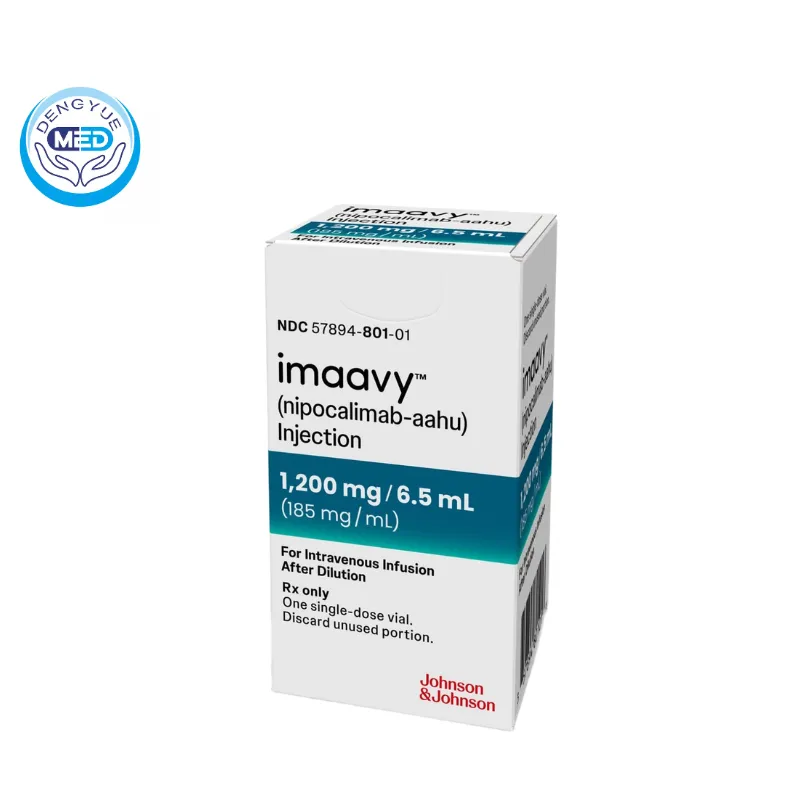
Previously approved FcRn-targeted therapies in China include:
✨ One major differentiating factor of nipocalimab approved in China for generalized myasthenia gravis is its broader patient coverage, including adolescents aged 12 years and older.
Vivacity-MG3 Phase III Results Highlight Long-Term Disease Control
The approval of nipocalimab approved in China for generalized myasthenia gravis was primarily supported by positive data from the global Phase III Vivacity-MG3 clinical trial.
The randomized, double-blind, placebo-controlled study enrolled antibody-positive adult gMG patients with insufficient response to standard of care (SOC) treatment.
Significant Improvement in MG-ADL Scores
During Weeks 22 to 24:
- Nipocalimab + SOC improved MG-ADL scores by 4.70 points
- Placebo + SOC improved scores by 3.25 points
The difference reached statistical significance.
Greater Improvement in QMG Scores
- Nipocalimab group: 4.86-point QMG improvement
- Placebo group: 2.05-point improvement
The data demonstrated meaningful improvements in muscle strength and neuromuscular function.
Rapid Reduction in IgG Levels
The study also showed:
- Significant IgG reduction within two weeks after the first dose
- Total IgG levels reduced by up to approximately 75%
- Stable reduction maintained throughout the 24-week treatment period
These findings suggest that FcRn-targeted therapy is beginning to reshape generalized myasthenia gravis disease management globally.
Adolescents Become an Important Expansion Area
Historically, most biologic therapies for generalized myasthenia gravis focused primarily on adults.
However, nipocalimab approved in China for generalized myasthenia gravis includes:
- Adult patients
- Adolescents aged 12 years and older
This makes it one of the first FcRn antagonists in China approved for a broad antibody-positive adolescent and adult gMG population.
In the ongoing Vibrance-MG pediatric study: 🔽
- Total IgG levels decreased by approximately 69% at Week 24
- MG-ADL and QMG scores improved
- Safety profiles were comparable to adult patients
The pediatric expansion of nipocalimab approved in China for generalized myasthenia gravis may represent an important advancement for younger gMG patients.

Why Has China’s Generalized Myasthenia Gravis Market Accelerated So Quickly?
According to industry estimates:
- Approximately 1.2 million people worldwide live with myasthenia gravis
- Around 220,000 patients are in China
Generalized myasthenia gravis has also been included in China’s first official rare disease catalog.
For many years, gMG treatment relied heavily on:
- Corticosteroids
- Traditional immunosuppressants
- Intravenous immunoglobulin (IVIG)
- Plasma exchange therapies
However, these approaches often involve slow onset, long-term adverse effects, high relapse rates, and unstable disease control.
This unmet clinical need has driven the rapid rise of FcRn therapies and C5 complement inhibitors.
✅ Compared with broad immunosuppressive therapies, these targeted biologics intervene more precisely in the underlying disease mechanisms: 👇
- FcRn therapies reduce pathogenic IgG autoantibodies
- C5 inhibitors block complement-mediated neuromuscular damage
The arrival of nipocalimab approved in China for generalized myasthenia gravis further intensifies competition in China’s innovative biologics market.
Newly Approved Myasthenia Gravis Drugs in China
Over the past two years, China’s generalized myasthenia gravis market has entered a rapid biologics expansion phase, particularly around FcRn and C5 targets.
C5 Complement Inhibitors
Eculizumab
The first globally approved C5 inhibitor for gMG, designed to block complement-mediated damage at the neuromuscular junction.
Ravulizumab
A long-acting upgraded version of eculizumab with lower dosing frequency and improved treatment convenience.
Zilucoplan
Developed by UCB, zilucoplan further expands complement-targeted treatment options for generalized myasthenia gravis through precise inhibition of the complement cascade.
FcRn-Targeted Therapies
Efgartigimod alfa
The world’s first approved FcRn-targeted therapy and a major milestone for FcRn commercialization.
Rozanolixizumab
An FcRn monoclonal antibody developed by UCB that reduces pathogenic IgG antibodies to achieve disease control.
Nipocalimab
The newly approved Johnson & Johnson FcRn antagonist stands out for its focus on long-term stable disease control and broader patient coverage.
The launch of nipocalimab approved in China for generalized myasthenia gravis further intensifies the FcRn race in autoimmune diseases.
Other Innovative Mechanisms
Telitacicept
Developed by RemeGen, telitacicept targets BLyS/APRIL pathways and offers an alternative immunomodulatory approach beyond FcRn and C5.
Inebilizumab
A CD19 monoclonal antibody introduced by Hansoh Pharma that regulates B-cell activity and represents deeper immune-targeted intervention strategies.
Additional pipeline products under regulatory review or clinical development include:
- Batoclimab
- Gorulimab
China’s generalized myasthenia gravis treatment landscape is clearly shifting from traditional immunosuppression toward precision biologic therapies. ✨
Why Is Johnson & Johnson Betting Heavily on Nipocalimab?
Autoimmune diseases remain a major strategic business area for Johnson & Johnson.
However, patent expirations and increasing competition have recently placed pressure on the company’s autoimmune portfolio revenue growth.
As a result, nipocalimab approved in China for generalized myasthenia gravis is widely regarded as one of the company’s next-generation growth drivers.
Beyond gMG, Johnson & Johnson is also exploring nipocalimab in multiple autoimmune diseases, including: 👇
- Sjögren’s syndrome
- Rheumatoid arthritis
- Autoimmune hemolytic anemia
- Chronic inflammatory demyelinating polyneuropathy
- Idiopathic inflammatory myopathies
- Hemolytic disease of the fetus and newborn
If these indications continue to expand successfully, nipocalimab could become one of the leading blockbuster drugs in the global FcRn market.
Conclusion: FcRn Competition Enters a New Phase
With FcRn, C5, CD19, and even CAR-T technologies continuing to advance, the generalized myasthenia gravis market is rapidly evolving.
Future competition will increasingly focus on:
- Long-term stable disease control
- Precision immune modulation
- Broader patient coverage
- Improved treatment convenience
- Expansion into additional autoimmune diseases
The approval of nipocalimab approved in China for generalized myasthenia gravis represents not only a major milestone for Johnson & Johnson, but also another signal that China’s autoimmune biologics market is entering a new era of rapid innovation.
HongKong DengYueMed will continue monitoring the latest developments in rare disease therapies, FcRn-targeted biologics, and the evolving autoimmune disease market worldwide.
FAQ about Nipocalimab Approved in China for Generalized Myasthenia Gravis
What is nipocalimab used for?
Nipocalimab is an FcRn-targeted therapy approved for treating antibody-positive generalized myasthenia gravis (gMG). It is used together with standard therapy in adolescents aged 12 years and older and adult patients.
How does nipocalimab work in generalized myasthenia gravis?
Nipocalimab works by blocking the neonatal Fc receptor (FcRn), helping reduce harmful IgG autoantibodies that drive generalized myasthenia gravis. This targeted mechanism may help improve muscle strength and support long-term disease control.
Why is the approval of nipocalimab important in China?
The approval of nipocalimab in China expands treatment options for patients with generalized myasthenia gravis, especially adolescents and patients with AChR or MuSK antibodies. It also reflects the rapid growth of FcRn-targeted biologics in China’s autoimmune disease market.
What other new biologic drugs are approved for gMG in China?
In addition to nipocalimab, China has approved several innovative gMG biologics, including efgartigimod alfa, rozanolixizumab, eculizumab, ravulizumab, and zilucoplan. These therapies mainly target FcRn or C5 pathways involved in autoimmune disease mechanisms.