China Innovative Drug Approvals April 2026: 6 Approved, 5 by Chinese Companies
April 2026 marked another milestone for China innovative drug approvals April 2026, as the country witnessed a new wave of regulatory clearances across oncology, hematology, nuclear medicine, and inflammatory diseases.
According to public information released by China’s National Medical Products Administration (NMPA), a total of six Class 1 innovative drugs were approved during the month, including five developed by Chinese companies.
🎯 Notably, three domestic innovative therapies received approval on April 30 alone, highlighting the accelerating momentum of China’s pharmaceutical innovation ecosystem.
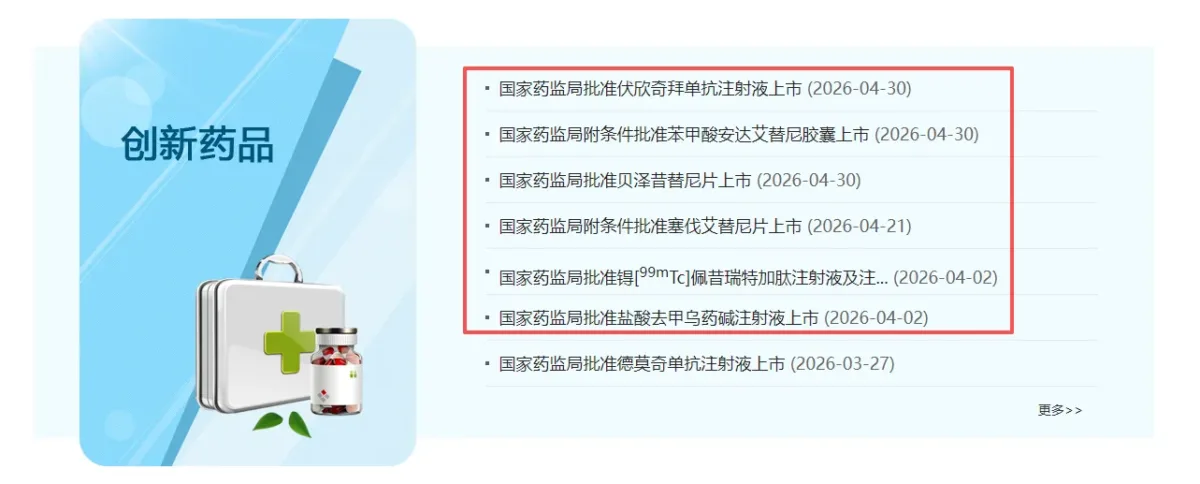
As a China-based pharmaceutical distributor, DengYueMed reviews the core information, mechanisms, and clinical value of these newly approved therapies, highlighting key trends in China innovative drug approvals April 2026.
Higenamine Hydrochloride: Expanding Non-Invasive Diagnosis for Myocardial Ischemia
Approval Date: April 2, 2026
Indication: Pharmacologic stress testing for myocardial perfusion imaging (MPI) to evaluate myocardial ischemia
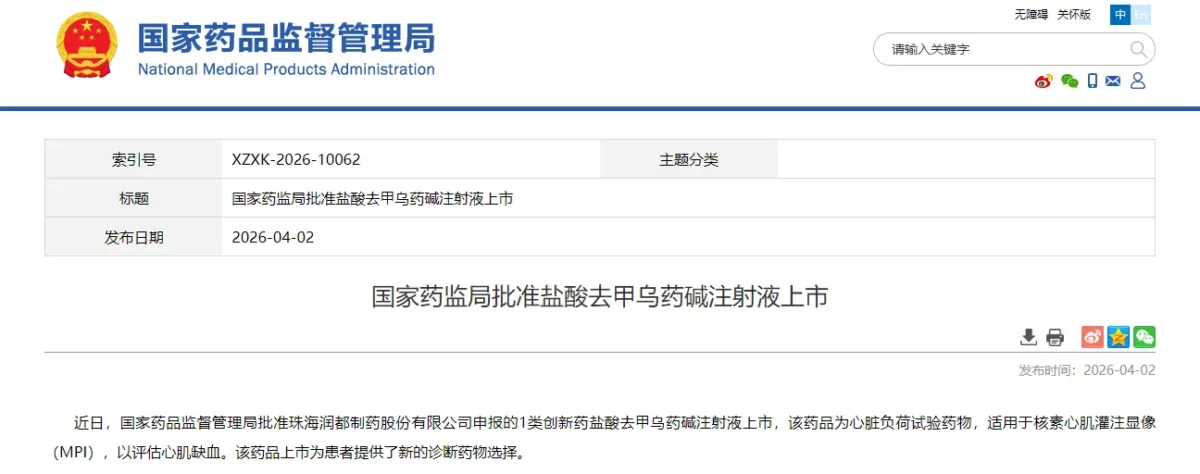
Developed by Zhuhai Rundu Pharmaceutical, Higenamine Hydrochloride Injection became China’s first approved selective β1-adrenergic receptor agonist stress agent for non-invasive assessment of coronary artery disease-related myocardial ischemia.
Although coronary angiography remains the clinical gold standard, its invasive nature limits large-scale screening applications.
Pharmacologic stress myocardial perfusion imaging is particularly important for patients unable to complete exercise stress testing, including elderly patients and individuals with cardiopulmonary dysfunction.
Key Advantages
- Rapid onset and metabolism
- Favorable safety profile with mild adverse reactions
- Fills a major gap in China’s cardiovascular diagnostic drug market
👉 The approval represents an important advancement in non-invasive cardiovascular diagnostics in China.
99mTc-3PRGD2: Bringing SPECT Into Precision Oncology Imaging
Approval Date: April 2, 2026
Indication: SPECT/CT imaging for lymph node metastasis evaluation in suspected lung cancer patients
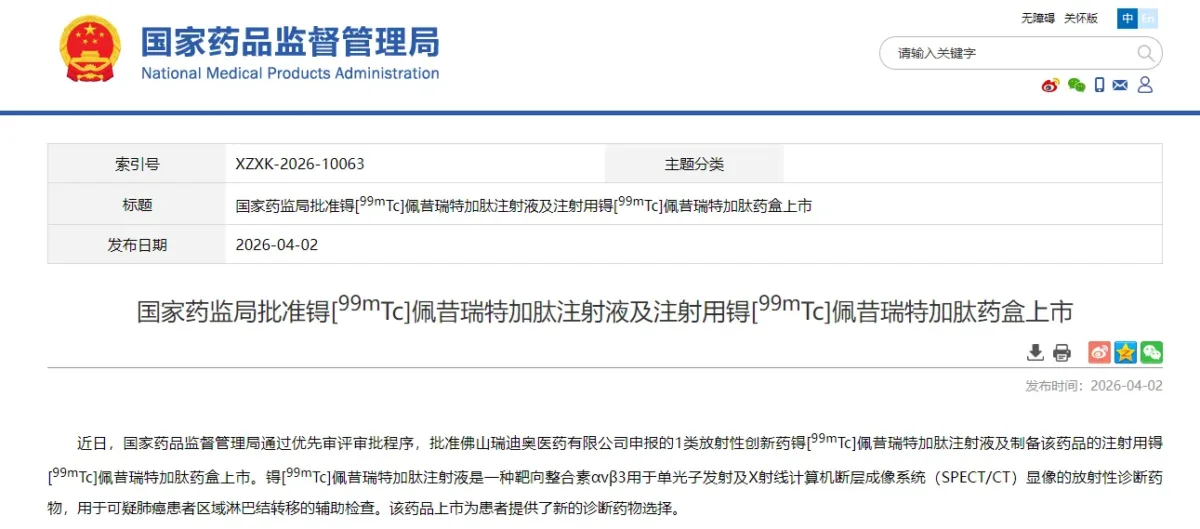
Developed by Foshan Rui Diao Pharmaceutical, 99mTc-3PRGD2 is the world’s first approved radiopharmaceutical targeting integrin αvβ3 for SPECT/CT imaging.
Using an RGD peptide probe, the agent specifically binds to tumor cells and tumor neovasculature, enabling highly precise imaging and expanding the role of nuclear medicine in oncology diagnostics.
Technological Breakthroughs
- Enables SPECT imaging for tumor diagnosis and staging
- Challenges PET’s long-standing dominance in oncology nuclear imaging
- Reduces imaging costs and improves accessibility
👉 The product marks a milestone for China’s independent innovation in nuclear medicine and reflects the growing strength of China innovative drug approvals April 2026 in advanced diagnostics.
Sevabertinib: A New Oral Targeted Therapy for HER2-Mutant NSCLC
Approval Date: April 21, 2026
Indication: HER2-mutant advanced or metastatic non-small cell lung cancer (NSCLC)
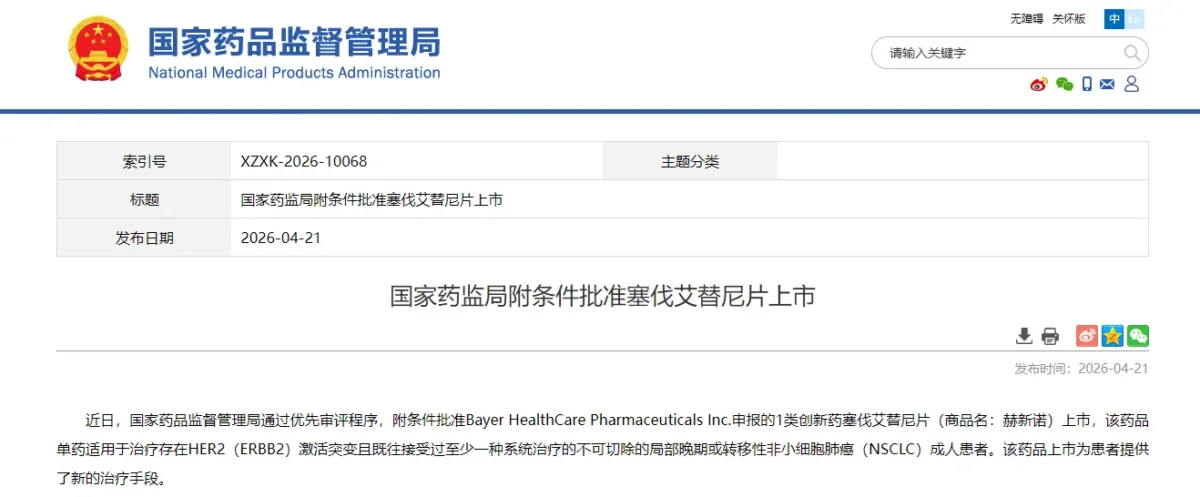
Developed by Bayer, Sevabertinib is an oral tyrosine kinase inhibitor (TKI) designed for patients with HER2-activating mutation-positive advanced or metastatic NSCLC.
Although HER2 mutations account for a relatively small subset of NSCLC cases, treatment options have historically been limited. The approval of Sevabertinib provides a new precision therapy option for this underserved patient population.
Key Features
- Targets HER2 exon 20 insertion mutations
- Oral administration improves patient convenience and adherence
- Previously received accelerated approval from the U.S. FDA in 2025
👉 The therapy further strengthens China’s position in precision oncology innovation and contributes to the broader trend of China innovative drug approvals April 2026.
Bewintinib: Advancing Precision JAK2 Therapy for Myelofibrosis
Approval Date: April 30, 2026
Indication: First-line treatment for myelofibrosis (PMF, PPV-MF, PET-MF)
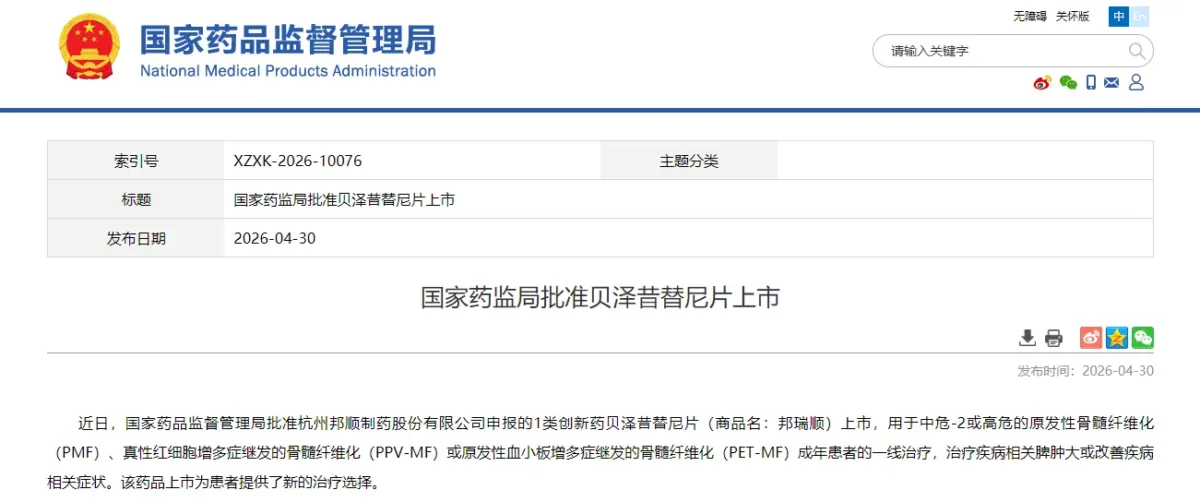
Developed by Hangzhou Bangshun Pharmaceutical, Bewintinib became China’s first approved selective JAK2 single-target inhibitor for first-line treatment of intermediate-2 or high-risk myelofibrosis.
The drug works by inhibiting the JAK2 V617F mutation and blocking the JAK-STAT signaling pathway, thereby improving splenomegaly and disease-related symptoms.
Clinical Significance
- Provides more precise targeted therapy
- May improve the safety profile compared with traditional JAK inhibitors
- Fills a domestic gap in selective JAK2 inhibition
👉 The approval demonstrates the continued evolution of hematologic malignancy treatment within China innovative drug approvals April 2026.
Andamertinib: Addressing EGFR Exon 20 Insertion Mutations in NSCLC
Approval Date: April 30, 2026
Indication: EGFR exon 20 insertion mutation-positive NSCLC
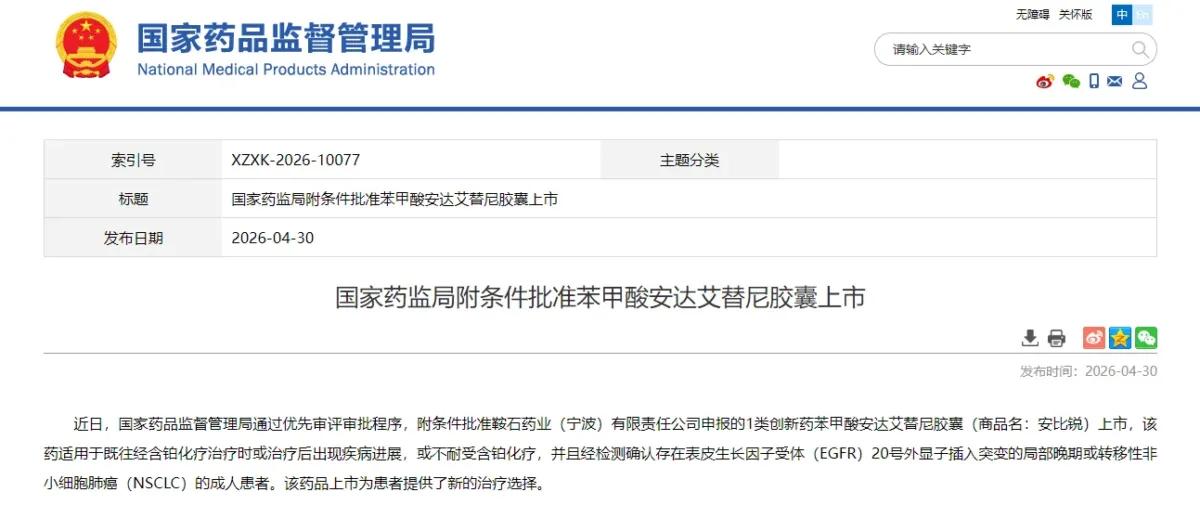
Developed by Avistone Pharmaceuticals, Andamertinib Benzenesulfonate Capsules are highly selective EGFR small-molecule inhibitors targeting difficult-to-treat EGFR exon 20 insertion mutations.
In addition to strong activity against EGFR ex20ins mutations, the drug also demonstrates selectivity against several classic EGFR mutations.
Key Features
- Specifically targets EGFR exon 20 insertion mutations
- Potential blood-brain barrier penetration advantage
- Covers Del19, L858R, and T790M mutations
👉 The approval provides a new treatment option for patients with resistant EGFR-mutant NSCLC and highlights the ongoing expansion of targeted therapies in China innovative drug approvals April 2026.
Firsekibart: Reshaping Inflammation Control in Refractory Gout
Approval Date: April 30, 2026
Indication: Acute attacks of refractory gouty arthritis
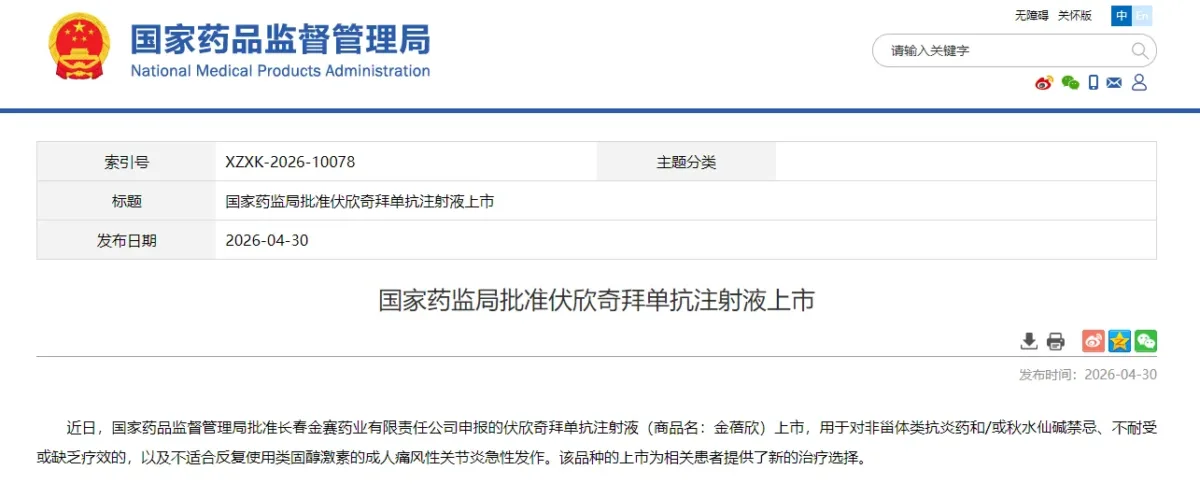
Developed by Changchun GeneScience Pharmaceutical, Firsekibart is a fully human IL-1β monoclonal antibody intended for gout patients who are resistant to or intolerant of conventional therapies.
By blocking the binding of IL-1β to its receptor, the therapy suppresses the inflammatory cascade at its source and provides a more precise biologic approach to inflammation management.
Clinical Value
- Suitable for patients intolerant to NSAIDs or colchicine
- May reduce repeated corticosteroid use
- Potential expansion into broader immune-inflammatory diseases
👉 The therapy could become an important new option for gout inflammation management.
Key Trends in China Innovative Drug Approvals April 2026
1️⃣ Chinese Innovative Drugs Dominated Approvals (5 out of 6)
Chinese biopharmaceutical companies continue transitioning from follow-on innovation toward first-in-class and globally competitive innovation.
2️⃣ Oncology Remains the Core Therapeutic Area
Targets including HER2 and EGFR reflect the continued advancement of precision medicine and molecularly targeted cancer therapies.
3️⃣ Breakthroughs in Nuclear Medicine and Diagnostic Imaging
The combination of RDC technology and SPECT imaging opens new possibilities for oncology diagnostics and disease monitoring.
4️⃣ Increasingly Precise Targeted Mechanisms
The shift from multi-target approaches toward highly selective targets such as JAK2 highlights the growing sophistication of China’s drug development ecosystem.
5️⃣ Continued Expansion in Inflammation and Chronic Disease
The emergence of IL-1β-targeted therapies demonstrates the increasing importance of immune modulation in chronic inflammatory diseases.
Conclusion
The wave of China innovative drug approvals April 2026 reflects not only the growing maturity of China’s pharmaceutical innovation system, but also the simultaneous improvement of regulatory efficiency and R&D capability.
From precision oncology therapies to nuclear medicine diagnostics and inflammatory disease management, breakthroughs across multiple therapeutic areas are rapidly moving into real-world clinical practice.
As China’s innovative drug approval momentum continues into the coming months, the market is expected to deliver more high-quality therapies for global patients and healthcare systems. 🐱🏍
As a participant focused on global pharmaceutical supply and access, DengYueMed continues to monitor the clinical accessibility and commercialization pathways of innovative therapies, helping connect high-quality pharmaceutical resources with diverse international healthcare needs.
FAQ about China Innovative Drug Approvals April 2026
What were the key China innovative drug approvals in April 2026?
China approved six innovative drugs in April 2026, including therapies for lung cancer, myelofibrosis, gouty arthritis, cardiovascular imaging, and nuclear medicine diagnostics. Five of the six products were developed by Chinese companies.
Why are China innovative drug approvals April 2026 important?
The approvals highlight China’s growing strength in biopharmaceutical innovation, particularly in precision oncology, targeted therapy, and advanced diagnostic imaging. Several products also represent first-in-class or first-approved therapies in China.
Which therapeutic areas dominated the April 2026 approvals?
Oncology remained the leading area, with approvals involving HER2-mutant NSCLC, EGFR exon 20 insertion NSCLC, and nuclear imaging for lung cancer. Hematology and inflammatory diseases also saw important advances.
What trends are shaping China’s innovative drug landscape?
China’s pharmaceutical industry is moving toward more precise targeted therapies, selective mechanisms, and globally competitive innovation. Increased regulatory efficiency and expanding clinical accessibility are also accelerating market growth.