
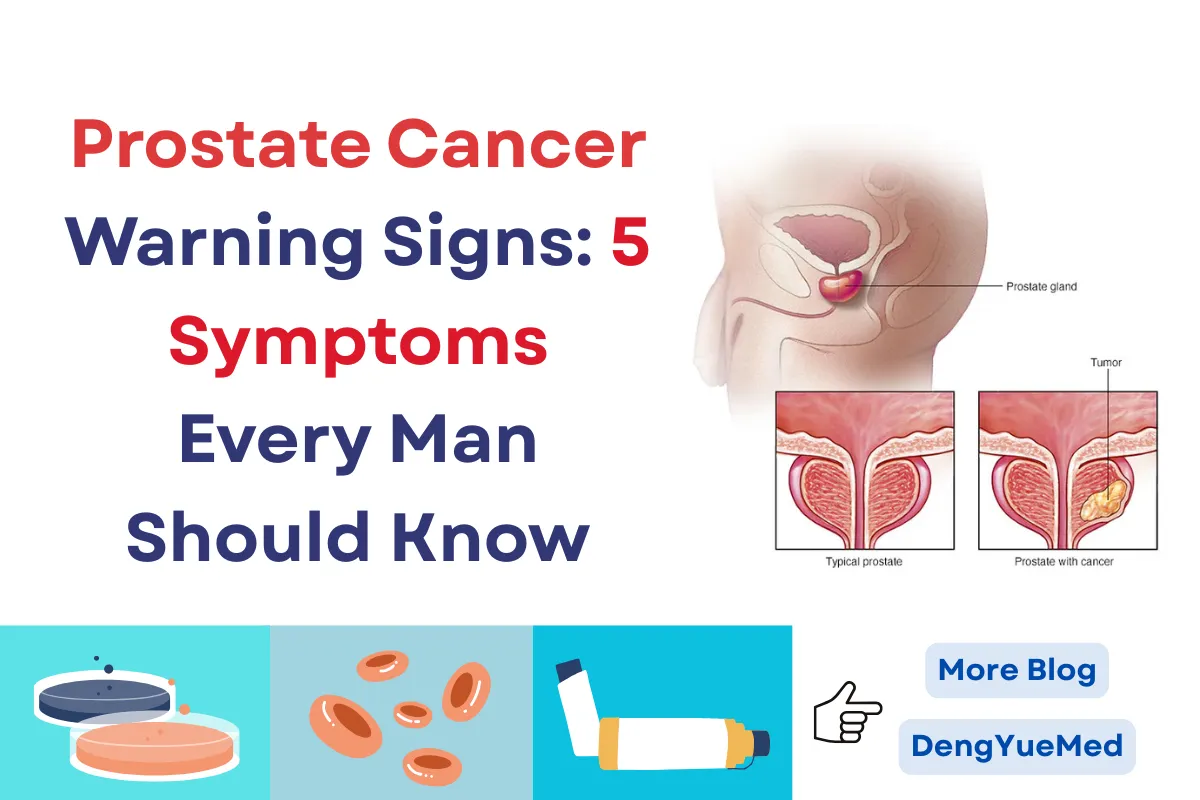
Prostate Cancer Warning Signs: 5 Symptoms Every Man Should Know
Prostate cancer is the second most common cancer in men worldwide; it has become something of a silent epidemic.
What’s particularly concerning is that over 50% of prostate cancer patients in many countries are diagnosed only after the cancer cells have advanced, making prostate cancer treatment much more challenging.
Changes in Urination—Early Signs of Prostate Cancer
When it comes to prostate cancer warning signs, urinary changes are often the first red flags for prostate cancer detection.
Here’s what might indicate prostate cancer involvement:
- Frequent nighttime trips — A classic symptom that many men ignore
- The “slow “flow”—Caused by abnormal growth pressing on the urethra
- The “start-stop struggle”—A possible sign of urinary tract obstruction
- That “gotta go” feeling—Your body’s reaction to prostate enlargement pressure
- The never-empty sensation—A concerning symptom of prostate issues
Medical professionals emphasize that these urinary symptoms might indicate benign conditions rather than a malignant diagnosis, but that’s exactly why you need a professional evaluation.
Blood Where It Shouldn’t Be—Prostate Cancer Red Flags
Seeing blood can be particularly alarming for those suspecting they may have this condition.
This clinical presentation occurs when tumors grow and affect nearby tissues:
- Blood in urine—Potentially indicating disease advancement
- Blood in semen—A direct prostate cancer concern
- Microscopic bleeding—Detectable through prostate cancer tests
Many individuals experiencing these warning signals report intermittent symptoms, but urology experts warn that even occasional bleeding requires thorough medical assessment.
Persistent Pain—Advanced Prostate Cancer Symptoms
When the condition spreads, it often announces itself through distinctive pain patterns. This stage may involve more complex treatment strategies:
- Deep bone aches—Suggesting metastasis
- Nighttime worsening—A characteristic of malignancy-related pain
- Pelvic discomfort—Related to prostate cancer location
This type of disease-related discomfort differs significantly from ordinary muscle pain and often indicates more advanced stages of the illness.
Sexual Changes—Prostate Cancer’s Impact on Intimacy
The condition’s effects on sexual function can be particularly distressing.
- Sudden erectile issues—Potentially linked to nerve damage
- Painful ejaculation—A direct consequence of the condition
- Decreased desire—Sometimes related to prostate cancer progression
These associated complications have multiple potential causes, but when they appear alongside other related warning signs, they demand proper evaluation by a specialist.
Whole-Body Symptoms—Systemic Prostate Cancer Effects
Advanced disease impact can cause body-wide symptoms. At this stage, innovative drugs like Akeega have shown significant efficacy:
- Unexplained weight loss—The body fighting disease invasion
- Persistent fatigue—Energy diverted to abnormal cell growth
- Loss of appetite—A systemic response to prostate cancer presence
These systemic effects of the disease occur because cancerous cells consume enormous energy while disrupting normal metabolic functions.
Prostate Cancer Risk Factors—Are You Vulnerable?
Understanding prostate cancer risks helps in prevention:
- Age—Risk increases dramatically after 50
- Family history—Genetic prostate cancer predisposition
- Ethnicity and health disparities—Elevated incidence among African American men
- Lifestyle—Diet and weight affecting prostate cancer probability
Prostate Cancer Screening—Early Detection Saves Lives
Modern prostate cancer care offers multiple approaches:
- Early-stage treatment—Often highly successful
- Innovative treatments for advanced cases—New options available
- Surgical intervention—For appropriate candidates
- Radiation—Targeted treatments
- Pharmaceutical interventions—Including hormone therapy
Your Prostate Cancer Action Plan
If you’re concerned about potential health issues:
- Don’t ignore potential health signals
- Schedule preventive screening if you have risk factors
- Discuss any health concerns openly with your physician
- Learn about the latest treatment options
- Share health knowledge and support among the men in your life
Remember: Prostate cancer awareness isn’t about fear—it’s about empowerment.
Dengyuemed emphasized that understanding the relevant knowledge, staying vigilant for warning signs, and taking proactive measures could save your life.
New Era of Prostate Cancer Drug Therapy
Bicalutamide capsules, as an established prostate cancer treatment, work by blocking androgen receptors and are commonly used in various stages of prostate cancer.
Meanwhile, Akeega, as a newly approved combination drug, represents a major breakthrough in prostate cancer treatment:
Bicalutamide Capsules: Commonly used for both early and advanced prostate cancer.

Bicalutamide Capsule | Prostate Cancer | HK DengYueMedicine
- Generic Name/Brand Name: Bicalutamide/Casodex
- Indications: Prostate Cancer, Luteinizing Hormone-releasing Hormone (LHRH)
- Dosage Form: Oral tablets
- Specification: Each tablet contains 50 mg of bicalutamide.
Akeega: Specifically for metastatic prostate cancer with certain genetic mutations.

Akeega (Niraparib Abiraterone) – mCRPC | HongKong DengYue Medicine
- Generic Name/Brand Name: Niraparib Abiraterone / Akeega®
- Indications: mCRPC
- Dosage Form: Tablet
- Specification: 100 mg, 500 mg × 60 tablets/box
HKdengyuemed strongly advise that if you’re experiencing any potential concerning symptoms, please consult a urologist or men’s health specialist.
FAQ about Prostate Cancer Warning Signs
What is the first hint of prostate cancer?
Blood in your urine.This is a common sign of prostate cancer.
What is the red flag of prostate cancer?
1. Erectile dysfunction
2. Blood in your urine
3. Blood in your semen
4. Lower back pain
5. Losing weight without trying to
How do I know if my prostate is okay?
You may be asked to give a urine sample for testing.
How do I get my prostate back to normal?
1. Drink less at night. Don’t drink anything for an hour or two before bedtime.
2. Limit caffeine and alcohol.
3. Watch what you eat.
4. Become more active.
5. Stay at a healthy weight.