

How Did Fruquintinib Elunate® Become the “Key Breakthrough” in the Treatment of Advanced Colorectal Cancer?
In advanced colorectal cancer, the exhaustion of first- and second-line standard chemotherapies and targeted therapies often results in a later-line treatment bottleneck, characterized by renewed disease progression and severely limited therapeutic options.
This created an urgent unmet need for an effective, well-tolerated oral anti-angiogenic therapy in the later-line setting of metastatic colorectal cancer.
Furthermore, prior to the availability of fruquintinib, Chinese patients entering third-line treatment typically had a median overall survival of only 6–7 months, with a notable lack of effective and convenient oral therapies.
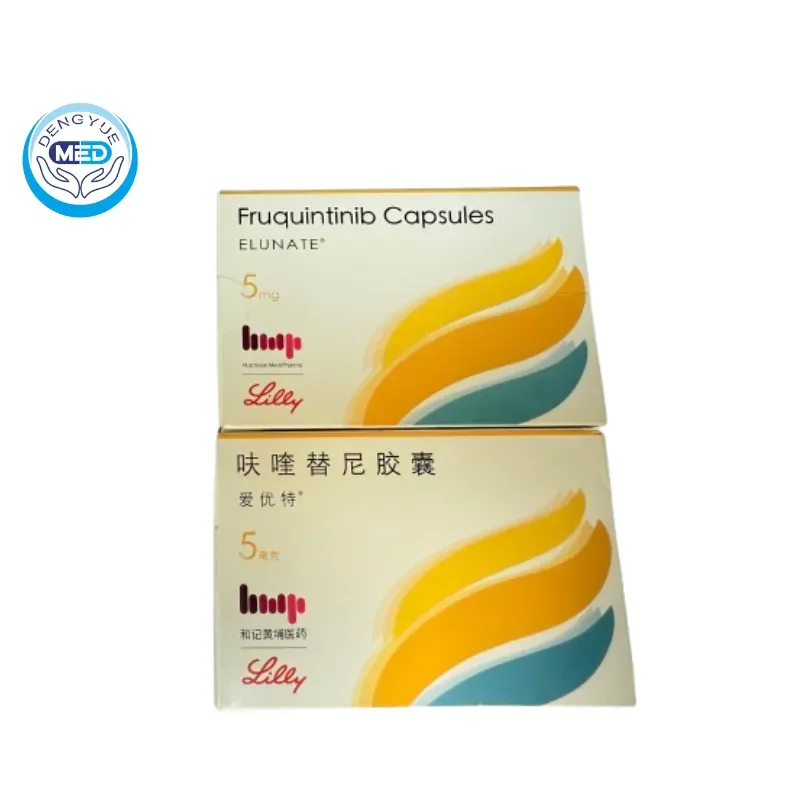
👉 In 2018, Fruquintinib Elunate was approved in China, effectively addressing this later-line treatment bottleneck and delivering a clear survival benefit for domestic patients.
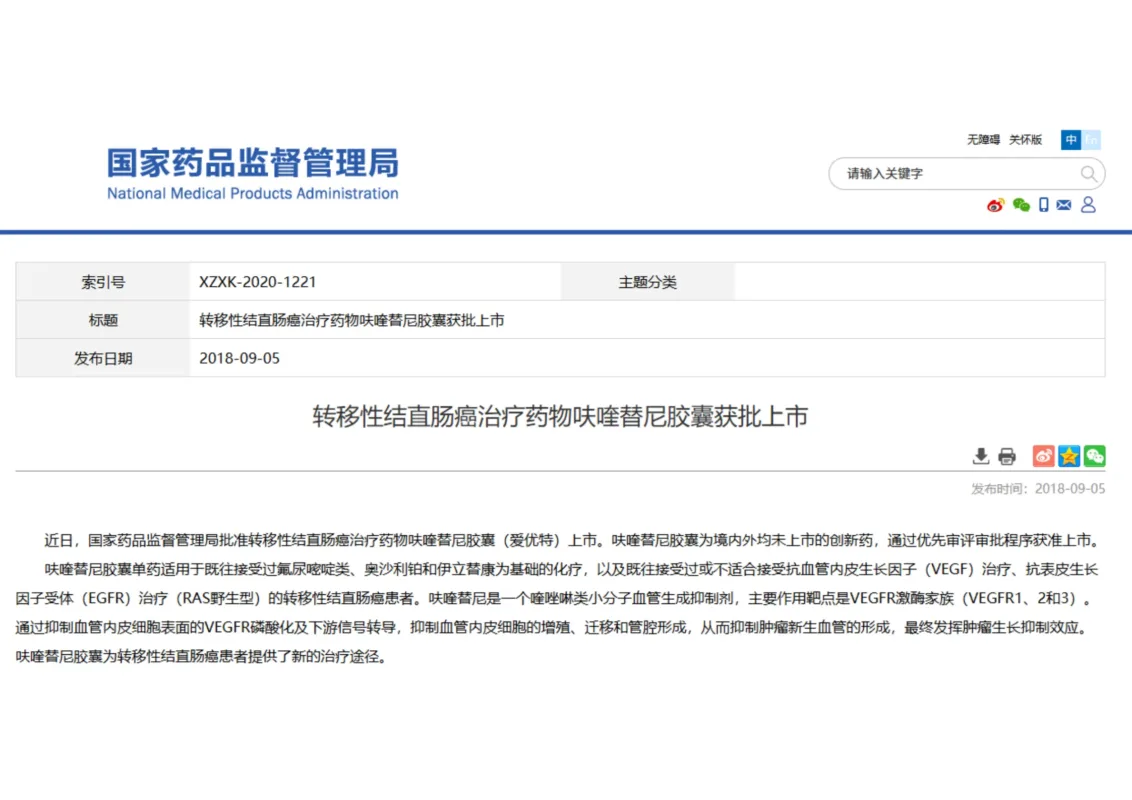
👉 Five years later, it achieved a historic milestone: in November 2023, based on data from global phase III clinical trials, fruquintinib—under the name Fruzaqla—received approval from the U.S. Food and Drug Administration (FDA), becoming the first original small-molecule anticancer drug developed in China to successfully enter the global market.
This achievement reflects not only the drug’s demonstrated clinical efficacy but also the maturation of China’s pharmaceutical ecosystem.
From research and development to clinical application and distribution, each stage has been supported by specialized partners such as DengYue Medicine, working collectively to bridge the “last mile” in delivering innovative therapies to patients.
🤔 From breaking through locally to earning global validation, what enabled fruquintinib to emerge as the “key solution” to the later-line treatment impasse in advanced colorectal cancer?
This article delves into the scientific rationale, confirmatory clinical evidence, and real-world clinical value behind its success.
A Precision-Guided “Vascular Sniper”—The Mechanism of Action of Fruquintinib (Elunate)
Core Targets: Highly Selective VEGFR Inhibition—A “China-Designed” Strategy
Fruquintinib Elunate is not a broad-spectrum “multi-tasker,” but rather a well-trained precision sniper, as well as an oral, highly selective small-molecule VEGFR inhibitor developed for the treatment of advanced colorectal cancer.
🎯 Its core mechanism of action lies in the highly selective inhibition of vascular endothelial growth factor receptors (VEGFRs)—specifically VEGFR-1, VEGFR-2, and VEGFR-3, which are central drivers of tumor angiogenesis in advanced and metastatic colorectal cancer.
The sophistication of this design philosophy can be summarized as “concentrated firepower.”
✨ Through precise molecular structure optimization, fruquintinib is designed to focus on the most critical angiogenic signaling pathway driving tumor progression.
Preclinical studies demonstrate that its inhibitory potency and selectivity against the VEGFR kinase family are superior to those of comparable agents.
In cellular assays, fruquintinib achieves nanomolar-level half-maximal inhibitory concentration (IC₅₀) against VEGFR-2, while showing minimal off-target kinase inhibition.
This high degree of selectivity allows fruquintinib to deliver equivalent—or even superior—anti-angiogenic efficacy while significantly reducing damage to normal tissues caused by off-target effects.
Structurally, this provides a solid foundation for the favorable safety and tolerability profile observed in patients with fruquintinib colorectal cancer in later-line clinical settings.
Mechanism Visualized: How Does Fruquintinib “Starve” the Tumor?
Tumor growth and metastasis can be likened to a rapidly expanding “rebellious city” that must continuously construct new supply lines—namely, newly formed blood vessels—to secure oxygen and nutrients.
👉 The VEGF signaling pathway functions as the central command system orchestrating this vascular expansion.
In this context, fruquintinib (Elunate) acts like a communications disruption specialist infiltrating the command center.
At the molecular level, fruquintinib precisely binds to the ATP-binding pocket within the intracellular domain of VEGFRs, competitively blocking ATP access.
This action directly suppresses VEGFR tyrosine kinase phosphorylation and prevents activation of downstream pro-angiogenic signaling cascades, including PLC-γ, Ras–MAPK, and PI3K–Akt pathways.
The biological consequences are multi-layered.
- On one hand, the proliferation, migration, and survival of vascular endothelial cells are directly inhibited.
- On the other, abnormal vascular permeability and tumor-associated vessel leakage are reduced.
- As a result, the dense yet chaotic vascular network characteristic of metastatic colorectal cancer fails to form effectively, pushing the tumor microenvironment into a state of nutrient and oxygen deprivation.
Under these hypoxic and nutrient-restricted conditions, tumor cell growth is markedly suppressed, and in certain regions, programmed cell death or tumor regression may occur.
The scientific value of this fruquintinib mechanism of action lies in its precision.
Unlike conventional chemotherapy, which exerts indiscriminate cytotoxic effects and leads to systemic toxicity, fruquintinib selectively interferes with a biological process essential to tumor survival.
✅ This targeted approach enables more refined disease control while better preserving quality of life, offering a meaningful therapeutic option for patients with advanced colorectal cancer and metastatic colorectal cancer in later-line treatment settings.
The mechanism of action of fruquintinib reflects the evolution of modern oncology from indiscriminate “carpet bombing” to precision-guided intervention.
Rather than relying solely on the direct cytotoxic destruction of tumor cells, fruquintinib targets a fundamental vulnerability of cancer growth by selectively inhibiting VEGFR, a key driver of tumor angiogenesis, thereby dismantling the biological foundation that sustains tumor survival.
This “siege-and-starvation” therapeutic strategy demonstrates distinct clinical advantages.
By delivering meaningful antitumor activity while maximally preserving normal tissue function, fruquintinib achieves a carefully calibrated balance between efficacy and safety.
It is precisely this optimization of the therapeutic window—finding the optimal equilibrium between treatment benefit and tolerability—that has enabled fruquintinib to emerge as a key solution for later-line treatment in advanced colorectal cancer.
Confirmed Survival Evidence —Key Clinical Studies of Fruquintinib (Elunate)
🔬 Any innovative drug must ultimately prove its value through rigorous clinical investigation.
The journey of fruquintinib (Elunate®) from the laboratory to clinical practice, and from China to the global stage, has been underpinned by two landmark global, multicenter phase III clinical trials—FRESCO and FRESCO-2.
👉 These studies not only provided definitive answers regarding efficacy and safety but also outlined a clear scientific pathway through which a China-developed original drug gained progressive recognition from regulatory authorities and clinical experts worldwide.
The FRESCO Study: A Milestone Establishing Efficacy in Chinese Patients
The approval of fruquintinib in China was fundamentally based on the FRESCO trial, a randomized, double-blind, placebo-controlled phase III study.
The results were published in the Journal of the American Medical Association (JAMA), lending decisive credibility to its clinical findings.
FRESCO enrolled 416 Chinese patients with metastatic colorectal cancer who had experienced disease progression after at least two prior lines of standard chemotherapy.
Patients were randomly assigned in a 2:1 ratio to receive either fruquintinib (n = 278) or placebo (n = 138). All patients received best supportive care, ensuring methodological rigor and comparability between treatment arms.
Key Efficacy Outcomes
- Overall Survival (OS):
Median OS reached 9.3 months in the fruquintinib group, compared with 6.6 months in the placebo group. This corresponded to a 35% reduction in the risk of death and an absolute survival gain of 2.7 months for patients with advanced colorectal cancer. - Progression-Free Survival (PFS):
The difference in PFS was even more pronounced. Median PFS was 3.7 months with fruquintinib versus 1.8 months with placebo. Fruquintinib reduced the risk of disease progression or death by 74%, a particularly notable outcome in later-line treatment for metastatic colorectal cancer. - Tumor Response:
The objective response rate (ORR) in the fruquintinib group was 4.7%, compared with 0% in the placebo group. More importantly, the disease control rate (DCR) reached 62.2%, significantly higher than the 12.3% observed with placebo. This indicates that more than 60% of patients derived tangible clinical benefit from fruquintinib colorectal cancer therapy.
Regarding safety, fruquintinib side effects were predictable and manageable.
The most commonly reported adverse events included hypertension, hand–foot skin reaction, and proteinuria.
With standardized monitoring and appropriate management, the majority of patients were able to tolerate treatment and continue therapy, reflecting a favorable balance between efficacy and safety.
These results established fruquintinib as a clinically meaningful later-line therapy for metastatic colorectal cancer, with a clear survival advantage over placebo.
The FRESCO-2 Study: A Gateway to Global Recognition
To further evaluate the efficacy and safety of fruquintinib on a global scale, investigators conducted FRESCO-2, a multinational, multicenter phase III trial.
This study enrolled 691 patients with metastatic colorectal cancer who had failed standard therapies across regions, including the United States, Europe, Japan, and Australia.
Results from FRESCO-2 demonstrated that fruquintinib once again delivered consistent and significant survival benefits in a global patient population.
Compared with placebo, fruquintinib significantly prolonged both overall survival and progression-free survival, with outcomes highly consistent with those observed in the original FRESCO study conducted in China.
Based on the robust evidence generated by FRESCO-2, the U.S. Food and Drug Administration (FDA) granted full approval to fruquintinib in November 2023.
This approval not only confirmed the drug’s efficacy and safety, but also represented a strong endorsement of the quality, integrity, and international credibility of Chinese clinical trial data, signaling that China-developed innovative medicines have reached the highest global regulatory standards.
- The FRESCO study established the efficacy of fruquintinib in the Chinese patient population, providing a confirmatory treatment option for domestic patients.
- The FRESCO-2 study extended this validation to a global scale, demonstrating the consistent benefit of fruquintinib across different healthcare settings and diverse ethnic populations.
✨ Together, these two trials form a comprehensive evidence chain supporting fruquintinib’s transition from China to the global stage, laying a solid foundation for its role as a standard later-line treatment for advanced colorectal cancer worldwide.
Optimizing Later-Line Treatment — The Differentiated Advantages of Fruquintinib (Elunate)
🏥 In the later-line treatment of advanced colorectal cancer, clinicians face an increasingly complex decision-making landscape.
When standard treatment options have been exhausted, the key question is no longer efficacy alone, but how to achieve the optimal balance between survival benefit and quality of life.
Any new therapy in this setting must demonstrate not only meaningful clinical benefit, but also advantages in toxicity management, treatment convenience, and economic accessibility.
It is within this unmet clinical need that Fruquintinib (Elunate) has progressively established its role, supported by robust clinical evidence and real-world practice.
Comparative Efficacy: Fruquintinib Versus Traditional Later-Line Options
In the later-line treatment of metastatic colorectal cancer, fruquintinib has demonstrated its differentiated value through comparisons with established therapeutic options.
- Comparison with Regorafenib
From a mechanistic perspective, regorafenib is a multikinase inhibitor with a broad target profile.
However, when comparing survival outcomes from pivotal phase III trials, fruquintinib shows a more pronounced clinical benefit.
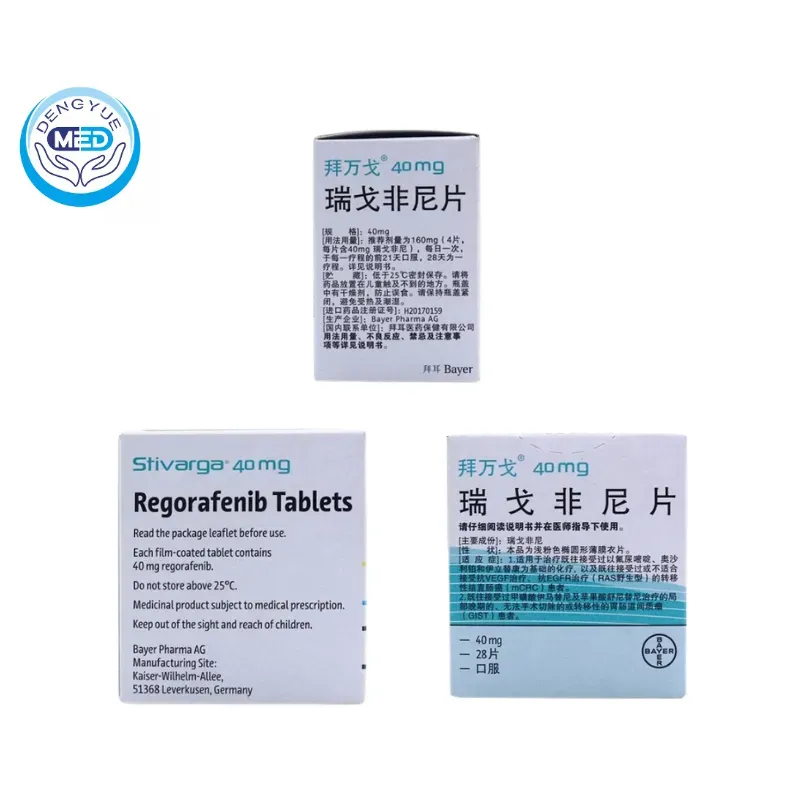
In the CORRECT trial, regorafenib improved median overall survival from 5.0 to 6.4 months, yielding a 1.4-month benefit. In contrast, in the FRESCO study, fruquintinib extended median overall survival from 6.6 to 9.3 months, translating into a 2.7-month survival gain.
Objective response rates further distinguish the two agents: fruquintinib achieved an ORR of 4.7%, compared with approximately 1.0% for regorafenib.
Importantly, real-world clinical experience consistently suggests that fruquintinib side effects are generally more manageable, particularly with regard to hand–foot skin reaction and fatigue, adverse events that directly affect patients’ daily functioning and quality of life.
- Comparison with TAS-102
TAS-102 is a cytotoxic chemotherapy with a mechanism of action fundamentally different from that of targeted agents.

In the RECOURSE trial, TAS-102 improved median overall survival from 5.3 to 7.1 months, representing a 1.8-month benefit—clinically meaningful, yet still less than the survival gain observed with fruquintinib.
The safety profiles of the two agents also differ substantially. 🔻
- TAS-102 is primarily associated with bone marrow suppression, necessitating close hematologic monitoring.
- Fruquintinib’s adverse events are mainly related to its mechanism of action, including hypertension, proteinuria, and hand–foot skin reaction, all of which follow well-established and standardized management strategies in clinical practice.
❗ It is important to note that these therapies are not mutually exclusive alternatives. Rather, they expand the therapeutic toolbox available to clinicians.
In real-world treatment sequencing, individualized decisions can be made based on patient characteristics, prior treatment response, comorbidities, and tolerance to specific toxicities.
The availability of agents with distinct mechanisms provides valuable flexibility in personalized care for fruquintinib colorectal cancer treatment strategies.
Guidelines for Standardized Use — How to Apply Fruquintinib (Elunate) Effectively
The clinical value of any highly effective therapy can only be fully realized through standardized and precise application.
💊 As a key later-line treatment option for advanced colorectal cancer, Fruquintinib (Elunate) must be used according to well-defined clinical principles to translate its proven efficacy into meaningful survival benefits.
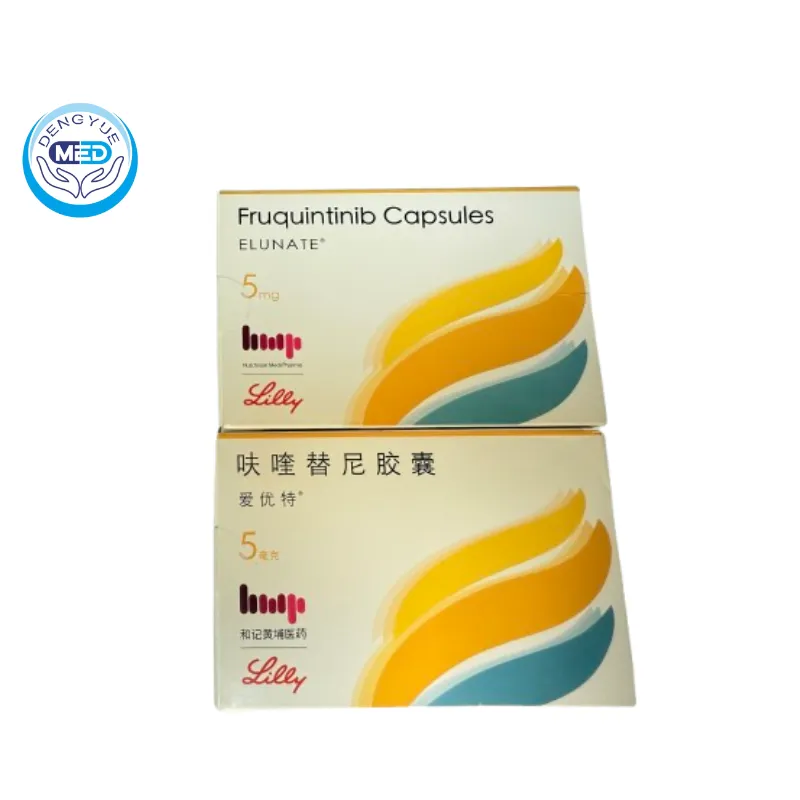
Fruquintinib Capsules | Colorectal Cancer | HK DengYue
- Generic Name/Brand Name: Fruquintinib / ELUNATE®
- Indications: Treatment of adult patients with metastatic colorectal cancer (mCRC) who have been previously treated with standard therapies.
- Dosage Form: Oral capsules
- Specification: 1 mg and 5 mg capsules
Appropriate use not only determines treatment outcomes, but also directly affects patient safety and quality of life.
This chapter outlines the practical clinical pathway for fruquintinib, providing clear guidance for both clinicians and patients.
Precise Positioning: Defining the Target Population and Optimal Timing
According to approval by the National Medical Products Administration (NMPA) of China, fruquintinib is indicated for patients with metastatic colorectal cancer who have previously received fluoropyrimidine-, oxaliplatin-, and irinotecan-based chemotherapy, and who have either received or are not suitable for anti-VEGF therapy, as well as anti-EGFR therapy in patients with RAS wild-type tumors.
Key Points for Clinical Practice:
- Line of Therapy
Fruquintinib should be positioned strictly as a third-line or later treatment. Patients are required to have experienced disease progression after at least two prior lines of standard systemic therapy. - Molecular Testing–Guided Selection
For patients with RAS wild-type colorectal cancer, prior exposure to anti-EGFR therapy should be confirmed, or documented clinical reasons should exist indicating that anti-EGFR treatment was not appropriate. - Timing of Initiation
Fruquintinib should be initiated promptly upon confirmed disease progression. Excessive delays may lead to deterioration in performance status, potentially limiting the patient’s ability to benefit from therapy.
👉 By applying fruquintinib at the appropriate stage and in the right patient population, clinicians can maximize the therapeutic window defined by its targeted mechanism of action, while maintaining control over fruquintinib side effects.
This precision-based approach supports optimal outcomes for patients with fruquintinib colorectal cancer, particularly in the challenging setting of advanced and metastatic disease.
Conclusion: Beyond the Breakthrough, a Promising Future Ahead
As a “key breakthrough” in the treatment of advanced colorectal cancer, Fruquintinib has already reshaped the landscape of later-line therapy in China and across the globe.
Yet in medicine, progress never stands still. Ongoing research is now exploring several important directions:
- Combination strategies
💊➕🏥 Investigations are underway into combining fruquintinib with immunotherapy and other targeted agents, aiming to achieve synergistic effects in which “1 + 1 > 2.”
- Earlier-line application
🔬 Researchers are evaluating whether fruquintinib can deliver meaningful benefits when introduced at earlier stages of treatment.
- Expanded indications
🧫 Clinical trials are actively assessing the potential role of fruquintinib in other solid tumors, including gastric cancer and lung cancer.
For patients, the availability of fruquintinib means that even in the most challenging stages of disease, effective, evidence-based options remain within reach.
✨ Along the journey against cancer, this “key” not only opens the door to extended survival but also unlocks a future in which Chinese innovation contributes to the health and well-being of patients worldwide.
As a China pharmacy wholesale supplier—Dengyue will continue to closely follow the development and clinical progress of fruquintinib.
FAQ about Fruquintinib Elunate
Is fruquintinib FDA approved?
On November 8, 2023, the FDA approved fruquintinib (brand name Fruzaqla) for adult patients with metastatic colorectal cancer.
What is the success rate of fruquintinib?
The disease control rate was 55.5% for fruquintinib versus 16.1% for placebo.
What class of drug is fruquintinib?
Fruquintinib is in a class of medications called kinase inhibitors.
What are the side effects of fruquintinib?
Hypertension.
Palmar-plantar erythrodysesthesia (hand-foot skin reactions)
Proteinuria.
Dysphonia.
Abdominal pain.
Diarrhea.
Asthenia.