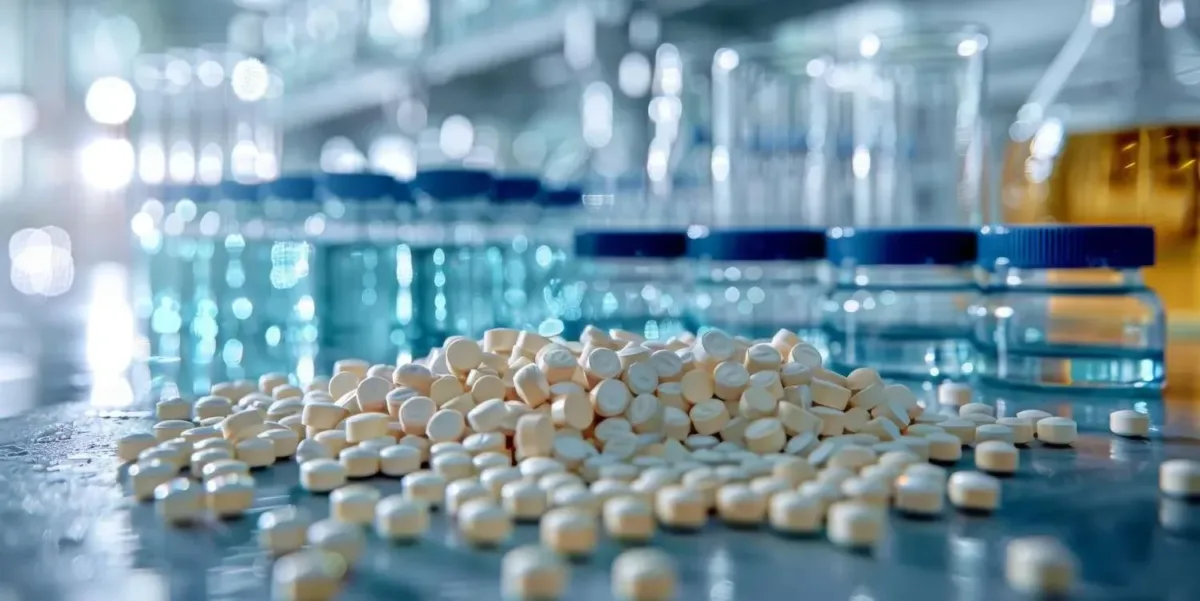
pharmaceutical raw materials are gaining global attention
As global attention remains on semiconductor, energy, and rare earth supply chains, another key sector linked to public health is gaining scrutiny—Active Pharmaceutical Ingredients (API) and Key Starting Materials (KSM) supply chains.
Over the past two decades, China pharmaceutical raw materials has evolved into a foundational pillar of the global pharmaceutical ecosystem.
🌏 HongKong DengYue Medicine continues to track global demand shifts for pharmaceutical raw materials in China, along with rising international focus on supply stability, quality compliance, and long-term partnerships.
China Pharmaceutical Raw Materials in the Global Supply Chain
According to publicly available data from China Customs, IQVIA, FDA reports, and CEP (European Pharmacopoeia suitability certification), China has become one of the world’s largest producers and exporters of APIs.
The key advantages of China’s pharmaceutical API industry are mainly concentrated in the following areas: 🔽
Antibiotics and Fermentation-Based APIs
China has a strong production advantage in fermentation-based antibiotics such as penicillins, cephalosporins, and macrolides.
Studies from the U.S. FDA and industry analysts have indicated that a significant portion of antibiotic APIs consumed in the United States rely on overseas supply chains, with China being one of the primary sources.
While India is a major generic drug exporter, it still depends heavily on imports of APIs and intermediates.
Within the global anti-infective supply chain, it plays not only a manufacturing role but also a key upstream intermediate production role.
Antipyretic and Analgesic Bulk APIs
Common global medicines such as ibuprofen and paracetamol rely heavily on supply chains linked to China pharmaceutical raw materials.
During the pandemic, many countries experienced shortages of basic fever-reducing medications. China’s production capacity in both APIs and finished formulations helped stabilize global supply pressure.
Vitamins and Nutritional APIs
China holds a leading global position in the production of vitamin C, vitamin B-complex, and vitamin E.
Thanks to advanced fermentation processes, large-scale manufacturing capabilities, and a complete supporting chemical infrastructure, Chinese companies have maintained strong long-term competitiveness in the global vitamin market.
Heparin and Biologically Derived Products
China is also one of the most important global suppliers of heparin APIs.
Heparin is widely used in surgery, dialysis, and cardiovascular treatments and represents a critical baseline drug in global clinical systems.
Due to the involvement of biological extraction, processing, and large-scale purification across the industrial chain, the industry has relatively high entry barriers.
GLP-1 Peptide APIs
Compared to Western markets, China demonstrates strong advantages in cost control and industrial support systems for peptide manufacturing.
In large-scale commercial production, process scale-up, and customized CDMO services, China pharmaceutical raw materials in the peptide sector has developed rapidly in recent years.
👉 For more information on the distribution of China’s peptide API companies, industry capabilities, and market landscape, you may refer to the article:
Why China’s Pharmaceutical Raw Materials Industry Is Difficult to Replace
In recent years, countries such as the United States, Europe, and Japan have been actively promoting pharmaceutical supply chain localization to reduce dependency on single-source regions.
However, in reality, restructuring the global pharmaceutical supply chain is not easy.
Integrated Industrial Chain and Cost Advantage
China has one of the world’s most complete chemical industrial systems, spanning basic chemicals, fine chemicals, intermediates, APIs, and finished dosage forms.
This level of integration significantly reduces production costs, logistics expenses, and manufacturing lead times for China pharmaceutical raw materials.
Industry consensus suggests that in most bulk API categories, China still maintains clear cost advantages over Western countries.
Large-Scale Manufacturing Capacity
China’s API manufacturers are not only numerous but also capable of large-scale, high-volume production.
Global pharmaceutical companies are often more concerned with supply stability, delivery timelines, and production scale than pricing alone.
For large global pharmaceutical companies, there are only a few countries capable of consistently supplying hundreds or even thousands of tons of active pharmaceutical ingredients.
Mature International Quality Certification System
A large number of Chinese API manufacturers have obtained certifications from the U.S. FDA, EU EDQM, and Japan PMDA.
Many companies are already integrated into the procurement systems of multinational pharmaceutical firms, meaning China pharmaceutical raw materials is no longer only a low-cost manufacturing base but also an active participant in global regulatory frameworks.
China’s Transition from Manufacturing Hub to Global Pharmaceutical R&D Partner
Historically, China’s pharmaceutical industry was often associated with generic production and cost-efficient manufacturing.
However, in recent years, the rapid development of the CDMO (Contract Development and Manufacturing Organization) sector has reshaped this perception.
Companies such as WuXi AppTec, Asymchem, Porton Pharma Solutions, and Jiuzhou Pharma are now deeply involved in global innovative drug development, process optimization, and commercial-scale manufacturing.
In this transformation, China pharmaceutical raw materials is evolving from a traditional manufacturing base into a global pharmaceutical innovation collaboration platform.
Why Global Attention on Pharmaceutical Supply Chain Security Is Increasing
After the COVID-19 pandemic, global attention to pharmaceutical supply chain resilience has increased significantly.
The United States, Europe, and India have all proposed strategies to strengthen domestic API production capacity.
Governments have repeatedly emphasized that supply chain security for critical medicines is not only an economic issue but also a public health and national security concern.
The reason is that disruptions in the supply of essential medicines are not only a commercial issue but can also affect the functioning of public health systems. For example: 👇
Infection control in hospitals (antibiotics shortages)
Basic healthcare services (analgesic shortages)
Critical care and surgical operations (heparin shortages)
The Hidden Role of China’s Pharmaceutical Raw Materials in Global Public Health
Despite ongoing diversification efforts, the role of China pharmaceutical raw materials in global public health systems remains significant.
China’s large-scale manufacturing capacity has enabled the global supply of affordable essential medicines, reducing healthcare costs in both developing and developed countries.
During the pandemic, China maintained stable exports of APIs, intermediates, and medical supplies, further demonstrating the resilience and importance of China pharmaceutical raw materials in global healthcare infrastructure.
From Global Factory to High-End Pharmaceutical Upgrading
Today, China’s pharmaceutical industry is undergoing structural transformation.
The development direction of China pharmaceutical raw materials is expanding beyond bulk APIs into:
High-value specialty APIs
Patent drug intermediates
Peptides and nucleic acid therapeutics
Biologic CDMO services
High-end finished dosage exports
Innovative drug R&D collaborations
As global pharmaceutical dynamics evolve, China is transitioning from a supply chain participant into a key organizer and innovation partner in the global pharmaceutical ecosystem.
Conclusion
The scale, manufacturing capability, and integrated industrial advantages of China pharmaceutical raw materials have already deeply influenced the global pharmaceutical market.
In the future, while global supply chains may become more diversified, China will remain one of the most critical players in the global API landscape.
✨ For international pharmaceutical companies, distributors, and healthcare institutions, China is not only a manufacturing hub but also a core component of global pharmaceutical supply stability.
Pharmaceutical raw materials are the essential substances used to manufacture medicines, mainly including active pharmaceutical ingredients (APIs) and key starting materials (KSMs). They determine the therapeutic effect of a drug.
Who are the China Pharmaceutical Raw Material Suppliers?
China Pharmaceutical Raw Material Suppliers include API manufacturers, chemical producers, and international distributors. One example is DengYueMed, a China pharmaceutical and active pharmaceutical ingredients wholesaler involved in global sourcing and supply.
Why is China important in the global API supply chain?
China plays a major role due to its large-scale manufacturing capacity and integrated chemical industry. It supplies a significant share of global APIs and intermediates across multiple therapeutic areas. This makes it a key part of the international pharmaceutical supply chain.
Which areas are China’s pharmaceutical raw materials strongest in?
China is particularly strong in antibiotics, vitamins, analgesics, heparin, and peptide APIs. These segments benefit from mature production systems and cost advantages. Many products are widely used in global healthcare systems.