

Abbisko’s Pimicotinib for Tenosynovial Giant Cell Tumor (TGCT): China’s First Approved Class-1 CSF-1R Inhibitor
Abbisko’s Pimicotinib for tenosynovial giant cell tumor (TGCT) is an oral CSF-1R inhibitor developed by Abbisko Therapeutics for the treatment of symptomatic or unresectable TGCT. It became China’s first approved Class-1 CSF-1R inhibitor in 2025.
In the field of tenosynovial giant cell tumor (TGCT), a rare but persistent disease that impairs joint function, long-term systemic treatment options are limited.
Abbisko’s Pimicotinib for tenosynovial giant cell tumor is the first Class 1 chemical innovative drug approved in China for TGCT, making China one of the major markets to achieve regulatory approval and clinical accessibility for this therapy.

As innovative therapies accelerate into global collaborative development and supply networks, DengYueMed continues to explore efficient and compliant pathways to bring breakthrough drugs to patients worldwide.
Quick Facts About Pimicotinib (ABSK021)
| Item | Information |
|---|---|
| Generic name | Pimicotinib |
| Development code | ABSK021 |
| Developer | Abbisko Therapeutics |
| Drug class | Highly selective CSF-1R inhibitor |
| Route of administration | Oral |
| Indication | Tenosynovial giant cell tumor (TGCT) |
| First approval | China (2025) |
| Global partner | Merck KGaA |
| Pivotal study | Phase III MANEUVER |
What Is Tenosynovial Giant Cell Tumor (TGCT)?
Tenosynovial giant cell tumor (TGCT) is a rare tumor arising from the synovium, tendon sheath, and bursae surrounding joints. Although generally considered benign, it can progressively damage joints and significantly affect quality of life.
TGCT is classified into two main subtypes: 🔽
- Localized TGCT (L-TGCT): Usually confined to a single area and associated with a lower recurrence risk.
- Diffuse TGCT (D-TGCT): More aggressive, involving extensive synovial tissue and carrying a substantially higher risk of recurrence.
Most patients are diagnosed between 35 and 50 years of age. Common symptoms include joint pain, swelling, stiffness, limited range of motion, and recurrent joint effusion.
Surgery remains the standard first-line treatment. However, complete resection is often difficult in diffuse disease, and recurrence rates may reach 20%–50%, creating a need for effective systemic therapies.

Why Abbisko’s Pimicotinib for Tenosynovial Giant Cell Tumor Matters
The development of Abbisko’s Pimicotinib for tenosynovial giant cell tumor is based on advances in the understanding of TGCT biology.
Most TGCT cases are driven by abnormal activation of the colony-stimulating factor 1 (CSF-1) and CSF-1 receptor (CSF-1R) signaling pathway, which promotes the accumulation of inflammatory macrophages and tumor growth.
Pimicotinib (ABSK021) is an oral, highly selective small-molecule CSF-1R inhibitor designed to block this signaling pathway. By targeting the underlying disease mechanism rather than only treating symptoms, it aims to reduce tumor burden while improving joint function and quality of life.
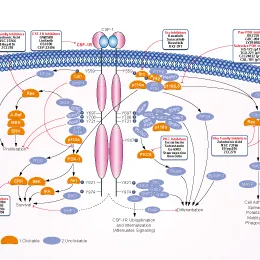
🎯 Its high selectivity may also help minimize off-target effects, supporting long-term treatment in patients with symptomatic or unresectable TGCT.
MANEUVER: A Phase III Study of Pimicotinib in TGCT
The approval of Pimicotinib was supported by the global Phase III MANEUVER study, a randomized, double-blind, placebo-controlled trial evaluating its efficacy and safety in patients with symptomatic TGCT who were not suitable for surgery.
The study demonstrated a significant improvement in objective response rate (ORR) at Week 25.
| Outcome | Pimicotinib | Placebo |
|---|---|---|
| Objective Response Rate (Week 25) | 54.0% | 3.2% |
| Statistical significance | p < 0.0001 | — |
Beyond tumor shrinkage, patients receiving Pimicotinib experienced meaningful improvements in joint pain, stiffness, physical function, and range of motion, supporting its overall clinical benefit.
These findings established Abbisko’s Pimicotinib for tenosynovial giant cell tumor as a promising systemic treatment option for patients with limited therapeutic alternatives.
Sustained Efficacy and Symptom Benefit of Pimicotinib in TGCT
Long-term follow-up results further solidified the therapeutic value of Pimicotinib in TGCT.
👏 At a median follow-up time of 14.3 months, the ORR in the study population increased to 76.2%, with some patients achieving complete remission, suggesting that the drug not only rapidly induces tumor shrinkage but also possesses sustained and stable anti-tumor activity.
In addition to tumor shrinkage, joint range of motion, pain and stiffness, and patient-reported physical function all showed significant improvements, suggesting that CSF-1R inhibition can simultaneously provide structural control and functional benefits.
Safety and Tolerability of Pimicotinib in TGCT
Compared with previous studies of CSF-1R inhibitors, Pimicotinib (ABSK021) for tenosynovial giant cell tumor shows a potential trend toward improved safety.
Current data show a low rate of ≥ grade 3 adverse events and dose reductions or discontinuations due to adverse reactions, and no drug-related liver injury or cholestatic hepatotoxicity signals were observed, nor were there significant pigment changes or other toxicities affecting long-term adherence.
✨ These characteristics suggest that it may be more suitable for long-term disease management in TGCT while maintaining efficacy.
Pimicotinib vs Pexidartinib
| Feature | Pimicotinib | Pexidartinib |
|---|---|---|
| Drug class | CSF-1R inhibitor | CSF-1R inhibitor |
| Administration | Oral | Oral |
| First approval | China | United States |
| Clinical benefit | Improved ORR, pain, and joint function | Proven efficacy in TGCT |
| Liver safety | No drug-related hepatotoxicity observed in clinical studies | Requires liver toxicity monitoring |
Although direct head-to-head studies are not available, Pimicotinib has demonstrated encouraging efficacy together with a favorable safety profile, making it an important addition to the evolving treatment landscape for TGCT.
Commercialization Progress and Global Market Significance of Merck KGaA Pimicotinib
From a global industry collaboration perspective, Pimicotinib has entered into an exclusive licensing agreement with Merck KGaA to promote its development and commercialization outside of Greater China.
This is considered by the industry as a landmark event in the “going global” of innovative Chinese oncology drugs.

1️⃣ China Achieves Standardized Access First
The official approval of pimicotinib (ABSK021) for tenosynovial giant cell tumor in China transforms TGCT systemic therapy from “limited options” to “realistically available,” marking a new stage in China’s accessibility to targeted therapy for rare tumors.
It also positions the country as one of the most clearly defined major markets for TGCT targeted therapy globally.
2️⃣ A Global Commercial Path is Taking Shape
Collaborations with multinational pharmaceutical companies lay the foundation for subsequent international registration and market entry, meaning that the scope of patient benefits is expected to gradually expand from a single country to a wider range of regions.
As original Chinese targeted drugs go global, DengYueMed provides compliant cross-border supply and professional distribution services, driving innovative therapies to reach real patients in different regions more efficiently.
3️⃣ Long-Term Treatment Attributes Determine Real Market Demand
TGCT typically requires long-term disease control rather than short-term cure. Therefore, the sustained efficacy, safety, and adherence of the drug directly determine its real clinical value and market stability.
Conclusion
Abbisko’s Pimicotinib for tenosynovial giant cell tumor represents an important advance in the treatment of TGCT by targeting the CSF-1R pathway, the key biological driver of the disease.
Clinical studies have demonstrated durable tumor responses, improved joint function, and a manageable safety profile, providing a new treatment option for patients with symptomatic or unresectable disease.
In the process of making innovative therapies globally accessible, global pharmaceutical distributor Dengyue Medicine is becoming a crucial link connecting scientific research results with real patients.
FAQ about Abbisko’s Pimicotinib for Tenosynovial Giant Cell Tumor
What is Pimicotinib (ABSK021)?
Pimicotinib (ABSK021) is an oral, highly selective CSF-1R inhibitor developed by Abbisko Therapeutics for the treatment of tenosynovial giant cell tumor (TGCT). It was approved in China in 2025 as the country’s first Class-1 CSF-1R inhibitor for this indication.
What is the mechanism of action of ABSK021?
ABSK021 (pimicotinib) is an orally available, highly selective small-molecule CSF-1R inhibitor that blocks CSF-1R signaling and modulates macrophage activity, thereby suppressing inflammation-driven tumor growth and disease progression.
Who may benefit from Abbisko’s Pimicotinib for tenosynovial giant cell tumor?
Pimicotinib may benefit patients with symptomatic, recurrent, or unresectable TGCT, particularly when surgery is not feasible or is expected to cause significant functional impairment.
Is Pimicotinib available outside China?
Pimicotinib is currently approved in China. Abbisko has granted Merck KGaA exclusive rights to develop and commercialize the therapy outside Greater China, supporting its future global development and regulatory expansion.
Is TGCT a rare condition?
Tenosynovial giant cell tumor (TGCT) is considered a rare disease, with reported incidence generally ranging from approximately 10 to 50 cases per million people, depending on subtype and population.