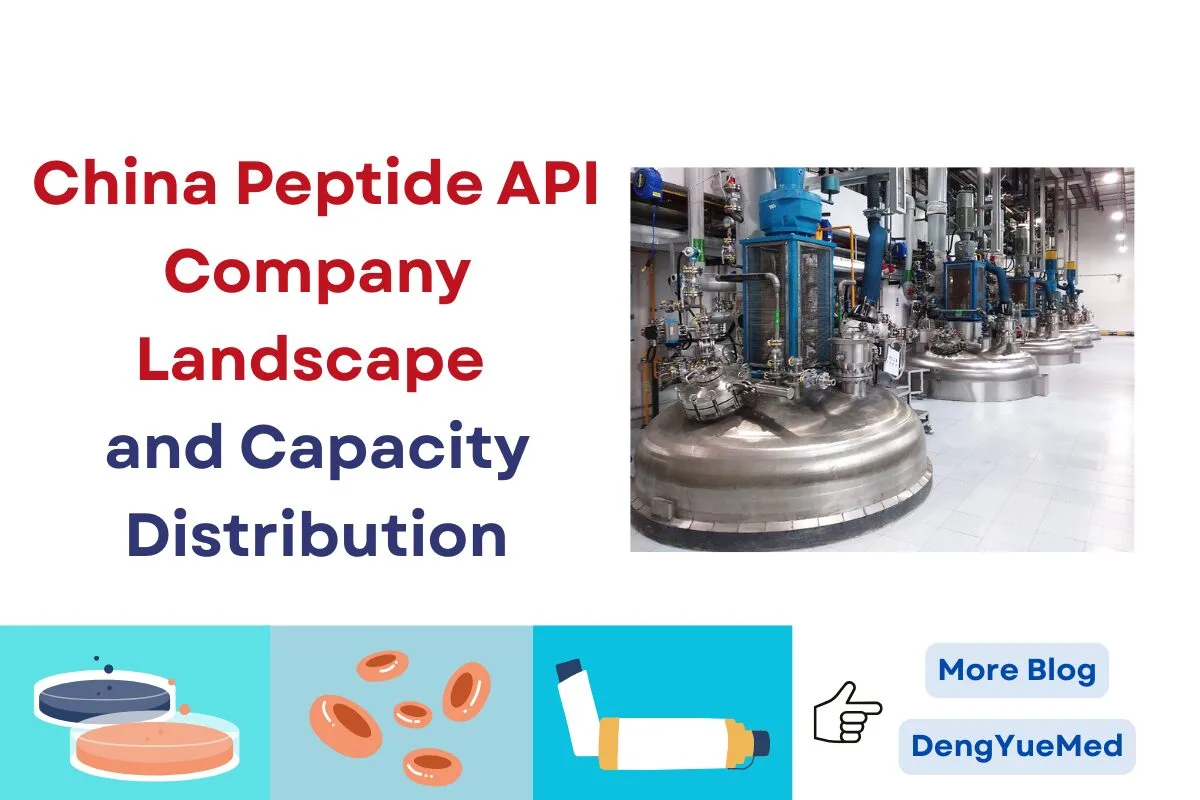
China Peptide API Company Landscape and Capacity Distribution
As Semaglutide, Tirzepatide, and next-generation multi-target peptides like Retatrutide advance in development and commercialization, China’s peptide API industry is entering a new capacity expansion cycle.
Currently, the China peptide API company landscape has gradually formed several competitive tiers: 🔽
- The first tier is represented by companies such as WuXi AppTec, Asymchem Laboratories, and Sinopep-Allsino Biopharmaceutical, which are accelerating ton-scale and commercial peptide API capacity deployment;
- The second tier continues expanding production scale while developing differentiated technology routes;
- Meanwhile, a growing number of new entrants focused on GLP-1 peptide APIs, peptide CDMO services, and specialty peptide raw materials are rapidly entering the market.
✅ Overall, China’s peptide API industry is transitioning from hundred-kilogram-scale production toward ton-scale manufacturing competition.
Chinese pharmaceutical and API wholesaler DengYueMed has reviewed production capacity, expansion plans, and the evolving China peptide API company landscape of major manufacturers, while analyzing future competition and supply chain trends in China’s GLP-1 peptide API industry.
Global GLP-1 Market Expansion Drives China Peptide API Growth
In 2025, the global GLP-1 market is expected to exceed USD 70 billion.
During the first half of 2025 alone, the market reached approximately USD 35.2 billion.
In the third quarter, Eli Lilly and Company’s Tirzepatide products (Zepbound/Mounjaro) generated more than USD 10.1 billion in quarterly revenue, up 132% year-over-year, officially surpassing Merck & Co.’s Keytruda to become the world’s highest-selling pharmaceutical product.
At the same time, competition between Pfizer and Novo Nordisk over next-generation obesity assets has further intensified strategic interest in GLP-1 APIs, multi-target peptide agonists, and peptide raw material supply chains.
With patents for Semaglutide, Tirzepatide, Liraglutide, and Dulaglutide expiring, and Retatrutide advancing in development, Chinese companies are rapidly accelerating capacity expansion.
For more insights on Retatrutide and its impact on peptide API demand, please read our related article: 👇
Overview of China Peptide API Capacity Expansion
Intensifying international competition is rapidly being transmitted upstream into the peptide API supply chain.
Only a few years ago, most China peptide API manufacturers operated mainly at hundred-kilogram production levels. By 2026, however, many companies have already entered ton-scale expansion cycles.
Current domestic expansion strategies mainly focus on:
- Large-scale SPPS (Solid-Phase Peptide Synthesis) upgrades
- Long-chain modified peptide manufacturing
- Fermentation-based peptide production alternatives
- Integrated API and formulation strategies
- Global peptide CDMO commercialization systems
The China peptide API company landscape is therefore becoming increasingly diversified and internationally competitive.
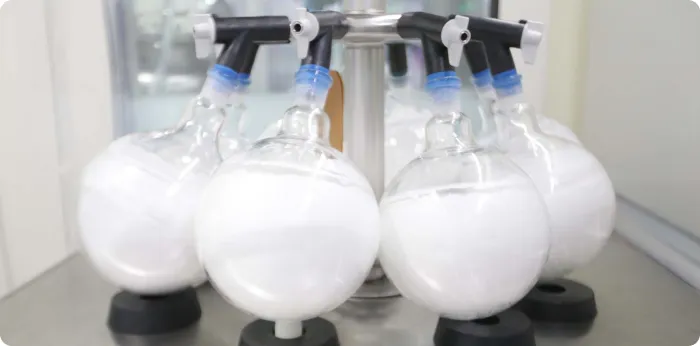
Major China Peptide API Companies and Capacity Distribution
First Tier: Global CDMO Platforms and Ton-Scale Manufacturers
WuXi AppTec
As a major global player in the TIDES sector, WuXi AppTec continues rapidly expanding its peptide platform.
By the end of 2024, the company’s SPPS reactor volume had reached 41,000 liters, with plans to expand to 100,000 liters by the end of 2025.
During the first three quarters of 2025, TIDES revenue reached RMB 7.84 billion, representing 121% year-over-year growth.
WuXi AppTec’s core strengths include its global peptide CDMO network, integrated development platform, and international commercial supply capabilities, making it one of the most important companies in the China peptide API company landscape.
Asymchem Laboratories
As of June 30, 2025, Asymchem’s peptide SPPS production capacity reached approximately 30,000 liters and is expected to increase to 44,000 liters by the end of 2025.
The company is widely recognized for its strong international client relationships and commercial manufacturing capabilities, making it one of China’s leading global peptide CDMO companies.
Sinopep-Allsino Biopharmaceutical
Sinopep-Allsino Biopharmaceutical officially launched its fourth-generation ton-scale peptide workshop in Lianyungang in 2025, reaching annual production capacity of 5 tons.
The company’s single-batch output for long-chain modified peptides such as Semaglutide and Tirzepatide has exceeded 10 kilograms.
Additional investments of RMB 230 million are being used to construct new facilities including:
- 500kg/year Semaglutide API
- 500kg/year Tirzepatide API
- 200kg/year Lanreotide API
The company has become one of the most representative ton-scale GLP-1 peptide API manufacturers in China.
Driven by global commercialization and GLP-1 outsourcing demand, the first-tier China peptide API company landscape is dominated by platform CDMOs with ton-scale capacity, regulatory experience, and integrated supply chains.
Second Tier: Large-Scale Expansion Companies
Hybio Pharmaceutical
As of 2025, Hybio Pharmaceutical’s total peptide API capacity exceeded 5 tons, covering products including:
- Semaglutide
- Tirzepatide
- Liraglutide
Its strengths lie in its diversified peptide product portfolio and expanding international market strategy.
Poly Pharmaceutical
Poly Pharmaceutical has adopted a differentiated fermentation-based peptide production route and has already established pilot production capacity of 12 tons/year for Semaglutide API.
Future plans include:
- 50 tons/year fermentation liquid production
- 10 tons/year peptide backbone production
If fermentation-based peptide manufacturing achieves sufficient cost advantages, the company could become a major disruptive force in the China peptide API company landscape.
Apeloa Pharmaceutical
Apeloa Pharmaceutical has already achieved commercial production of protected amino acids for Semaglutide, reaching 500kg/month capacity.
Its planned peptide facilities are expected to become operational in Q2 2026, with designed capacity reaching 12,000–20,000 liters.
The company is extending downstream from peptide intermediates into full peptide API manufacturing.
Shengnuo Biotechnology
Shengnuo Biotechnology’s total peptide production capacity is expected to reach approximately 0.8–0.95 tons/year in 2025.
The company has already established relatively stable commercial peptide manufacturing capabilities.
As more companies accelerate scale expansion and differentiated technology development, the second-tier China peptide API company landscape is becoming one of the fastest-growing segments in China’s peptide pharmaceutical manufacturing industry.
Third Tier: Specialized and Emerging Expansion Companies
Livzon Pharmaceutical Group
Livzon currently operates fermentation-based Semaglutide API capacity of 300kg/year and plans to expand to 2,000kg/year.
The company focuses heavily on fermentation-based peptide technology routes.
Jiuyuan Genetic Biopharmaceutical
Current production includes:
- 18kg/year Semaglutide API
- 3 million injectable units annually
Its primary advantage lies in its integrated API and formulation strategy.
Chinese Peptide Company
Current Semaglutide capacity includes:
- 500kg/year
- 20kg per batch
Expansion plans include:
- 2,000kg/year China capacity
- 100–300kg/year overseas capacity
BrightGene Pharmaceutical
Current peptide production capacity is approximately 0.52 tons/year.
Expansion projects include:
- 100kg/year Semaglutide API
- 100kg/year Tirzepatide API
- 1,200kg/year Copper Peptide
Aurisco Pharmaceutical
Aurisco established 300kg/year Semaglutide API capacity in 2024 and plans future expansion toward ton-scale manufacturing.
Huadong Medicine
Current capacity includes:
- 100kg/year Semaglutide
- 120kg/year Liraglutide
Planned Semaglutide capacity expansion: 250kg/year.
Jiuzhou Pharmaceutical
Current Semaglutide capacity at its Suzhou base includes:
- 70–90kg/year
- 3kg per batch
Shenzhen JYMed Technology
Existing workshops currently produce approximately 1,000kg of peptide products annually.
Future expansion is expected to add 7,500kg of peptide capacity covering:
- Semaglutide
- Tirzepatide
- Liraglutide
Although many third-tier manufacturers are still in early expansion stages, this part of the China peptide API company landscape represents an important source of future production growth, particularly in GLP-1 APIs, specialty peptides, and emerging peptide CDMO services.
New Entrants and Future Expansion Projects
Jiekun Bio
The company plans to construct:
- 6,000kg high-end peptide APIs
- 5,000kg peptide intermediates
The project is expected to be completed by the end of 2026.
Chenggong Pharmaceutical
The company is developing production systems for:
- Liraglutide
- Tirzepatide
- Retatrutide
- Semaglutide
with total planned peptide API capacity of approximately 250kg/year.
The company is also building multiple enzyme and biocatalyst platforms to support upstream peptide manufacturing.
Changzhou Pharmaceutical Factory
The company is simultaneously developing fermentation and SPPS routes:
- Fermentation-based Semaglutide: 280kg/year
- SPPS Semaglutide: 60kg/year
This dual-route strategy reflects the industry’s preparation for future manufacturing cost competition.
Sintaho Pharmaceutical
The new peptide base jointly developed with Desano is expected to achieve:
- 1 ton/year Semaglutide
- 0.2 tons/year Tirzepatide
The facility is also expected to support next-generation obesity peptides such as Retatrutide.
Weiqida Guangming Pharmaceutical
Planned new capacity includes:
- 200kg/year Semaglutide
- 200kg/year Tirzepatide
Single-batch production capacity can reach 33kg.
Genohope Biotechnology
Current plans include:
- 406kg/year recombinant Semaglutide
- 50kg/year Tirzepatide
The company is simultaneously developing synthetic and recombinant peptide production technologies.
China’s GLP-1 Peptide API Industry Is Entering a New Competitive Cycle
Analysis of current capacity expansion trends shows that China’s GLP-1 supply chain is undergoing major structural transformation.
Historically, most peptide pharmaceutical companies in China mainly focused on:
- Preclinical R&D
- Small-scale supply
- Custom peptide manufacturing
Over the next several years, however, industry competition will increasingly focus on: 🔽
- Global generic drug launches
- Biosimilar commercialization
- International peptide CDMO contracts
- Large-scale stable supply
- Manufacturing cost optimization
As a result, ton-scale production capacity will become a critical measure of global competitiveness rather than simply a capital market narrative.
The future China peptide API company landscape will likely become increasingly segmented:
- Platform companies with global certifications and ton-scale capabilities will dominate international commercial orders;
- Companies with differentiated technology routes will establish specialized competitive advantages;
- Regional and niche-product manufacturers will focus on segmented supply markets.
🎯 2026 could become a major turning point for China’s peptide API industry to establish itself as a key global supply chain hub.
DengYueMed: China Peptide API Supply Chain Platform
Driven by rapid growth in GLP-1 drugs, obesity therapeutics, and innovative peptide medicines, DengYueMed continues focusing on global pharmaceutical and API supply chain services while actively participating in the evolving China peptide API company landscape.
Our business covers not only innovative Chinese medicines, generic drugs, and international pharmaceutical supply, but also:
- Peptide APIs
- Peptide intermediates
- GLP-1 related APIs
- CDMO resource integration
- International API distribution
- Pharmaceutical supply chain management
HongKong DengYueMed continues to connect Chinese manufacturing with international markets, serving global clients’ pharmaceutical and API sourcing needs.
Explore Strategic Partnership Opportunities
FAQ about China Peptide API Company Landscape and Capacity Distribution
Can I source peptide APIs such as Semaglutide or Tirzepatide from China?
Yes, China has become one of the major global supply bases for peptide APIs including GLP-1 products like Semaglutide and Tirzepatide. Many manufacturers offer kilogram- to ton-scale production capacity for global customers. Supply availability depends on regulatory status, scale, and project requirements.
How stable is the peptide API supply chain in China?
China’s peptide API supply chain is becoming more stable due to rapid capacity expansion and CDMO integration. Large manufacturers are scaling up to ensure long-term commercial supply. However, stability may vary depending on company size and production route.
Which types of companies should I work with for peptide API sourcing?
Customers usually work with CDMO platforms, large-scale API manufacturers, or specialized peptide producers. Tier-one companies provide commercial-scale supply, while mid-tier and emerging players offer cost or flexibility advantages. The choice depends on project stage and volume requirements.
What is the main cost driver for peptide API production?
The main cost factors include synthesis route (SPPS vs fermentation), peptide length, purification complexity, and production scale. Large-scale ton-level manufacturing significantly reduces unit cost. Process optimization and supply chain integration also play key roles in pricing.