
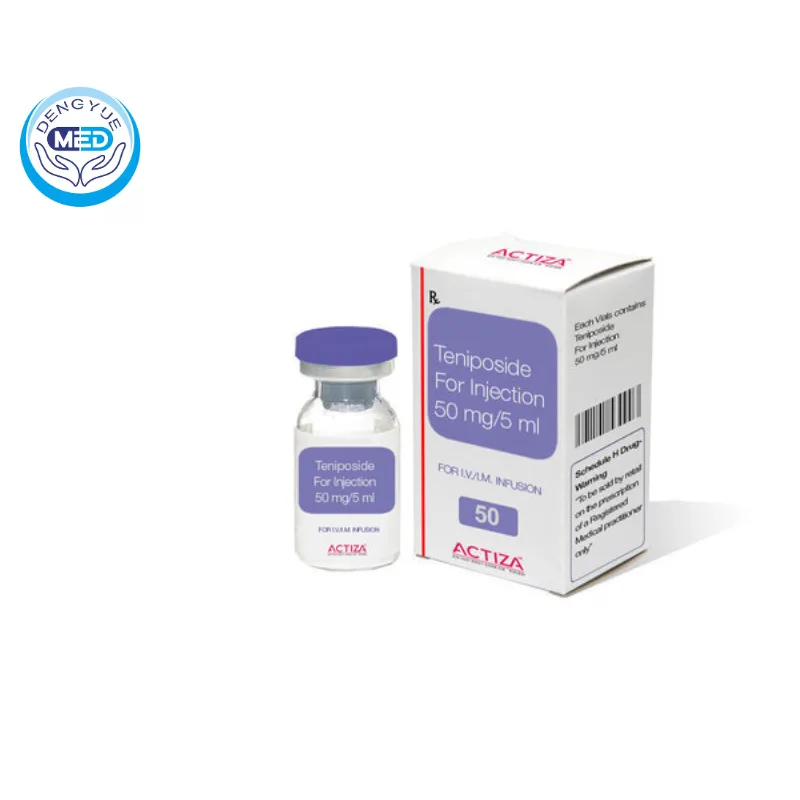
VUMON (Teniposide) – Antineoplastic Agent | HongKong DengYue Medicine
- Generic Name/Brand Name: Teniposide / VUMON
- Indications: Antineoplastic Agent
- Dosage Form: Solution for subcutaneous injection
- Specification: 50 mg / 5 mL * 1 vial
Teniposide Application Scope
-
Acute lymphoblastic leukemia (ALL) (often as part of combination chemotherapy, incl. refractory or relapsed pediatric ALL);
-
Malignant lymphoma / Hodgkin disease;
-
Central nervous system malignancies (e.g., neuroblastoma, gliomas) and other solid tumors (bladder cancer, metastatic disease) per local clinical protocols.
Teniposide Characteristics
-
Ingredients:
-
Active ingredient: Teniposide (chemical name: 4′-demethylepipodophyllotoxin 9-(4,6-O-2-thenylidene-β-D-glucopyranoside)).
-
Excipients (examples from commercial injectable formulations): polyoxyethylene castor oil (Cremophor-type), N,N-dimethylacetamide (or other organic solvents), anhydrous ethanol, benzyl alcohol, maleic acid or maleate salts — refer to the local product insert for the exact list.
-
-
Properties:
-
Appearance: Pale yellow to yellow-green clear solution for injection (commercial ampoule/ vial).
-
Route: Intravenous administration (irritant to tissues) — slow IV infusion recommended.
-
-
Packaging Specification:Typical commercial presentation: 50 mg / 5 mL ampoule (examples: 50 mg/5 mL) or other regional pack sizes; VUMON® U.S. NDC example: 50 mg/5 mL ampoules. Verify local packaging.
-
Storage: Store refrigerated at 2 °C – 8 °C (36 °F – 46 °F). Retain in original packaging to protect from light. Some labels indicate stability at room temperature for limited periods — follow local product label. Freezing does not adversely affect some formulations, but follow local label instructions.
-
Expiry Date: Use the expiry date printed on the carton/vial. Unopened ampoules are generally stable until the date shown when stored refrigerated; check the label for the exact shelf life.
-
Executive Standard: Manufactured and released according to applicable pharmaco-technical and regulatory standards for cytotoxic injections (local GMP / pharmacopeial requirements).
-
Approval Number: Approval/registration numbers vary by market and by manufacturer. Refer to the product carton or national drug registration database for the exact approval number in your country. (Example: marketing authorizations available historically under trade names such as VUMON.)
-
Date of Revision: See the revision date on the local package insert. (Example source inserts list various approval/revision dates.)
-
Manufacturer: Manufacturer and marketing authorization holder depend on country and product brand — check the vial/carton. (Examples of suppliers and manufacturers appear in product monographs and registration records.)
Guidelines for the Use of Teniposide
-
Dosage and Administration:
-
Recommended Dose:
-
General principle: dosing regimens vary by indication, age, body surface area (BSA), combination regimen and institution protocol. Follow the approved local protocol or oncology guideline.
Representative adult / pediatric dosing examples (illustrative — verify specific protocol):
-
Acute lymphoblastic leukemia / lymphoma regimens: Teniposide dosing schedules vary (e.g., 60–200 mg/m² per dose depending on regimen, given IV over at least 30–60 minutes; cumulative and schedule-dependent). Dose adjustments frequently needed for marrow suppression and hepatic impairment. Always follow institutional protocol.
-
-
Administration: Intravenous infusion (slow): infuse over ≥30 minutes (slower infusion may reduce hypotension, nausea). Flush IV lines thoroughly before and after; incompatible with heparin in some settings; do not use in-line filter during infusion unless specified. Use appropriate cytotoxic handling precautions
-
Missed Dose: If a scheduled dose is missed, follow the treating oncologist’s protocol — typically give as soon as clinically appropriate and adjust subsequent cycle timing per protocol; do not double the dose.
-
-
Adverse Reactions:
-
Common Adverse Reactions:
-
Myelosuppression (neutropenia, thrombocytopenia, anemia) — dose-limiting toxicity.
-
Nausea and vomiting, mucositis, alopecia, hepatic function changes, peripheral neuropathy (less common), injection/infusion-related hypotension or allergic symptoms.
-
-
Serious Adverse Reactions: Severe bone marrow suppression leading to infection/bleeding; severe hypersensitivity reactions; secondary leukemias are reported for some topoisomerase II inhibitors (monitor long-term). Manage per oncology supportive care protocols.
-
-
Contraindications: Known hypersensitivity to teniposide or to podophyllotoxin derivatives or to formulation excipients. Significant baseline myelosuppression or active severe infection unless benefit outweighs risk (follow local label).
-
Precautions:
-
Monitor CBC frequently; withhold or reduce dose for significant neutropenia or thrombocytopenia.
-
Hepatic impairment: dosage reduction often required; monitor LFTs.
-
Pregnancy / breastfeeding: teratogenic — avoid during pregnancy; women of childbearing potential should use contraception.
-
Handle as a cytotoxic agent with safe-handling procedures (PPE, spillage protocols)
-
Teniposide Interactions
- Drug interactions: co-administration with other myelosuppressive agents increases hematologic toxicity. Incompatibilities with certain infusion materials/solutions reported — consult local product monograph. Monitor drug interactions in multi-agent chemotherapy regimens.
Note:
- If there is a new packaging for the drug, the new packaging shall prevail. The above information is sourced from DengYue Medicine.
- This content is for reference only. Prescription drugs must be used under a doctor’s guidance and purchased from authorized sources.
Related products
-

Syprine Trientine Hydrochloride Tablets | Wilson’s Disease | DengYueMedicine
-

Vimizim Elosulfase Alpha | Mucopolysaccharidosis Type IV
-
Ubenimex Capsules|Enhancement of immune function
-
Pitolisant Hydrochloride Tablets
-
Siltuximab For Injection | Castleman’s Disease
-

Proglycem Diazoxide | Hyperinsulinemic Hypoglycemia | DengYueMedicine
-
Thymalfasin for Injection – Adjuvant for Influenza Vaccine
-
Nitisinone Capsules | Hereditary Tyrosinemia Type 1
.webp "Vimizim Elosulfase Alpha | Mucopolysaccharidosis Type IV")
Reviews
There are no reviews yet.