
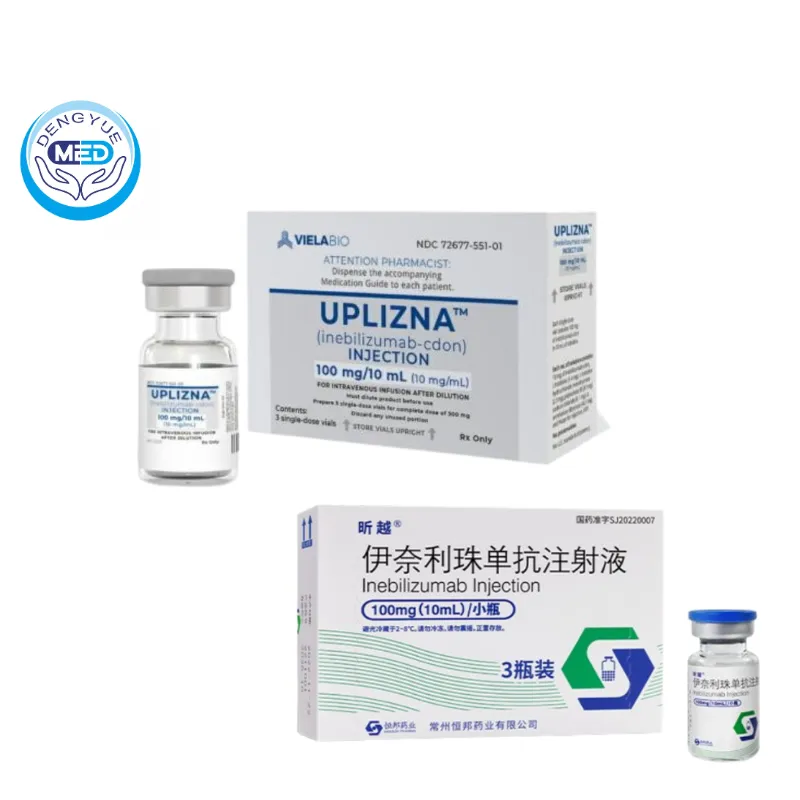
UPLIZNA (Inebilizumab) – IgG4‑RD | HongKong DengYue Medicine
- Generic Name/Brand Name: Inebilizumab/UPLIZNA
- Indications: NMOSD,IgG4-RD
- Dosage Form: Injection for intravenous infusion
- Specification: 100 mg/10 mL (10 mg/mL) × 1 vial
UPLIZNA Inebilizumab Application Scope
-
Neuromyelitis Optica Spectrum Disorder (NMOSD)
-
For adults who are AQP4-IgG positive, to reduce the risk of relapse.
-
-
IgG4-Related Disease (IgG4-RD)
-
For adult patients with active IgG4-related disease to lower disease activity and prevent organ damage (FDA approved in 2025; regional availability may vary).
uplizna inebilizumab
-
UPLIZNA Inebilizumab Characteristics
-
Ingredients: Inebilizumab
-
Properties: Clear to slightly opalescent, colorless to slightly yellow solution
-
Packaging Specification: Single-dose vial containing 100 mg/10 mL
-
Storage: Refrigerate at 2°C to 8°C (36°F to 46°F) and do not freeze
-
Expiry Date: Refer to the expiration date printed on the packaging
-
Executive Standard: Manufactured in compliance with Good Manufacturing Practices (GMP) and regulatory standards
-
Approval Number:
-
FDA Approval No. 761142
-
EMA Approval No. EPAR/UPLIZNA/000001
-
-
Date of Revision: Latest revision: April 2025
-
Manufacturer: Amgen Inc.
Guidelines for the Use of UPLIZNA Inebilizumab
-
Dosage and Administration:
-
-
Recommended Dose: The recommended dosage is 300 mg per infusion.
-
-
Administration:
It is administered as an intravenous (IV) infusion. The regimen consists of:
-
Initial dose: 300 mg on Day 1.
-
Second dose: 300 mg on Day 15.
-
Maintenance doses: 300 mg every 6 months starting from the first infusion
-
-
Missed Dose: The search results do not provide specific guidance on handling a missed dose. This must be discussed with the treating physician.
-
-
Adverse Reactions:
-
Common Adverse Reactions: Common side effects include infections (such as urinary tract infections, nasopharyngitis, and upper respiratory tract infections), joint pain (arthralgia), back pain, and headache.
-
Serious Adverse Reactions: The drug increases the risk of infections. Infusion reactions can also occur. Low levels of lymphocytes (a type of white blood cell) have been observed . As with many immunosuppressants, there is a potential risk of serious infections.
-
-
Contraindications:
-
History of life-threatening infusion reaction to UPLIZNA.
-
Active hepatitis B infection.
-
Active or untreated latent tuberculosis.
-
-
Precautions:
-
Monitor for signs and symptoms of infection during treatment.
-
Assess immunoglobulin levels periodically.
-
Vaccination with live-attenuated vaccines is not recommended during treatment.
-
Use effective contraception during treatment and for six months after the last dose.
-
UPLIZNA Interactions
-
Live Vaccines: Avoid administration during treatment.
-
Immunosuppressive Agents: Use caution when co-administering with other immunosuppressive therapies.
-
Concomitant Infections: Manage appropriately; consider delaying treatment initiation during active infections.
Note:
- If there is a new packaging for the drug, the new packaging shall prevail. The above information is sourced from DengYue Medicine.
- This content is for reference only. Prescription drugs must be used under a doctor’s guidance and purchased from authorized sources.
Related products
-

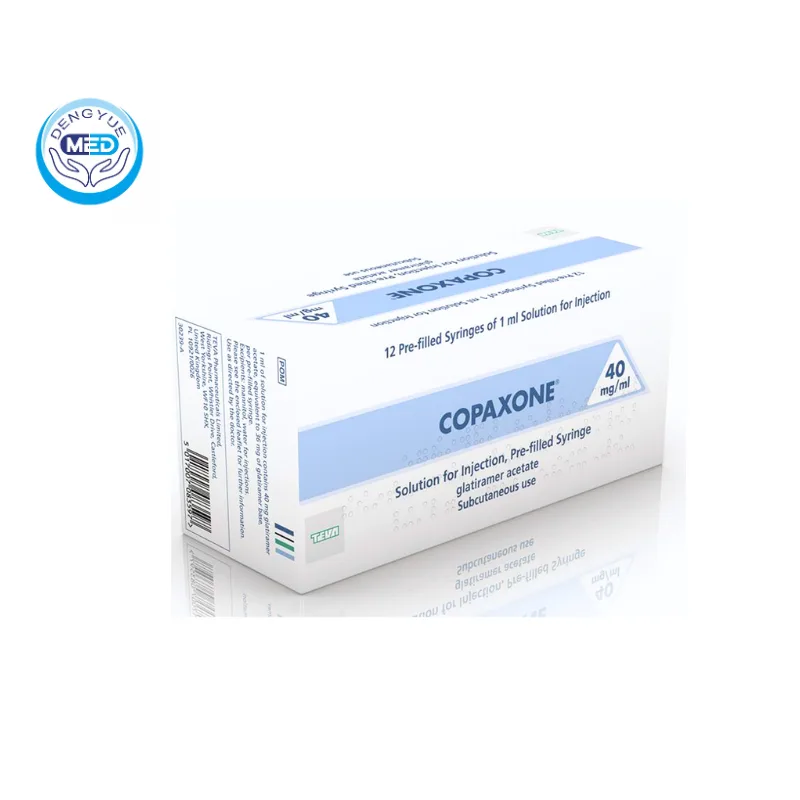
Copaxone (Glatiramer Acetate) – Multiple Sclerosis | DengYue
-
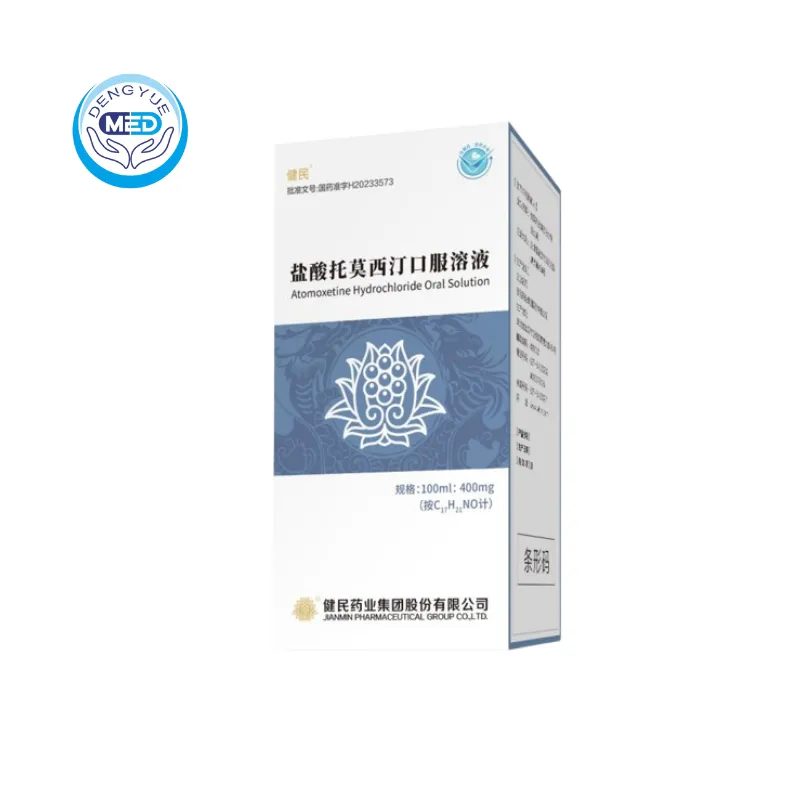
Jianmin (Atomoxetine) – ADHD | HongKong DengYue Medicine
-
Emgality (Galcanezumab) – Anti-Migraine | HongKong DengYue Medicine
-
Rystiggo (Rozanolixizumab) – gMG | HongKong DengYue Medicine
-
Kesimpta (Ofatumumab) – Multiple Sclerosis | DengYueMed
-
Jinyouping (Rotigotine) – PD | HongKong DengYue Medicine
-
Sishujing (Anrecfen Injection) – CKD-aP | HongKong DengYue Medicine
-
Bimzelx (Bimekizumab) – Psoriasis | HongKong DengYue Medicine
Reviews
There are no reviews yet.