
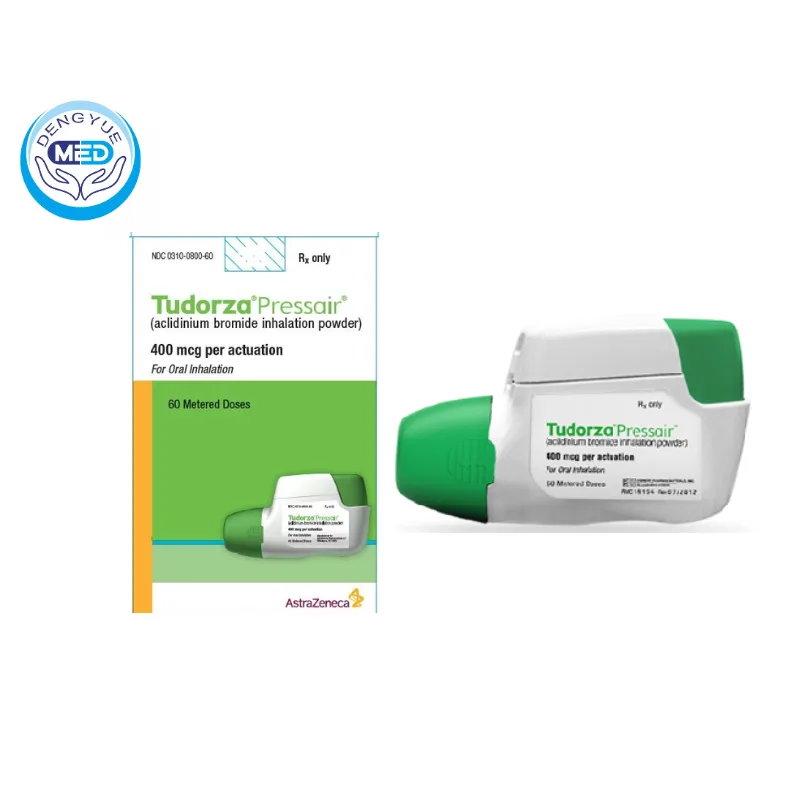
Tudorza (Aclidinium Bromide) – COPD | HongKong DengYue Medicine
- Generic Name/Brand Name: Aclidinium bromide / Tudorza
- Indications: COPD
- Dosage Form: Breath-actuated dry powder inhaler
- Specification: 400 µg per actuation x 60 doses
Tudorza Application Scope
Tudorza is a long-acting inhaled anticholinergic bronchodilator used for maintenance treatment of chronic obstructive pulmonary disease (COPD).
Characteristics
Ingredients: Aclidinium Bromide
Properties: Long‑acting muscarinic antagonist (LAMA); acts on M3 receptors to relax bronchial smooth muscle
Packaging Specification: Multi-dose dry powder inhaler; 60 or 30 doses per inhaler
Storage:
Room temperature 15–30 °C (59–86 °F)
Store in a sealed pouch until use
Keep dry
Don’t store on vibrating surfaces
Expiry Date: Discard 45 days after the pouch is opened, or when the counter reaches zero
Executive Standard: Typically follows pharmacopoeial requirements
Approval Number: U.S. FDA-approved in July 2012 (NDA 202450)
Date of Revision: Label revised Feb 2021; Drugs.com updated Jan 20, 2025
Manufacturer: AstraZeneca (U.S.); under license from Almirall/Circassia
Guidelines for the Use of Tudorza
Dosage and Administration:
One inhalation (400 µg) twice daily, approximately 12 hours apart
Use oral inhalation only via the Pressair device
Dose confirmed by click and color change
Adverse Reactions:
Common (≥1% vs placebo):
headache (6–7%)
nasopharyngitis (5–6%),
cough (~3%),
diarrhea,
sinusitis
rhinitis,
toothache,
fall,
vomiting
Postmarketing:
hypersensitivity (anaphylaxis, rash, bronchospasm),
nausea, dysphonia, blurred vision, urinary retention, tachycardia, stomatitis
Contraindications: Known severe hypersensitivity to aclidinium bromide, milk proteins, or excipients
Precautions:
Not for acute bronchospasm (rescue use)
May cause paradoxical bronchospasm—discontinue if it occurs
Use with caution in narrow-angle glaucoma, prostatic hyperplasia
Or bladder-neck obstruction; monitor symptoms
Tudorza Interactions
Drug Interactions:
Additive anticholinergic effects when combined with other anticholinergics—avoid duplication (e.g., umeclidinium)
No significant interactions with β₂‑agonists, steroids, methylxanthines, or glucocorticoids
Note:
- If there is a new packaging for the drug, the new packaging shall prevail. The above information is sourced from DengYue Medicine.
- It is only for internal discussion among medical staff and does not serve as a basis for medication. For specific medication guidelines, please consult the attending physician.

Reviews
There are no reviews yet.