
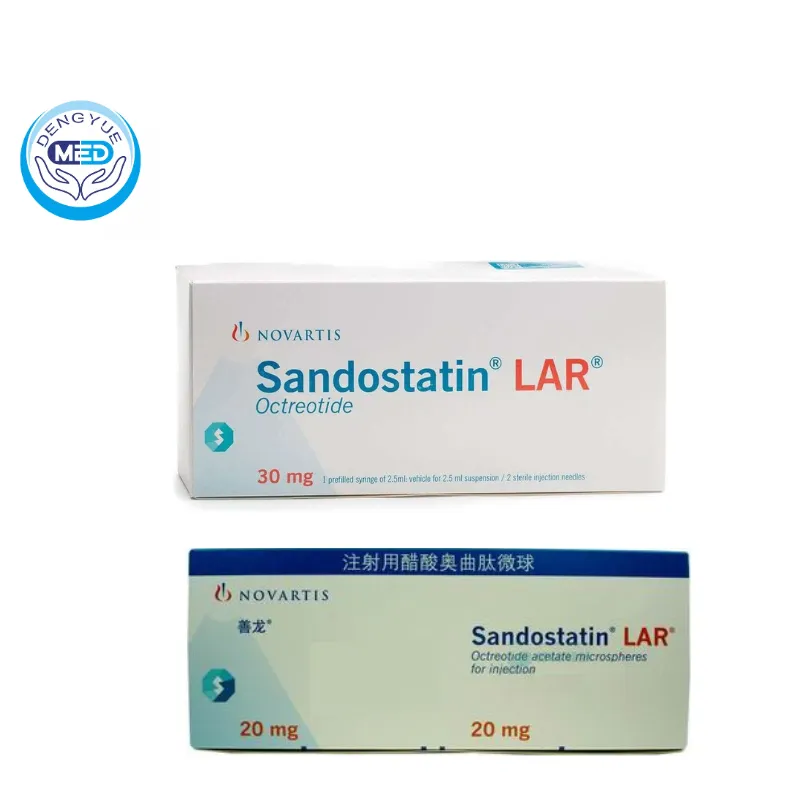
Sandostatin LAR (Octreotide Acetate) – NETs | HongKong DengYue Medicine
- Generic Name/Brand Name: Octreotide Acetate / Sandostatin® LAR
- Indications: Acromegaly, neuroendocrine tumors
- Dosage Form: Long-acting injectable suspension
- Specification: 10 mg/20 mg/30 mg x 1 vial
Octreotide Acetate Application Scope
A synthetic octapeptide analogue of natural somatostatin has a broad application scope primarily in endocrinology, gastroenterology, and oncology.
Octreotide Acetate Characteristics
-
Ingredients: Octreotide Acetate
-
Properties: Clear liquid
-
Packaging Specification: Varies (e.g., 1 ml:0.1 mg ampoules, 0.1 mg or 0.3 mg vials)
-
Storage: Store at 2-8°C in a refrigerator, protected from light and freezing.
-
Expiry Date: Refer to the expiry printed on the vial/carton
-
Executive Standard: Chinese Pharmacopoeia
-
Approval Number: See the local product labe
-
Date of Revision:Varies by manufacturer
-
Manufacturer: Beijing Salugea Pharmaceutical Co., Ltd., Chengdu Xinlibang Biological Pharmaceutical Co., Ltd. (“Pei Xin”), Wuhan Humanwell Pharmaceutical Co., Ltd., Hainan Shuangcheng Pharmaceutical Co., Ltd.
Guidelines for the Use of Octreotide Acetate
-
Dosage and Administration:
-
Recommended Dose:
-
For Acromegaly: The initial dose is often 0.05-0.1 mg administered subcutaneously every 8 hours. The dose is then adjusted based on monthly assessments of growth hormone (GH) levels, clinical response, and tolerance. The maintenance dose for most patients is usually between 0.2 and 0.3 mg per day, and the maximum dose should not exceed 1.5 mg per day.
-
For Gastroenteropancreatic Endocrine Tumors: The initial dose is typically 0.05 mg administered subcutaneously once or twice daily. Depending on tolerance and efficacy, the dose may be gradually increased to 0.2 mg three times daily.
-
For Prevention of Pancreatic Postoperative Complications: 0.1 mg subcutaneously three times daily for 7 days, with the first injection given at least 1 hour before surgery.
-
For Esophagogastric Variceal Bleeding: Specific dosing regimens exist, such as an initial intravenous bolus followed by a continuous intravenous infusion.
-
-
Administration:
-
For subcutaneous injection, rotate injection sites to prevent local reactions.
-
Allow the solution to reach room temperature before injection to minimize discomfort.
-
Intravenous administration should be performed under medical supervision.
-
-
Missed Dose: If you miss a dose, contact your healthcare provider for advice. Do not double the next dose to make up for a missed one.
-
-
Adverse Reactions:
-
Common Adverse Reactions:
-
Injection site reactions: Pain, redness, burning or stinging sensation (usually transient, lasting <15 minutes).
-
Gastrointestinal reactions: Anorexia, nausea, vomiting, abdominal cramps, bloating, flatulence, loose stools, diarrhea, steatorrhea.
-
-
Serious Adverse Reactions:
-
Gallbladder abnormalities: Long-term use may lead to gallstone formation (reported in 15-30% of patients) , biliary sludge, and even pancreatitis.
-
Glucose metabolism disorders: Hyperglycemia or hypoglycemia due to altered insulin and glucagon secretion.
-
Hepatic function impairment: Elevated bilirubin, alkaline phosphatase, γ-GT, and transaminases.
-
Bradycardia (slow heart rate)
-
-
- Contraindications: Hypersensitivity to Octreotide Acetate or any excipients in the formulation .
-
Precautions:
-
Monitor blood glucose in diabetic patients or those at risk of glucose dysregulation. Adjust antidiabetic therapy as needed.
-
Monitor for gallbladder abnormalities; consider ultrasound if clinically indicated.
-
Use caution in patients with preexisting cardiac conduction abnormalities; monitor ECG as clinically indicated.
-
Long-term use may impair fat absorption and lead to vitamin deficiencies—monitor nutritional status and supplement when indicated.
-
Octreotide Acetate Interactions
-
May reduce the intestinal absorption of cyclosporine.
-
May delay the absorption of Cimetidine.
-
May increase the bioavailability of bromocriptine.
-
Limited data suggests it might slow the clearance of drugs metabolized by Cytochrome P450 enzymes (e.g., Quinidine, Terfenadine). Caution is advised with narrow therapeutic index drugs primarily metabolized by CYP3A4.
-
Inform your doctor about all medications you are taking, including prescription, over-the-counter, and herbal products.
Note:
- If there is a new packaging for the drug, the new packaging shall prevail. The above information is sourced from DengYue Medicine.
- This content is for reference only. Prescription drugs must be used under a doctor’s guidance and purchased from authorized sources.
Related products
-

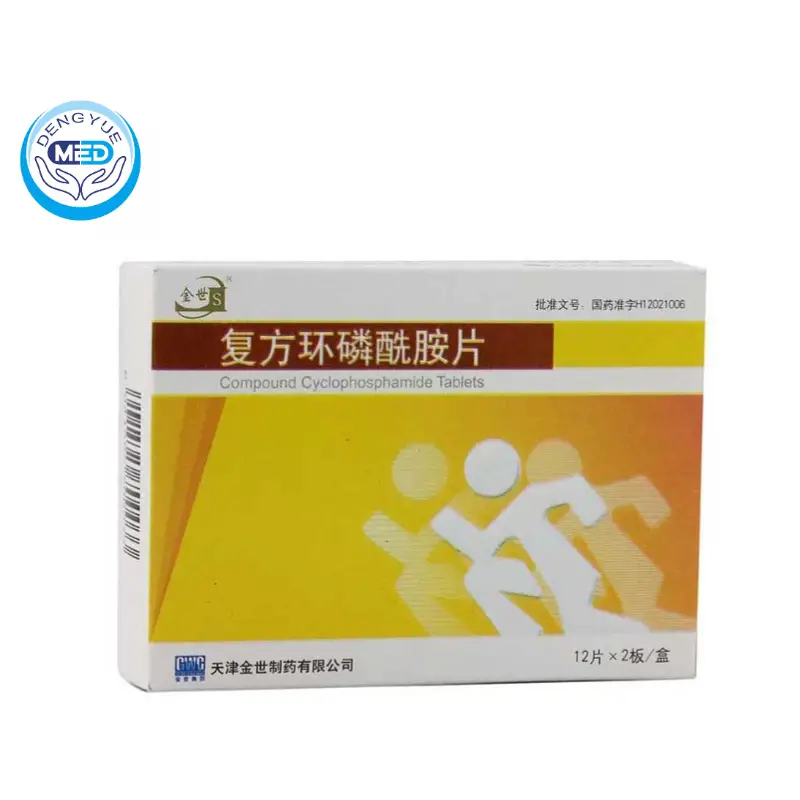
Compound Cyclophosphamide Tablets | Ovarian Cancer | DengYueMed
-
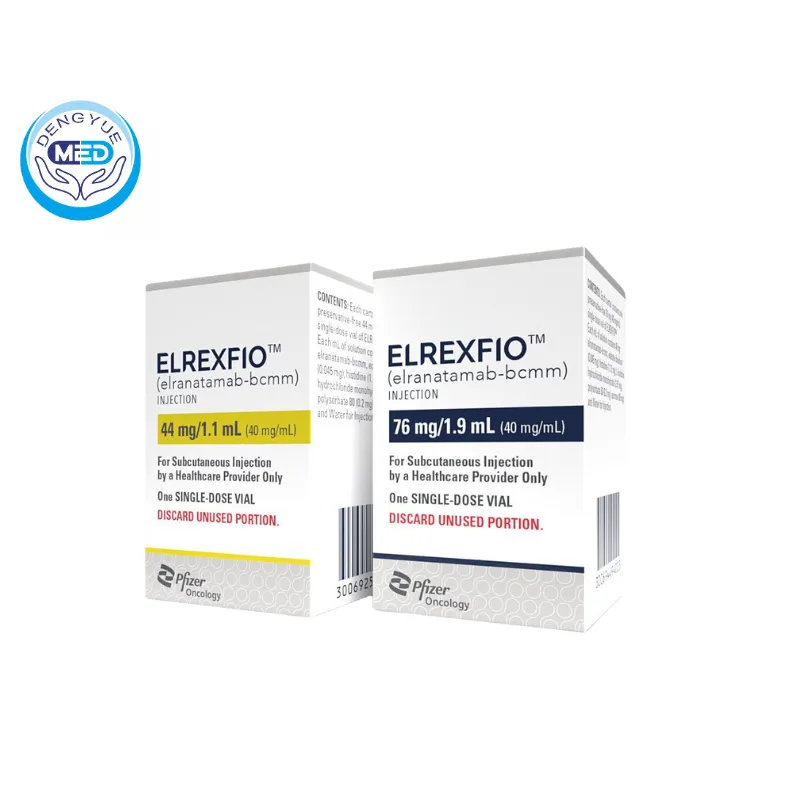
Elranatamab|Multiple Myeloma|HongKong DengYue Medicine
-
Imetelstat For Injection|Myelodysplastic Syndromes|HongKong DengYue Medicine
-
Ubenimex Capsules | Anti-Cancer Chemotherapy
-
Methotrexate 2.5mg Tablets | Cancer Chemotherapy
-
Talquetamab-tgvs|Multiple Myeloma|HongKong DengYue Medicine
-
Enweida (Envafolimab) | Advanced Solid Tumors | DengYue
-
Etoposide Soft Capsules | Ovarian Cancer | China Medicine Wholesaler
Reviews
There are no reviews yet.