
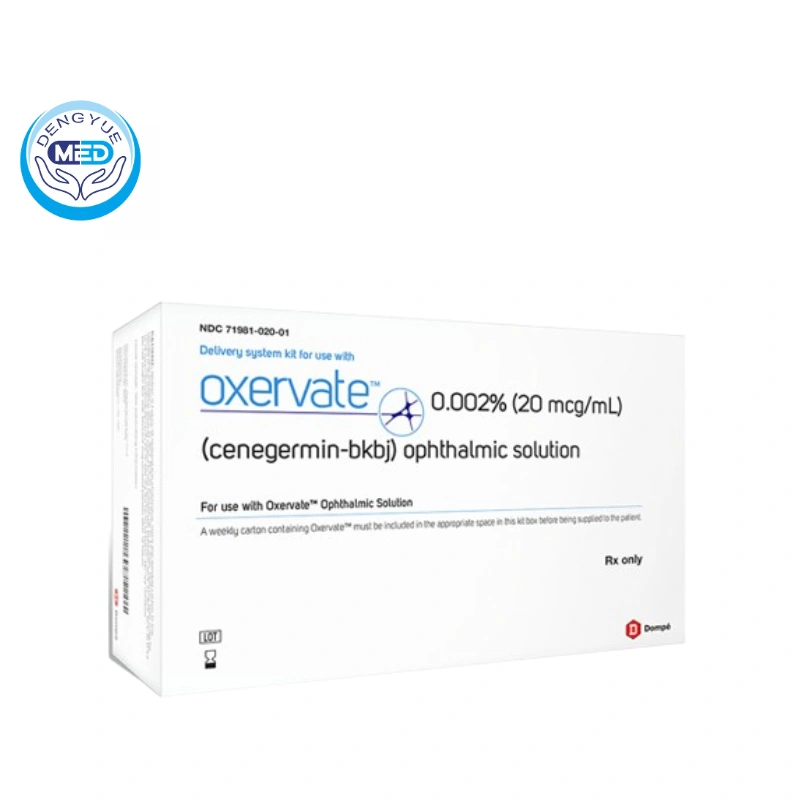
Oxervate Cenegermin | Neurotrophic Keratopathy (NK)
- Generic Name/Brand Name:Cenegermin/Oxervate
- Indications:neurotrophic keratopathy (NK)
- Dosage Form:Ocular solution (eye drop) for topical administration.
- Specification:0.002% Cenegermin solution in 0.3 mL vials, used for topical ocular administration.
Oxervate Cenegermin Application Scope
Oxervate (Cenegermin) is indicated for the treatment of neurotrophic keratopathy (NK), a rare condition characterized by corneal damage and impaired healing.
It is specifically used to treat patients with moderate to severe NK due to nerve damage caused by herpes simplex virus or surgical interventions. Oxervate works by stimulating corneal nerve regeneration and promoting healing, significantly improving symptoms and reducing the risk of further corneal damage.
Oxervate Cenegermin Characteristics
- Ingredients:
- Active ingredient: Cenegermin
- Excipients: Includes sodium chloride, sodium citrate, and water for injection.
- Properties:Cenegermin is a recombinant human nerve growth factor (NGF), which helps regenerate corneal nerves and stimulates epithelial cell growth, aiding in healing and reducing symptoms of NK.
- Specification:Oxervate is supplied as a 0.002% solution in a 0.3 mL vial for ocular use.
- Storage:
- Store the vials in a refrigerator at 2°C to 8°C (36°F to 46°F).
- Do not freeze. Keep it in the original packaging to protect it from light.
- Expiry Date:24 months from the date of manufacture (please check the packaging for the exact date).
- Executive Standard:Follow the applicable regulatory standards as per local health authorities (e.g., FDA, EMA).
- Approval Number:The specific approval number from the FDA or local health authorities.
- Manufacturer:Dompe Pharmaceuticals
Guidelines For The Use Of Oxervate Cenegermin
Dosage and Administration:
- The recommended dose of Oxervate is 1 drop in each affected eye 6 times a day (approximately every 2 hours while awake) for a duration of 8 weeks.
- The drop should be applied to the lower conjunctival sac of the affected eye.
Adverse Reactions:
- The most common adverse reactions include eye irritation, eye pain, and conjunctival hyperemia (redness of the eye).
- In rare cases, allergic reactions and increased intraocular pressure may occur.
Medication Limitations
Contraindications:
- Oxervate should not be used in patients with hypersensitivity to cenegermin or any of the excipients in the formulation.
- It is also not recommended for patients with active eye infections or those with an unhealed corneal defect.
Precautions:
- Use with caution in patients with glaucoma or other eye conditions that may require monitoring of intraocular pressure.
- Pregnancy and lactation: Consult a physician before use during pregnancy or breastfeeding.
Oxervate Cenegermin Interactions
Drug Interactions:No significant interactions with other ocular medications have been reported. However, caution should be exercised when using multiple eye drops concurrently; if used, administer other drops at least 5 minutes apart to avoid dilution.
Note:
- If there is a new packaging for the drug, the new packaging shall prevail. The above information is sourced from HongKong DengYue Medicine, China Drug Import and Export Wholesaler It is only for internal discussion among medical staff and does not serve as a basis for medication. For specific medication guidelines, please consult the attending physician.
Related products
-

Spesolimab Injection | Psoriatic Arthritis Treatment
-

Proglycem Diazoxide | Hyperinsulinemic Hypoglycemia | DengYueMedicine
-
Pitolisant Hydrochloride Tablets
-
Sodium Phenylbutyrate Granules | Urea Cycle Disorders
-
Nitisinone Capsules | Hereditary Tyrosinemia Type 1
-
Aidixi Disitamab Vedotin Of Injection | HER2-Overexpressing | DengYueMedicine
-
Elaprase Idursulfase | Mucopolysaccharidosis Type II | DengYueMedicine
-
Ubenimex Capsules|Enhancement of immune function

Reviews
There are no reviews yet.