
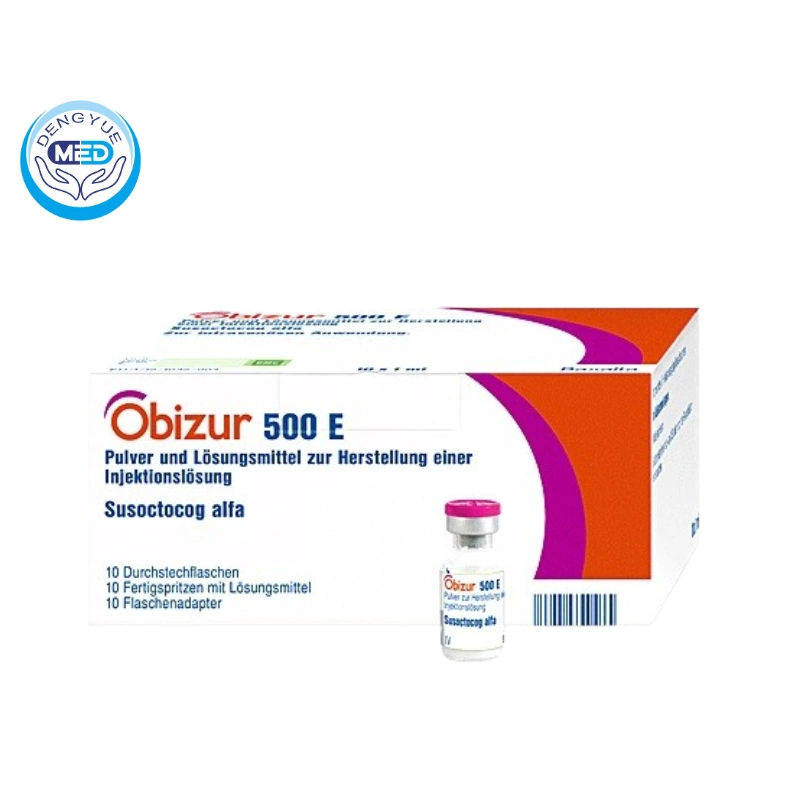
Obizur Susoctocog Alfa | Acquired Haemophilia | HK DengYueMed
- Generic Name/Brand Name: Obizur Susoctocog Alfa/Obizur
- Indications:acquired hemophilia
- Dosage Form:recombinant human factor VIII
- Specification:500 IU per vial
Obizur Susoctocog Alfa Application Scope
Obizur (Susoctocog Alfa) is a recombinant human coagulation factor VIII (FVIII) product used primarily in the treatment of bleeding episodes in patients with acquired hemophilia A, a rare autoimmune disorder where the body produces antibodies that inhibit the activity of FVIII, leading to uncontrolled bleeding. Obizur is designed to replace the deficient or inhibited FVIII activity in these patients, helping to control and prevent bleeding.
Obizur is not indicated for hemophilia A patients with inhibitors to FVIII or congenital hemophilia A.
Obizur Susoctocog Alfa Characteristics
- Ingredients:
- Active ingredient: Susoctocog alfa (Recombinant human factor VIII)
- Excipients: Includes L-histidine, glycine, mannitol, polysorbate 20, and other stabilizers.
- Properties:
- Susoctocog alfa is a recombinant factor VIII replacement therapy. It restores FVIII activity in patients with acquired hemophilia A, reducing the risk of severe bleeding and helping control bleeding episodes. The product is specifically designed to be effective even in patients with inhibitors to conventional factor VIII.
- Specification:Available in single-use vials with a strength of 500 IU/vial, used for intravenous infusion.
- Packaging:
- Vials containing 500 IU/vial of Susoctocog alfa.
- Each vial is accompanied by a diluent for reconstitution, and the product is usually packaged in a box of 1 vial.
- Storage:
- Store at 2°C to 8°C (refrigerated).
- Do not freeze. Keep the product in the original carton to protect it from light.
- Effective period:Shelf life is typically 36 months from the date of manufacture (check packaging for exact expiry date).
- Approval Number:Refer to the specific regulatory approval number based on your country’s health authority (e.g., FDA or EMA).
- Manufacturer:Baxter International Inc. (or as per local distribution).
Guidelines For The Use Of Obizur Susoctocog Alfa
- Dosage and Administration:
- The recommended dose of Obizur is based on the patient’s body weight, the severity of the bleeding episode, and the clinical response. The initial dose is typically 40–80 IU/kg administered as an intravenous infusion. Subsequent doses may be adjusted based on bleeding control.
- Reconstitution: The powder must be reconstituted with the provided diluent, and the solution should be administered via slow intravenous infusion.
- Adverse Reactions:
- Common side effects may include headache, fever, and injection site reactions (e.g., pain, swelling).
- Serious adverse reactions could include hypersensitivity reactions, such as anaphylaxis, and thrombosis in some cases due to the activation of the clotting system.
- Antibody formation to the recombinant FVIII could occur, particularly in patients who develop inhibitors.
Medication Limitations
- Contraindications:
- Contraindicated in patients with known hypersensitivity to Susoctocog alfa or any of the excipients.
- Not indicated for the treatment of congenital hemophilia A or hemophilia A patients with inhibitors.
- Precautions:
- Use with caution in patients with a history of thromboembolic events or cardiovascular disease.
- Monitor for signs of inhibitor development or allergic reactions during and after infusion.
- Ensure that patients with acquired hemophilia A have appropriate management to control any underlying conditions or coexisting diseases.
Obizur Susoctocog Alfa Interactions
- Drug Interactions: No significant drug interactions have been identified in the available literature. However, caution should be exercised when using Obizur with other anticoagulants or medications that may affect coagulation.
Note:
- If there is a new packaging for the drug, the new packaging shall prevail. The above information is sourced from HongKong DengYue Medicine. It is only for internal discussion among medical staff and does not serve as a basis for medication. For specific medication guidelines, please consult the attending physician.
Contact Us
Related products
-

Carbaglu Carglumic Acid | Urea Cycle Disorders | HK DengYueMedicine
-
Recombinant Human Somatropin | Growth Hormone Deficiency | DengYueMedicine
-

Syprine Trientine Hydrochloride Tablets | Wilson’s Disease | DengYueMedicine
-
Teysuno (Tegafur Gimeracil and Oteracil Potassium) – Gastric Cancer | HongKong DengYue Medicine
-
Ubenimex Capsules|Enhancement of immune function
-
Sodium Phenylbutyrate Granules | Urea Cycle Disorders
-

Proglycem Diazoxide | Hyperinsulinemic Hypoglycemia | DengYueMedicine
-
Aidixi Disitamab Vedotin Of Injection | HER2-Overexpressing | DengYueMedicine
Reviews
There are no reviews yet.