

Junshida (Ongericimab) – Hypercholesterolemia | HongKong DengYue Medicine
- Generic Name/Brand Name: Ongericimab/Junshida
- Indications: Non‑familial Hypercholesterolemia, HeFH, Mixed Dyslipidemia
- Dosage Form: Subcutaneous injection
- Specification: 150 mg (1 ml) × 1 vial
Ongericimab Application Scope
Treatment of adult patients with:
-
Primary hypercholesterolemia (non-familial) and mixed dyslipidemia, in combination with statins (or statins + ezetimibe).
-
Heterozygous familial hypercholesterolemia (HeFH) in adults.
-
For statin‑intolerant or statin‑contraindicated patients with non-familial hypercholesterolemia or mixed dyslipidemia, ongericimab may be used alone or combined with ezetimibe.
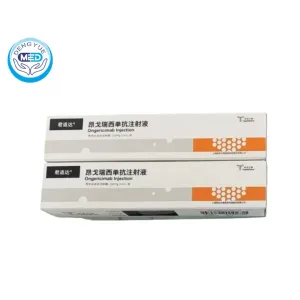
junshida ongericimab
Ongericimab Characteristics
-
Ingredients: Ongericimab
-
Properties: Slightly opalescent, colorless or light‑yellow liquid
-
Packaging Specification: 150 mg / 1 mL
-
Storage: Refrigerate at 2–8 °C, protect from light, avoid freezing
-
Expiry Date: Must be taken from the actual carton or prescribing information accompanying your specific vial
-
Executive Standard: Must be taken from the actual carton or prescribing information accompanying your specific vial
-
Approval Number: Must be taken from the actual carton or prescribing information accompanying your specific vial
-
Date of Revision: This is product-specific and should be checked on the latest package insert
-
Manufacturer: Shanghai Junshi Biosciences Co., Ltd.
Guidelines for the Use of Ongericimab
-
Dosage and Administration:
-
Recommended Dose:
-
150 mg subcutaneous injection every 2 weeks (Q2W) OR
-
300 mg (or 450 mg, per some protocols) every 4 weeks (Q4W) depending on regimen and patient profile.
-
-
Administration: Subcutaneous injection, using pre-filled syringe or auto-injector.
-
Missed Dose: No publicly available official guidance found for missed dose protocol.
-
-
Adverse Reactions:
-
Common Adverse Reactions:
-
In clinical studies, the incidence of treatment-emergent adverse events (TEAEs) was comparable to placebo.
-
In supplier‑provided non‑official sheet: injection site reactions (e.g., erythema, pain), upper respiratory tract infections.
-
-
Serious Adverse Reactions:
-
Publicly available sources do not yet indicate new safety signals or frequent serious AEs from the published Phase 3 trials over one-year exposure.
-
As with all monoclonal antibodies: potential for immunogenicity (anti‑drug antibodies), though no published long-term immunogenicity data yet.
-
-
-
Contraindications: Publicly disclosed sources do not yet list specific contraindications beyond standard considerations (e.g., known hypersensitivity to the active substance or excipients).
-
Precautions:
-
As with other PCSK9 inhibitors, monitor for potential immunogenicity/hypersensitivity. (Long-term safety data still accumulating.)
-
Use according to approved indication (i.e., hypercholesterolemia / dyslipidemia). Off-label use not recommended without thorough risk/benefit evaluation.
-
Ongericimab Interactions
- No publicly reported drug–drug interaction studies for Ongericimab have been published yet. Sources do not provide a defined interaction profile.
Note:
- If there is a new packaging for the drug, the new packaging shall prevail. The above information is sourced from DengYue Medicine.
- This content is for reference only. Prescription drugs must be used under a doctor’s guidance and purchased from authorized sources.
Related products
-

Teysuno (Tegafur Gimeracil and Oteracil Potassium) – Gastric Cancer | HongKong DengYue Medicine
-
Risdiplam Oral Solution For Spinal Muscular Atrophy
-
Marinolone Urea Ointment | Chapped Hands And Feet | HK DengYueMedicine
-
Thymalfasin for Injection – Adjuvant for Influenza Vaccine
-
Nitisinone Capsules | Hereditary Tyrosinemia Type 1
-
Enspryng Satralizumab | Optic Nerve Myelitis Spectrum Disorders
-

Proglycem Diazoxide | Hyperinsulinemic Hypoglycemia | DengYueMedicine
-
Tetrabenazine Tablets | Huntington’s Disease | DengYueMedicine
Reviews
There are no reviews yet.