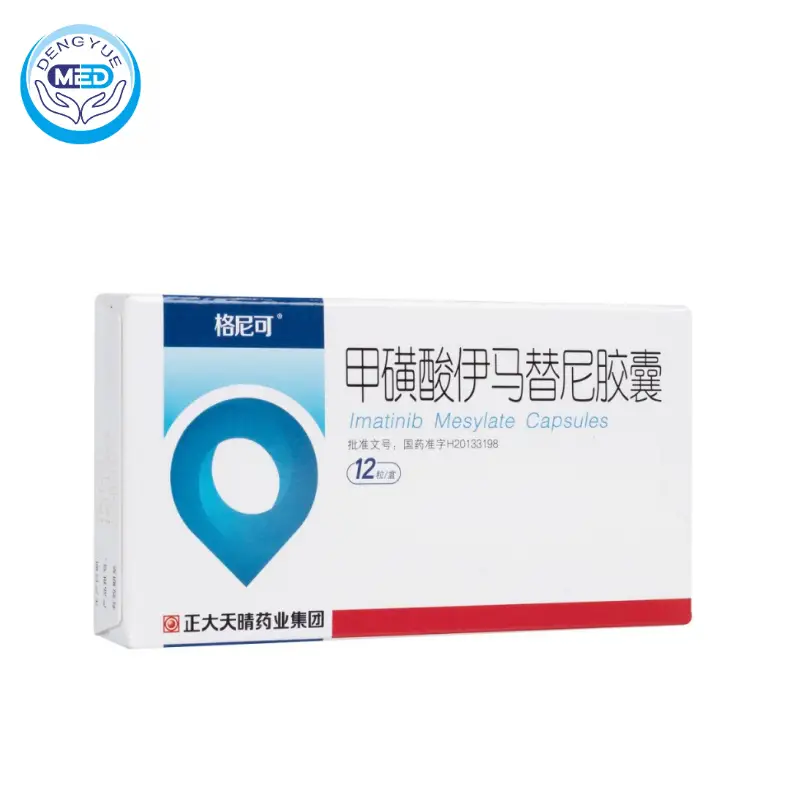
Imatinib Mesylate Tablets are primarily indicated for the treatment of various cancers, including:
- Chronic Myeloid Leukemia (CML): Used in adult and pediatric patients with Philadelphia chromosome-positive (Ph+) CML in chronic phase, accelerated phase, or blast crisis.
- Acute Lymphoblastic Leukemia (ALL): Indicated for adult patients with relapsed or refractory Ph+ ALL.
- Gastrointestinal Stromal Tumors (GIST): For adult patients with unresectable and/or metastatic malignant GIST.
- Myelodysplastic/Myeloproliferative Diseases (MDS/MPD): Treatment of adult patients with MDS/MPD associated with platelet-derived growth factor receptor (PDGFR) gene rearrangements.
- Systemic Mastocytosis (ASM): For adult patients with ASM without the D816V c-Kit mutation or with unknown c-Kit mutational status.
- Hypereosinophilic Syndrome (HES) and/or Chronic Eosinophilic Leukemia (CEL): Indicated for adult patients with HES/CEL.
- Dermatofibrosarcoma Protuberans (DFSP): Treatment of adult patients with unresectable, recurrent, and/or metastatic DFSP.

Imatinib Mesylate Tablets Characteristics
- Ingredients: Each tablet contains imatinib mesylate as the active ingredient.
- Properties: Imatinib mesylate is a tyrosine kinase inhibitor that targets BCR-ABL, c-Kit, and PDGFR tyrosine kinases.
- Specification: Available in tablet strengths of 100 mg and 400 mg.
- Packaging Specification: Typically packaged in blister packs or bottles containing 30 or 90 tablets, depending on the manufacturer.
- Storage: Store at room temperature, 20°C to 25°C (68°F to 77°F); excursions permitted to 15°C to 30°C (59°F to 86°F).
- Expiry Date: 24 months
- Approval Number: H20100263
- Date of Revision: Refer to the specific product labeling for the most recent revision date.
- Manufacturer: Novartis Pharma Stein AG
Guidelines For The Use Of Imatinib Mesylate Tablets
Imatinib Mesylate Tablets Medication Limitations
- Contraindications:Contraindicated in patients with hypersensitivity to imatinib or any of its excipients.
- Precautions:
- Use with caution in patients with hepatic impairment, renal impairment, or cardiac disease.
- Monitor for signs of fluid retention, such as weight gain and edema.
- Advise women of childbearing potential to use effective contraception during treatment and avoid breastfeeding.
- Regular monitoring of complete blood counts and liver function tests is recommended.
Imatinib Mesylate Tablets Interactions
- Drug Interactions:
- CYP3A4 Inhibitors: Co-administration with strong CYP3A4 inhibitors (e.g., ketoconazole, itraconazole) may increase imatinib plasma concentrations; dose reduction may be necessary.
- CYP3A4 Inducers: Co-administration with strong CYP3A4 inducers (e.g., rifampin, St. John’s Wort) may decrease imatinib plasma concentrations; dose increase may be necessary.
- Warfarin: Imatinib may increase the anticoagulant effect of warfarin; consider alternative anticoagulants.
- Acetaminophen: Caution is advised when using acetaminophen concomitantly with imatinib due to potential hepatotoxicity.



Reviews
There are no reviews yet.