
Haiyitan (Glumetinib) – Lung Cancer (NSCLC) | HongKong DengYue Medicine
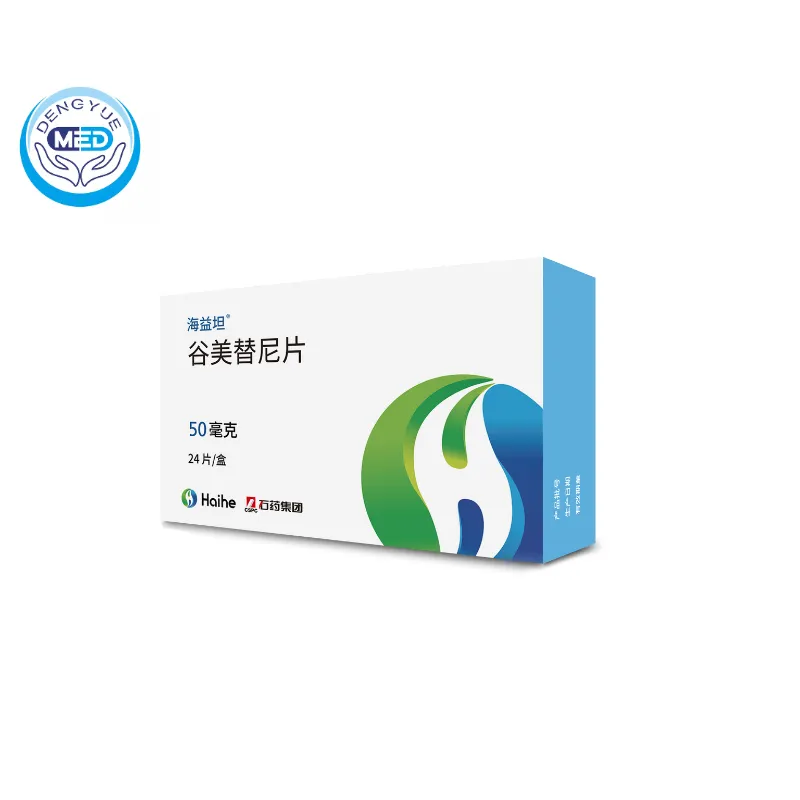
- Generic Name/Brand Name: Glumetinib/Haiyitan
- Indications: NSCLC
- Dosage Form: Tablets
- Specification: 50 mg × 24
Glumetinib Application Scope
Glumetinib (谷美替尼,海益坦®) is indicated for the treatment of adult patients with locally advanced or metastatic non-small cell lung cancer (NSCLC) harboring mesenchymal-epithelial transition factor (MET) exon 14 skipping mutations (METex14 skipping). This includes both previously untreated and previously treated patients, as well as those with brain metastases.
Glumetinib Characteristics
-
Ingredients: Active ingredient: Glumetinib (C21H17N9O2S). Each tablet contains 50 mg of glumetinib. Inactive ingredients are not publicly detailed in available sources but typically include standard tablet excipients such as microcrystalline cellulose, lactose monohydrate, croscarmellose sodium, and magnesium stearate (consult full prescribing information for exact formulation).
-
Properties: Glumetinib is an oral, potent, and highly selective small-molecule inhibitor of the c-MET tyrosine kinase. It specifically binds to the kinase domain of c-MET, inhibiting its activity and downstream signaling pathways (e.g., PI3K/AKT and MAPK), thereby blocking tumor cell proliferation, migration, and invasion in MET-altered tumors. It exhibits rapid absorption (Tmax: 1-3 hours), high plasma protein binding (97%), extensive tissue distribution (Vd/F: 198 L), and a long half-life suitable for once-daily dosing. Steady-state exposure is 2-3 times higher than day 1, with low potential for drug interactions due to minimal CYP3A metabolism contribution (<5%). It is stable in vivo, crosses the blood-brain barrier effectively, and has no dose adjustment needed based on body weight.
-
Packaging Specification: 50 mg tablets; 24 tablets per box.
-
Storage: Store at room temperature (below 25°C), protected from light and moisture, in the original packaging.
-
Expiry Date: 36 months from the date of manufacture (check product labeling).
-
Executive Standard: Chinese Pharmacopoeia (ChP) standards for new chemical entities.
-
Approval Number: 国药准字 H20230005 (conditional approval by NMPA, China, March 8, 2023).
-
Date of Revision: Latest revision: September 2024 (based on recent approvals and updates; confirm with current labeling).
-
Manufacturer: Shanghai Haihe Biopharma Co., Ltd.
Guidelines for the Use of Glumetinib
-
Dosage and Administration:
-
Recommended Dose: 300 mg orally once daily (6 tablets of 50 mg). Continue until disease progression or unacceptable toxicity. No dose adjustment for body weight, mild hepatic/renal impairment, or age.
-
Administration: Swallow tablets whole (do not chew or crush) with water, approximately at the same time each day. May be taken with or without food. If vomiting occurs after dosing, do not replace the dose—resume the next day as scheduled.
-
Missed Dose: If a dose is missed, take it as soon as remembered on the same day. If more than 12 hours late, skip the missed dose and resume the next day. Do not double the dose.
-
-
Adverse Reactions:
-
Common Adverse Reactions: Peripheral edema (most common, ≥20%; mostly grade 1-2), fatigue, nausea, vomiting, headache, diarrhea, rash, decreased appetite, and elevated liver enzymes (ALT/AST). These are generally mild to moderate and resolve with symptomatic treatment.
-
Serious Adverse Reactions: Hepatotoxicity (grade ≥3 ALT/AST elevation in ~5-10%; monitor closely), interstitial lung disease/pneumonitis (rare, <1%), severe skin reactions (e.g., Stevens-Johnson syndrome, rare), and photosensitivity (low risk). Discontinue if grade ≥3 non-hematologic toxicity occurs and does not resolve to grade ≤1.
-
-
Contraindications: Hypersensitivity to glumetinib or any excipients. Severe hepatic impairment (Child-Pugh C). Concurrent use not recommended with strong CYP3A inducers (e.g., rifampin) due to potential reduced efficacy.
-
Precautions:
-
Monitor liver function (ALT, AST, bilirubin) before treatment, every 2 weeks for the first 3 months, then monthly. Withhold for grade 2 elevations, reduce dose by 100 mg for grade 3, and discontinue for grade 4 or persistent grade 3.
-
Assess for interstitial lung disease symptoms (e.g., dyspnea, cough); withhold if suspected and permanently discontinue if confirmed.
-
Use caution in patients with cardiac risk factors; monitor ECG if QT prolongation history.
-
Advise sun protection due to potential photosensitivity.
-
Not recommended during pregnancy (may cause fetal harm); effective contraception required for patients of reproductive potential and males (duration: at least 1 week post-last dose). Lactation: Discontinue breastfeeding.
-
Elderly patients: No overall differences, but monitor for edema and fatigue.
-
Glumetinib Interactions
-
In vitro studies indicate minimal interactions. Glumetinib is not a substrate or inhibitor of P-gp, BCRP, OATP1B1/3, or OCT2, reducing risk with transporters.
-
CYP3A inhibitors/inducers: Low impact on exposure (<5% metabolism via CYP3A), but avoid strong inducers (e.g., phenytoin, rifampin) to prevent reduced efficacy. Strong inhibitors (e.g., ketoconazole) unlikely to cause significant increases.
-
Acid-lowering agents (e.g., PPIs, H2 blockers): No significant effect on absorption.
-
No clinically significant interactions with warfarin, digoxin, or midazolam observed in studies. Monitor for toxicities if co-administered with narrow therapeutic index CYP substrates.
Note:
- If there is a new packaging for the drug, the new packaging shall prevail. The above information is sourced from DengYue Medicine.
- This content is for reference only. Prescription drugs must be used under a doctor’s guidance and purchased from authorized sources.
Related products
-

Transfer Factor Injection | Other Tumors | HK DengYueMed
-
Ensartinib | Non-small Cell Lung Cancer | HongKong DengYue Medicine
-
Anfangning (Garsorasib) – NSCLC | HongKong DengYue Medicine
-
Capmatinib|Non-Small Cell Lung Cancer (NSCLC)
-
Tarlatamab-Dlle|Extensive-Stage Small Cell Lung Cancer
-
Zenocutuzumab-Zbco|Non-Small Cell Lung Cancer|HongKong DengYue Medicine
-
Opdivo (Nivolumab) – NSCLC | HongKong DengYue Medicine
-

Taletrectinib Adipate Capsules|Non–small cell lung cancer
Reviews
There are no reviews yet.