
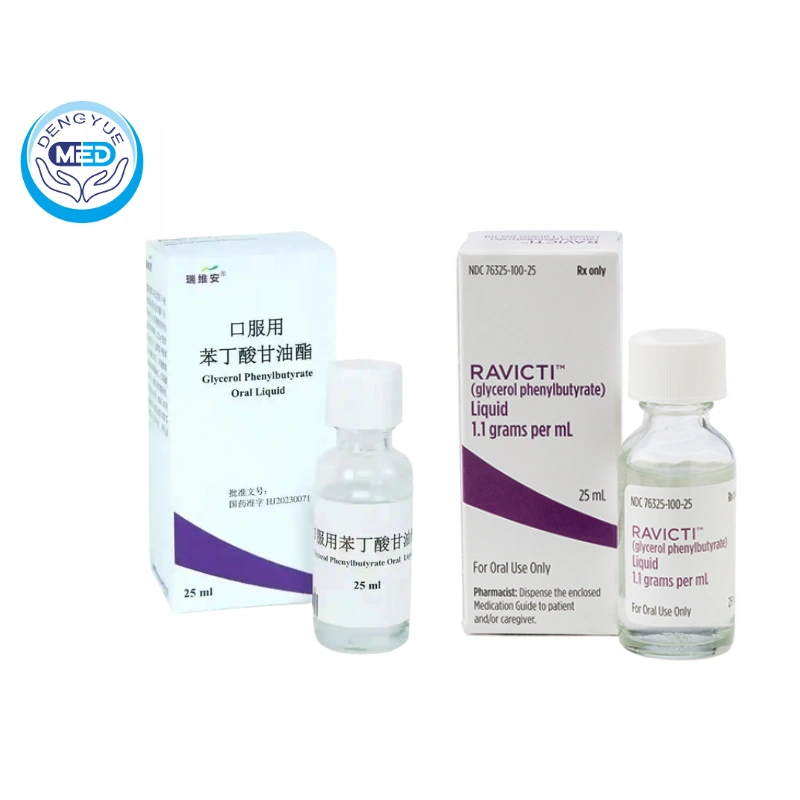
RAVICTI (Glycerol Phenylbutyrate) – Reduce Blood Ammonia Levels | DengYue
- Generic Name/Brand Name: Glycerol phenylbutyrate/Ravicti
- Indications: Chronic management of UCDs (e.g., OTC, CPS1 deficiency)
- Dosage Form: Oral liquid
- Specification: 1.1 g/mL glycerol phenylbutyrate
Glycerol Phenylbutyrate Application Scope
- Used for the chronic management of urea cycle disorders (UCDs) in patients who cannot be controlled by dietary protein restriction and/or amino acid supplementation alone.
- Helps reduce blood ammonia levels by providing an alternative pathway for nitrogen excretion.
Glycerol Phenylbutyrate Characteristics
Ingredients:
- Active ingredient: Glycerol phenylbutyrate (1,2,3-Propanetriyl tris(4-phenylbutanoate).
- Contains 1.1 g/mL of glycerol phenylbutyrate, delivering 1.02 g/mL of phenylbutyrate.
Properties:
- Tasteless and odorless liquid formulation.
- No sodium content, unlike sodium phenylbutyrate alternatives.
- Slow-release mechanism, providing stable ammonia control over 24 hours.
Specification:
- Oral liquid (1.1 g/mL).
Packaging Specification:
- Typically supplied in bottles with an oral syringe or dosing cup for accurate measurement.
Storage:
- Store at room temperature (away from moisture, heat, and direct light).
- Do not freeze.
Expiry Date:
- Refer to the manufacturer’s labeling (not explicitly mentioned in search results).
Executive Standard:
- Approved by FDA (U.S.), EMA (Europe), and other regulatory bodies.
Approval Number:
- FDA NDA #203284.
Date of Revision:
- Last updated in prescribing information as of 2024.
Manufacturer:
- Originally developed by Hyperion Therapeutics, now marketed by various pharmaceutical companies globally.
Guidelines for the Use of Glycerol Phenylbutyrate
Dosage and Administration:
- Adults & children ≥2 years:
- Initial dose: 4.5–11.2 mL/m²/day, divided into 3 equal doses (rounded to nearest 0.5 mL).
- Max dose: 17.5 mL/day.
- Infants <2 years:
- Similar dosing but adjusted for body size, rounded to nearest 0.1 mL.
- Switching from sodium phenylbutyrate:
- Powder form: Multiply dose by 0.81.
- Tablet form: Multiply dose by 0.86.
- Administration:
- Take with food or infant formula.
- Can be given via nasogastric or gastrostomy tube (flush with water after).
Adverse Reactions:
- Common:
- Gastrointestinal issues (diarrhea, vomiting, stomach pain).
- Headache, fatigue, rash.
- Serious (require medical attention):
- Hyperammonemia symptoms (confusion, seizures, lethargy).
- Neurological effects (numbness, tingling, hearing loss).
Contraindications:
- Hypersensitivity to glycerol phenylbutyrate.
- Infants <2 months old (unless under strict medical supervision due to immature pancreatic enzymes).
Precautions:
- Monitor ammonia levels regularly.
- Use caution in liver/kidney disease (may increase drug exposure).
- Avoid abrupt discontinuation (risk of hyperammonemia).
Glycerol Phenylbutyrate Interactions
Drug Interactions:
- Valproic acid, corticosteroids, and haloperidol (may increase ammonia levels).
- Probenecid (may affect excretion of phenylacetylglutamine).
Generic Name / Brand Name:
- Generic: Glycerol phenylbutyrate
- Brand: Ravicti®.
Indications:
- Chronic management of UCDs (e.g., OTC, CPS1 deficiency).
Dosage Form:
- Oral liquid (1.1 g/mL).
Specification:
- 1.1 g/mL glycerol phenylbutyrate.
Note:
- If there is a new packaging for the drug, the new packaging shall prevail. The above information is sourced from DengYue Medicine.
- It is only for internal discussion among medical staff and does not serve as a basis for medication. For specific medication guidelines, please consult the attending physician.
Contact Us
Related products
-

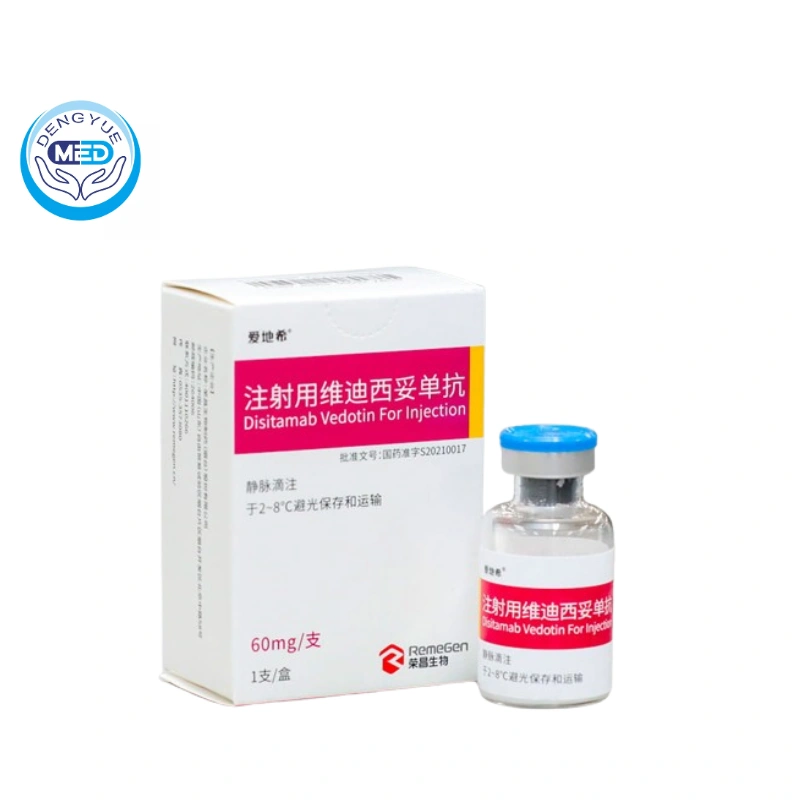
Aidixi Disitamab Vedotin Of Injection | HER2-Overexpressing | DengYueMedicine
-
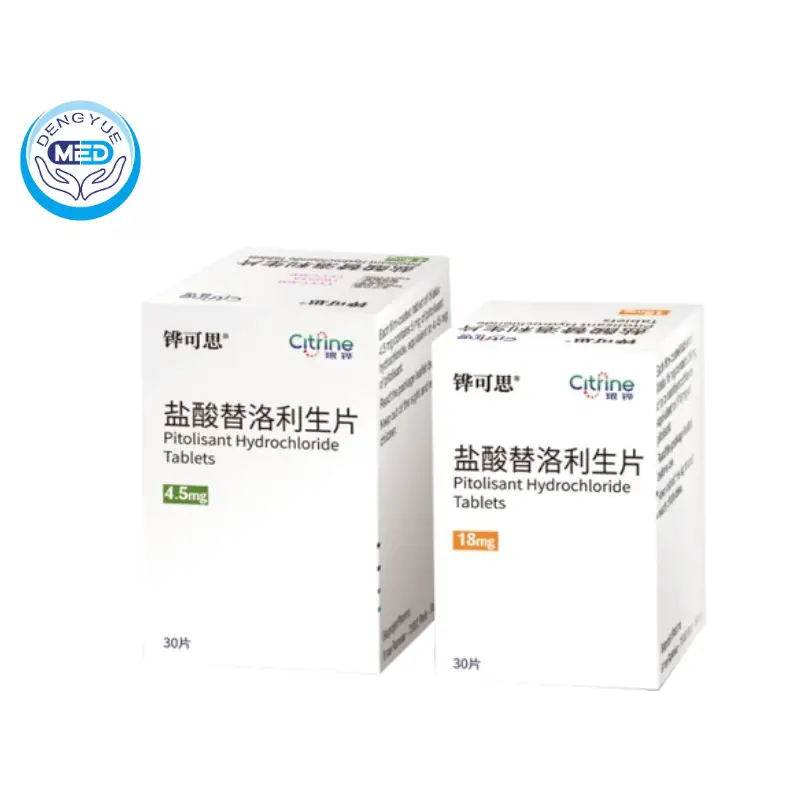
Pitolisant Hydrochloride Tablets
-
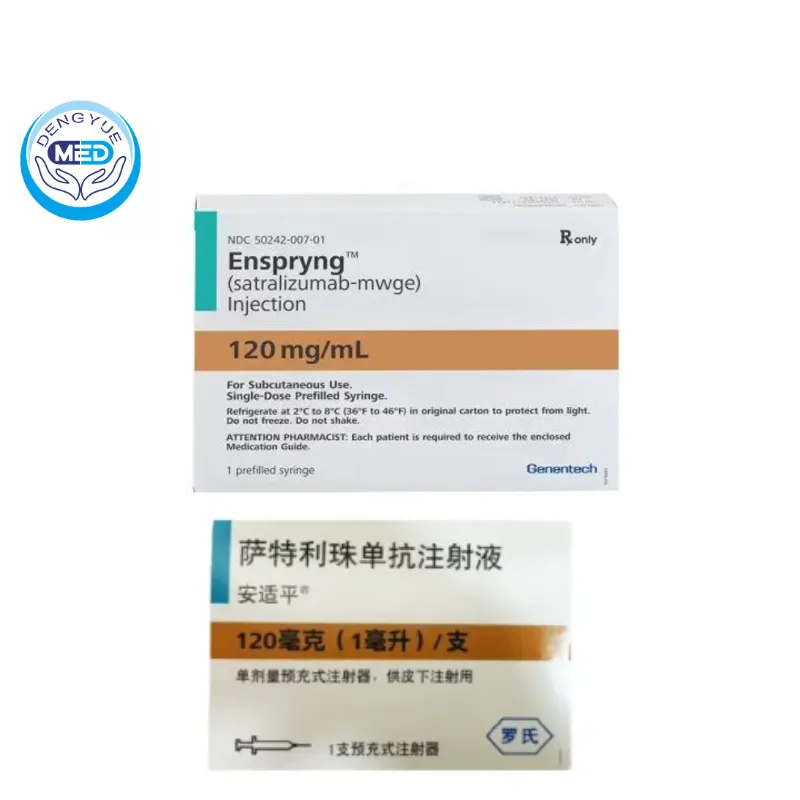
Enspryng Satralizumab | Optic Nerve Myelitis Spectrum Disorders
-
Ubenimex Capsules|Enhancement of immune function
-
Carbaglu Carglumic Acid | Urea Cycle Disorders | HK DengYueMedicine
-
Elaprase Idursulfase | Mucopolysaccharidosis Type II | DengYueMedicine
-
Sodium Phenylbutyrate Granules | Urea Cycle Disorders
-
Sirolimus Gel | Facial Angiofibroma
Reviews
There are no reviews yet.