
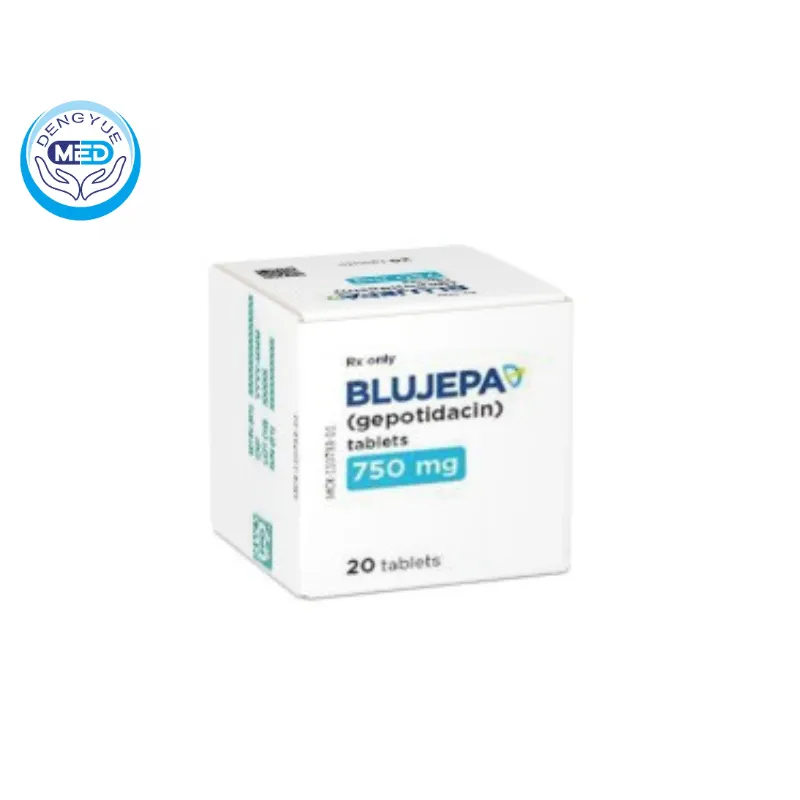
Gepotidacin | UUTIs | HongKong DengYue Medicine
- Generic Name/Brand Name: Gepotidacin/Blujepa
- Indications: Uncomplicated urinary tract infections (uUTIs)
- Dosage Form: Film-coated oral tablets
- Specification: 1,500 mg (two 750 mg tablets) taken orally twice daily (approximately every 12 hours) for 5 days.
Gepotidacin Application Scope
Treatment of uncomplicated urinary tract infections (uUTIs) in female adults and pediatric patients aged 12 years and older, weighing at least 40 kg.
Gepotidacin Characteristics
-
Ingredients:
- Each Blujepa tablet contains 750 mg of gepotidacin, equivalent to 910.7 mg of gepotidacin mesylate (anhydrous).
-
Properties
-
Packaging Specification: Each tablet contains 750 mg of gepotidacin.
-
Storage: Store at room temperature, between 20°C to 25°C (68°F to 77°F); excursions permitted between 15°C to 30°C (59°F to 86°F).
-
Expiry Date: Refer to the packaging for the specific expiration date.
-
Executive Standard: As per FDA approval standards.
-
Approval Number: NDA 218230.
-
Date of Revision: March 2025.
-
Manufacturer: GlaxoSmithKline LLC.
Guidelines for the Use of Gepotidacin
-
Dosage and Administration:
-
Recommended Dosage: 1,500 mg (two 750 mg tablets) taken orally twice daily (approximately every 12 hours) for 5 days.
-
Administration Instructions: Take after a meal to reduce the potential for gastrointestinal intolerance.
-
Missed Dose: If a dose is missed, take it as soon as possible. Do not double the dose to make up for a missed dose
-
-
Adverse Reactions:
-
Common Side Effects (>10%): Diarrhea.
-
Other Side Effects (1–10%): Nausea, abdominal pain, flatulence, headache, soft stools, dizziness, vomiting, vulvovaginal candidiasis.
-
Rare Side Effects (<1%): Abdominal distension, dyspepsia, hypersalivation, presyncope, dysarthria, muscle spasms, hot flush, tachycardia, blurred vision, vertigo, fatigue.
-
Serious Adverse Reactions: QTc prolongation, acetylcholinesterase inhibition effects (e.g., bradycardia, seizures), hypersensitivity reactions including anaphylaxis, and Clostridioides difficile infection.
-
-
Contraindications: Known hypersensitivity to gepotidacin or any component of the formulation.
-
Precautions:
-
Avoid use in patients with a history of QTc interval prolongation or those taking medications that may prolong the QTc interval.
-
Use caution in patients with severe hepatic or renal impairment.
-
Monitor for signs of hypersensitivity reactions during treatment.
-
Interactions
- Drug Interactions:
-
CYP3A4 Inhibitors: Concomitant use with strong CYP3A4 inhibitors (e.g., itraconazole, ketoconazole) may increase gepotidacin exposure; avoid co-administration.
-
QTc-Prolonging Agents: Avoid concurrent use with other medications known to prolong the QTc interval.
-
Acetylcholinesterase Inhibitors: Use caution when co-administered with other acetylcholinesterase inhibitors due to potential additive effects.
Note:
- If there is a new packaging for the drug, the new packaging shall prevail. The above information is sourced from DengYue Medicine.
- It is only for internal discussion among medical staff and does not serve as a basis for medication. For specific medication guidelines, please consult the attending physician.
Related products
-

Spesolimab Injection | Psoriatic Arthritis Treatment
-
Prednisone Acetate Tablets|Immune Inflammatory Diseases
-
Risdiplam Oral Solution For Spinal Muscular Atrophy
-
Aidixi Disitamab Vedotin Of Injection | HER2-Overexpressing | DengYueMedicine
-
Marinolone Urea Ointment | Chapped Hands And Feet | HK DengYueMedicine
-
Tetrabenazine Tablets | Huntington’s Disease | DengYueMedicine
-
Pitolisant Hydrochloride Tablets
-

Syprine Trientine Hydrochloride Tablets | Wilson’s Disease | DengYueMedicine


Reviews
There are no reviews yet.