
Fulzerasib|Non-Small Cell Lung Cancer (NSCLC)|HongKong DengYue Medicine
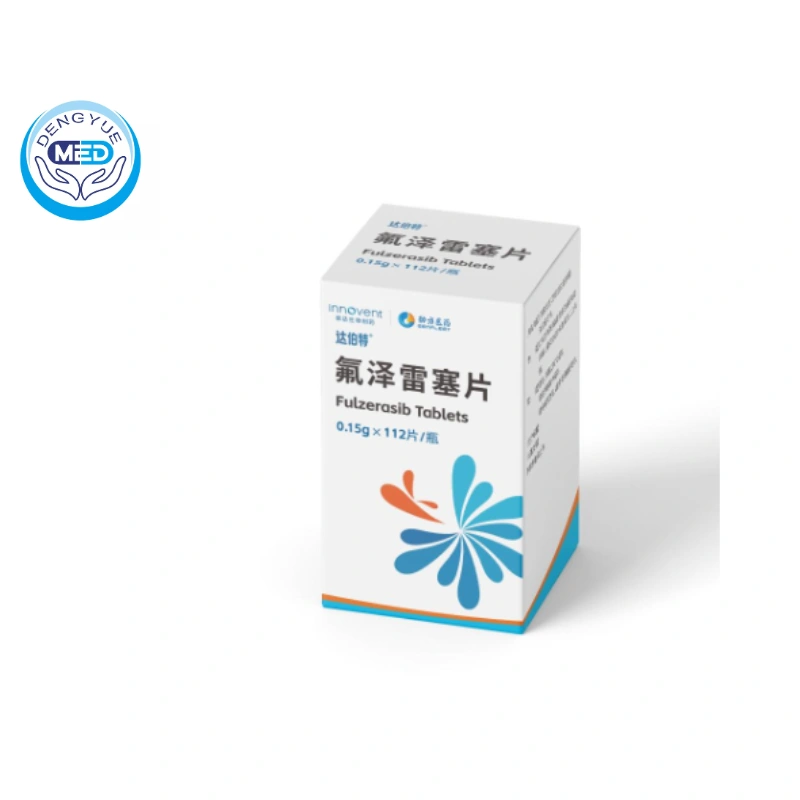
- Generic Name/Brand Name: Fulzerasib/Dupert
- Indications: Non-Small Cell Lung Cancer (NSCLC)
- Dosage Form: tablets
- Specification: 150 mg
Fulzerasib Application Scope
Fulzerasib, also known as Dupert®, is an orally active small molecule inhibitor targeting the KRAS G12C mutant protein. It is developed for the treatment of solid tumors harboring the KRAS G12C oncogenic driver mutation, including non-small cell lung cancer (NSCLC) and colorectal cancer.
Fulzerasib Characteristics
-
Ingredients: The active ingredient in Fulzerasib is fulzerasib.
-
Properties: Fulzerasib covalently inhibits the KRAS G12C mutant protein by locking it in its inactive GDP-bound state, thereby blocking KRAS signaling pathways.
-
Specification: Each tablet contains 150 mg of fulzerasib.
-
Packaging Specification: Available in bottles containing 112 tablets.
-
Storage: Store in a sealed container at temperatures not exceeding 30°C. Keep out of reach of children.
-
Expiry Date: Refer to the packaging for the specific expiration date.
-
Executive Standard: Manufactured in compliance with current Good Manufacturing Practices (cGMP).
-
Approval Number: Specific approval numbers may vary by region; consult local regulatory resources for details.
-
Date of Revision: August 30, 2024.
-
Manufacturer: Innovent Biologics/GenFleet Therapeutics.
Guidelines for the Use of Fulzerasib
-
Dosage and Administration:
- The recommended dosage is 600 mg orally twice daily (approximately 12 hours apart), taken with or without food. Continue treatment until disease progression or unacceptable toxicity occurs. Swallow tablets whole; do not chew, crush, or split. If a dose is missed and more than 4 hours have passed, skip the missed dose and resume at the next scheduled time. If vomiting occurs after taking a dose, do not take an additional dose; continue with the next scheduled dose.
-
Adverse Reactions:
- Common adverse reactions (≥20%) include anemia (47.5%), elevated alanine aminotransferase (28.2%), elevated aspartate aminotransferase (27.6%), increased blood bilirubin (25.2%), proteinuria (24.6%), fatigue (24.3%), hypoproteinemia (23.9%), pruritus (23.3%), edema (22.9%), and elevated gamma-glutamyl transferase (20.3%). Serious adverse reactions (≥3%) include anemia (9.0%), elevated gamma-glutamyl transferase (8.0%), fatigue (4.0%), liver function abnormalities (4.0%), elevated alkaline phosphatase (3.7%), and decreased lymphocyte count (3.7%)
-
Contraindications:
- Contraindicated in patients with known hypersensitivity to fulzerasib or any of its excipients.
-
Precautions:
-
Hepatotoxicity: Monitor liver function tests before starting treatment, every three weeks for the first three months, and monthly thereafter. Adjust dosage or discontinue use if liver function abnormalities occur.
-
Anemia: Monitor complete blood counts before starting treatment, every three weeks for the first three months, and monthly thereafter. Manage anemia appropriately, including dose adjustments or discontinuation if necessary.
-
Fulzerasib Interactions
-
Drug Interactions:
- Caution is advised when co-administering fulzerasib with sensitive CYP2D6 substrates or those with a narrow therapeutic index, as it may increase their plasma concentrations. Avoid concomitant use with strong P-glycoprotein (P-gp) inhibitors. Concurrent use with proton pump inhibitors should also be avoided.
Note:
- If there is a new packaging for the drug, the new packaging shall prevail. The above information is sourced from HongKong DengYue Medicine. It is only for internal discussion among medical staff and does not serve as a basis for medication. For specific medication guidelines, please consult the attending physician.
Related products
-

Methotrexate 2.5mg Tablets | Cancer Chemotherapy
-
Zepzalca (Lurbinectedin) – NSCLC|HongKong DengYue Medicine
-
Transfer Factor Injection | Other Tumors | HK DengYueMed
-
Rezivertinib Mesylate Capsules|Non-Small Cell Lung Cancer (NSCLC)
-
Yidafang (Ivonescimab) – NSCLC | HongKong DengYue Medicine
-
Repotrectinib NTRK | Non-small Cell Lung Cancer
-
Tarlatamab-Dlle|Extensive-Stage Small Cell Lung Cancer
-
Anfangning (Garsorasib) – NSCLC | HongKong DengYue Medicine
Reviews
There are no reviews yet.