
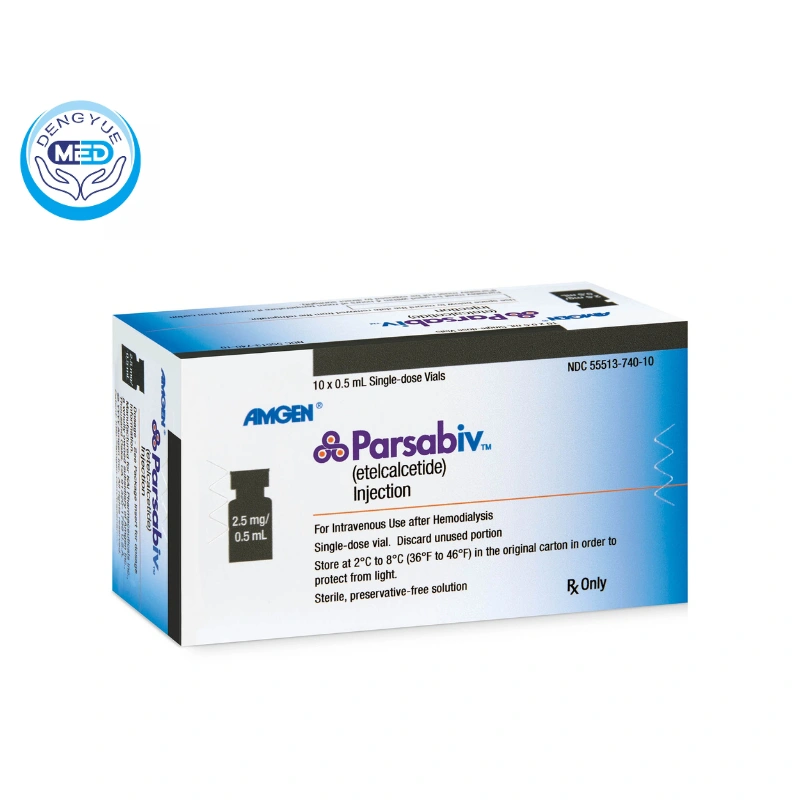
Etelcalcetide Injection|Secondary Hyperparathyroidism (SHPT)
- Generic Name/Brand Name: Etelcalcetide/parsabiv
- Indications: Secondary Hyperparathyroidism (SHPT)
- Dosage Form: slightly yellow solution
- Specification: 2.5 mg/0.5 mL, 5 mg/1 mL, or 10 mg/2 mL
Etelcalcetide Application Scope
Etelcalcetide is a calcimimetic agent used for the treatment of the following conditions:
Secondary Hyperparathyroidism (SHPT): For patients with chronic kidney disease (CKD) undergoing hemodialysis to control serum parathyroid hormone (PTH) levels.
Etelcalcetide Characteristics
Ingredients:
- Active ingredient: Etelcalcetide
- Excipients: May include water for injection, sodium chloride, etc., depending on the formulation.
Properties:
- Appearance: Clear, colorless to slightly yellow solution.
- Dosage form: Injection.
Specification:
- Dosage per vial: Common specifications include 2.5 mg/0.5 mL, 5 mg/1 mL, or 10 mg/2 mL.
Packaging Specification:
- Each box typically contains one or multiple vials of injection.
Storage:
- Storage temperature: 2°C to 8°C (36°F to 46°F).
- Protect from light and avoid freezing.
Expiry Date:
- Refer to the expiration date on the packaging; do not use if expired.
Executive Standard:
- Complies with relevant standards from the FDA (U.S. Food and Drug Administration) or NMPA (China National Medical Products Administration).
Approval Number:
- Refer to the approval number on the packaging.
Date of Revision:
- Refer to the latest revision date on the drug leaflet.
Manufacturer:
- Amgen Inc. or its authorized manufacturers.
Guidelines For The Use Of Etelcalcetide
Dosage and Administration:
- Recommended dose: Adjust based on serum PTH levels and clinical response. The usual starting dose is 5 mg, administered intravenously three times per week after dialysis.
- Dose adjustment: Titrate based on serum PTH levels, calcium levels, and patient tolerance. The maximum dose should not exceed 15 mg per administration.
- Administration method: Administered intravenously by a healthcare professional after dialysis.
Adverse Reactions:
Common adverse reactions include:
- Hypocalcemia
- Muscle spasms
- Diarrhea
- Nausea
- Vomiting
- Headache
- Hyperkalemia
If severe adverse reactions occur (e.g., severe hypocalcemia, arrhythmias), discontinue use immediately and seek medical attention.
Contraindications:
- Hypersensitivity to Etelcalcetide or any excipients.
- Patients with hypocalcemia.
Precautions:
- Regularly monitor serum PTH, calcium, and phosphorus levels during treatment.
- Pregnant or breastfeeding women should use under medical supervision.
- Safety and efficacy in pediatric patients have not been established.
Etelcalcetide Interactions
Drug Interactions:
- Other calcium-lowering agents or vitamin D analogs: May increase the risk of hypocalcemia; use with caution.
- Strong CYP450 inhibitors or inducers: Etelcalcetide is not metabolized by hepatic enzymes, and no significant interactions are expected.
- Medications containing aluminum, magnesium, or calcium: May affect the absorption of Etelcalcetide; consider staggered administration.
Note:
- If there is a new packaging for the drug, the new packaging shall prevail. The above information is sourced from DengYue Medicine.
- It is only for internal discussion among medical staff and does not serve as a basis for medication. For specific medication guidelines, please consult the attending physician.
Contact Us
Related products
-

Prednisone Acetate Tablets|Immune Inflammatory Diseases
-

Nusinersen Injection – Spinal Muscular Atrophy
-

Syprine Trientine Hydrochloride Tablets | Wilson’s Disease | DengYueMedicine
-
Sirolimus Gel | Facial Angiofibroma
-
Thymalfasin for Injection – Adjuvant for Influenza Vaccine
-
Sodium Phenylbutyrate Granules | Urea Cycle Disorders
-
Ozamode/Ozanimod Hydrochloride Capsules
-
Recombinant Human Somatropin | Growth Hormone Deficiency | DengYueMedicine

Reviews
There are no reviews yet.