
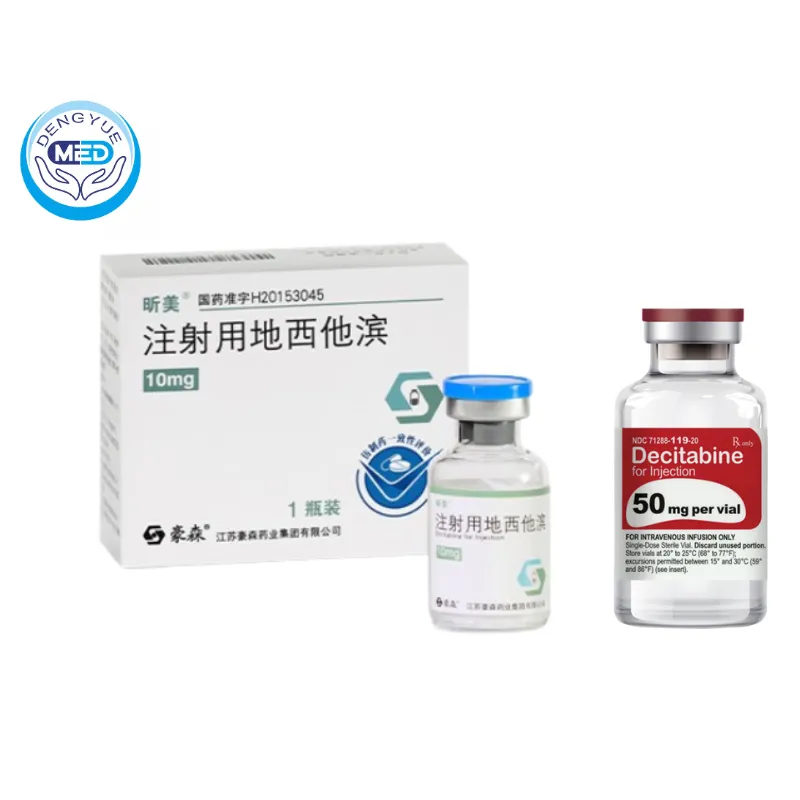
Dacogen (Decitabine) – Hematologic Malignancies | HongKong DengYue Medicine
- Generic Name/Brand Name: Decitabine/Dacogen
- Indications: Myelodysplastic Syndromes, Acute Myeloid Leukemia
- Dosage Form: Lyophilized powder for injection
- Specification: 50 mg × 1 vial
Dacogen Application Scope
Dacogen (decitabine) is indicated for the treatment of adult patients with:
Myelodysplastic Syndromes (MDS), including previously treated and untreated, de novo and secondary MDS of all French-American-British (FAB) subtypes and Intermediate-1, Intermediate-2, and High-Risk International Prognostic Scoring System (IPSS) groups.
Acute Myeloid Leukemia (AML) in adults aged 65 years and older who are not candidates for intensive induction chemotherapy.

dacogen decitabine
Dacogen Characteristics
Ingredients: Decitabine
Properties: Lyophilized (freeze‑dried) sterile powder
Packaging Specification: Supplied as a single‑dose glass vial containing 50 mg decitabine (in 20 mL vial)
Storage: Store the vials at controlled room temperature: 20°C to 25°C (allowed excursions 15°C–30°C)
Expiry Date: As per manufacturer’s approved labelling
Executive Standard: As per the regulatory / pharmacopeia standard in the country where marketed
Approval Number: U.S. FDA NDA: 021790
Date of Revision: Please refer to the latest official prescribing information for the most recent revision date
Manufacturer: Otsuka America Pharmaceutical, Inc.
Guidelines for the Use of Dacogen
Dosage and Administration:
Recommended Dose:
For MDS:
Option 1: 15 mg/m² administered by continuous intravenous infusion over 3 hours, repeated every 8 hours for 3 days. This cycle should be repeated every 6 weeks.
Option 2: 20 mg/m² administered by continuous intravenous infusion over 1 hour, repeated daily for 5 days. This cycle should be repeated every 4 weeks.
For AML: The 5-day dosing regimen (20 mg/m² daily for 5 days) is commonly used.
Administration: Dacogen is for intravenous infusion only. It must be reconstituted and then diluted in a compatible solution (e.g., 0.9% Sodium Chloride Injection, 5% Dextrose Injection, or Lactated Ringer’s Injection) before use.
Missed Dose: This is a clinic/hospital-administered drug. The healthcare team will manage the schedule. If a treatment is delayed, the physician will determine the best course of action, which may involve rescheduling the dose or modifying the treatment cycle.
Adverse Reactions:
Common Adverse Reactions:
Blood and Lymphatic System: Neutropenia, thrombocytopenia, anemia, leukopenia, and febrile neutropenia.
Gastrointestinal: Nausea, constipation, diarrhea, vomiting, abdominal pain, mucositis.
General: Fatigue, pyrexia (fever), edema, rigors.
Other: Cough, headache, petechiae, rash, arthralgia, insomnia, decreased appetite.
Serious Adverse Reactions:
Severe myelosuppression (neutropenia, thrombocytopenia) leading to life-threatening infections (sepsis, pneumonia) and hemorrhage.
Febrile neutropenia.
Drug-induced hepatic toxicity (rare).
Progressive multifocal leukoencephalopathy (PML), a rare but serious brain infection, has been reported.
Contraindications: According to the official prescribing information, there are no formal contraindications listed for Dacogen.
Precautions:
Myelosuppression: Dacogen causes severe neutropenia and thrombocytopenia. Monitor complete blood counts frequently. Therapy may need to be delayed or dose-reduced based on blood counts and the presence of infection or bleeding.
Pregnancy and Lactation: May cause fetal harm. Advise women of the potential risk to a fetus and to avoid pregnancy during treatment. It is not known if decitabine is excreted in human milk; a decision should be made to discontinue nursing or discontinue the drug.
Use in Geriatric Patients: No significant differences in safety were observed relative to younger patients, but elderly patients are more likely to have decreased renal function, which may require caution.
Renal/Hepatic Impairment: Use with caution in patients with pre-existing renal or hepatic impairment, as these populations have not been extensively studied.
Dacogen Interactions
No strong drug-drug interaction section is highlighted in the core prescribing information—but because decitabine is a cytotoxic/hypomethylating agent with marrow suppression, concurrent myelosuppressive therapies or bone marrow-toxic agents must be used with caution or avoided.
Because of potential fetal toxicity, interactions with other teratogenic agents need careful consideration (as with any cytotoxic chemotherapy).
Note:
- If there is a new packaging for the drug, the new packaging shall prevail. The above information is sourced from DengYue Medicine.
- This content is for reference only. Prescription drugs must be used under a doctor’s guidance and purchased from authorized sources.
Related products

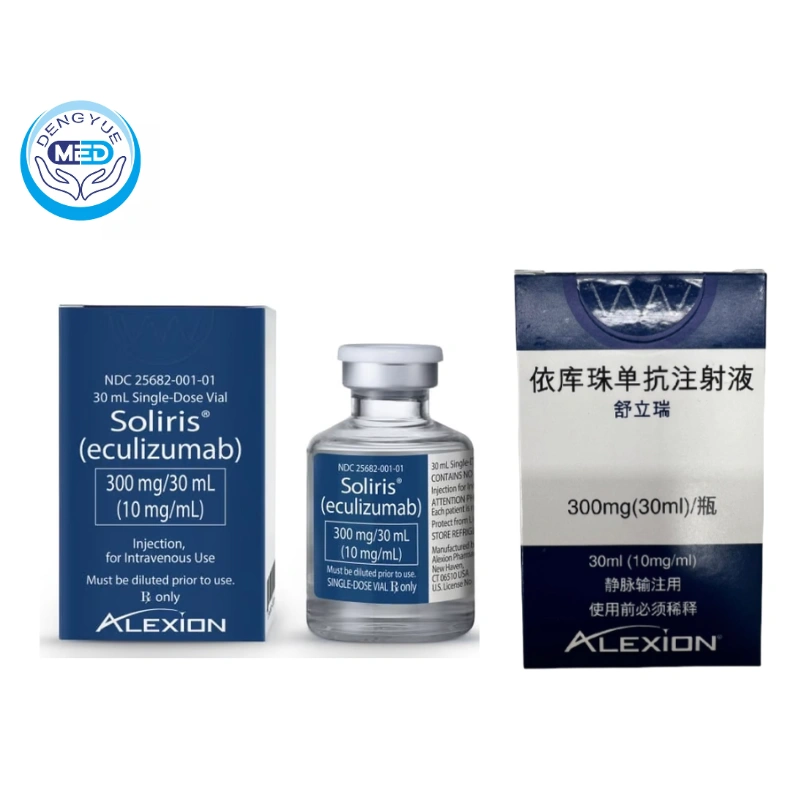
Eculizumab Injection | Paroxysmal Sleep Hemoglobinuria
Azathioprine Tablets

Vonicog Alfa|Hemophiliac|HongKong DengYue Medicine

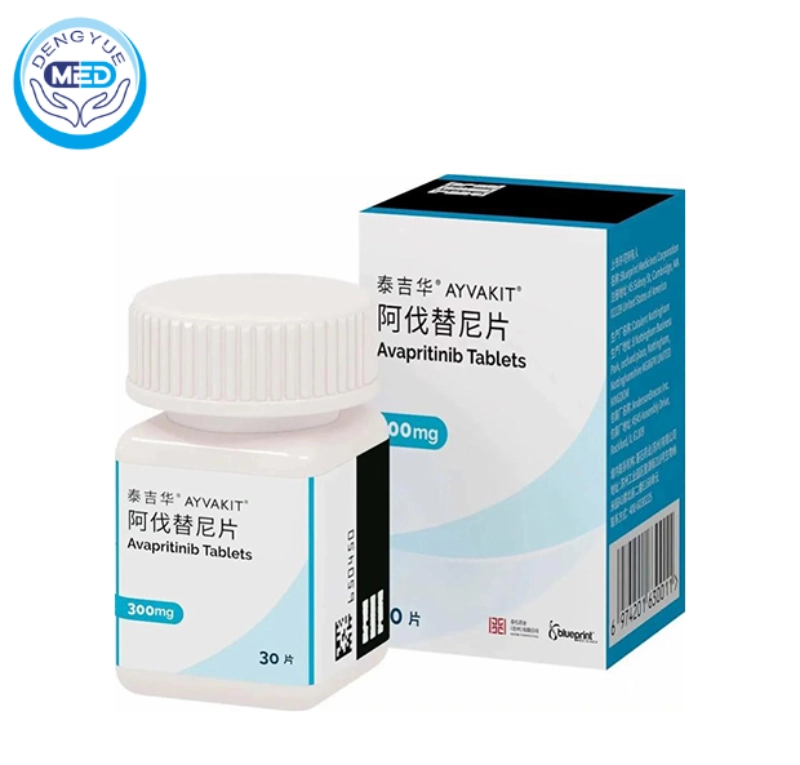
Ayvakit (Avapritinib) – Systemic Mastocytosis | HongKong DengYue Medicine
Piasky Crovalimab | Paroxysmal Nocturnal Hemoglobinuria
Imatinib Mesylate Capsules | Leukemia Treatment
Ciltacabtagene Autoleucel|Multiple Myeloma
Nplate Romiplostim | Immune Thrombocytopenia | DengYueMedicine


Reviews
There are no reviews yet.