
Capmatinib|Non-Small Cell Lung Cancer (NSCLC)
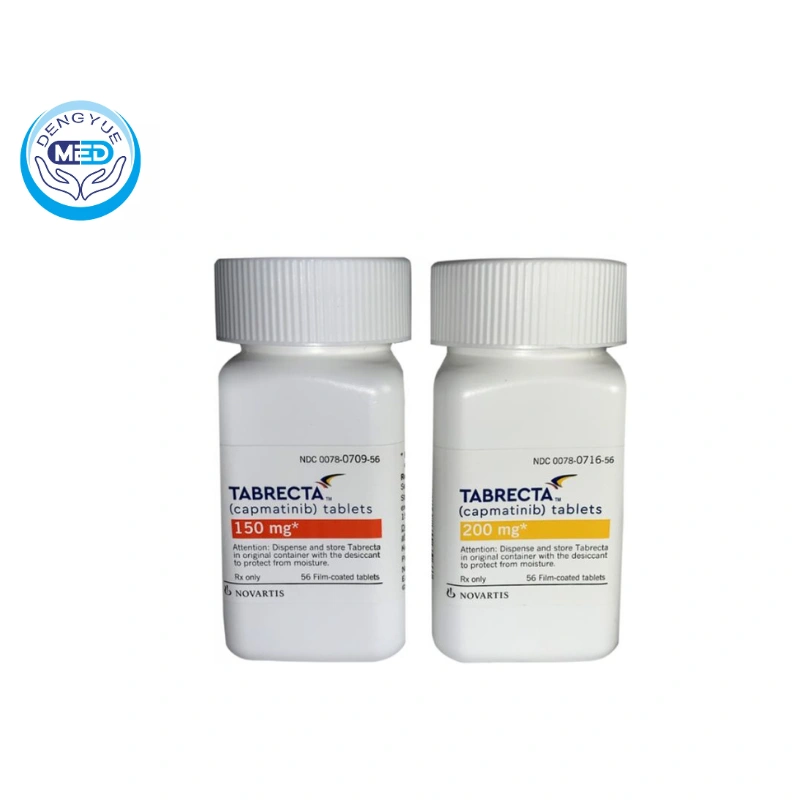
- Generic Name/Brand Name: Capmatinib/Tabrecta
- Indications: Non-Small Cell Lung Cancer (NSCLC)
- Dosage Form: Tablets
- Specification: 150 mg and 200 mg strengths
Capmatinib Application Scope
Capmatinib, marketed under the brand name Tabrecta®, is a tyrosine kinase inhibitor approved for the treatment of adult patients with metastatic non-small cell lung cancer (NSCLC) whose tumors exhibit a mutation leading to mesenchymal-epithelial transition (MET) exon 14 skipping, as detected by an FDA-approved test.
Capmatinib Characteristics
Ingredients:
- Active Ingredient: Capmatinib hydrochloride
- Inactive Ingredients: Specific inactive ingredients are not detailed in the provided sources.
Properties:
- Capmatinib selectively binds to the MET proto-oncogene, inhibiting its phosphorylation and disrupting signal transduction pathways, which can lead to apoptosis in cells that overexpress MET.
Specification:
- Tablets are available in 150 mg and 200 mg strengths.
Packaging Specification:
- Tablets are supplied in bottles containing a specific number of tablets, depending on the prescribed dosage.
Storage:
- Store at room temperature, away from heat, moisture, and direct light. Keep from freezing.
Expiry Date:
- Use within 6 weeks after opening the bottle. Dispose of any unused medicine after 6 weeks.
Executive Standard:
- Approved by the U.S. Food and Drug Administration (FDA) for the specified indication.
Approval Number:
- Specific approval numbers are not provided in the available sources.
Date of Revision:
- The prescribing information was updated in August 2022.
Manufacturer:
- Novartis Pharmaceuticals Corp.
Guidelines For The Use Of Capmatinib
Dosage and Administration:
- The recommended dose is 400 mg orally twice daily, with or without food. Swallow tablets whole; do not break, crush, or chew them.
Adverse Reactions:
- Common adverse reactions (≥20%) include peripheral edema, nausea, musculoskeletal pain, fatigue, vomiting, dyspnea, cough, and decreased appetite.
Contraindications:
- There are no listed contraindications in the manufacturer’s U.S. labeling.
Precautions:
- Interstitial Lung Disease (ILD)/Pneumonitis: Monitor for new or worsening pulmonary symptoms. Withhold capmatinib if ILD or pneumonitis is suspected; discontinue if confirmed.
- Hepatotoxicity: Perform liver function tests prior to starting treatment, every two weeks during the first three months, and then monthly or as clinically indicated.
- Photosensitivity: Advise patients to limit direct ultraviolet exposure and use protective measures such as sunscreen or protective clothing during treatment.
Interactions
Drug Interactions:
- CYP3A Inhibitors: Co-administration with strong CYP3A inhibitors may increase capmatinib exposure, potentially enhancing adverse reactions.
- CYP3A Inducers: Co-administration with strong or moderate CYP3A inducers can decrease capmatinib exposure, possibly reducing its efficacy. Avoid concomitant use with strong and moderate CYP3A inducers.
- CYP1A2 Substrates: Capmatinib can increase blood levels and effects of caffeine; patients may need to limit caffeine intake.
Note:
- If there is a new packaging for the drug, the new packaging shall prevail. The above information is sourced from HongKong DengYue Medicine. It is only for internal discussion among medical staff and does not serve as a basis for medication. For specific medication guidelines, please consult the attending physician.
Contact Us
Related products
-

Compound Cyclophosphamide Tablets | Ovarian Cancer | DengYueMed
-
Rezivertinib Mesylate Capsules|Non-Small Cell Lung Cancer (NSCLC)
-
Zepzalca (Lurbinectedin) – NSCLC|HongKong DengYue Medicine
-
Vindesine Sulfate For Injection | Melanoma | HK DengYue
-
Chloroxoquinoline Capsules | Lung Cancer
-
Methotrexate 2.5mg Tablets | Cancer Chemotherapy
-
Tetrandrine Tablets | Anti Rheumatism | Lung Cancer
-
Opdivo (Nivolumab) – NSCLC | HongKong DengYue Medicine

Reviews
There are no reviews yet.