
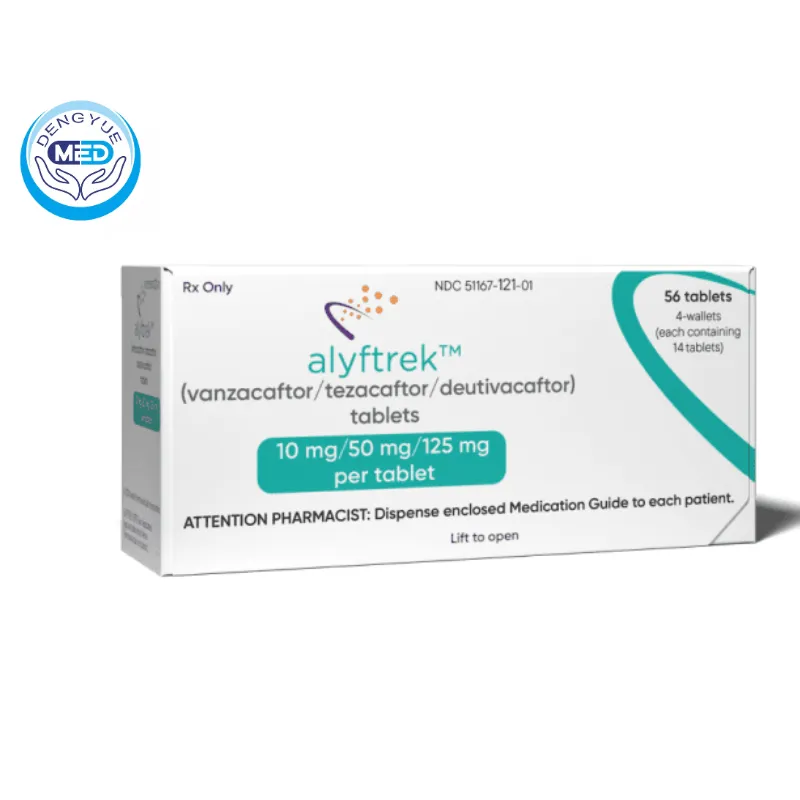
Alyftrek | Cystic Fibrosis | HongKong DengYue Medicine
- Generic Name/Brand Name: Vanzacaftor, Tezacaftor and Deutivacaftor / Alyftrek
- Indications: Cystic Fibrosis in individuals aged 6 years and older
- Dosage Form: Oral capsule
- Specification: 10 mg / 50 mg / 125 mg
Alyftrek Application Scope
Alyftrek is a prescription medicine used for the treatment of cystic fibrosis (CF) in patients aged 6 years and older who have at least one F508del mutation or another responsive mutation in the CFTR gene.
It is a triple combination CFTR modulator that helps improve the function of the defective CFTR protein, thereby enhancing lung function and reducing symptoms associated with CF.
Characteristics
-
Ingredients:
-
Vanzacaftor
-
Tezacaftor
- Deutivacaftor
-
-
Properties: Alyftrek is a once-daily, triple-combination CFTR modulator designed to enhance the function of the defective CFTR protein in patients with cystic fibrosis (CF). It is indicated for individuals aged 6 years and older who possess at least one F508del mutation or another responsive mutation in the CFTR gene.
-
Packaging Specification: 10 mg / 50 mg / 125 mg
-
Storage:
- Store at room temperature between 68°F to 77°F (20°C to 25°C)
-
Short-term excursions permitted between 59°F to 86°F (15°C to 30°C)
-
Expiry Date: Refer to the expiration date printed on the product packaging
-
Executive Standard: Approved under FDA New Drug Application (NDA) 205718.
-
Approval Number: FDA approval granted on December 20, 2024
-
Date of Revision: December 2024
-
Manufacturer:Vertex Pharmaceuticals Incorporated
Guidelines for the Use of Ensartinib
-
Dosage and Administration:
-
Patients aged 6 to less than 12 years:
-
Weight <40 kg: Three tablets of 4 mg/20 mg/50 mg
-
Weight ≥40 kg: Two tablets of 10 mg/50 mg/125 mg
-
-
Patients aged 12 years and older:
-
Two tablets of 10 mg/50 mg/125 mg
-
-
-
Adverse Reactions:
-
Cough
-
Headache
-
Nasopharyngitis
-
Upper respiratory tract infection
-
Oropharyngeal pain
-
Fatigue
-
Elevated liver enzymes (ALT/AST)
-
Rash
-
Sinus congestion
-
Non-congenital lens opacities/cataracts
-
Hepatic injury/failure
-
Hypersensitivity reactions
-
-
Contraindications:
-
Should not be used in patients with severe hepatic impairment (Child-Pugh Class C).
-
It is not recommended in patients with moderate hepatic impairment (Child-Pugh Class B) unless the benefit outweighs the risk.
-
-
Precautions:
-
Liver Function Monitoring: Assess liver function tests (ALT, AST, alkaline phosphatase, and bilirubin) before initiating treatment, every month during the first 6 months, every 3 months during the next 12 months, and at least annually thereafter.
-
Hypersensitivity Reactions: Monitor for signs of serious hypersensitivity reactions, including anaphylaxis. Discontinue Alyftrek if such reactions occur.
-
Cataracts: Non-congenital lens opacities/cataracts have been reported in pediatric patients. Baseline and follow-up ophthalmological examinations are recommended.
-
Interactions
-
Drug Interactions:
-
CYP3A Inhibitors: Strong (e.g., itraconazole) or moderate (e.g., fluconazole) CYP3A inhibitors may increase exposure to Alyftrek components; dosage adjustment may be necessary.
-
CYP3A Inducers: Strong or moderate CYP3A inducers (e.g., rifampin, carbamazepine) may decrease the effectiveness of Alyftrek; concurrent use is not recommended.
-
Other Interactions: Caution is advised when co-administering with CYP2C9 substrates (e.g., warfarin), BCRP substrates, or P-gp substrates with a narrow therapeutic index. Monitor for potential interactions
-
Note:
- If there is a new packaging for the drug, the new packaging shall prevail. The above information is sourced from DengYue Medicine.
- It is only for internal discussion among medical staff and does not serve as a basis for medication. For specific medication guidelines, please consult the attending physician.
Related products
-

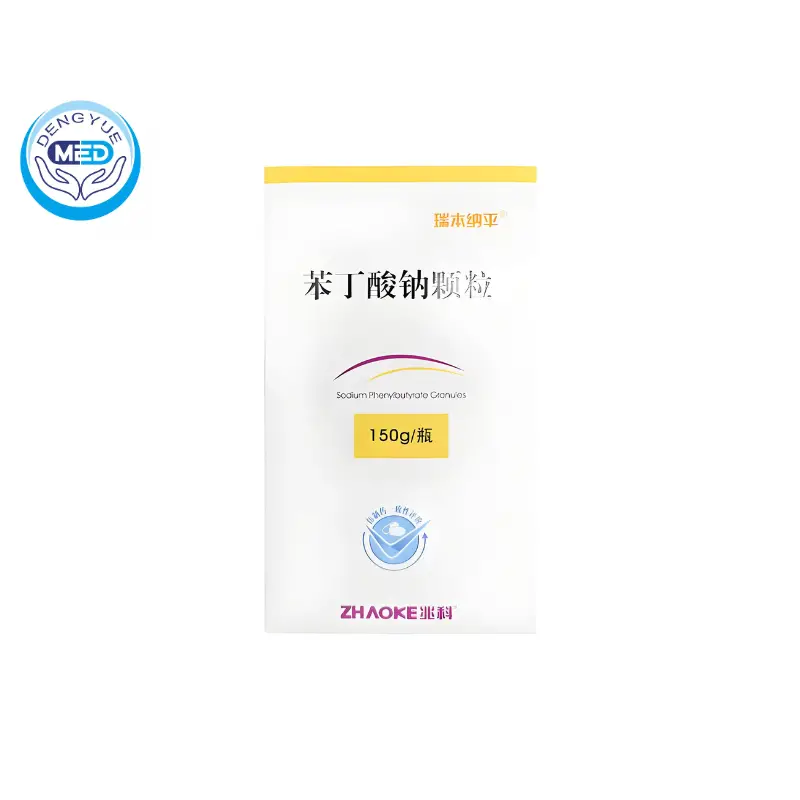
Sodium Phenylbutyrate Granules | Urea Cycle Disorders
-
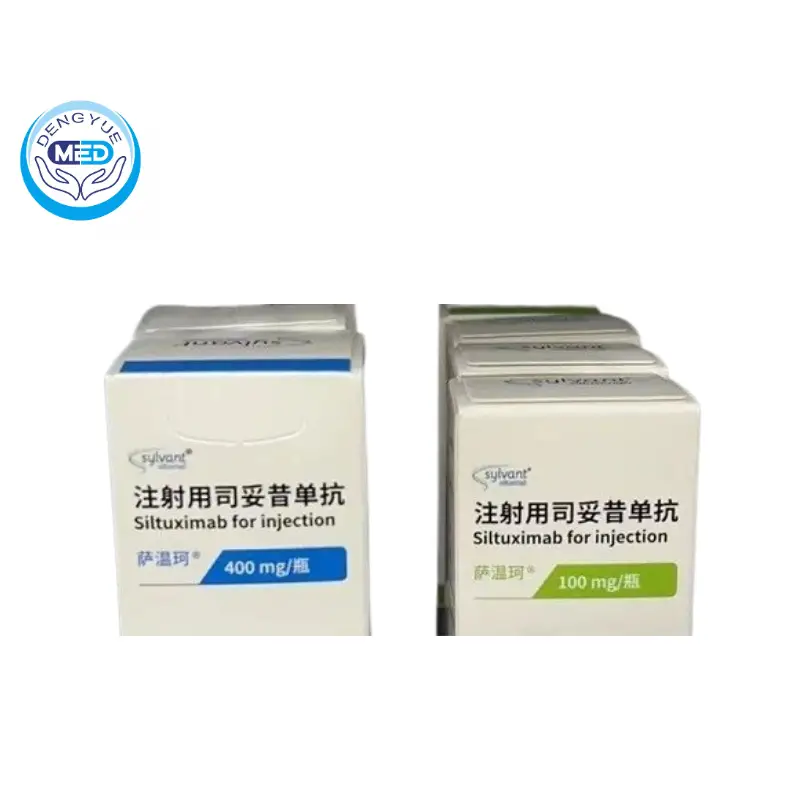
Siltuximab For Injection | Castleman’s Disease
-
Spesolimab Injection | Psoriatic Arthritis Treatment
-

Nusinersen Injection – Spinal Muscular Atrophy
-
Sirolimus Gel | Facial Angiofibroma
-
Myozyme(Alglucosidase Alfa )- Pompe Disease
-
Enspryng Satralizumab | Optic Nerve Myelitis Spectrum Disorders
-
Ozamode/Ozanimod Hydrochloride Capsules


.webp "Myozyme(Alglucosidase Alfa )- Pompe Disease")
Reviews
There are no reviews yet.