
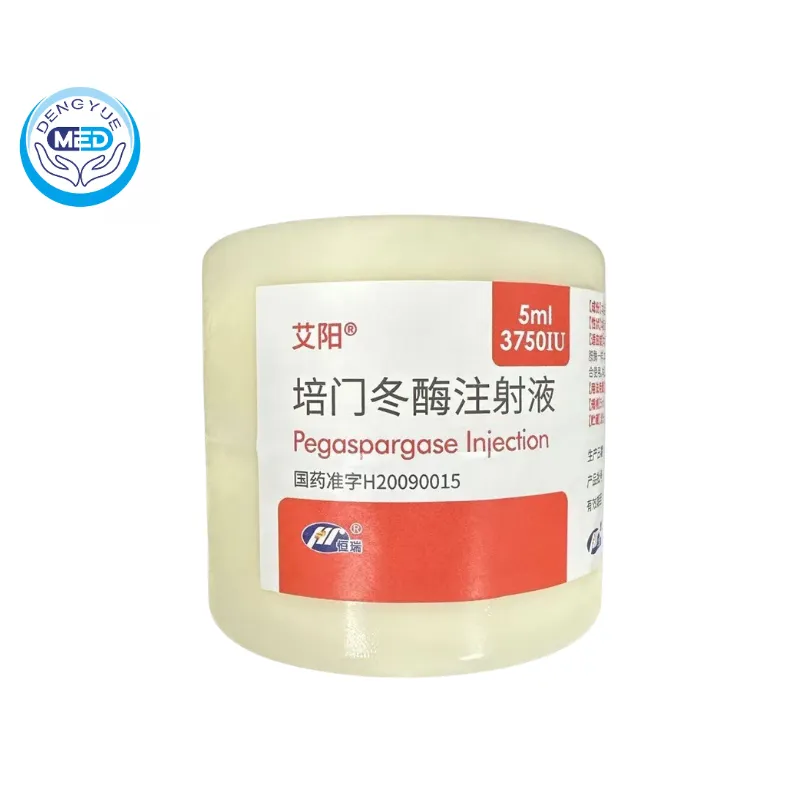
Aiyang (Pegaspargase) – Lymphoblastic Leukemia (ALL) | HongKong DengYue Medicine
- Generic Name/Brand Name: Pegaspargase/Aiyang
- Indications: Acute lymphoblastic leukemia (ALL)
- Dosage Form: Injection
- Specification: 3,750 IU x 1 vial (5 mL: 3,750 International Units, equivalent to 750 IU/mL)
Pegaspargase Application Scope
Used as part of a multi-agent chemotherapeutic regimen for acute lymphoblastic leukemia (ALL) in pediatric and adult patients.

Pegaspargase Characteristics
-
Ingredients:Pegaspargase (pegylated L-asparaginase) (active) in a buffered aqueous solution (no preservatives)
-
Properties:
-
It is a PEGylated form of E. coli L-asparaginase (i.e. enzyme conjugated with polyethylene glycol)
-
Enzyme activity: hydrolyzes L-asparagine to aspartate + ammonia, depleting plasma asparagine, thus starving leukemic cells that cannot synthesize asparagine efficiently
-
-
Packaging Specification: 3,750 International Units / 5 mL (i.e. 750 IU/mL) single-dose vial
-
Storage:
-
Store refrigerated, between 2 °C and 8 °C (do not freeze)
-
Do not use if frozen, shaken vigorously, or stored > 48 hours at room temperature
-
-
Expiry Date: As per manufacturer’s label (typical shelf life as specified on vial/box) — not uniformly published in public summary; refer to the specific batch label.
-
Executive Standard: Depends on the country
-
Approval Number: National Drug Approval Number H20090015
-
Date of Revision: Last major revision in FDA label: November 2021
-
Manufacturer: Jiangsu Hengrui Medicine Co., Ltd.
Guidelines for the Use of Pegaspargase
-
Dosage and Administration:
-
Recommended Dose:
-
For patients ≤ 21 years: 2,500 IU/m² every 14 days
-
For patients > 21 years: 2,000 IU/m² every 14 days
-
-
Administration:
-
Intramuscular (IM) injection or intravenous (IV) infusion
-
For IV: infuse over 1–2 hours in 100 mL of 0.9% NaCl or 5% dextrose, can be given via an already-running infusion line
-
IM: limit volume per injection site (≤ 2 mL in children, ≤ 3 mL in adults; if larger, split into multiple sites)
-
-
Missed Dose:
Not specifically detailed in public prescribing summary. Typically, dosing is scheduled every 14 days; for missed dose, physician judgment is required (e.g. administer as soon as possible within protocol allowances).
-
-
Adverse Reactions:
-
Common Adverse Reactions:
-
Hypoalbuminemia
-
Elevated liver transaminases
-
Hyperglycemia
-
Hypertriglyceridemia
-
Febrile neutropenia
-
Increased bilirubin
-
Pancreatitis
-
Abnormal clotting studies
-
Hypersensitivity / allergic reactions
-
-
Serious Adverse Reactions:
-
Anaphylaxis or serious hypersensitivity reactions
-
Thrombosis / embolic events
-
Pancreatitis
-
Hepatotoxicity / severe liver injury
-
Hemorrhage
-
Glucose intolerance / hyperglycemia requiring insulin
-
-
-
Contraindications:
-
History of serious hypersensitivity to pegaspargase or any component
-
Prior serious thrombosis with L-asparaginase therapy
-
Prior history of pancreatitis associated with L-asparaginase
-
Prior serious hemorrhagic events with L-asparaginase therapy
-
Severe hepatic impairment (e.g. bilirubin >3× ULN, transaminases > 10× ULN)
-
-
Precautions:
-
Monitor for hypersensitivity and infusion reactions; observe for at least 1 hour post-administration
-
Monitor liver function tests, bilirubin, transaminases
-
Monitor coagulation parameters (PT, aPTT, fibrinogen) and for signs of bleeding or thrombosis
-
Monitor pancreatic enzymes / signs of pancreatitis
-
Monitor serum glucose (risk of hyperglycemia)
-
In patients with previous hypersensitivity, consider switching to alternative asparaginase forms
-
Pregnancy / lactation: use with caution; animal studies show teratogenic risk; discontinue breastfeeding during treatment
-
Pegaspargase Interactions
-
Because pegaspargase may reduce serum proteins, it can increase toxicity of protein-bound drugs
-
It can interfere with other agents requiring protein synthesis / cell division (e.g. methotrexate, cytarabine)
-
Interaction with vincristine: effects may be potentiated or altered; caution advised
Note:
- If there is a new packaging for the drug, the new packaging shall prevail. The above information is sourced from DengYue Medicine.
- This content is for reference only. Prescription drugs must be used under a doctor’s guidance and purchased from authorized sources.
Related products
-

Nimustine Hydrochloride for Injection | Brain Cancer
-
Dotinurad|Hyperuricemia|HongKong DengYue Medicine
-

Lunsumio(Mosunetuzumab)- NHL|HongKong DengYue Medicine
-
Hydroxycarbamide Tablets | Treatment of Leukemia
-
Zevorcabtagene Autoleucel Injection|Multiple Myeloma
-
Azathioprine Tablets
-
Simoctocog Alfa|Hemophilia A|HongKong DengYue Medicine
-
Methotrexate 2.5mg Tablets | Cancer Chemotherapy

Reviews
There are no reviews yet.