
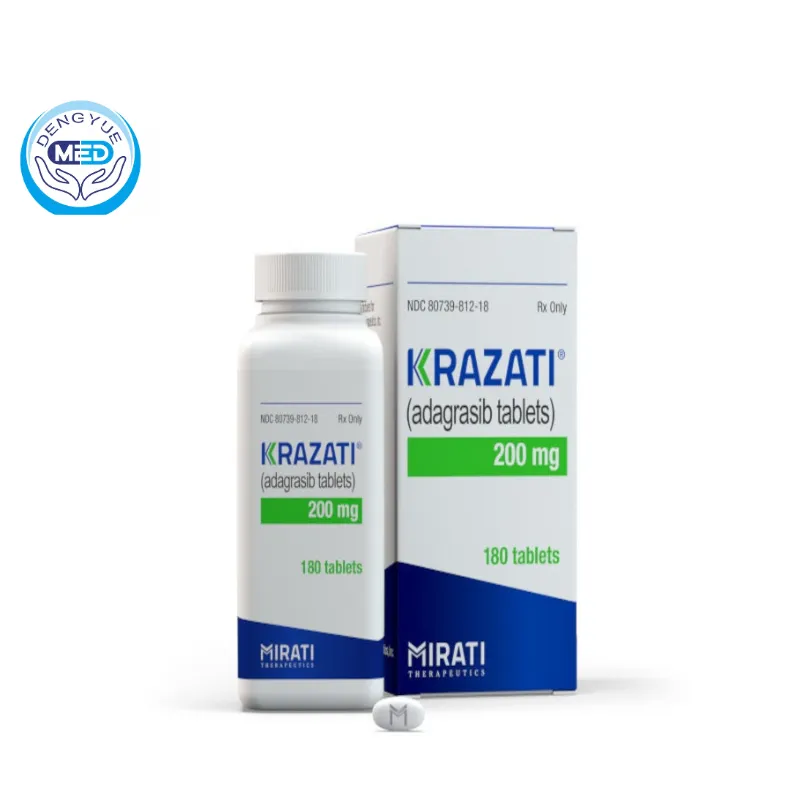
Adagrasib Tablets | Lung Cancer | HK DengYueMed
- Generic Name/Brand Name: Adagrasib/KRAZATI®
- Indications: Non-Small Cell Lung Cancer, Colorectal Cancer
- Dosage Form: Film-coated tablets.
- Specification: Each tablet contains 200 mg of adagrasib.
Adagrasib Tablets Application Scope
Adagrasib tablets are inhibitors of the RAS GTPase family, indicated for the treatment of adult patients with locally advanced or metastatic non-small cell lung cancer (NSCLC) harboring the KRAS G12C mutation, who have received at least one prior systemic therapy.
Adagrasib Package Insert
-
Ingredients:
- Active ingredient: Adagrasib (chemical name: {(2S)-4-[7-(8-chloronaphthalen-1-yl)-2-{[(2S)-1-methylpyrrolidin-2-yl]methoxy}-5,6,7,8-tetrahydropyrido[3,4-d]pyrimidin-4-yl]-1-(2-fluoroprop-2-enoyl)piperazin-2-yl}acetonitrile).
- Inactive ingredients: Colloidal silicon dioxide, crospovidone, magnesium stearate (vegetable source), mannitol, and microcrystalline cellulose. The film coating contains oligodextrin, maltodextrin, medium-chain triglycerides (vegetable source), polydextrose, talc, and titanium dioxide.
-
Properties:
White to off-white, oval, film-coated, immediate-release tablets with “200” on one side and “M” on the other. -
Specification:
200 mg per tablet. -
Packaging Specification:
200 mg × 180 tablets. -
Storage:
Store at room temperature, 20°C to 25°C (68°F to 77°F), with permitted excursions between 15°C and 30°C (59°F to 86°F). -
Expiry Date:
18 months. -
Executive Standard:
Not specified. -
Approval Number:
Not specified. -
Date of Revision:
September 11, 2024. -
Manufacturer:
Mirati Therapeutics, USA.
Guidelines For The Use Of Adagrasib Tablets
-
Dosage and Administration:
The recommended dosage is 600 mg twice daily, taken orally with or without food. -
Adverse Reactions:
The most common adverse reactions (≥25%) include nausea, diarrhea, vomiting, fatigue, musculoskeletal pain, hepatotoxicity, renal impairment, edema, dyspnea, and decreased appetite. -
Contraindications:
Not specified. -
Precautions:
- Patients should be monitored for gastrointestinal symptoms such as diarrhea, nausea, and vomiting, and supportive care should be provided as needed.
- Avoid co-administration with drugs known to prolong the QTc interval in patients at risk, and monitor ECG and electrolyte levels accordingly.
Adagrasib Tablets Interactions
Drug Interactions:
- Avoid co-administration with strong CYP3A4 inducers (e.g., carbamazepine, phenobarbital, rifampin).
- Strong CYP3A4 inhibitors (e.g., clarithromycin, itraconazole, ketoconazole) should also be avoided until Adagrasib reaches a stable concentration.
Note:
- If there is a new packaging for the drug, the new packaging shall prevail. The above information is sourced from HongKong DengYue Medicine.
- It is only for internal discussion among medical staff and does not serve as a basis for medication. For specific medication guidelines, please consult the attending physician.
Related products
-

Repotrectinib NTRK | Non-small Cell Lung Cancer
-
Tetrandrine Tablets | Anti Rheumatism | Lung Cancer
-
Methotrexate 2.5mg Tablets | Cancer Chemotherapy
-
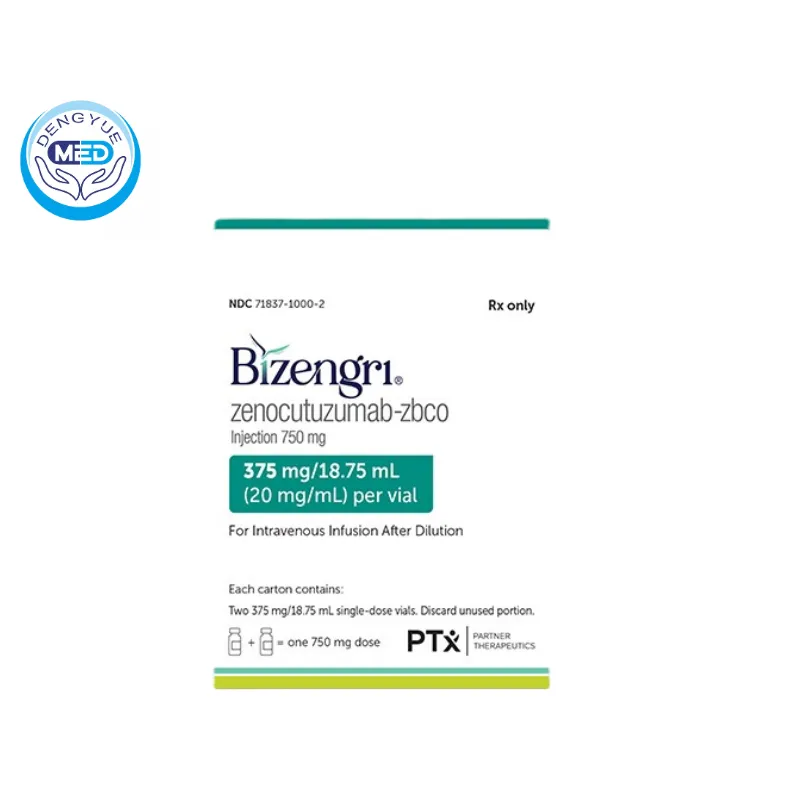
Zenocutuzumab-Zbco|Non-Small Cell Lung Cancer|HongKong DengYue Medicine
-
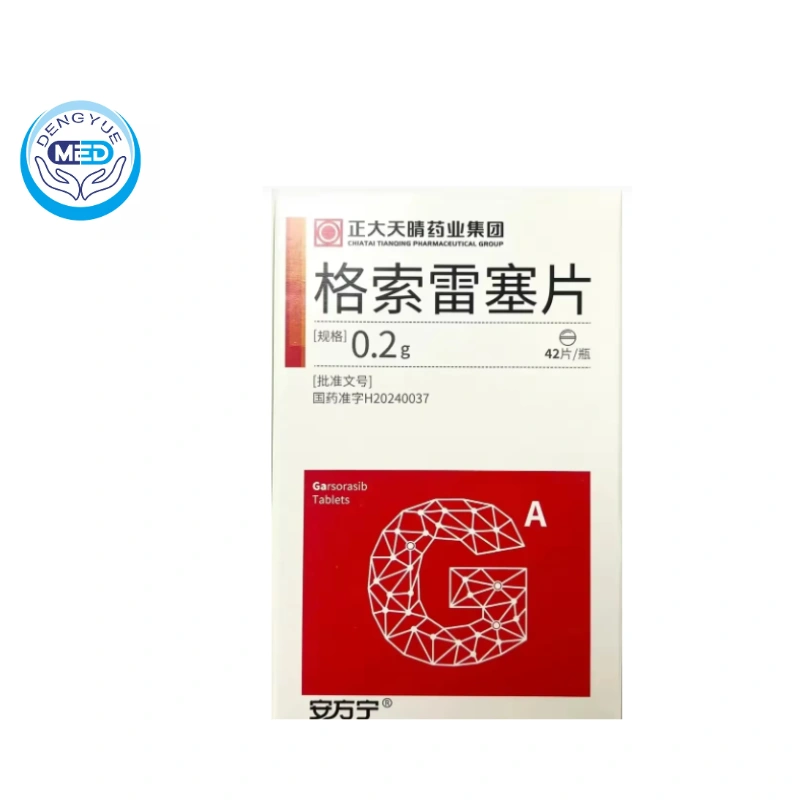
Anfangning (Garsorasib) – NSCLC | HongKong DengYue Medicine
-
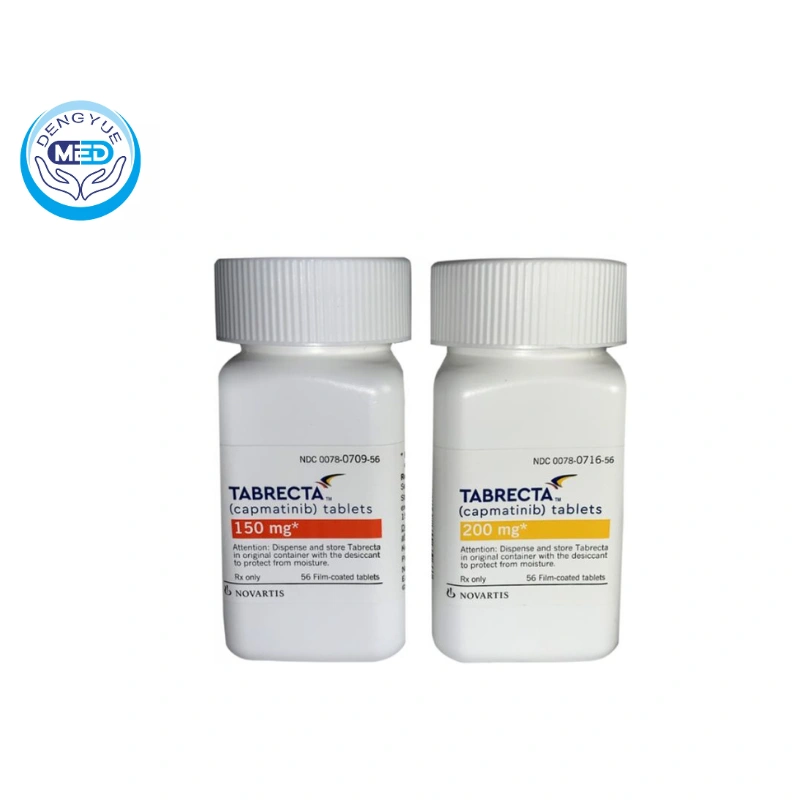
Capmatinib|Non-Small Cell Lung Cancer (NSCLC)
-
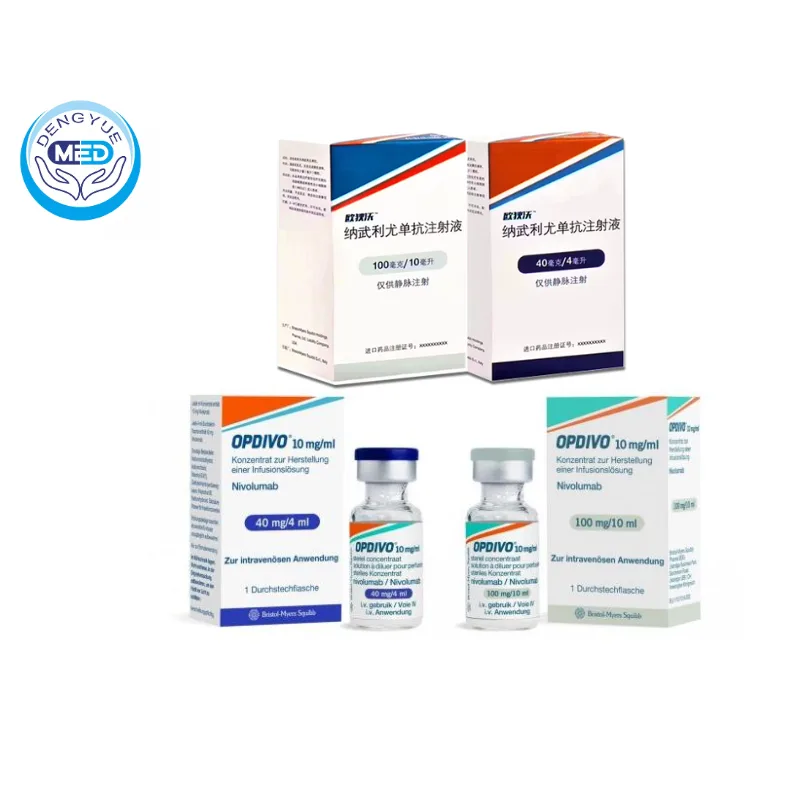
Opdivo (Nivolumab) – NSCLC | HongKong DengYue Medicine
-
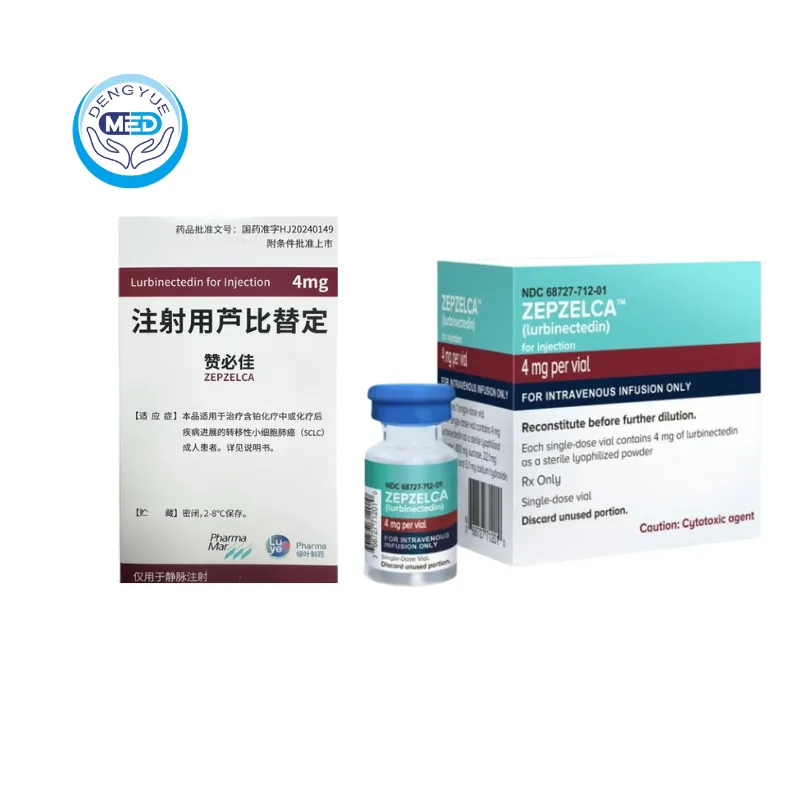
Zepzalca (Lurbinectedin) – NSCLC|HongKong DengYue Medicine

Reviews
There are no reviews yet.