
FDA Innovative Drugs 2025: Rare-Disease Therapies, Antibody Breakthroughs, and Global Innovation Momentum
The U.S. Food and Drug Administration’s (FDA) Center for Drug Evaluation and Research (CDER) continues to drive medical progress in 2025, marking another transformative year for global drug development.
The agency’s annual compilation of FDA Innovative Drugs 2025 reflects a rapidly evolving pharmaceutical ecosystem.
Characterized by record numbers of therapies targeting rare diseases, a surge in biologics and antibody-drug conjugates (ADCs), and the continued expansion of expedited regulatory pathways.

Overview of the Approval Landscape
✨ As of mid-2025, the FDA has approved a diverse portfolio of new therapies addressing unmet needs and introducing novel mechanisms of action.
Key examples include:
- Datopotamab Deruxtecan (Datroway)—ADC approved for HR+/HER2- metastatic breast cancer.
- Nipocalimab – Approved for generalized myasthenia gravis.
- Elamipretide – Approved for Barth syndrome.
💊Compared to previous years, the therapeutic spectrum of FDA Innovative Drugs 2025 is not only broader but also more scientifically sophisticated, with multiple first-in-class and best-in-class designations.
This trend underscores a fundamental shift toward precision medicine and targeted therapeutics.
Expedited Review Pathways Driving Access
✨ The FDA’s regulatory framework has evolved to keep pace with scientific innovation.
Building on 2024, where approximately 66% of new drugs used one or more expedited pathways (fast-track, breakthrough therapy, priority review, or accelerated approval).
The FDA Innovative Drugs 2025 data suggests a continued commitment to efficiency.
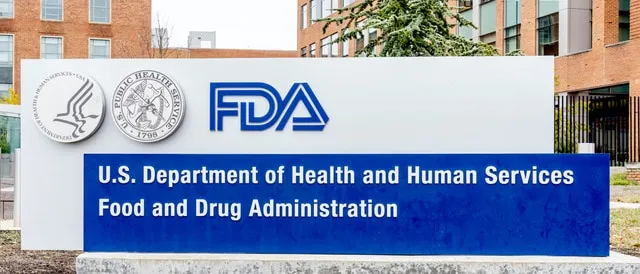
In 2025, CDER has piloted new review programs for complex biologics and gene-based therapies, further streamlining communication between regulators and sponsors.
✅ The agency’s emphasis on early engagement and rolling submissions has shortened average review times, allowing life-saving drugs to reach patients sooner.
❗ Such regulatory agility is a defining trait of FDA Innovative Drugs 2025, bridging scientific discovery and real-world patient impact.
Rare-Disease and Orphan-Drug Approvals Dominate
For the third consecutive year, rare-disease drugs constitute over half of new approvals.
This focus is central to FDA Innovative Drugs 2025, reflecting a global commitment to previously neglected conditions.
🏢 The FDA’s Office of Orphan Products Development (OOPD) has continued to grant designations that encourage innovation through incentives like market exclusivity, tax credits, and fee waivers.
In particular, the approvals of Elamipretide and Nipocalimab demonstrate the FDA’s ongoing support for therapies with limited commercial potential but immense clinical value.
Biologics and ADCs: The New Frontier
Biologics continue to dominate the FDA’s approval portfolio.
In 2024, they represented nearly one-third of new approvals; in FDA Innovative Drugs 2025, that proportion is expected to rise to almost 40%. Among these, antibody-drug conjugates (ADCs) stand out as the fastest-growing class of therapeutics.
The approval of Datopotamab Deruxtecan builds on the success of earlier ADC leaders such as Trastuzumab Deruxtecan and Enhertu.
💊 These hybrid molecules combine the targeting precision of monoclonal antibodies with the cytotoxic potency of chemotherapy, offering a powerful approach to solid tumor management.
Beyond oncology, the FDA Innovative Drugs 2025 report shows emerging applications for ADCs and bispecific antibodies in autoimmune and infectious disease areas
It is signaling a new phase in the biologic revolution.
Oncology Leads but Neurology and Immunology Surge
Oncology remains the largest therapeutic area within FDA Innovative Drugs 2025, accounting for roughly one-third of all novel approvals.
From April to June 2025 alone, 13 new oncology therapies were approved, spanning hematologic malignancies and solid tumors.
However, neurology and immunology are quickly closing the gap. Several disease-modifying therapies for neurodegenerative and autoimmune conditions have entered the market, reflecting advances in blood-brain barrier delivery and cellular immunomodulation.
Digital Integration and AI-Driven Discovery
A new feature of FDA Innovative Drugs 2025 is the integration of digital health and artificial intelligence (AI) into both clinical trials and drug design.
AI algorithms are increasingly used to identify novel targets, optimize molecular structures, and simulate pharmacokinetic profiles.
The FDA has responded by issuing new guidance on digital biomarkers, electronic data capture, and AI validation criteria.
✅Such adaptations ensure that it remains at the intersection of science and technology—laying the groundwork for next-generation regulatory frameworks.

Globalization: China and Emerging-Market Innovation
Innovation is no longer limited to traditional Western pharma hubs.
In the context of FDA Innovative Drugs 2025, companies from Asia and Europe are increasingly present in the FDA pipeline.
🔬 China’s biopharmaceutical sector, which achieved notable breakthroughs in 2024 with BeiGene’s Tevimbra (tislelizumab) and Betta Pharmaceuticals’ Ensacove (ensartinib), continues to advance globally.
🌍 In 2025, several Chinese and Korean biotech firms have initiated FDA submissions for novel anticancer agents, biologics, and biosimilars.
This trend highlights the internationalization of innovation—where FDA Innovative Drugs 2025 serves not only as a U.S. regulatory milestone but also as a global benchmark for scientific credibility and market access.
Post-Market Surveillance and Real-World Evidence
Post-approval monitoring is another pillar of the FDA Innovative Drugs 2025 strategy.
With the growing complexity of therapies, the FDA has expanded its use of real-world data (RWD) and real-world evidence (RWE) to assess long-term safety and effectiveness.
Collaborations with health data networks and academic centers are enhancing signal detection and adaptive labeling strategies.
This data-driven approach enables the agency to maintain a balance between innovation and patient safety—an essential theme in the modern era of precision pharmacovigilance.
Policy Evolution and Future Outlook
The future trajectory of FDA Innovative Drugs 2025 and beyond will likely be shaped by three overarching forces:
- 🧬 Technological Acceleration—Gene and cell therapies, RNA platforms, and AI design tools will continue to reshape the therapeutic landscape.
- 🌐 Global Harmonization—Regulatory alignment between the FDA, EMA, and Asian authorities will facilitate multi-regional drug approvals.
- 😷 Patient-Centric Innovation—The agency is placing greater emphasis on diverse clinical representation and real-world outcomes in approval decisions.
As a result, the FDA Innovative Drugs 2025 report is not merely a record of approvals—it is a snapshot of how science, policy, and industry are converging to redefine modern medicine.
▶️ The story of FDA Innovative Drugs 2025 is one of expanding possibility: faster regulatory reviews, stronger global collaboration, and a deepening focus on unmet needs.
✨From rare disease therapies and antibody-drug conjugates to AI-driven molecule design, the FDA’s 2025 agenda embodies a future where science moves swiftly yet responsibly.
Companies like DengYueMed are playing a vital role in bridging innovation and accessibility, ensuring that cutting-edge treatments reach patients worldwide faster and more efficiently.