
How to Identify the Early Signs of Melanoma: The ABCDE Rule and Warning Signs
Key Takeaways
- New moles or pigmented spots, especially those that appear in adulthood and look unusual, should be monitored.
- Changes in an existing mole, including changes in size, shape, color, or borders, may be warning signs of melanoma.
- The ABCDE rule for melanoma can help you observe asymmetry, border irregularity, color changes, diameter, and evolving features.
- E (Evolving) is particularly important. A mole that continues to change should be professionally evaluated.
- If you notice a suspicious skin lesion, consult a dermatologist rather than trying to determine whether it is melanoma from photos or online information.
Melanoma is a malignant tumor that originates from melanocytes and most commonly develops in the skin.
So, how to identify the early signs of melanoma? What changes in an ordinary mole should raise concern?
This article is prepared by DengYueMed to help patients and healthcare industry readers understand the early identification, common signs, and evaluation of melanoma.
What Is Melanoma?
Melanoma most commonly develops in the skin, but it can also occur in other areas containing melanocytes. It can invade surrounding tissues and may spread to other parts of the body as the disease progresses.
The American Cancer Society (ACS) notes that, although melanoma is less common than some other types of skin cancer, it is more likely to invade nearby tissues and spread to other parts of the body.
In its early stages, melanoma may not cause noticeable pain or other symptoms. Therefore, recognizing unusual skin changes and seeking professional evaluation are important parts of melanoma early detection.
It is important to understand that not every new or changing mole is melanoma. Some benign moles and other skin conditions can have similar appearances.
👩⚕️ A healthcare professional must determine whether a lesion is melanoma, with a biopsy and pathological examination performed when necessary.
How to Identify the Early Signs of Melanoma?
Understanding how to identify the early signs of melanoma starts with paying attention to changes in the appearance of the skin. Early melanoma may not cause noticeable discomfort, so visual changes can be particularly important.
1. New Moles or Pigmented Spots
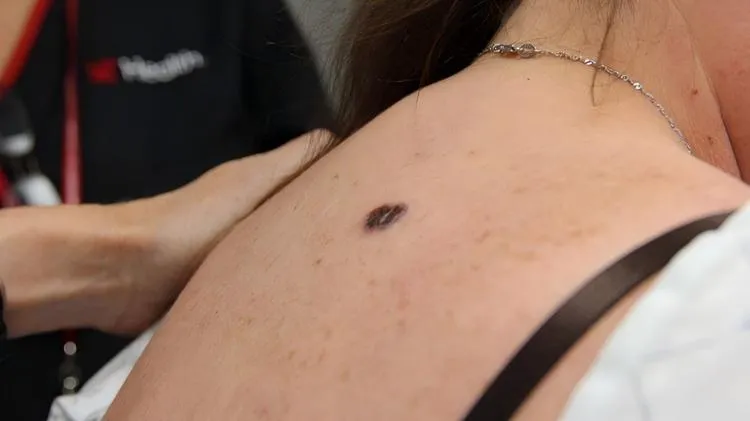
A new pigmented lesion that appears during adulthood, especially one that looks noticeably different from other moles on the body, should be monitored.
A new mole does not necessarily mean melanoma. However, if it looks unusual or continues to change, it should be evaluated by a healthcare professional.
2. Changes in an Existing Mole
If a mole that has remained stable for a long time suddenly changes, pay attention to:
- Changes in size
- Changes in shape
- Changes in color
- Changes in the border
- Changes in the surface or appearance
Changes in a previously stable mole are among the important melanoma warning signs to discuss with a dermatologist.
3. An Asymmetrical Mole
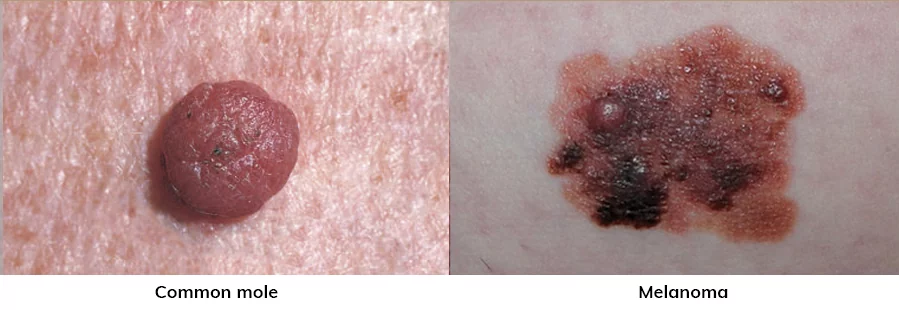
Stable or typical moles often have a relatively regular overall shape.
If you imagine dividing a mole into two halves, and one half looks noticeably different from the other in shape or size, this may be a feature that requires further evaluation.
4. An Irregular Border
A suspicious lesion may have a border that is:
- Irregular
- Blurred
- Jagged
- Uneven
However, an irregular border alone cannot determine whether a lesion is melanoma. It needs to be considered together with other features.
5. Uneven Color
Typical moles often have a relatively uniform color, while suspicious lesions may contain different shades.
A single lesion may contain:
- Black
- Dark brown
- Light brown
- Red
- White
- Blue
If a mole that was previously uniform in color develops noticeable color changes, it should be evaluated by a healthcare professional.
6. A Lesion That Continues to Grow
If a mole or pigmented spot continues to increase in size, particularly when accompanied by changes in shape, borders, or color, further evaluation may be appropriate.
However, diameter alone cannot diagnose melanoma. The pattern and progression of change are also important when considering early signs of melanoma.
7. Itching, Bleeding, or Crusting
Some suspicious skin lesions may develop:
- Persistent itching
- Bleeding
- Crusting
- Ulceration
- Surface changes
These symptoms do not necessarily mean that a lesion is melanoma. Other skin conditions can cause similar symptoms.
If these changes persist, professional evaluation is recommended.
8. A Mole That Looks Different From the Others
In addition to the ABCDE rule, another useful observation is whether one mole looks noticeably different from the other moles on your body.
For example, if most of your moles have a similar appearance but one suddenly becomes much darker, more irregular, or noticeably larger, it may be worth discussing with a dermatologist.
This “different from the others” approach can be useful when considering how to identify the early signs of melanoma, particularly when a lesion does not clearly match every ABCDE feature.
How to Use the ABCDE Rule to Identify Melanoma?
The ABCDE rule for melanoma is a simple observation tool that can help people identify skin lesions that may require professional evaluation.
| Letter | What It Stands For | What to Look For |
|---|---|---|
| A | Asymmetry | One half of the lesion looks different from the other |
| B | Border | Edges appear irregular, blurred, jagged, or uneven |
| C | Color | Multiple or uneven colors appear within the lesion |
| D | Diameter | The lesion is relatively large or continues to increase in size |
| E | Evolving | The lesion changes in size, shape, color, or appearance |
Among these features, E — Evolving is particularly important.
Knowing how to identify the early signs of melanoma using the ABCDE rule can help you recognize changes that may warrant professional assessment.
What Can the ABCDE Rule Help You Do?
The ABCDE rule is mainly intended to:
Identify unusual changes → Prompt professional evaluation → Support further examination by a healthcare professional
It cannot replace a dermatologist’s diagnosis, and a melanoma diagnosis cannot be made reliably from an online image or smartphone photograph.
What Are the Signs of Melanoma in Different Body Areas?
Melanoma can develop in areas that are easy to overlook. When checking your skin, pay attention not only to visible areas but also to the palms, soles, nails, and scalp.
1. Palms and Soles
Watch for new or changing pigmented spots, particularly lesions that:
- Continue to grow
- Have uneven color
- Have irregular borders
- Look noticeably different from the surrounding skin
These can be important melanoma symptoms on the palms and soles that warrant professional evaluation.
2. Nails
Pay attention to new dark or brown vertical lines under a fingernail or toenail, especially if the pigmentation becomes wider over time or extends onto the skin around the nail.
3. Face, Scalp, and Neck
Melanoma can also develop on the face, scalp, or neck.
Because the scalp can be difficult to examine yourself, pay attention to new or changing skin lesions when washing your hair or visiting a hairdresser.
Summary
Knowing how to identify the early signs of melanoma does not mean trying to diagnose a mole yourself. The key is to recognize unusual or persistent changes and seek professional evaluation when necessary.
If you notice a new skin lesion or an existing mole that becomes asymmetrical, develops an irregular border, changes color, grows noticeably, or continues to evolve, the ABCDE rule can be used as an initial observation guide.
If a lesion appears suspicious, consult a dermatologist for appropriate evaluation.
Global pharmaceutical distributor DengYueMed follows advances in melanoma treatment, innovative medicines, and global healthcare, providing patients, healthcare professionals, and industry partners with reliable pharmaceutical and disease information.
FAQ about How to Identify the Early Signs of Melanoma
What are the early signs of melanoma?
Early signs of melanoma may include a new or changing mole, asymmetry, irregular borders, uneven color, continued growth, or other noticeable changes in a skin lesion.
How can you tell if a mole might be melanoma?
A mole may require medical evaluation if it looks different from other moles or shows changes in asymmetry, border, color, size, or appearance over time.
What is the ABCDE rule for melanoma?
The ABCDE rule helps identify suspicious skin lesions by looking for Asymmetry, Border irregularity, Color changes, Diameter, and Evolving features.
Can melanoma be painless in the early stages?
Yes, early melanoma may not cause pain or other noticeable symptoms, which is why changes in the appearance of a mole or skin lesion are important to monitor.
When should you see a doctor about a suspicious mole?
You should consult a dermatologist if a mole is new, continues to change, becomes irregular, bleeds, crusts, grows, or looks noticeably different from your other moles.