

What Is Megestrol Acetate Used for? —From Tablets to Oral Suspension How to Improve Appetite and Weight
In global oncology practice, cancer anorexia–cachexia syndrome (CACS) is a common and clinically significant complication, characterized by appetite loss, involuntary weight loss, and skeletal muscle wasting. This condition not only reduces quality of life but also impairs treatment tolerance and overall survival.
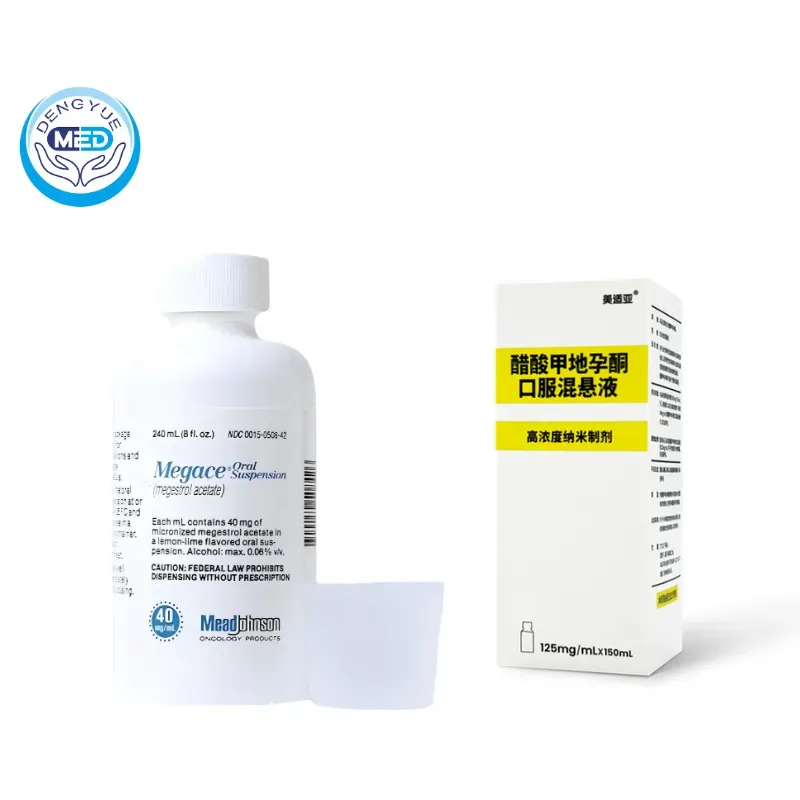
To address this challenge, megestrol acetate oral suspension (Megace®) offers a formulation-based therapeutic advancement. Developed using nanocrystal technology, it improves the clinical usability of this well-established agent and helps clarify what is megestrol acetate used for in modern supportive cancer care.
According to DengYue Medicine, this oral suspension represents a practical, evidence-based option for the management of cancer-related anorexia and cachexia.
The following sections will further examine its pharmacological characteristics, clinical evidence, and the formulation advantages that support its role in contemporary cancer care.
What Is Megestrol Acetate?
Megestrol acetate is a synthetic progestin that was originally developed for the treatment of hormone-related conditions. Over time, clinical practice revealed its pronounced ability to stimulate appetite and promote weight gain, leading to its broader use in supportive care.

👉 Based on these properties, megestrol acetate has become an important therapeutic option for managing anorexia and cachexia associated with chronic wasting diseases, particularly in patients with cancer or HIV/AIDS.
Unlike treatments that directly target tumors or viral infections, megestrol acetate is primarily used to improve nutritional status and functional capacity. Within a comprehensive treatment strategy, it serves as a supportive therapy that helps patients better tolerate ongoing or subsequent disease-directed treatments.
Mechanism of Action: A Multi-Pathway Approach to Cancer Anorexia–Cachexia Syndrome
The mechanisms by which megestrol acetate improves appetite and body weight are complex and are generally understood to involve the coordinated effects of central nervous system regulation, endocrine modulation, and metabolic pathways.
✨ Rather than acting as a simple appetite stimulant, megestrol acetate intervenes at key pathophysiological stages of cancer anorexia–cachexia syndrome (CACS), addressing the underlying drivers of appetite loss and metabolic imbalance.
1️⃣ Central Appetite Stimulation
Megestrol acetate acts on the hypothalamic appetite-regulating center, promoting the synthesis and release of orexigenic neurotransmitters such as neuropeptide Y (NPY). This central mechanism enhances the sensation of hunger and significantly increases patients’ voluntary food intake.
Such central appetite stimulation is widely regarded as the core mechanism underlying its clinical benefit in appetite improvement.
2️⃣ Modulation of Inflammatory Responses
The development of cancer cachexia is closely associated with chronic systemic inflammation. Megestrol acetate has been shown to suppress the production of key pro-inflammatory cytokines, including tumor necrosis factor-α (TNF-α) and interleukin-6 (IL-6), which play critical roles in muscle wasting, appetite suppression, and metabolic dysregulation.
By modulating inflammatory activity, megestrol acetate helps alleviate the metabolic disturbances characteristic of cachexia.
3️⃣ Improvement of Endocrine and Metabolic Status
As a synthetic progestin, megestrol acetate influences the hormonal milieu and energy metabolism.
- It promotes protein synthesis, reduces skeletal muscle breakdown, and supports the restoration of positive nitrogen balance.
- 🔬 Clinical studies have shown that patients receiving megestrol acetate experience measurable improvements in body weight, with average weight gains typically ranging from 2 to 5 kg over 8–12 weeks of treatment, reflecting a shift away from catabolic metabolism.
- In addition, it improves glucose and lipid metabolism by enhancing insulin sensitivity and facilitating energy storage, thereby contributing to weight gain and metabolic stabilization.
- 🔬 Clinical studies in patients with cancer-related cachexia have reported mean body weight increases of approximately 5–10% over baseline within 2–3 months of megestrol acetate therapy, suggesting improved metabolic efficiency rather than continued catabolism.
4️⃣ From “Passive Nutritional Support” to “Active Eating Behavior”
Unlike traditional nutritional strategies that rely primarily on enteral or parenteral calorie supplementation, megestrol acetate does not function merely as an external source of energy.
👉 Instead, it restores intrinsic appetite drive and corrects abnormal metabolic signaling, enabling patients to shift from passive nutritional intake to active, self-motivated eating behavior.
This pathophysiology-oriented approach gives megestrol acetate a distinct advantage in the comprehensive management of cancer-related anorexia and cachexia and helps clarify what is megestrol acetate used for in modern supportive oncology care.
Compared with conventional nutritional support strategies, its action is more targeted, addressing the underlying drivers of reduced appetite and metabolic abnormalities rather than relying solely on external calorie supplementation.
🤔 With the introduction of new formulations such as nano-based oral suspensions, the convenience of administration and clinical applicability of megestrol acetate have been further enhanced, offering a more optimized and practical option for the comprehensive management of cachexia.
Clinical Indications: What Is Megestrol Acetate Used For?
Megestrol acetate is primarily used as a supportive therapy to manage anorexia, weight loss, and cachexia associated with chronic, debilitating diseases. Rather than targeting the underlying cause of disease, it addresses the downstream metabolic and nutritional consequences that significantly impair quality of life, treatment tolerance, and overall clinical outcomes.
👉 In global clinical practice, megestrol acetate has become one of the most widely recognized pharmacologic options for appetite stimulation and weight gain in patients with severe disease-related wasting.
Cancer-Related Anorexia and Cachexia
The most established and extensively studied indication for megestrol acetate is cancer-associated anorexia–cachexia syndrome (CACS). Patients with advanced solid tumors or hematologic malignancies frequently develop profound appetite loss, involuntary weight loss, and muscle wasting driven by systemic inflammation and metabolic dysregulation.
In this population, megestrol acetate is used to:
- Improve appetite and caloric intake
- Promote weight gain, predominantly through increased fat mass
- Enhance patient-reported outcomes such as energy level and overall well-being
By stabilizing nutritional status, megestrol acetate may help patients better tolerate chemotherapy, radiotherapy, or other systemic anticancer treatments, reinforcing its role as an adjunctive component of comprehensive cancer care.
HIV/AIDS-Related Wasting Syndrome
Megestrol acetate is also indicated for the treatment of anorexia and weight loss associated with HIV/AIDS. Chronic immune activation, hormonal disturbances, and altered metabolism contribute to wasting in this population, even in the era of antiretroviral therapy.
Clinical evidence demonstrates that megestrol acetate can:
- Increase appetite
- Support weight gain
- Improve nutritional stability
These effects are particularly valuable in patients who fail to respond adequately to dietary counseling or nutritional supplementation alone.
Other Chronic and Catabolic Conditions
In selected clinical scenarios, megestrol acetate may be considered for patients with other chronic illnesses characterized by severe anorexia or unintended weight loss, such as advanced pulmonary, gastrointestinal, or neurological diseases. In these settings, its use is typically individualized and guided by a careful assessment of benefit versus risk.
Taken together, the answer to what is megestrol acetate used for extends beyond a single disease category.
Its therapeutic role lies in supportive care across multiple chronic, catabolic conditions, where improving appetite, body weight, and functional status is essential for maintaining dignity, resilience, and continuity of treatment.
Rather than serving as a curative agent, megestrol acetate functions as a metabolic and nutritional stabilizer, helping patients transition from progressive wasting toward a more manageable and clinically sustainable state.
Formulation Evolution: Tablets vs Oral Suspension
As the clinical role of megestrol acetate in appetite stimulation and cachexia management has become well established, attention has increasingly shifted toward how formulation design influences real-world effectiveness and patient adherence.
Although megestrol acetate tablets have been used globally for decades, limitations related to absorption and administration have prompted the development of improved oral formulations, most notably the oral suspension.
Megestrol Acetate Tablets: Established but Limited
💊 Megestrol acetate tablets represent the traditional dosage form and remain widely available in many regions. Their clinical efficacy in improving appetite and promoting weight gain has been supported by long-term use and accumulated clinical experience.
However, several practical limitations have been consistently recognized:
- Low and variable bioavailability, particularly in patients with poor gastrointestinal function
- Dependence on high-fat meals to achieve optimal absorption, which can be challenging for patients with anorexia
- Difficulty swallowing, especially in frail, elderly, or severely ill patients
These factors may reduce treatment consistency and limit the full therapeutic potential of the drug in real-world settings.
Oral Suspension: Designed for Clinical Reality
🥛 The oral suspension formulation of megestrol acetate (Megace)was developed to address the shortcomings of tablet-based therapy. By improving drug dispersion and gastrointestinal absorption, oral suspensions offer a more predictable pharmacokinetic profile, independent of strict dietary requirements.
Key advantages include:
- Improved absorption without the need for high-fat meals, enhancing reliability in patients with minimal appetite
- Ease of administration, particularly for patients with dysphagia or severe weakness
- Greater dosing flexibility, allowing individualized titration based on clinical response and tolerability
These characteristics make oral suspension formulations particularly well suited for patients with advanced disease, where simplicity and consistency of administration are critical.
Why Formulation Matters in Cachexia Management
In anorexia–cachexia syndromes, therapeutic success depends not only on pharmacologic activity but also on whether patients can realistically and consistently take the medication.
👉 Oral suspension formulations align more closely with the clinical realities of cachectic patients, where swallowing difficulties, poor appetite, and gastrointestinal intolerance are common.
By reducing administration barriers and improving absorption reliability, oral suspension formulations help translate the known pharmacologic benefits of megestrol acetate into more stable clinical outcomes.
Overall, the transition from tablets to oral suspension reflects a broader trend in supportive oncology and chronic disease care: optimizing drug delivery to match patient needs.
While tablets remain an effective option in selected patients, oral suspension formulations represent a practical evolution of megestrol acetate therapy—enhancing convenience, adherence, and real-world usability without changing the drug’s established mechanism of action.
This formulation-level innovation sets the stage for a more patient-centered approach to appetite and cachexia management.
Conclusion
The introduction of oral suspension formulations represents a meaningful evolution of this established therapy. By improving ease of use, absorption reliability, and treatment adherence—especially in patients with poor appetite or swallowing difficulties—these newer formulations help translate pharmacologic efficacy into more consistent clinical benefit.
From the perspective of DengYue as a global pharmaceutical supplier, ensuring access to clinically appropriate, patient-centered formulations is an essential part of supporting effective cachexia management.
Overall, the development from tablets to oral suspension underscores a broader shift toward patient-centered supportive care, positioning megestrol acetate as a practical, evidence-based option in the comprehensive management of anorexia and cachexia.
FAQ about What Is Megestrol Acetate Used for?
What is the drug megestrol acetate used for?
Megestrol acetate is mainly used to stimulate appetite and promote weight gain in patients with cancer-related cachexia or HIV-associated wasting.
In selected cases, it may also be used as hormonal therapy for certain hormone-sensitive cancers.
Is megestrol a chemo drug?
Megestrol is a hormonal therapy drug.
What should I avoid while taking megestrol?
Drinking alcohol and smoking during your treatment may increase some side effects and make your medication less effective.
How long does it take to gain weight on megestrol?
It may take up to 3 weeks to first notice an improved appetite. It may take up to 12 weeks to notice weight gain.