

Is Hep C Curable? 5 Powerful Facts You Need to Know
Hepatitis C is a viral infection that primarily affects the liver, often transmitted through blood contact, unsafe injections, or unsterile medical procedures.
It is a major global health issue, impacting millions of people every year and leading to serious complications if left untreated.
For patients and caregivers, one of the most important questions is: Is Hep C curable? 5 powerful facts you need to know. Thanks to major advances in medical science, the answer is now more positive than ever.
At Hong Kong DengYue Medicine, we are dedicated to raising awareness about Hepatitis C by sharing knowledge on treatment breakthroughs, patient care, and prevention strategies.
✨ With modern antiviral therapies, many patients can achieve a complete cure, leading to healthier, longer, and more empowered lives.
What Is the Main Cause of Hep C?
Hepatitis C is caused by infection with the Hepatitis C Virus (HCV), which is transmitted through blood-to-blood contact.
The virus primarily targets the liver, leading to inflammation, fibrosis, and potentially cirrhosis or liver cancer if left untreated.
The most common causes historically included contaminated blood transfusions and organ transplants before reliable screening was implemented in the early 1990s. Today, unsafe injection practices remain the main driver of new infections worldwide.
According to the World Health Organization (WHO), about 1.5 million new HCV infections occur globally each year, with injection drug use accounting for more than 40% of cases in many regions.
Is Hep C curable once it comes from blood exposure is a fact, and with today’s modern therapies, cure rates above 95% are possible.
🌟Early understanding of causes helps patients take control of their health journey.💪
How Is Hep C Contracted?
HCV is transmitted when blood from an infected person enters the bloodstream of another. The primary risk factors include:
- Sharing needles, syringes, or other drug-injecting tools.
- Exposure through unsafe healthcare procedures, such as unsterilized medical or dental equipment.
- Blood transfusions or organ transplants prior to 1992 in many countries, when effective screening tests became routine.
Sexual transmission is less common but has been well documented, particularly among high-risk groups like HIV-positive men who have sex with men. Vertical transmission (from mother to child during birth) occurs in about 5% of cases.
🌍Knowing how the virus spreads empowers patients to protect themselves and others.✨
Can Hep C Be Transmitted Through Saliva?
Unlike hepatitis B, Hepatitis C is not easily spread through saliva. Casual activities such as kissing, sharing utensils, or eating together pose no risk.
The only rare possibility is if saliva is contaminated with blood, for example, through bleeding gums, open sores, or mouth injuries. Even then, documented cases are extremely rare.
The Centers for Disease Control and Prevention (CDC) emphasizes that HCV requires direct blood exposure for transmission.
This means living with or caring for someone with Hepatitis C is safe as long as personal items like razors and toothbrushes are not shared.
Beyond the fear of infecting others, the most pressing concern becomes: “Is Hep C curable if I already have it?” Fortunately, yes — with today’s antiviral therapies, the infection can be eliminated.
💖Families can live together without fear, supported by accurate knowledge.🏡
What Are the Warning Signs of Hepatitis?
Hepatitis C is often a “silent disease” for years. Many patients remain asymptomatic until significant liver damage occurs. However, early warning signs include:
- Persistent fatigue and weakness.
- Nausea, loss of appetite, or abdominal pain.
- Dark urine, pale stools, or jaundice (yellowing of the skin and eyes).
- Easy bruising or bleeding.
- Cognitive fog or difficulty concentrating (sometimes called “hepatic brain fog”).
Clinical data show that 20–30% of untreated patients progress to cirrhosis within 20 years, often without clear warning signs.
This makes screening essential, especially for people with risk factors. Importantly, even if symptoms develop, many patients ask, “Is Hep C curable at this stage?”
The answer is yes — DAAs can stop the virus even in advanced disease, though cirrhosis may require ongoing monitoring. 🔬Recognizing signs early means more effective treatment and a brighter future.
Is Hep C Curable? 5 Powerful Facts You Need to Know
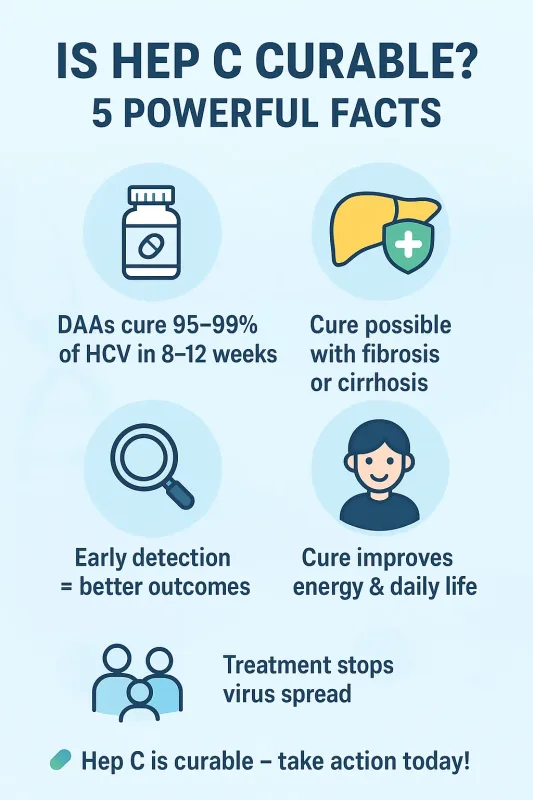
Modern Therapies Offer Cure Rates Above 95%
In the past, Hepatitis C was considered a lifelong disease, with interferon treatments offering only a 40–50% chance of cure and significant side effects.
Today, direct-acting antivirals (DAAs) like sofosbuvir/velpatasvir and glecaprevir/pibrentasvir achieve cure rates of 95–99% in just 8–12 weeks.
Large clinical trials such as ASTRAL-1 and EXPEDITION-8 consistently report these results across all genotypes.
👉 The answer to “is Hep C curable” is not just yes — it’s backed by decades of robust data. Modern medicine has changed HCV from a chronic burden into a curable infection. 💊
Cure Is Possible Even in Advanced Liver Disease
Many patients fear that once cirrhosis or liver damage develops, it’s too late for treatment. The good news: DAAs are highly effective even in patients with advanced fibrosis or compensated cirrhosis.
For example, studies in cirrhotic populations show SVR rates above 90%, dramatically reducing risks of liver failure and cancer.
While patients with cirrhosis still need long-term monitoring, curing the virus halts further progression. So if you’re asking, “Is Hep C curable once my liver is already damaged?” — the evidence shows that yes, it is. It’s never too late to seek treatment and protect your future. 🌈
Early Diagnosis Maximizes Benefits
Curing Hepatitis C is possible at all stages, but catching the infection early has major advantages. Patients treated before cirrhosis develops have near-normal life expectancy and greatly reduced risk of complications like hepatocellular carcinoma (HCC).
The WHO estimates that global HCV elimination could prevent over 70% of liver cancer cases linked to the virus.
That’s why routine screening for at-risk populations — including people who received blood products before 1992 or those with a history of injection drug use — is so important.
So if you’re asking, “Is Hep C curable before symptoms appear?” the truth is that early therapy offers the best chance for a full recovery.🔬 Knowledge and testing give you the power to stay ahead.
Cure Restores Quality of Life
Beyond the numbers, curing Hepatitis C dramatically improves daily living. Studies show that patients achieving SVR report better energy, improved mental clarity, and reduced fatigue.
In fact, quality-of-life scores in cured patients often match those of the general population within a year of treatment.
“Many ask, is Hep C curable in a way that lets them live a normal life?” The answer is yes — curing the virus restores energy, daily functioning, work life, and relationships.
🌸Treatment gives you back your energy and peace of mind.
Curing HCV Protects Families and Communities
Treatment benefits extend far beyond the individual. Once cured, patients cannot pass the virus to others.
Public health models show that scaling up DAAs could reduce global HCV prevalence by more than 80% within 15 years. This means every person treated contributes to breaking the chain of transmission.
For families, the question isn’t only “is Hep C curable” but also “can I protect my loved ones?” The answer is a double yes — curing yourself also protects those around you.
🤝By treating Hep C, you’re not just healing yourself, you’re safeguarding your community.
How to Cure HCV Positive?
Treatment of Hepatitis C has dramatically changed in the past decade. Before 2013, cure rates with interferon-based therapies were only around 40–50% and came with harsh side effects. Today, direct-acting antivirals (DAAs) have revolutionized care:
- Diagnosis: Confirm infection with an HCV RNA test and assess liver damage using FibroScan or elastography.
- Therapy: Pan-genotypic DAAs like sofosbuvir/velpatasvir or glecaprevir/pibrentasvir cure more than 95% of patients in 8–12 weeks, with few side effects.
- Evidence: Clinical trials such as ASTRAL-1 and EXPEDITION-8 consistently report sustained virologic response (SVR) rates above 95%, meaning patients are effectively cured.
- Follow-up: SVR12 (no virus detectable after 12 weeks) is considered a true cure. Patients without cirrhosis can often resume life without further restrictions.
So when patients wonder, “Is Hep C curable once I test positive?” the answer is clear: yes, with today’s medicines, cure is the standard outcome, not the exception.
💊Modern science has transformed HCV from a chronic burden into a curable infection.🚀
Hep C Treatments: Key Therapies You Should Know
Emitasvir (Chronic Hepatitis C Virus Infection)

Emitasvir is a direct-acting antiviral that interferes with HCV replication. When combined with other HCV therapies, it can achieve sustained virologic response in chronic Hepatitis C patients.
Ascletavir (Ravidasvir)

Ascletavir targets HCV nonstructural proteins to block viral replication. It is used in combination with sofosbuvir for high cure rates across multiple HCV genotypes.
Sanoldi (Alfosbuvir)

Sanoldi is an antiviral therapy that inhibits HCV polymerase, stopping the virus from multiplying. It is typically used in combination with other drugs for better efficacy in chronic HCV patients.
Vosevi (Sofosbuvir, Velpatasvir and Voxilaprevir)
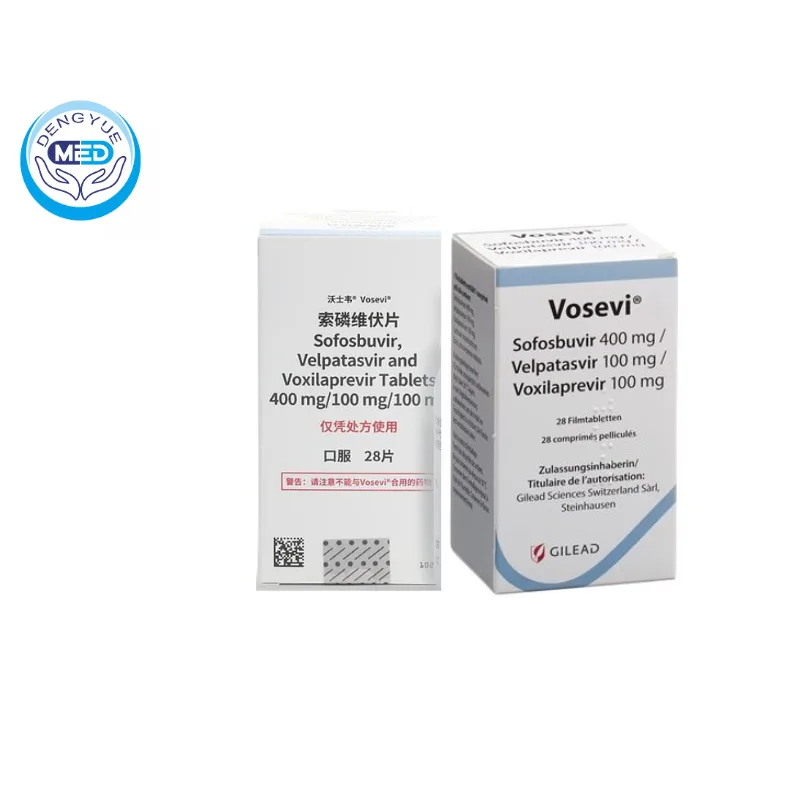
Vosevi is a triple-drug regimen designed for patients who have failed previous HCV treatments. It effectively suppresses viral replication, offering a second-line cure option for resistant HCV strains.
Harvoni (Ledipasvir and Sofosbuvir)
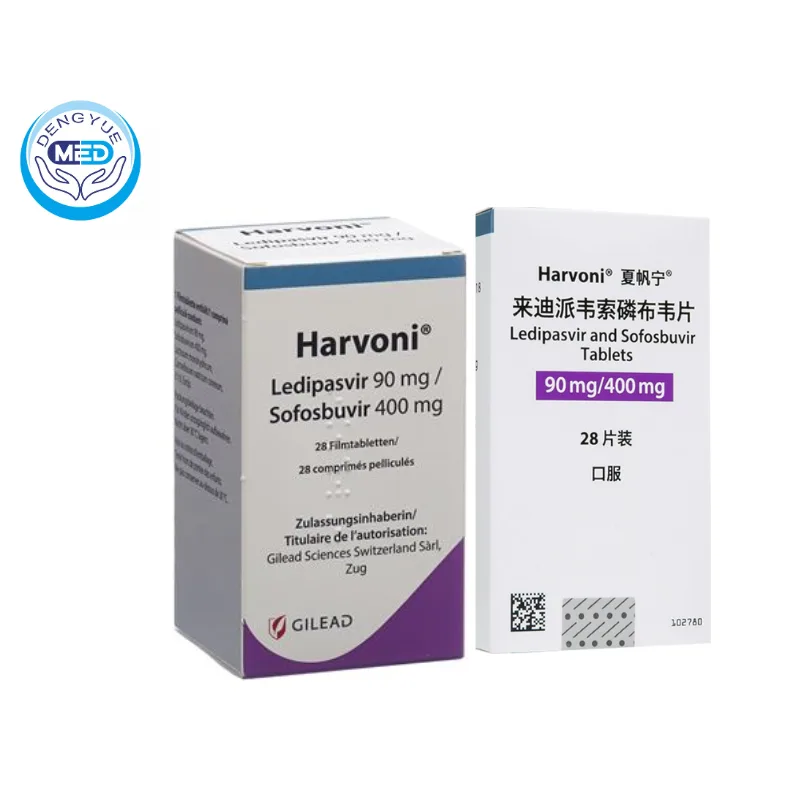
Harvoni combines two antiviral agents to treat chronic HCV infection, particularly in patients with genotypes 1, 4, 5, and 6. It is taken orally and has shown high cure rates with minimal side effects.
Ganovo (Danoprevir)

Ganovo is a direct-acting antiviral that targets the HCV protease, preventing the virus from multiplying. It is commonly used in combination therapies to improve treatment effectiveness.
Epclusa (Sofosbuvir and Velpatasvir)
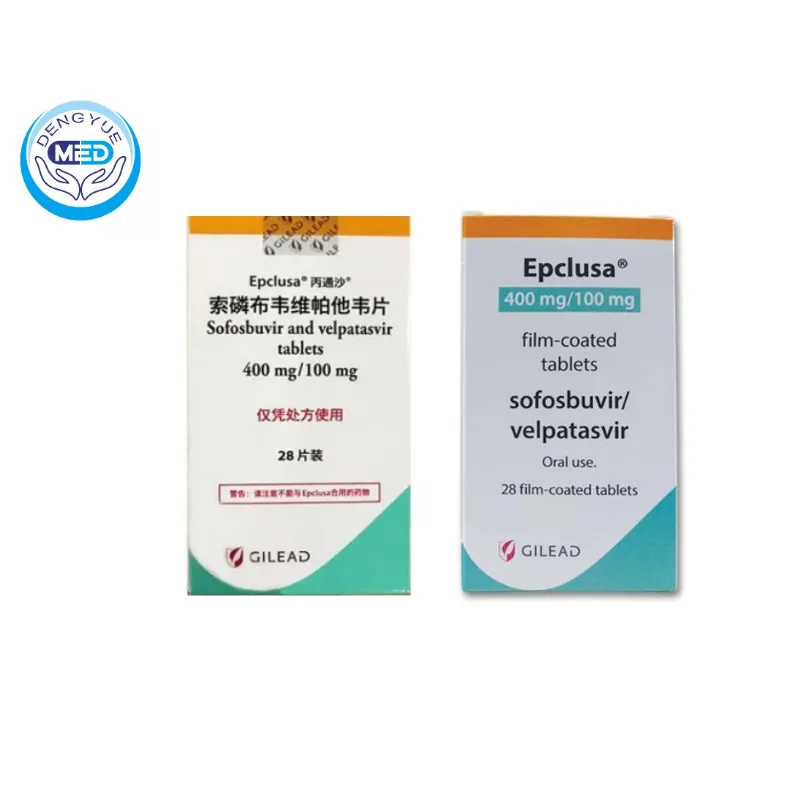
Epclusa is a pan-genotypic treatment for chronic HCV, meaning it works against all major virus genotypes. It blocks viral replication, offering high cure rates with an oral, once-daily regimen.
Zepatier (Elbasvir and Grazoprevir)

Zepatier is an antiviral medication used to treat chronic Hepatitis C virus (HCV) infection. It is especially effective against genotypes 1 and 4, helping reduce viral load and improve liver health.
Can I Live a Normal Life With Hep C?
Yes — especially if you get treatment. Studies have shown that patients who achieve SVR have survival rates comparable to the general population.
For example, a long-term follow-up of over 40,000 treated patients in Europe showed that cured individuals had 70–80% lower risk of liver cancer compared with untreated patients.
Without treatment, however, 15–30% may develop cirrhosis within 20 years, leading to complications such as liver failure or hepatocellular carcinoma.
For those who receive DAAs, energy levels, liver health, and overall well-being improve significantly within months.
🌟With treatment, patients can work, travel, raise families, and thrive just like anyone else. 🌸
Is It Safe to Live With Someone With Hep C?
It is absolutely safe to live in the same household with someone who has Hepatitis C. The virus is not spread through hugging, casual contact, food, or water.
Household precautions involve avoiding the sharing of blood-contaminated items, such as toothbrushes, razors, or nail clippers.
Clinical evidence supports that casual family contact carries virtually zero risk. Moreover, once treatment is complete and the patient achieves SVR, they are considered cured and no longer infectious.
This directly addresses the concern “is hep c curable,” as curing the infection not only saves the patient’s health but also eliminates household transmission risk.
Living together safely is possible — compassion and accurate information keep families strong.💞
FAQ about Is Hep C Curable? 5 Powerful Facts You Need to Know
Can Hep C Be Completely Cured?
Yes! Modern antiviral treatments can completely cure most people with Hepatitis C, especially when detected early. Early treatment gives you the best chance for a full recovery.
Is Hep C Considered an STD?
Hepatitis C is primarily transmitted through blood, not sexual contact. It is not classified as a typical STD, though transmission via sex is possible in rare cases. Practicing safe habits can further reduce your risk.
How Long Can a Person With Hep C Live?
With early detection and proper treatment, people with Hepatitis C can live a normal lifespan and maintain a healthy life. Regular check-ups and healthy lifestyle choices make a big difference.
Is Hep C Positive Serious?
Hepatitis C can be serious if left untreated, potentially causing liver damage, cirrhosis, or liver cancer. Early treatment significantly reduces risks. With proper care, you can lead a healthy and fulfilling life.