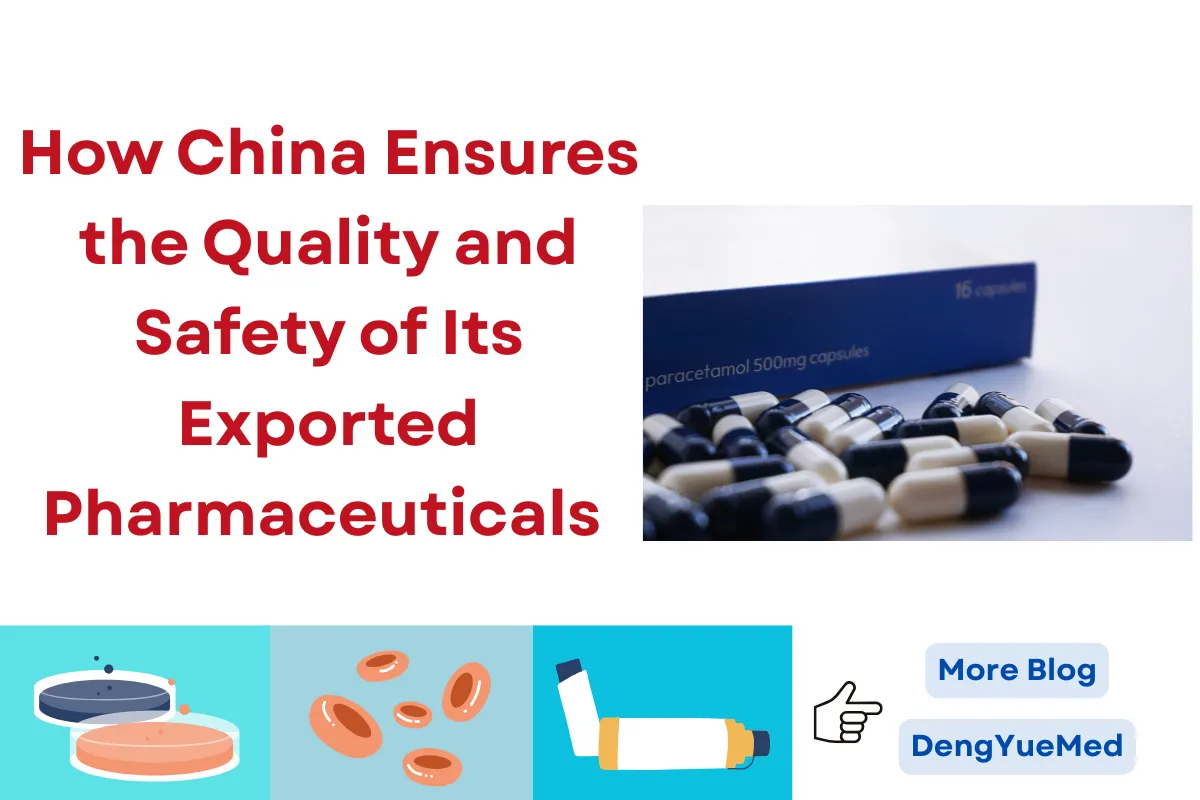
How China Ensures the Quality and Safety of Its Exported Pharmaceuticals
With the rapid globalization of China’s pharmaceutical industry, the question of how China ensures the quality and safety of its exported pharmaceuticals has become increasingly important.
This commitment is reflected in two major aspects:
- The continuous improvement of domestic regulatory standards
- The alignment with international pharmaceutical regulations such as those of the WHO, FDA, and EMA.
Domestic Drug Standards: From CFDA to NMPA—Systemic Upgrading of Regulation
✨ Over the past decade, China’s pharmaceutical regulatory system has undergone profound reform.
The transition from CFDA (China Food and Drug Administration) to NMPA (National Medical Products Administration) reflects the country’s commitment to strengthening drug quality oversight and aligning with international standards.
Institutional Evolution: From CFDA to NMPA
China’s modern drug regulatory system has undergone a significant transformation over the past decade.
- CFDA (China Food and Drug Administration)—Established in 2013, CFDA was responsible for overseeing the safety of food, drugs, and medical devices.
👉 It played a vital role in unifying national drug quality standards and strengthening supervision across all production and distribution stages.
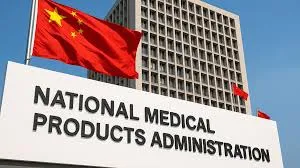
- NMPA (National Medical Products Administration)—In 2018, the CFDA was reorganized into the NMPA under the State Administration for Market Regulation (SAMR).
👉 The restructuring marked a new era of professional, science-based, and internationally aligned regulation.
Today, the NMPA serves as China’s top drug regulatory body, equivalent to the U.S. FDA and European EMA, responsible for drug approval, inspection, post-market surveillance, and international coordination.
Supporting Institutions and Policies
China’s drug supervision framework involves several specialized bodies working under the NMPA:
- 📃 CDE (Center for Drug Evaluation)—Conducts scientific and technical review of new drug applications.
- 🔬 CPIE (Center for Pharmaceutical Inspection and Evaluation)—Performs GMP inspections and on-site audits.
- 💻 ADR Monitoring System—Tracks and manages adverse drug reactions for post-market safety.
China enforces a series of rigorous regulatory systems, including:
- 🔴 GMP (Good Manufacturing Practice)—Ensures consistent production quality.
- 🟢 GSP (Good Supply Practice)—Regulates distribution and storage.
- 🟡 GCP (Good Clinical Practice)—Guarantees ethical and scientific integrity in clinical research.
- 🔵 Drug Marketing Authorization Holder (MAH) system—Holds the manufacturer legally responsible for the full lifecycle of a product.
International Standards and Global Certification: The Path of Chinese Pharma Globalization
🌟 To compete in global markets, Chinese pharmaceutical manufacturers must meet the world’s most stringent regulatory benchmarks set by organizations such as the WHO, FDA, and EMA.
This reflects both the quality of Chinese medicines and the growing competitiveness of China’s pharmaceutical technology internationally, while illustrating how China ensures the quality and safety of its exported pharmaceuticals.
WHO: Ensuring Global Consistency
🗺️ The WHO’s Prequalification Program (WHO PQ) evaluates medicines for safety, efficacy, and quality, particularly for public health use.
Many Chinese manufacturers have obtained WHO PQ certification, proving their ability to meet international requirements for vaccines, APIs, and essential medicines.
U.S. FDA Standards
🗽 The U.S. Food and Drug Administration (FDA) is recognized globally for its rigorous inspection and approval process.
✅ Chinese pharmaceutical exporters must comply with FDA cGMP (current Good Manufacturing Practice) requirements and pass on-site audits before their products can be marketed in the United States.
👉 This has driven Chinese companies to continuously upgrade production facilities, introduce advanced automation, and adopt digital quality control systems.
▶️ More Chinese companies are passing FDA inspections and obtaining ANDA (Abbreviated New Drug Application) approvals to provide high-quality medicines worldwide, illustrating how China ensures the quality and safety of its exported pharmaceuticals.
EMA Standards
🌍 The EMA (European Medicines Agency) governs drug approvals within the European Union.
Medicines approved under the EMA’s Centralized Procedure are automatically valid across all EU member states.
❗ Chinese companies seeking entry to the European market must meet EU GMP standards and undergo repeated quality assessments, ensuring product reliability and consistency.
Chinese innovative pharmaceutical companies are applying for EMA authorization to bring their medicines to European patients, reflecting how China ensures the quality and safety of its exported pharmaceuticals.
Building Global Trust: China’s Upgraded Manufacturing and Traceability
Modern Chinese pharmaceutical companies have embraced smart manufacturing, AI-based quality monitoring, and international certification systems.
Each exported batch is tested, documented, and traceable through digital platforms, preventing counterfeit products and ensuring safety across borders
In addition, AI is playing an increasingly important role in driving innovative drug development in China, helping companies improve research efficiency and drug efficacy.
For a deeper look into how AI is transforming China’s pharmaceutical innovation, read this article.
👉 Consumers can use this comprehensive article to understand China’s regulatory system for pharmaceutical production and learn how to identify authentic Chinese medicines.
There are three key takeaways:
- NMPA registration numbers and manufacturer information
- Product traceability codes and packaging details
- Authorized distributors or importers
Dengyue Pharma’s Role in Ensuring Quality and Safety
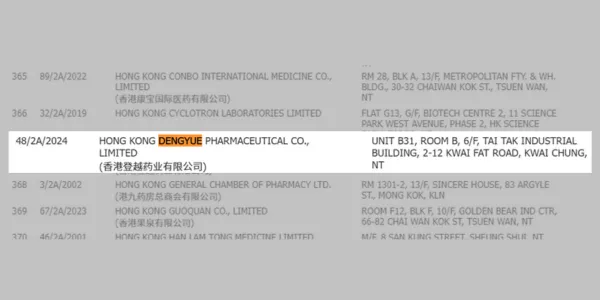
As a Chinese licensed and certified pharmaceutical distributor recognized by the Hong Kong Department of Health, Hong Kong DengYue Medicine is dedicated to safely and compliantly delivering high-quality Chinese medicines to global markets.
We ensure:
- 🌐 Sourcing only from certified manufacturers approved by NMPA or international agencies
- 📦 Comprehensive export compliance, including inspection and documentation
- 🔍 Strict product verification to prevent counterfeit or substandard medicines
- 💬 Transparent communication and global logistics support for reliable supply chain delivery

At Dengyue, our mission is to make high-quality, innovative Chinese medicines accessible to patients worldwide—with safety, authenticity, and efficacy guaranteed.
Conclusion: From “Made in China” to “Trusted by the World”
From strict national regulations to international certification, China’s pharmaceutical export system continues to evolve.
Advanced manufacturing, professional distribution, and regulatory support ensure drug quality and safety, illustrating how China ensures the quality and safety of its exported pharmaceuticals and earning global trust in Chinese medicines.
FAQ about How China Ensures the Quality and Safety of Its Exported Pharmaceuticals
How do you ensure the quality of pharmaceutical products?
1. Sampling.
2. Testing and Analysis.
3. Instrument Calibration.
4. Data Recording and Documentation.
5. Review and Interpretation.
6. Out-of-Specification (OOS) Investigation.
7. Stability Testing.
8. Documentation Review.
How to ensure drug safety?
This involves monitoring, evaluating, and reporting adverse drug reactions, both before and after medicines are launched on the market.
Why is drug safety important?
Drug safety practices support the ongoing development of pharmaceuticals.
What is responsible for ensuring the safety and effectiveness of medications?
The Food and Drug Administration (FDA) is responsible for protecting the public health by assuring the safety, efficacy, and security of human and veterinary drugs, biological products, medical devices, our nation’s food supply, cosmetics, and products that emit radiation.