New Drug Batoclimab for Myasthenia Gravis Approved in China, Advancing FcRn-Targeted Therapy
On October 22, 2026, China’s NMPA official website showed the approval of batoclimab injection for adults with AChR antibody-positive generalized myasthenia gravis (gMG), in combination with conventional therapy.
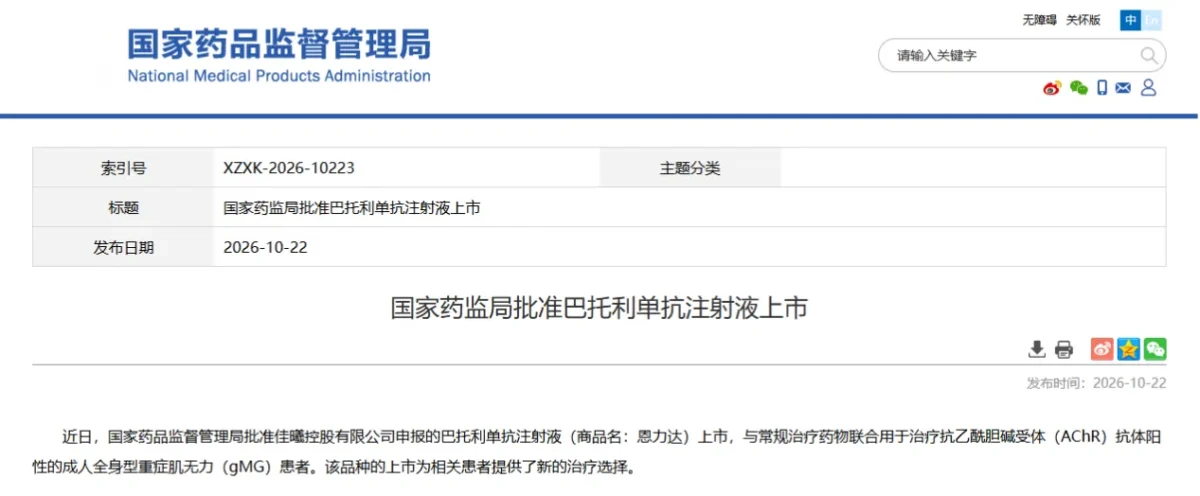
This approval provides a new treatment option for eligible patients and further expands the range of FcRn-targeted therapies available in China.
Hong Kong DengYueMed explores the mechanism of action, clinical data, and significance of the new drug batoclimab for myasthenia gravis, highlighting its role in the evolving treatment landscape.
What Is Batoclimab and How Does It Work?
Batoclimab is a fully human monoclonal antibody targeting the neonatal Fc receptor (FcRn). It is being developed primarily for the treatment of autoimmune diseases.
Basic Information About Batoclimab
| Item | Details |
|---|---|
| Generic name | Batoclimab |
| Brand name | Enlida® /恩力达® |
| Drug class | Fully human anti-FcRn monoclonal antibody |
| Original developer | HanAll Biopharma, South Korea |
| Chinese development partners | Harbour BioMed and CSPC Pharmaceutical Group Limited |
| Route of administration | Subcutaneous injection |
| Presentation | 170 mg/1 mL per vial |
| China approval date | October 2026 |
| Approved indication | In combination with conventional therapy for adults with AChR antibody-positive generalized myasthenia gravis |
Mechanism of Action of Batoclimab
The neonatal Fc receptor (FcRn) is involved in the recycling of immunoglobulin G (IgG).
Under normal physiological conditions, FcRn binds to intracellular IgG and protects it from lysosomal degradation, thereby extending its half-life in the bloodstream.
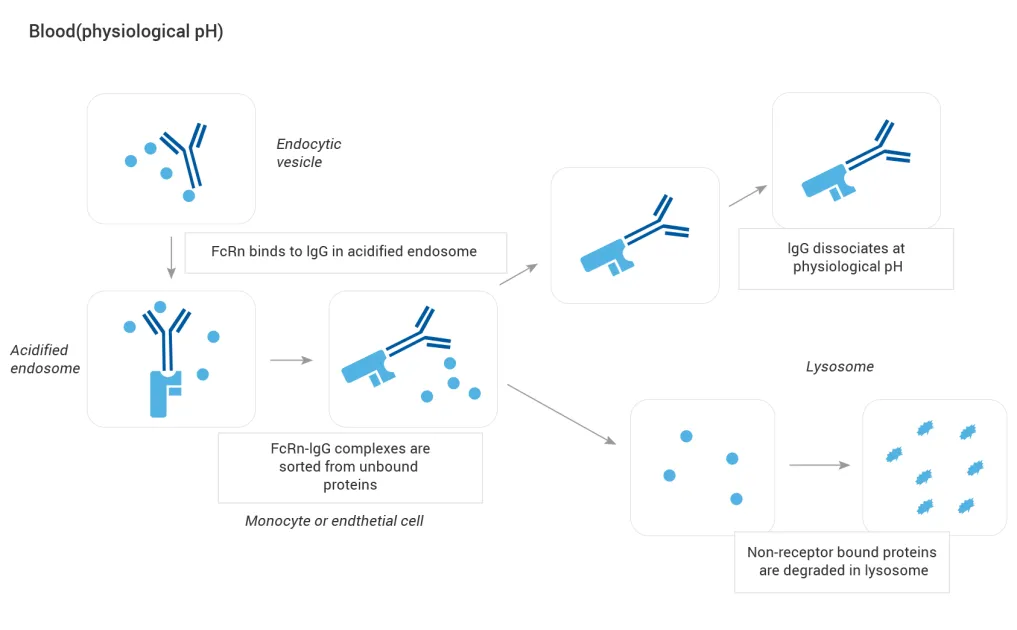
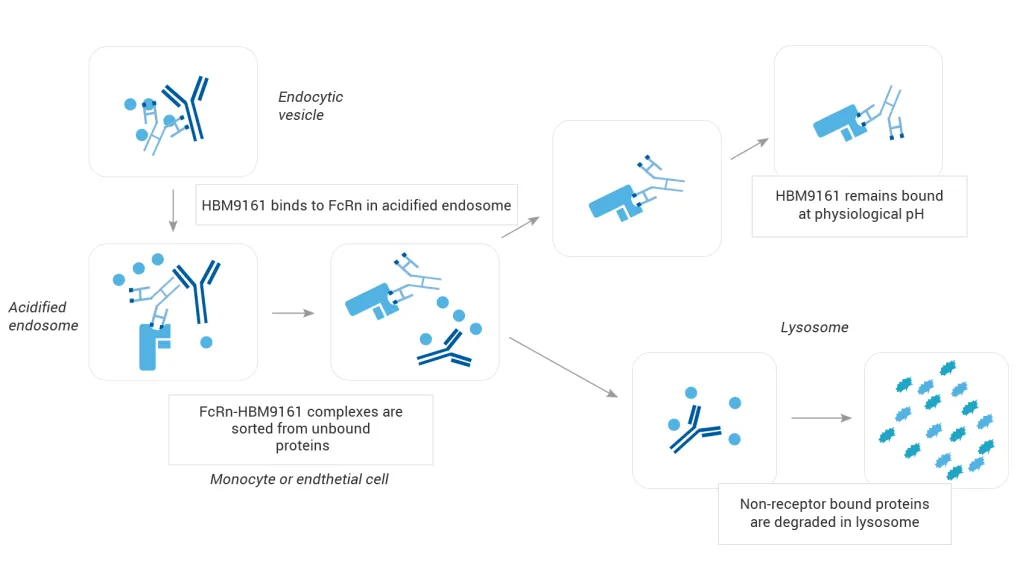
Batoclimab, also known as HBM9161, is an anti-FcRn monoclonal antibody that competitively blocks the interaction between FcRn and IgG.
This disrupts the IgG recycling process, allowing more IgG to enter the intracellular degradation pathway and reducing total IgG levels in the blood, including disease-causing autoantibodies.
In patients with generalized myasthenia gravis, pathogenic autoantibodies such as anti-AChR antibodies interfere with signal transmission at the neuromuscular junction, leading to muscle weakness.
By reducing circulating IgG and the associated pathogenic autoantibodies, batoclimab may help alleviate the pathological effects mediated by these antibodies.
What Is the Significance of the New Drug Batoclimab for Myasthenia Gravis?

Generalized myasthenia gravis (gMG) is a chronic autoimmune neuromuscular disease characterized primarily by muscle weakness and fatigability.
It can affect the eyes, limbs, swallowing muscles, and respiratory muscles. In severe cases, patients may experience a potentially life-threatening myasthenic crisis.
Conventional treatments include cholinesterase inhibitors, corticosteroids, and other immunosuppressive agents.
In recent years, targeted therapies have become an important area of development in myasthenia gravis treatment, including FcRn antagonists, complement inhibitors, and B-cell-targeted therapies.
🎯 Batoclimab is an FcRn antagonist that works by reducing IgG levels. Unlike drugs that directly inhibit the complement pathway, batoclimab acts at the level of circulating antibodies. This distinct mechanism provides another approach to managing antibody-mediated disease.
The approval of the new drug batoclimab for myasthenia gravis further expands targeted treatment options in China, providing an additional option for adults with AChR antibody-positive generalized myasthenia gravis.
How Does Batoclimab Perform in Phase III Clinical Trials?
A pivotal Phase III clinical trial of batoclimab was conducted across 27 research centers in China and enrolled 132 adults with generalized myasthenia gravis.
The study used a randomized, double-blind, placebo-controlled design. The primary efficacy assessment focused on symptom improvement measured using the Myasthenia Gravis Activities of Daily Living (MG-ADL) scale. The results were published in JAMA Neurology in 2024.[1]
Key Clinical Data
The study showed that patients receiving batoclimab experienced greater symptom improvement than those receiving placebo during the first treatment cycle.
| Clinical endpoint | Batoclimab group | Placebo group |
|---|---|---|
| Sustained improvement in MG-ADL | 58.2% | 31.3% |
| Sustained improvement in QMG | 64.2% | 40.6% |
| Proportion achieving minimal symptom expression (MSE) | 25.4% | 4.7% |
| Sustained improvement in MG-ADL during the second treatment cycle | 62.7% | 36.4% |
Note: Sustained improvement in MG-ADL was defined as an improvement of at least 3 points from baseline maintained for at least 4 weeks. The assessment criteria differed across endpoints.
The study reported a difference in symptom improvement between the treatment groups as early as Week 2. Analyses using the Myasthenia Gravis Composite (MGC) and the 15-item revised Myasthenia Gravis Quality of Life scale (MG-QOL15r) also showed similar trends toward improvement.
Safety Profile
The proportions of patients experiencing treatment-emergent adverse events were 95.5% in the batoclimab group and 92.3% in the placebo group.
Common adverse events in the batoclimab group included peripheral edema, upper respiratory tract infections, and urinary tract infections. Clinical use should follow the approved prescribing information, with appropriate safety monitoring.
China’s FcRn-Targeted Therapy Landscape and Future Outlook
As of October 2026, several FcRn-targeted therapies had been approved in China for generalized myasthenia gravis.[2-5]
The major products include:
| Generic name | Brand name | Company | China approval date | Route of administration |
|---|---|---|---|---|
| Efgartigimod alfa injection | VYVGART® / 卫伟迦® | argenx / Zai Lab | June 2023 | Intravenous infusion; subcutaneous formulation approved in 2024 |
| Rozanolixizumab injection | RYSTIGGO® / 优迪革® | UCB | March 2025 | Subcutaneous injection |
| Nipocalimab injection | IMAAVY® / 安力威® | Johnson & Johnson | May 2026 | Intravenous infusion |
| Batoclimab injection | Enlida® / 恩力达® | Harbour BioMed and CSPC Pharmaceutical Group | October 2026 | Subcutaneous injection |
Beyond FcRn-targeted therapies, treatments with other mechanisms, including complement inhibitors, are also advancing the management of myasthenia gravis and further expanding clinical treatment options.
Future Development of Batoclimab
As more FcRn-targeted therapies receive regulatory approval, the future market performance of batoclimab will depend on several factors, including clinical efficacy, safety, dosing regimens, market access, and patient accessibility.
In addition to generalized myasthenia gravis, the development pipeline for the new drug batoclimab for myasthenia gravis has also included other autoimmune diseases, such as:
- Thyroid eye disease (TED)
- Immune thrombocytopenia (ITP)
- Graves’ disease
- Lupus nephritis
Conclusion
The approval of the new drug batoclimab for myasthenia gravis by China’s NMPA provides a new treatment option for adults with AChR antibody-positive generalized myasthenia gravis.
As FcRn antagonists, complement inhibitors, and other targeted therapies continue to develop, treatment options and competition in China’s myasthenia gravis market are expected to evolve further.
As a China pharmaceutical wholesaler, DengYueMed leverages its China pharmacy resources to support global pharmaceutical stakeholders with drug sourcing coordination, supply chain services, and relevant market insights.

Explore Our China Pharmaceutical Supply Solutions
FAQ about New Drug Batoclimab for Myasthenia Gravis
What Is Batoclimab Used for?
Batoclimab is approved in China for adults with acetylcholine receptor (AChR) antibody-positive generalized myasthenia gravis (gMG), in combination with conventional therapy.
How Does Batoclimab Work in Myasthenia Gravis?
Batoclimab blocks the neonatal Fc receptor (FcRn), reducing IgG levels and disease-causing autoantibodies that contribute to myasthenia gravis.
Is Batoclimab Approved in China?
Yes, China’s National Medical Products Administration (NMPA) approved batoclimab injection in October 2026 for eligible adults with generalized myasthenia gravis.
What Did Phase III Clinical Trials Show About Batoclimab?
A Phase III trial involving 132 adults with generalized myasthenia gravis found greater sustained symptom improvement with batoclimab than with placebo across key clinical endpoints.
How Does Batoclimab Compare With Other FcRn Inhibitors in China?
Batoclimab is a subcutaneous FcRn antagonist, while other approved FcRn-targeted therapies in China include efgartigimod alfa, rozanolixizumab, and nipocalimab, which differ in administration and clinical profiles.
References
- Yan C, Yue Y, Guan Y, et al. Batoclimab vs Placebo for Generalized Myasthenia Gravis: A Randomized Clinical Trial. JAMA Neurology. 2024;81(4):336–345. Published online March 4, 2024. doi:10.1001/jamaneurol.2024.0044. https://jamanetwork.com/journals/jamaneurology/fullarticle/2815832
- argenx and Zai Lab. Approval of VYVGART® (efgartigimod alfa injection) for Generalized Myasthenia Gravis in China. June 30, 2023. https://argenx.com/news/2023/argenx-and-zai-lab-announce-approval-vyvgartr-efgartigimod-alfa-injection-generalized
- argenx. Approval of Efgartigimod Alfa Injection (Subcutaneous Injection) for Generalized Myasthenia Gravis in China. July 16, 2024. https://argenx.com/content/dam/argenx-corp/media-documents/argenx_Press_Release_Hytrulo_BLA_approval.pdf.coredownload.inline.pdf
- UCB. UCB Announces China NMPA Approval of RYSTIGGO® (rozanolixizumab) for the Treatment of Adults with Generalized Myasthenia Gravis. March 31, 2025. https://www.prnasia.com/story/483779-1.shtml
- Johnson & Johnson. Nipocalimab Approved in China for Generalized Myasthenia Gravis. May 21, 2026. https://www.prnasia.com/story/533967-1.shtml