

Sanofi’s Rilzabrutinib Approved in China: First BTK Inhibitor for Immune Thrombocytopenia (ITP)
On September 3, 2026, China’s NMPA website showed that Sanofi’s rilzabrutinib tablets had been approved for adults with persistent or chronic primary immune thrombocytopenia (ITP) who had an inadequate response or intolerance to corticosteroids, immunoglobulins, or other prior treatments.
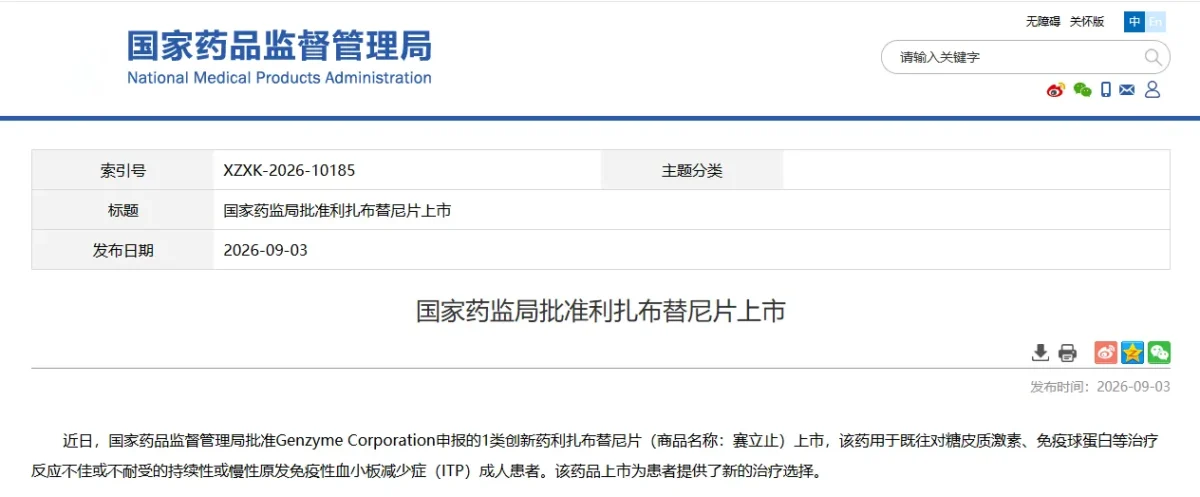
Rilzabrutinib was previously approved in the United States and other markets, where it became the first BTK inhibitor approved for ITP. The rilzabrutinib approved in China further brings this BTK-targeted treatment into the clinical treatment landscape for ITP in China.
In this article, DengYueMed provides an overview of rilzabrutinib, including its basic information, mechanism of action, key clinical evidence, and the significance of its approval in China.
What Is Rilzabrutinib and How Does It Work?
Rilzabrutinib is an oral, reversible covalent BTK inhibitor that targets Bruton tyrosine kinase (BTK) and modulates signaling pathways involved in B-cell and other immune-cell activation.
The rilzabrutinib approved in China is currently indicated for ITP, while rilzabrutinib is also being investigated in other immune-mediated and inflammatory diseases.
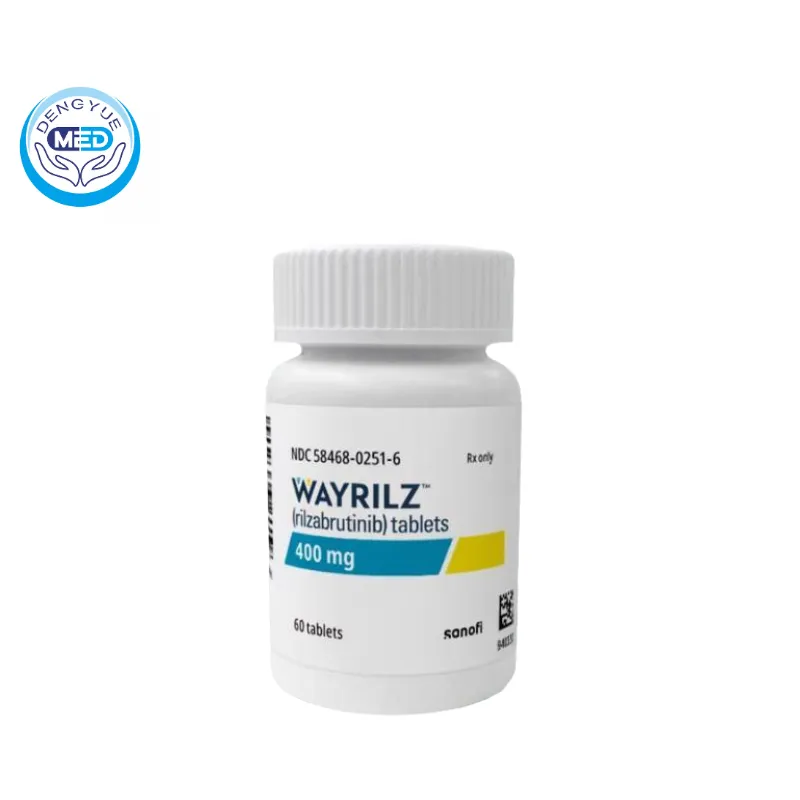
Basic Information About Rilzabrutinib
| Item | Information |
|---|---|
| Generic name | Rilzabrutinib |
| Brand name | Wayrilz® / 赛立止® |
| Drug class | BTK inhibitor |
| Target | Bruton tyrosine kinase (BTK) |
| Dosage form | Tablet |
| China approval | September 2026 |
| U.S. approval | August 2025 |
| Approved indication | Adult patients with persistent or chronic primary ITP who have had an inadequate response or intolerance to previous treatments such as corticosteroids and immunoglobulins |
| Key clinical study | Phase 3 LUNA 3 |
Mechanism of Action of Rilzabrutinib
BTK is an important kinase in B-cell receptor (BCR) signaling and also participates in signaling pathways in macrophages and other immune cells.
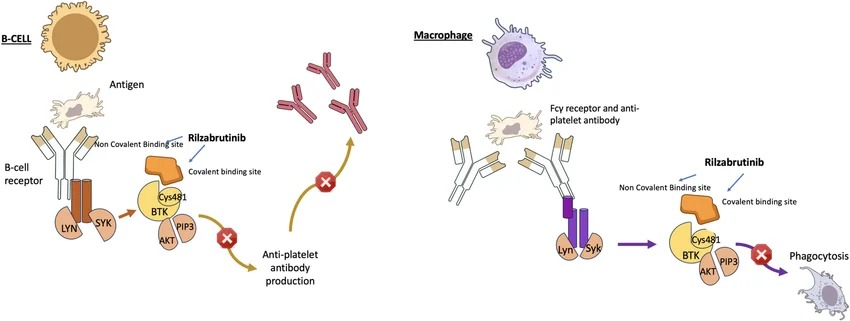
🎯 Rilzabrutinib forms a reversible covalent interaction with BTK and inhibits its activity, blocking related signaling pathways and thereby modulating immune-cell activity.
In ITP, BTK is involved in two important immune pathways associated with platelet reduction:
- B-cell pathway: Abnormal B-cell activation can promote the production of anti-platelet autoantibodies, contributing to platelet destruction.
- Macrophage pathway: Macrophages can recognize and phagocytose antibody-coated platelets through Fcγ receptor (FcγR)-mediated signaling, contributing to platelet clearance.
Therefore, the rilzabrutinib mechanism of action involves both B-cell-mediated autoantibody production and FcγR-mediated platelet clearance. By inhibiting BTK, rilzabrutinib can modulate these two important immune pathways involved in ITP.
Clinical Significance of Rilzabrutinib for ITP Treatment
ITP is a complex immune-mediated disease in which thrombocytopenia involves multiple processes, including autoantibody production and immune-cell-mediated platelet clearance.
Although treatments such as rituximab and other established therapies are available, some patients may still experience inadequate treatment response, relapse, or intolerance. Persistent or chronic ITP therefore continues to have unmet treatment needs.
Rilzabrutinib targets BTK and introduces a different therapeutic mechanism into ITP treatment.
This mechanism also distinguishes rilzabrutinib from therapies that primarily target platelet production or other immune pathways, providing a new targeted treatment strategy for ITP.
Results from the rilzabrutinib clinical trial LUNA 3 showed that some patients achieved a durable platelet response, providing clinical evidence supporting its use in ITP.
Key Clinical Study of Rilzabrutinib for ITP: LUNA 3
The key clinical evidence for rilzabrutinib for ITP comes from the Phase 3 LUNA 3 study (NCT04562766).
The study enrolled 202 adults with persistent or chronic ITP. Of these, 133 patients received rilzabrutinib 400 mg twice daily, while 69 received placebo. The double-blind treatment period lasted up to 24 weeks, and the primary endpoint was durable platelet response.
Key Results From LUNA 3
| Key measure | Rilzabrutinib | Placebo |
|---|---|---|
| Durable platelet response | 23.3% | 0% |
| Median time to first platelet response | 36 days | Not reached |
| Platelet response during the first 12 weeks | Approximately 64% | Approximately 32% |
| Duration of platelet response, LS mean | 7.18 weeks | 0.72 weeks |
FDA data showed that 31 patients in the rilzabrutinib group achieved a durable platelet response, compared with 0 in the placebo group. The median time to the first platelet response was 36 days, while the LS mean duration of platelet response was 7.18 weeks.
Three key findings can be highlighted from the study: 👇
- More patients achieved a platelet response: Rilzabrutinib helped some patients improve their platelet counts.
- Some patients responded relatively early: Platelet improvement was observed during the early treatment period in the study.
- Responses could be sustained in some patients: LUNA 3 evaluated not only whether platelet counts increased, but also whether the response could be maintained over time.
In terms of safety, commonly reported adverse reactions included diarrhea, nausea, headache, abdominal pain, and COVID-19. Specific safety information should be based on the latest locally approved prescribing information.
Significance of Rilzabrutinib Approval in China for ITP
1. The First BTK Inhibitor Approved for ITP Enters China
Rilzabrutinib is the first BTK inhibitor approved for ITP globally. The rilzabrutinib approved in China further expands the availability of this innovative targeted therapy into one of the world’s major pharmaceutical markets.
2. Expands Treatment Options for ITP in China
The approved indication focuses on patients who have had an inadequate response or intolerance to treatments such as corticosteroids and immunoglobulins. Rilzabrutinib offers a different treatment approach and further expands treatment options for ITP in China.
3. Expands the Clinical Application of BTK-Targeted Therapy
The rilzabrutinib approved in China further extends the clinical application of BTK inhibition into an immune-mediated disease such as ITP. More broadly, rilzabrutinib reflects the expanding development of BTK-targeted therapies beyond traditional hematologic indications and into immune-mediated diseases.

What Other Diseases Is Rilzabrutinib Being Studied For?
ITP is not the only area being investigated for rilzabrutinib. Because BTK is involved in signaling pathways across multiple immune cells, rilzabrutinib is also being studied in other immune-mediated and inflammatory diseases.
Current publicly disclosed development areas include:
- Warm autoimmune hemolytic anemia (wAIHA)
- IgG4-related disease (IgG4-RD)
- Sickle cell disease (SCD)
Sanofi is also investigating rilzabrutinib in these diseases, but these uses remain investigational and are not yet approved. Phase 3 studies include wAIHA, IgG4-RD, and SCD.
Conclusion
The rilzabrutinib approved in China provides a new oral treatment option for adults with persistent or chronic primary ITP who have had an inadequate response or intolerance to previous treatments.
The approval also marks the further expansion of BTK-targeted therapy into immune-mediated diseases and adds to the global development landscape for rilzabrutinib in ITP and other rare immune-mediated conditions.
China pharmaceutical exporter DengYueMed follows developments in China’s innovative medicines and global pharmaceutical markets, leveraging China pharmacy and pharmaceutical resources to support international partners and connect China’s pharmaceutical resources with global markets.
FAQ about Rilzabrutinib Approved in China
Is rilzabrutinib approved in China for ITP?
Yes. China’s NMPA approved rilzabrutinib for adults with persistent or chronic primary ITP who have had an inadequate response or intolerance to previous treatments.
What is rilzabrutinib used for?
Rilzabrutinib is approved for the treatment of persistent or chronic primary ITP in adults after inadequate response or intolerance to previous treatments.
How does rilzabrutinib work for ITP?
Rilzabrutinib is a reversible covalent BTK inhibitor that modulates B-cell and macrophage pathways involved in autoantibody production and platelet clearance.
What did the LUNA 3 trial show for rilzabrutinib?
The Phase 3 LUNA 3 trial showed that rilzabrutinib produced durable platelet responses in some adults with persistent or chronic ITP.
What other diseases is rilzabrutinib being studied for?
Rilzabrutinib is also being investigated in warm autoimmune hemolytic anemia, IgG4-related disease, and sickle cell disease.