
EAL (Expanded Activated Lymphocytes) – HCC | HongKong DengYue Medicine
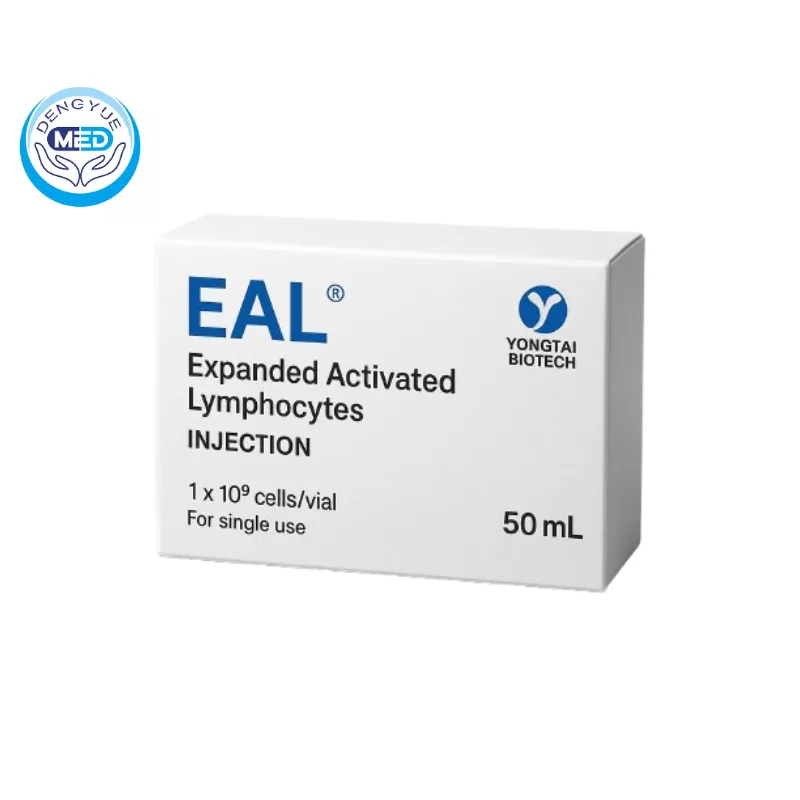
- Generic Name/Brand Name: Expanded Activated Lymphocytes/EAL
- Indications: HCC
- Dosage Form: Injection
- Specification: 50 ml × 1 vial
EAL Application Scope
EAL (Expanded Activated Lymphocytes) is an investigational autologous cell immunotherapy intended for the prevention of tumor recurrence in high-risk patients following radical resection of primary hepatocellular carcinoma (HCC). The target population must meet at least two of the following immune characteristic criteria: no microvascular invasion, postoperative neutrophil-to-lymphocyte ratio (NLR) <3, and postoperative platelet-to-lymphocyte ratio (PLR) <110. As of December 5, 2025, EAL has not been approved for marketing in China or elsewhere; its new drug application was accepted for conditional approval by the CDE on March 31, 2025, and it remains under review. It has been used in over 4,000 patients with more than 20,000 infusions as a Class III medical technology prior to the application.
EAL Characteristics
-
Ingredients: Autologous cytokine-induced killer (CIK) cells, primarily consisting of CD3+CD8+ cytotoxic T cells as the main active component, along with NK cells and CD4+ helper T cells. These are derived from the patient’s peripheral blood mononuclear cells, activated and expanded using patented technology.
-
Properties: Clear to slightly opalescent cell suspension for intravenous injection. It is a non-gene-modified autologous cell product, offering broad-spectrum anti-tumor activity with minimal damage to normal cells.
-
Packaging Specification: Not publicly specified in available sources, as the product is investigational. Likely supplied in single-use sterile bags or vials for infusion.
-
Storage: Specific storage conditions are not detailed in public sources. For similar fresh autologous cell therapies, short-term storage at room temperature (15-25°C) or refrigerated (2-8°C) is common, with use recommended within hours of preparation to maintain cell viability.
-
Expiry Date: Not publicly specified. For autologous cell products like CIK, the shelf life is typically short (e.g., 24-72 hours post-preparation) due to cell viability requirements.
-
Executive Standard: Not applicable, as the product is not yet approved.
-
Approval Number: Not applicable, as the product has not been approved for marketing.
-
Date of Revision: Not applicable.
-
Manufacturer: Beijing Yongtai Biological Products Co., Ltd., a subsidiary of Yongtai Bio.
Guidelines for the Use of EAL
-
Dosage and Administration:
-
Recommended Dose: Specific dosing details are not publicly available from clinical trials. Based on general CIK therapy practices and the product’s use in over 20,000 infusions, typical regimens involve infusing 1-10 × 10^9 cells per dose, administered multiple times (e.g., 4-6 cycles over several months) post-surgery. Dosing is personalized based on patient body weight and cell yield.
-
Administration: Intravenous infusion. Cells are prepared from the patient’s own blood, expanded ex vivo, and reinfused. Pre-treatment lymphodepleting chemotherapy is not typically required, unlike some other cell therapies.
-
Missed Dose: No specific guidance available. If a dose is missed in a multi-infusion regimen, consult the treating physician for rescheduling, as cell products have limited viability.
-
-
Adverse Reactions:
-
Common Adverse Reactions: The product demonstrates good safety with low incidence of adverse events. Common reactions may include mild fever, chills, or fatigue, typical of immune cell infusions.
-
Serious Adverse Reactions: Rare, due to its non-gene-modified nature and autologous origin, which reduces risks like cytokine release syndrome (CRS) or neurotoxicity compared to CAR-T therapies. No viral vector-related mutations or long-term safety concerns reported.
-
-
Contraindications: Specific contraindications are not detailed publicly. Likely includes active systemic infections, severe autoimmune diseases, or conditions where immune activation could be harmful (e.g., recent organ transplant). Pregnant or breastfeeding individuals should avoid, as with most investigational immunotherapies.
-
Precautions:
- Monitor patients for infusion-related reactions, such as allergic responses or cytokine-related symptoms. Ensure compatibility with concurrent therapies. Use only under specialist supervision in facilities equipped for cell therapy administration. As an autologous product, confirm patient identity to avoid mismatches.
EAL Interactions
- No specific drug interactions are documented in available sources. Potential interactions with immunosuppressants could reduce efficacy by impairing cell activity. Consult with a physician regarding concomitant medications, especially those affecting the immune system.
Note:
- If there is a new packaging for the drug, the new packaging shall prevail. The above information is sourced from DengYue Medicine.
- This content is for reference only. Prescription drugs must be used under a doctor’s guidance and purchased from authorized sources.
Related products
-

Likating (Iodine131I Metuximab) – HCC | HongKong DengYue Medicine
-
Pegpesen (Inpegsomatropin Injection) – AGHD | HongKong DengYue Medicine
-
Cabometyx (Cabozantinib) – Solid Tumors | HongKong DengYue Medicine
-
Zepsun (Donafenib Tosilate) – HCC | HongKong DengYue Medicine
-
Daboshu (Sintilimab Injection) – Lung Cancer | HongKong DengYue Medicine
-
Cyramza (Ramucirumab) – NSCLC | HongKong DengYue Medicine
-
Pradefovir Mesylate Tablets|Liver Cancer|HongKong DengYue Medicine
-
Beyfortus (Nirsevimab) – Respiratory Syncytial Virus | HongKong DengYue Medicine
Reviews
There are no reviews yet.