
Junshi’s PD-1/VEGF Bispecific JS207: The Key Head-to-Head Test Against Opdivo in NSCLC—Following FDA Clearance for Phase II/III Trial
As a Hong Kong drug wholesale distributor, we stay open to learning and closely track China’s progress in drugs and other new approvals, helping us anticipate trends and deliver timely, high-quality solutions for patients and partners.
In a significant step for its oncology pipeline, Junshi Biosciences has announced that the U.S. Food and Drug Administration has cleared its investigational PD-1/VEGF bispecific antibody, JS207, to initiate a Phase II/III clinical trial.
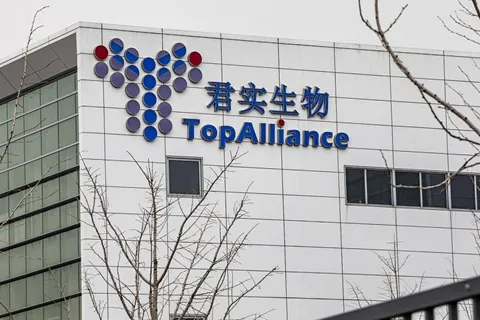
This pivotal study will pit JS207 directly against Bristol Myers Squibb‘s blockbuster immunotherapy, Opdivo (nivolumab), in patients with stage II/III resectable non-small cell lung cancer (NSCLC) who are AGA-negative, in the neoadjuvant setting.

The FDA clearance marks a milestone for the NSCLC treatment landscape, representing the first PD-1/VEGF dual-targeting agent to enter a confirmatory study in a surgically eligible population.
“By challenging a first-generation PD-1 inhibitor with our novel bispecific, JS207, we aim to provide a more advanced therapeutic option and improve cure rates for patients.”
🔍 “By challenging a first-generation PD-1 inhibitor with our novel bispecific, JS207, we aim to provide a more advanced therapeutic option and improve cure rates for patients.”
🧑⚕️ “We are committed to accelerating the global development of JS207 to solidify its core role in the next wave of immuno-oncology innovation.”
Mechanism of Action: Dual-Targeting Approach—How JS207 Aims for Synergistic Efficacy
The potential of JS207 to challenge established PD-1 monotherapy lies in its unique mechanism of action.
Dual Blockade: JS207 is a recombinant humanized bispecific antibody that simultaneously binds with high affinity to both PD-1 and VEGFA. This enables it to block both the PD-1/PD-L1 immune checkpoint pathway and the VEGF/VEGFR angiogenesis pathway.
Synergistic Effect: This design offers more than just additive effects. By neutralizing VEGF, JS207 inhibits aberrant tumor blood vessel growth. This remodeling of the tumor microenvironment helps alleviate immunosuppression, thereby promoting the infiltration and cytotoxic activity of T-cells within the tumor.
Theoretically, this synergistic mechanism could lead to superior anti-tumor activity compared to monotherapy or even combination therapy, potentially with an improved safety profile.
Development Pipeline & Industry Trends: Bispecific Antibodies Fueling China’s Biopharma Out-Licensing
The progress of JS207 aligns closely with the current wave of out-licensing deals for innovative Chinese drugs.
Rapid Clinical Advancement: JS207 has now formally entered the Phase II/III clinical stage.
Furthermore, the company is actively advancing multiple Phase II studies exploring JS207’s potential in combination with chemotherapy, other monoclonal antibodies, and antibody-drug conjugates (ADCs) across various solid tumors, including NSCLC, colorectal cancer, triple-negative breast cancer, and liver cancer, demonstrating a broad development strategy.
Robust Business Development Landscape: On a broader industry level, bispecific antibodies and ADCs have become powerful new engines for China’s biopharmaceutical out-licensing.
Data reveals that the total value of business development (BD) transactions for Chinese innovative drugs reached a staggering $63.55 billion in the first half of 2025, already surpassing the full-year total for 2024.
This period witnessed 16 deals each valued over $1 billion, with bispecific antibody transactions being particularly prominent.
PD-1/VEGF as a Key Target: The industry widely recognizes that novel bispecific molecules like PD-1/VEGF and PD-1/TGF-β are becoming central to the next wave of BD transactions between Chinese and international pharmaceutical companies.
A landmark precedent was set in May when 3SBio out-licensed its PD-1/VEGF bispecific, SSGJ-707, to Pfizer for a record-breaking $1.25 billion upfront payment and a total deal value of $6.05 billion.
In this context, JS207, as a core asset of Junshi Biosciences, is poised to become a highly sought-after potential target for global partnership, especially upon the success of its clinical trials.
At Hong Kong Deng Yue Medicine, we regard these achievements—particularly the progress in drugs and other new approvals—as valuable references that deepen our professional insight, strengthen our service capabilities, and enable us to stay ahead of industry trends, ultimately supporting patients and partners with more timely and effective solutions.