
China Pharmaceutical Supply Chain Transformation: The Support System Behind the $66 Billion Boom in Innovative Drug Globalization
In just six months, China’s innovative drug outbound licensing deals have surged past $66 billion—a clear sign of China pharmaceutical supply chain that’s rapidly evolving and globally integrating.
The momentum is striking.
In just two days this October, five major overseas licensing deals were signed, several surpassing $1 billion each.
Shenzhen Prigin Biotechnology and Hansoh Pharma each secured multi-billion-dollar collaborations with global players like Gilead and Roche.
This isn’t just a streak of luck—it’s the outcome of a maturing, system-wide upgrade across China’s pharmaceutical ecosystem.
A Surge in Global Partnerships: The Numbers Behind the Boom
China’s innovative drug sector is making its mark on the global stage.
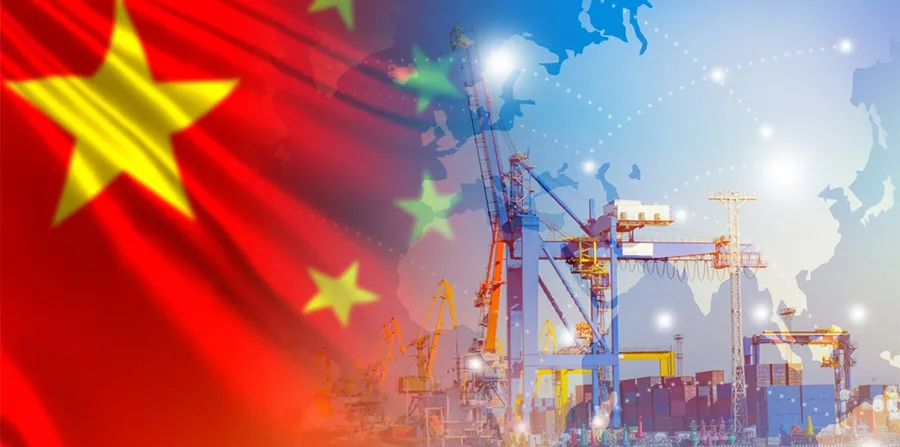
In the first half of 2025 alone, overseas licensing deals hit nearly $66 billion, outpacing the full-year total of 2024.
Over 50 outbound partnership transactions were recorded, with disclosed values reaching approximately $48.45 billion—a new historical benchmark.
Key metrics shaping this trend:
- Mega-deals on the rise: 21 transactions exceeded $1 billion, almost matching the 23 recorded throughout 2024.
- Upfront payments surged to $4.16 billion, nearing the previous year’s total.
- ADC drugs lead the pack: Antibody-drug conjugates accounted for over one-third of total deal value, reaching $17.27 billion.
These figures reflect more than just deal-making momentum—they signal China’s strategic shift from a generics-focused “follower” to an innovation-driven “global collaborator.”
Upstream Strength: The Unshakable Backbone of APIs and Intermediates
China continues to anchor the global pharmaceutical supply chain as the world’s leading supplier of active pharmaceutical ingredients (APIs) and intermediates.
Customs data shows that in the first half of 2025, China’s API and intermediate trade reached $28.11 billion, a 6.0% year-on-year increase, with exports accounting for $22.14 billion.
A look at the broader trajectory:
- Steady growth from $23.55 billion in export value in 2015 to $42.98 billion in 2024—a 7.7% compound annual growth rate.
- APIs and intermediates consistently make up around 80% of China’s Western medicine exports.
- Key markets remain Asia and Europe, which together account for 74% of total API exports, with India and the U.S. as the top two destination countries.
Midstream Innovation: R&D and Manufacturing Upgrades
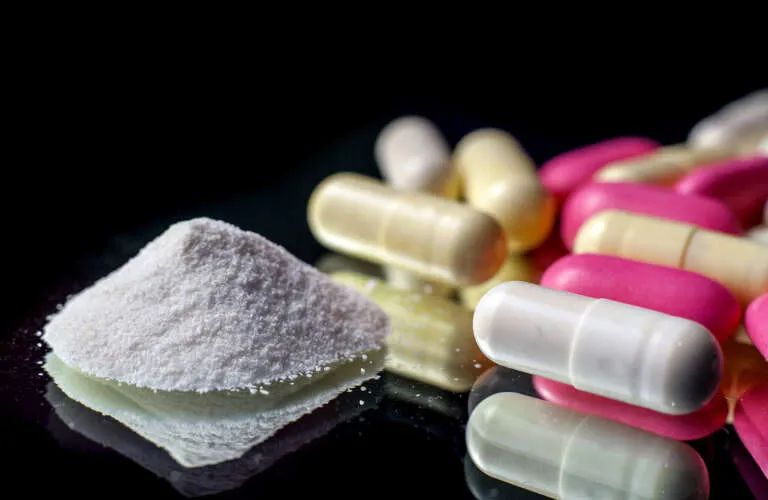
The middle segment of China pharmaceutical supply chain—drug R&D and manufacturing—is undergoing a profound transformation, moving from a generics-dominated past toward an innovation-led future.
- Artificial intelligence is reshaping R&D efficiency.
🔍As one researcher from the Western Institute of Computing Technology noted, “Our goal is to cut traditional drug development cycles by 90%.”
- R&D investment tells the same story.
💵Jiangsu Hengrui Pharmaceuticals, for instance, has cumulatively invested more than $48 billion in R&D, with its R&D-to-revenue ratio hitting 29.4% in 2024—among the highest in the industry.
💊The company now boasts 24 category 1 innovative drugs and 4 category 2 new drugs approved domestically.
- Regulatory reforms have further accelerated progress.
⭕Since 2015, drug review and approval timelines have been shortened from three years to 60 working days.
👉In 2025, the National Medical Products Agency aims to further reduce the clinical trial review period to 30 working days.
- Chinese drug candidates are also gaining visibility on international platforms.
🔬For example, the anlotinib and bemosumab combination therapy has entered head-to-head trials against Merck’s Keytruda in lung and colorectal cancers—showcasing China’s potential to offer competitive “homegrown solutions.”
Downstream Evolution: Cold Chain Logistics and Rural Access
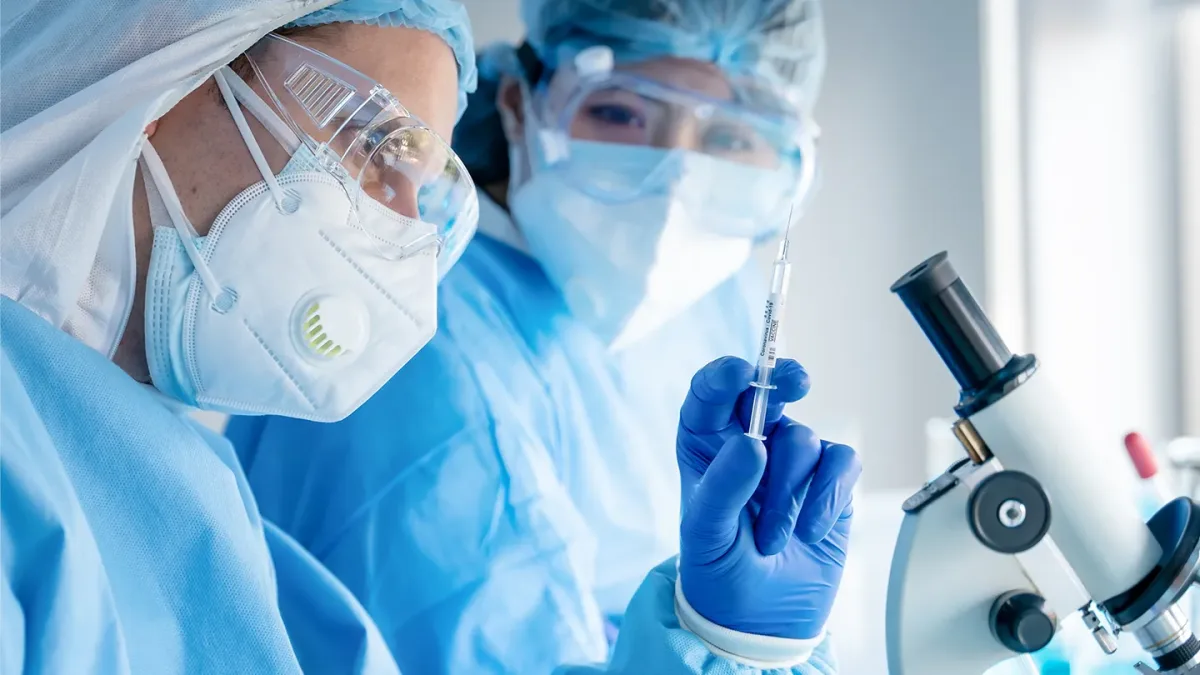
The final leg of the China pharmaceutical supply chain—logistics and distribution—is also advancing, driven by specialized drug requirements and expanding market access.
The rapid adoption of GLP-1 therapies for weight management—which demonstrate an average 15% weight reduction in trials—has accelerated demand for reliable cold chain logistics.
E-health platforms are partnering with global e-commerce players to optimize last-mile distribution.
One health management company, working with a major online pharmacy, has cut average delivery times in rural areas from 4 days to 2.
Still, challenges in accessibility remain.
A recent survey indicated that 37% of patients in remote regions struggle with comparing prices and accessing these drugs across different pharmacies.
To close this gap, companies are deploying a two-pronged strategy:
- Building networks of self-service medication kiosks, targeting 4,000 new rural service areas by 2026.
- Investing over $4 billion to expand logistics infrastructure and triple cold chain capacity.
With the FDA accelerating approvals and generics entering the market, the GLP-1 segment is poised for further growth in 2025.
In response, Chinese pharma firms are shifting from product-level competition to integrated “drug + service” ecosystems—strengthening supply chain resilience while expanding patient access.

Conclusion: From “Made in China” to “Innovated in China”
China pharmaceutical supply chain is steadily shifting from a manufacturing-heavy model to an innovation-oriented one.
With strong API foundations, accelerating R&D capabilities, and more efficient logistics, the country has built an integrated ecosystem capable of supporting globally competitive drug development.
Policy support continues to play a crucial role.
In early 2025, the National Healthcare Security Administration held forums to advance the “1+3+n” multi-level protection system—broadening reimbursement pathways for innovative drugs.
As Chinese pharmaceutical companies increasingly embed themselves in global innovation networks, the supply chain will continue to become more digital, precise, and international.
The era of Chinese drug development mirroring global standards is evolving into one of leading it, and the supply chain is the engine making it possible.
About DengYue Medicine

In this era of unprecedented opportunity and challenge within the China pharmaceutical market, success is inextricably linked to having a forward-thinking and reliable partner.
As an industry pioneer, DengYue Medicine is proactively embracing this profound transformation.
We are more than just a pharmaceutical distributor; we are a connector of innovation and a creator of value.
By building an intelligent supply chain network, expanding into innovative digital healthcare services, and actively forming strategic alliances with domestic innovative pharma companies, DengYueMed is committed to transcending the boundaries of traditional distribution to provide our partners with future-ready, comprehensive solutions.
To partner with HK DengYue is to walk in step with the future of the market.
FAQ about China Pharmaceutical Supply Chain
What is a pharmaceutical supply chain?
The pharma supply chain begins with the research and development process and ends with medication dispensing to consumers.
What are the 5 stages of a supply chain?
1. Planning and Analysis.
2. Sourcing
3. Manufacturing and Production
4. Distribution
5. Returning
What are the 7 C’s of supply chain management?
The 7 C’s of Logistics—Connect, Create, Customize, Coordinate, Consolidate, Collaborate, and Contribute—provide a useful framework for improving operations.
What is OTD in supply chain?
OTD means “on-time delivery,” which refers to the percentage of orders delivered within the promised window.


China’s pharmaceutical ecosystem is definitely in a growth phase, but I think it’s equally important to consider the impact this will have on emerging markets. Will this shift also democratize access to innovative drugs?