2025 in Review丨Dual Harvest for China Innovative Drugs — How R&D Leadership Met Capital Validation
The year 2025 marked a profound paradigm shift for China’s innovative drug industry. We witnessed the historic achievement of the “Dual Harvest for China Innovative Drugs.”
✨ The “Dual Harvest” signifies: 1️⃣ lies the scientific voice defining global R&D, 2️⃣ the capital votes validating its commercial worth.
The question then follows: How did this happen? Is this “harvest” a sporadic wave or a sustainable tide?
As a leading global pharma procurement platform in China, Hong Kong DengYue Medicine has deeply participated in and witnessed this wave of “value realization” for Chinese innovative drugs, from the laboratory to the global marketplace, throughout 2025.
R&D Breakthroughs—From “Following” to “Defining”
“Previously, we looked to international conference agendas to set our research direction. Now, global peers are adjusting their R&D strategies based on our data,” remarked Xia Yu, Chairman of Consonance Biologics, at an industry forum in December.
This role reversal found solid data-backed support in 2025. 🔻
According to data from the National Medical Products Administration, by the end of November, a total of 68 Class 1 new drugs had been approved this year—an increase of over 30% compared to the full-year total of the previous year.
More noteworthy is the structural shift: among these approvals, 12 were First-in-class (FIC) drugs with novel mechanisms of action, accounting for 17.6%. This marks a significant leap from less than 5% just five years ago.
👉 These parallel breakthroughs across two dimensions constitute the most compelling evidence of the “Dual Harvest for China Innovative Drugs”: the dual establishment of scientific and commercial influence.
In specific therapeutic areas, Chinese innovative drugs are actively redefining treatment standards:
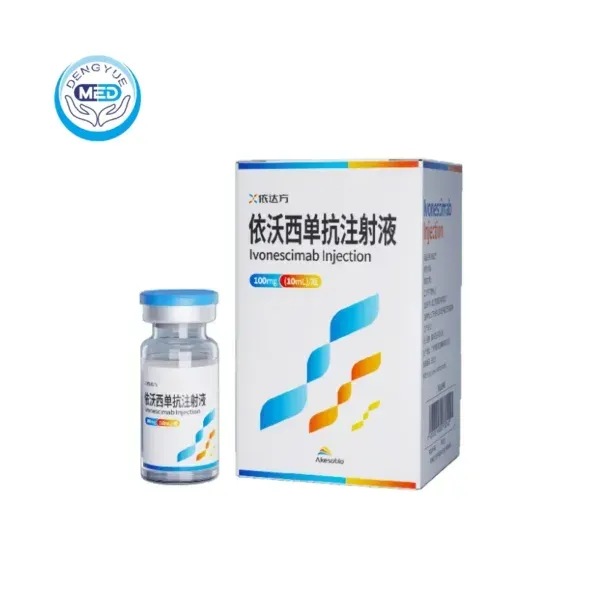
- Bispecific Antibodies Taking the Lead: Consonance Biologics’ PD-1/VEGF bispecific antibody (Ivonescimab) has demonstrated significant advantages in the first-line treatment of non-small cell lung cancer, with global Phase III patient enrollment already past the halfway mark.
👉 3S Pharmaceuticals’ bispecific antibody targeting the same pathway (SSGJ-707) was in-licensed by Pfizer with a staggering $1.25 billion upfront payment, setting a new record for Chinese innovative drug out-licensing deals.
- ADC Drugs Entering a ‘Bumper Harvest: Antibody-drug conjugates (ADCs) from companies such as Kelun-Biotech, RemeGen, and Lepu Biotech were approved intensively in 2025.
👉 Currently, China contributes over 40% of all ADC pipelines in global development, establishing a formidable cluster advantage in popular targets including HER2, TROP2, and Claudin 18.2.
- Cell Therapy Becoming ‘Accessible’: Following approvals, CAR-T products from companies like IASO Biotech and Juventas Cell Therapy have achieved significant process optimizations, bringing treatment costs into a more accessible range.
👉 This year alone, they have cumulatively treated over 2,000 patients, successfully transitioning these therapies from “prohibitively expensive drugs” to “accessible treatments.”
Data from the national drug clinical trial registration platform reveals a landmark shift in 2025: the number of innovative drug clinical trials initiated in China surpassed that of the United States for the first time, reaching 32% of the global total.
Particularly in areas long dominated by multinational pharmaceutical companies—such as solid tumor therapy, autoimmune diseases, and metabolic disorders—China’s share of clinical development now exceeds 40%.
Commercial Value—From “Input” to “Output”
Breakthroughs in R&D require validation through commercial value, and 2025 delivered a clear answer.
Financial reports show that in the first three quarters of this year, major innovative pharmaceutical companies listed on the A-share and Hong Kong markets achieved an overall basic balance between R&D investment and licensing revenue for the first time.
💰 License-out revenue reached 112 billion yuan, a year-on-year increase of 156%, while R&D investment amounted to 118 billion yuan, up 28% year-on-year.
- “This is a symbolic turning point,” analyzed Zhang Lei, a private equity investor who has long focused on healthcare”.
- It indicates that the business model for innovative drugs is beginning to prove viable—upfront R&D investment can be balanced by later-stage value realization, steering the industry toward a virtuous cycle.”
At the enterprise level, the polarization effect among leading companies has become increasingly pronounced:
- BeiGene, leveraging global sales of Zanubrutinib and sustained volume growth of Tislelizumab, reported revenue of 18.5 billion yuan in the first three quarters, a year-on-year increase of 72%, with overseas revenue exceeding 60% of the total for the first time.
- Innovent Biologics, after entering into a strategic collaboration with Takeda Pharmaceutical totaling $11.4 billion, significantly bolstered its cash flow. Meanwhile, its proprietary product, Sintilimab, is projected to achieve annual sales exceeding 5 billion yuan.
- Kelun-Biotech, by licensing multiple ADC projects to Merck, has cumulatively received over $1.5 billion in upfront and milestone payments, establishing itself as a model for successful transformation through the license-out model.
The capital market has also provided a clear response. 🔻
In 2025, despite overall volatility in the biotech sector, leading companies with outstanding clinical data and commercialization capabilities performed strongly.
The market capitalization of firms such as Hengrui Pharmaceuticals, BeiGene, and Innovent Biologics increased by an average of 45% since the beginning of the year, significantly outperforming the broader market.
Global Presence—From “Participant” to “Architect”
“Five years ago, our goal was to make the world’s newest drugs available to Chinese patients. Today, our goal is to make drugs defined by China available to patients around the world.” Wu Xiaobin, Global President of BeiGene, described the company’s strategic shift in a recent interview.
This transformation manifested in three upgraded dimensions in 2025:
- Market Dimension: From Domestic to Global
Chinese innovative pharmaceutical companies are now conducting clinical trials in over 50 countries.
The number of products approved for marketing in mainstream markets such as Europe and the United States has reached 24, an increase of 8 compared to the end of last year.
BeiGene’s Zanubrutinib has been approved in 65 global markets, with global sales exceeding $1 billion in the first three quarters of this year.
- Collaboration Dimension: From Licensing to Co-creation
Early license-outs often involved single-product authorizations. In 2025, multiple platform-level and strategic collaborations emerged.
The partnership between Hengrui Pharmaceuticals and GSK covers 11 projects across multiple disease areas, while Innovent Biologics’ collaboration with Takeda focuses on next-generation tumor immunotherapies, with both parties sharing R&D costs and global revenues.
- Standard Dimension: From Acceptance to Contribution
In 2025, Chinese pharmaceutical companies led or participated in the development of seven international standards for cell therapy products and ADC drug quality control guidelines, which were adopted by the International Organization for Standardization (ISO).
Chinese innovative drugs are no longer just followers of international rules but have begun to contribute to industry standards.
Why 2025? The Inevitable Unleashing of a Decade of Accumulation
“What appears to be a sudden surge is, in fact, the concentrated release of a decade’s worth of accumulated policy support, talent, and capital,” explained Professor Qian Feng from the School of Pharmaceutical Sciences at Tsinghua University.
Looking back, several critical milestones stand out clearly:
- 2015 saw the launch of the drug review and approval system reform, which addressed the backlog of drug registrations and established a clear policy direction to encourage innovation.
- In 2017, China officially joined the International Council for Harmonisation of Technical Requirements for Pharmaceuticals for Human Use (ICH), aligning domestic drug development and registration standards with international norms.
- 2018 marked the introduction of Chapter 18A by the Hong Kong Stock Exchange, allowing pre-revenue biotech companies to go public. This was followed in 2019 by the establishment of the Science and Technology Innovation Board (STAR Market), providing a crucial capital channel for innovative pharmaceutical companies.
- Since 2020, the dynamic adjustment mechanism for the national reimbursement drug list (NRDL) has become routine, enabling rapid market access for innovative drugs after approval.
“The policy design has been highly systematic,” noted Wang Hong, an expert involved in formulating multiple pharmaceutical policies.
“From tax incentives at the R&D stage and accelerated review during clinical trials, to post-market reimbursement under the national health insurance system and the marketing authorization holder (MAH) framework, a comprehensive innovation support system has been established.”
The return of talent has injected core momentum into this system.
Data shows that over the past five years, more than 5,000 high-level professionals who worked at multinational pharmaceutical companies or top overseas research institutions have returned to China to join domestic innovative drug enterprises, bringing with them advanced R&D concepts, management expertise, and a global perspective.
Capital support has been consistent throughout.
From 2016 to 2025, cumulative financing in China’s biopharmaceutical sector exceeded 12 trillion RMB, with over 70% directed toward innovative drug R&D.
Particularly during the peak period from 2019 to 2021, the influx of capital accelerated pipeline development and clinical advancement.
Future Challenges: Reflecting Amid Prosperity
Beneath the prosperity, challenges remain evident.
Homogeneous competition has not yet been fully resolved.
According to Insight Database, there are still 28 PD-1 monoclonal antibodies and over 40 GLP-1-based drugs under development domestically.
“We need more genuine pioneering innovation, rather than low-level repetition on mature targets,” reminded Academician Chen Kaixian of the Chinese Academy of Sciences.
Globalization capabilities still require strengthening.
Although products have successfully gone global, the vast majority of Chinese pharmaceutical companies still lack independent global commercialization networks and rely on partners.
“Building international clinical development, regulatory submission, and marketing teams is the next challenge we must tackle,” said Wu Yifang, Chairman of Fosun Pharma.
The translation of basic research remains a weak point.
Compared to the United States, China still lags in the discovery of entirely new targets and the development of cutting-edge technology platforms, such as protein degradation and gene editing therapies.
“The mechanism for efficiently translating basic research achievements from academic institutions into pharmaceutical R&D pipelines still needs optimization,” pointed out Wang Xiaodong, Director of the Beijing Institute of Life Sciences.
Additionally, uncertainties arising from geopolitical factors and changes in the global healthcare payment system may also impact the internationalization progress of Chinese innovative drugs.
Looking Ahead to 2026: From “Spot” Breakthroughs to “Systematic” Advantages
Looking back at the end of 2025, China’s innovative drug industry has completed the leap from “having or not” to “being good or not.” Looking ahead to 2026, the sector will advance toward the goal of “being strong or not.”
“The success of a single product may rely on luck, but the sustained success of an industry must rely on a system,” said Zhou Kui, Partner at Sequoia China.
He believes that the next core task for China’s innovative drugs is to build systematic competitive advantages—including an efficient clinical development system, global regulatory submission capabilities, and a sustainable innovation iteration mechanism.
These systematic advantages are already emerging across multiple dimensions:
- In R&D efficiency, the average time from Investigational New Drug (IND) application to New Drug Application (NDA) for Chinese innovative drugs has been shortened to 5.2 years, surpassing the global average of 6.8 years.
- In cost control, the cost of conducting a Phase III clinical trial in China is approximately 60% of that in the United States. The “engineer dividend” and a mature CRO industry chain provide a significant cost advantage.
- In patient resources, China’s vast patient population offers unique advantages for clinical research, particularly in studies of regionally prevalent diseases such as liver cancer and gastric cancer.
“The significance of 2025 lies in demonstrating that China’s innovative drug model is viable and sustainable,” concluded Song Ruilin, Executive President of the China Pharmaceutical Innovation and Research Association (PhIRDA). “The next step is to extend this success from individual enterprises and products to the entire industry ecosystem.”
From breakthroughs in the laboratory to the prestige of global licensing, and ultimately to the benefit of end patients, Chinese innovative drugs completed a full “value cycle” in 2025.
At the intersection of 2025 and 2026, the “Dual Harvest for China Innovative Drugs” has transitioned from an industry aspiration to a tangible starting point.
Dengyue Medicine is honored to shoulder the mission of “value transmitter” and “ecosystem co-builder” within this grand cycle.
🙂 Looking forward, we will continue to deepen strategic cooperation with innovative pharmaceutical companies, not only serving as
Pharmaceutical Distributor in China, but also empowering the value of our partners.
🤝 Together, we will advance more “Chinese innovations” to benefit patients worldwide and welcome a new era of health defined by Chinese wisdom.