
Complete Guide to Cancer Treatment in China for International Patients
A cancer diagnosis often brings many important questions.
Which treatment option is most suitable? Which hospital has the right expertise? Should patients consider seeking further treatment overseas?
In recent years, China has become an increasingly important destination for international cancer patients seeking advanced medical care, second opinions, and additional treatment options.
With rapidly developing medical technologies, specialized cancer centers, multidisciplinary treatment systems, and growing international patient services, China is attracting patients from Southeast Asia, the Middle East, Central Asia, Africa, Europe, and other regions.
This guide to cancer treatment in China for international patients will help you understand: 👇
Why Choose China for Cancer Treatment?

Over the past decade, China has continued to strengthen its oncology infrastructure. Many major hospitals have established specialized cancer centers while gradually integrating advanced technologies and international medical services.
For patients seeking second opinions or additional treatment opportunities, cancer treatment in China for international patients has become an increasingly recognized option.
1. Extensive Clinical Experience and High Patient Volume
Large cancer hospitals in China treat a significant number of cancer patients every year, including cases involving lung cancer, liver cancer, gastric cancer, breast cancer, and hematologic malignancies.
This high case volume allows specialists to accumulate extensive experience in managing complex and advanced-stage cancers.
Key advantages include:
- Greater experience with difficult and late-stage cases
- More mature multidisciplinary treatment approaches
- Deeper understanding of tumor progression and individualized management
2. Rapidly Developing Advanced Cancer Therapies
China has made rapid progress in modern oncology, with many hospitals now offering advanced treatment technologies such as:
- Immunotherapy
- Targeted therapy
- CAR-T cell therapy
- Proton therapy
- Minimally invasive interventional oncology
Some cancer centers also combine precision medicine approaches, including:
- Genomic testing for treatment guidance
- AI-assisted imaging analysis
- Personalized treatment planning
These developments have made cancer treatment in China for international patients increasingly attractive for those seeking more treatment options or faster access to advanced therapies.
3. Efficient Medical Processes and Cost Advantages
Compared with some countries where treatment waiting times may be lengthy, many major Chinese cancer hospitals can provide relatively efficient diagnostic and treatment coordination.
After completing examinations and specialist evaluations, patients are often able to begin treatment more quickly.
In addition, some cancer treatment programs in China may offer relatively cost-effective options while maintaining modern medical standards.
Advantages may include:
- Faster coordination between examinations and treatment
- Shorter waiting times for certain therapies
- More manageable overall treatment costs depending on the condition and hospital
4. Growing International Patient Services
Many hospitals in major cities now provide structured international support services, making cancer treatment in China for international patients more accessible and easier to navigate.
Services may include:
- English-speaking assistance
- Medical translation support
- Medical record organization
- Visa documentation assistance
- Hospital admission coordination
- International insurance support
These services help make cancer treatment in China for international patients more organized and accessible.
Advanced Cancer Therapies in China
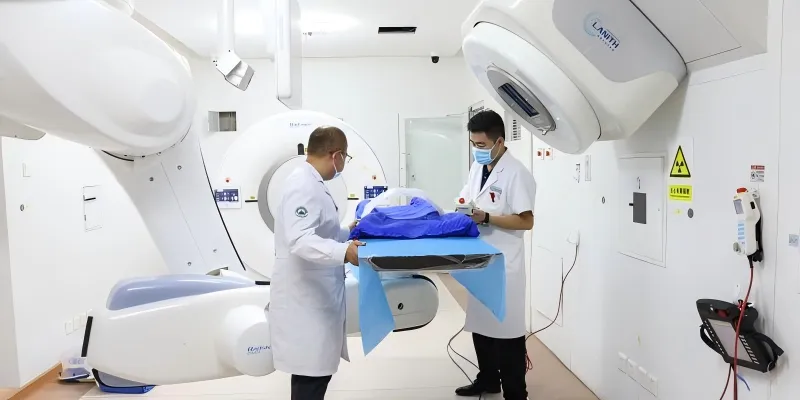
China has rapidly expanded its oncology capabilities in recent years, developing comprehensive treatment systems centered around immunotherapy, targeted therapy, precision medicine, and minimally invasive cancer treatment technologies.
Immunotherapy: CAR-T and Immune Checkpoint Inhibitors
Immunotherapy has become one of the most important breakthroughs in modern oncology by helping the immune system recognize and attack cancer cells.
In China, CAR-T cell therapy is mainly used for hematologic malignancies such as leukemia, lymphoma, and multiple myeloma.
Some clinical studies have shown promising remission rates in selected B-cell malignancies, while research is also expanding toward dual-target CAR-T therapies and solid tumor treatment.
At the same time, immune checkpoint inhibitors (ICIs), including PD-1/PD-L1 and CTLA-4 inhibitors, are widely used in the treatment of:
- Non-small cell lung cancer (NSCLC)
- Liver cancer
- Gastric cancer
- Esophageal cancer
These therapies are often combined with chemotherapy, targeted therapy, or radiotherapy to improve overall treatment outcomes.
Patients interested in advanced cancer treatment in China for international patients often explore immunotherapy options as part of their treatment planning.
If you would like to learn more about CAR-T cell therapies and immune checkpoint inhibitors approved in China, please read our related articles below: 👇
Minimally Invasive and Local Ablation Therapies
China has also developed strong experience in minimally invasive oncology techniques, particularly for patients who are not suitable for surgery or have locally advanced tumors.
Common technologies include:
- Cryoablation
- Microwave ablation (MWA)
- Radiofrequency ablation (RFA)
- Irreversible electroporation (NanoKnife / IRE)
These approaches aim to destroy tumors locally while preserving surrounding healthy tissues and reducing recovery time.
Interventional oncology is also widely applied through techniques such as:
- Transarterial chemoembolization (TACE)
- Localized targeted drug infusion
- Tumor embolization procedures
Precision Medicine and Advanced Radiotherapy
Precision oncology is becoming increasingly important in Chinese cancer centers through the use of molecular diagnostics and genomic technologies.
Key approaches include:
- NGS genomic testing
- Biomarker analysis
- Personalized treatment planning
Some hospitals also provide advanced radiotherapy technologies such as:
- Proton therapy
- Stereotactic body radiation therapy (SBRT)
- Intensity-modulated radiation therapy (IMRT)
These technologies help improve tumor targeting while reducing damage to surrounding tissues.
Leading Cancer Hospitals in China
The following hospitals are frequently recognized for their oncology expertise, international medical services, or specialized cancer programs for overseas patients seeking cancer treatment in China for international patients.
| Hospital | City | Key Features | Specialty Areas | International Accreditation |
|---|---|---|---|---|
| Sun Yat-sen University Cancer Center | Guangzhou | One of China’s national-level cancer centers | Nasopharyngeal cancer, liver cancer, lung cancer, precision radiotherapy, MDT care | International-standard management systems |
| Peking Union Medical College Hospital | Beijing | Prestigious tertiary hospital with strong complex case expertise | Comprehensive oncology care, multidisciplinary consultation | International-standard medical systems |
| Royallee Cancer Hospital | Guangzhou | International-focused oncology hospital | Precision oncology, immunotherapy, comprehensive cancer management | JCI-accredited |
| Fudan University Shanghai Cancer Center | Shanghai | Leading cancer specialty center in China | Breast cancer, gastric cancer, lung cancer, precision medicine | International-standard clinical systems |
| National Cancer Center of China | Beijing | National-level cancer research and treatment center | Comprehensive oncology treatment, radiotherapy, clinical research | Extensive international collaboration |
If you would like to learn more about hospitals in China suitable for international patients, you can read this article for further information: 👇
Cancer Treatment Costs and Budget Considerations in China

Cancer treatment costs in China can vary significantly depending on the cancer type, disease stage, treatment plan, hospital level, and whether advanced therapies are involved.
For international patients, accurate cost estimation usually requires a full medical record review and specialist evaluation before a treatment pathway can be determined.
Major factors that may affect overall costs include: 🔽
- Cancer type and staging
- Surgical or combined treatment requirements
- Immunotherapy, targeted therapy, or CAR-T treatment needs
- Length of hospitalization
- International medical service standards
For many patients, cancer treatment in China for international patients is often considered for two main reasons:
- Seeking a structured second medical opinion
- Exploring additional treatment options that may not be easily accessible locally
Before making travel decisions, patients are generally advised to:
- Prepare complete medical records and imaging reports
- Clarify treatment goals and expectations
- Assess suitability for international travel and long-term treatment planning
Many Chinese cancer hospitals now provide remote consultation services for overseas patients, allowing specialists to review medical records and discuss possible treatment directions before travel.
Because every case is different, final treatment recommendations and costs can only be confirmed after professional hospital evaluation.
How DengYueMed Helps International Patients Access Cancer Treatment in China

Get Guidance on Cancer Treatment in China
International cancer care often involves multiple stages, including medical record review, hospital coordination, treatment planning, and travel arrangements.
DengYueMed helps streamline communication for cancer treatment in China for international patients, making the entire process more organized and efficient between patients and Chinese hospitals. 💌
1️⃣ Medical Record Preparation and Initial Review
Patients can submit pathology reports, imaging records, and previous treatment history. DengYueMed assists with document organization and translation to support preliminary hospital evaluation.
2️⃣ Remote Second Opinion Coordination
Before traveling, patients may arrange remote consultations with Chinese hospitals to confirm diagnosis, staging, and possible treatment directions.
3️⃣ Treatment Information and Hospital Communication
After evaluation, hospitals may provide preliminary treatment recommendations and related information. DengYueMed helps patients better understand the communication process and hospital arrangements.
4️⃣ Travel and Admission Coordination
DengYueMed assists with invitation letters, visa-related documents, scheduling, and coordination with hospital international departments.
5️⃣Support After Arrival
Once patients arrive in China, medical treatment is managed directly by the hospital. DengYueMed may continue to assist with communication and coordination support when needed.
6️⃣ Discharge and Follow-up Support
After treatment is completed, the hospital provides a discharge summary and follow-up care plan. DengYueMed assists with organizing medical documents and supports ongoing communication with the hospital when needed.
FAQ about Cancer Treatment in China for International Patients
Is China considered a world-leading destination for cancer treatment?
China’s cancer treatment is considered among the leading options globally, and cancer treatment in China for international patients is gaining attention due to advances in immunotherapy, targeted therapy, and CAR-T therapy.
Are translation and language support available?
Many hospitals with international departments provide English-speaking assistance and medical translation support for overseas patients.
Can family members accompany patients during treatment?
In most cases, family members are allowed to accompany patients, although accommodation policies vary depending on the hospital and room type.
How do insurance and payment processes work?
International patients commonly use self-payment or insurance reimbursement. Hospitals with international accreditation standards, such as JCI-certified institutions, may offer more structured documentation support for insurance claims.
Do international patients need medical visas?
Most overseas patients will require medical-related or visitor visa arrangements. Hospitals may provide invitation letters and supporting documents during the application process.
Is traveling to China convenient for patients from Southeast Asia or neighboring countries?
China has extensive international flight connections with countries such as Indonesia, Malaysia, Vietnam, the Philippines, Mongolia, and Russia, making medical travel relatively accessible.
What should patients from Africa or South Asia prepare in advance?
Patients from countries such as Nigeria, Kenya, Bangladesh, or Pakistan are generally advised to complete remote evaluations and organize medical documents before arranging travel plans.
Can patients get a second opinion before making treatment decisions?
Yes. Many major hospitals offer remote second-opinion services that allow specialists to review records before patients travel to China.
What does the treatment process usually look like after arrival?
The process typically includes specialist consultation, additional examinations, treatment planning, and formal therapy such as surgery, chemotherapy, radiotherapy, or immunotherapy.
Is follow-up support available after returning home?
Many hospitals provide discharge summaries, medication instructions, and follow-up recommendations. Some also support remote follow-up communication for international patients.