
Is Colorectal Cancer Curable? From Symptoms to Survival
Introduction
“It was just some blood in my stool. I thought it was hemorrhoids. But two weeks later, the doctor said it was cancer. I’m only 28.”
This is a story we hear more and more. Colorectal cancer (CRC) isn’t just a disease for the elderly anymore.
It’s becoming alarmingly common among people under 50, especially those who overlook symptoms like rectal bleeding, changes in bowel habits, or fatigue.
In this blog post, Dengyue will break down the basics of colorectal cancer, including its symptoms, risk factors, causes, prevention tips, diagnosis, and treatment options—so you can better understand, prevent, or fight CRC.
What Is Colorectal Cancer?
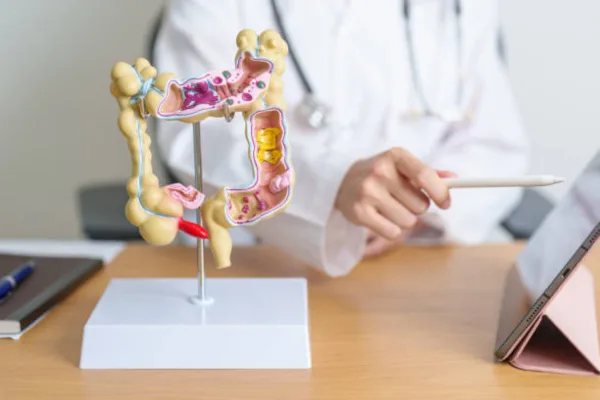
Colorectal cancer occurs when abnormal growths, called polyps, develop in the colon or rectum and become cancerous.
Over time, these cells can invade healthy tissue or spread to other parts of the body.
Many people ask, “is colorectal cancer the same as colon cancer?” While the terms are often used interchangeably, colorectal cancer includes both colon and rectal cancers.
Colon cancer refers only to cancers in the colon, while colorectal cancer encompasses cancers in both the colon and the rectum.
Signs and Symptoms of Colorectal Cancer

Colorectal cancer is crucial for early detection and better outcomes. Some people may not experience symptoms right away, but common early warning signs include:
- 🩸 Blood in the stool
- ⏰ Changes in bowel habits (e.g., diarrhea or constipation lasting more than a few days)
- 😞 Persistent abdominal discomfort or cramps
- 😔 Fatigue or weakness
- ⬇️ Unexplained weight loss
So, what are 3 warning signs or symptoms of colorectal cancer? The three most common are:
- Blood in the stool
- Abdominal pain or discomfort
- Significant change in bowel habits
If you notice any of these symptoms, it’s important to consult a healthcare provider.
Colorectal Cancer vs Hemorrhoids: Bleeding Comparison
🩸 If you are unsure whether bleeding is caused by colon cancer or hemorrhoids, the following comparison table may be helpful.
| Feature | Colorectal Cancer | Hemorrhoids |
|---|---|---|
| Blood Color | Dark red, maroon, or mixed with stool/mucus | Bright red, fresh-looking blood |
| Bleeding Pattern | Persistent or gradually worsening | Intermittent, often after straining during bowel movement |
| Blood Location | Mixed within the stool | On toilet paper, stool surface, or dripping into the toilet |
| Pain with Bowel Movement | Rarely painful | Often painful, burning, or itchy around anus |
| Other Symptoms | Abdominal pain, weight loss, fatigue, anemia, bowel habit change | Anal discomfort, itching, swelling, feeling of incomplete emptying |
| Stool Changes | May become narrow, irregular, or mucus-like | Usually no change in stool shape |
| Age & Risk Factors | Common after age 50; family history, poor diet, sedentary life | Can occur at any age; linked to straining, constipation, sitting long hours |
| Need for Colonoscopy | Strongly recommended if symptoms persist | Usually not required unless symptoms are unclear or severe |
⚠️ Reminder:
If bleeding is persistent or accompanied by weight loss or bowel changes, it’s critical to seek medical attention.
Early detection of colorectal cancer can save lives.
From Polyps to Cancer—A Long but Dangerous Road
CRC typically begins as a polyp—an abnormal growth in the colon or rectum lining. While many polyps are benign, certain types carry higher cancer risks:
- Adenomatous polyps (adenomas)—especially those with villous features
- Serrated polyps (SSPs or TSAs)—subtle in appearance, more likely to be missed in routine colonoscopy
It usually takes 10–15 years for these polyps to develop into cancer. That long timeline makes screening tests life-saving.
Colorectal Cancer by the Numbers
- In the U.S., CRC is the second leading cause of cancer death among men and women combined.
- 1 in 23 men and 1 in 25 women will be diagnosed with CRC in their lifetime.
- Rates are rising among people under 50—a group not traditionally targeted by routine screening.
Black communities face a higher incidence and mortality rate, often due to inequitable access to early detection and care.
🌟Prevention Tips
While not all cases are preventable, there are ways to reduce your risk:
- ✅ Eat a diet rich in fruits, vegetables, and whole grains
- ✅ Stay physically active
- ✅ Maintain a healthy weight
- ✅ Avoid tobacco and limit alcohol consumption
- ✅ Get regular screenings
What Is the Main Cause of Colorectal Cancer?
The main cause of colorectal cancer is usually the development of precancerous polyps. These can turn into cancer over time if left untreated.
However, the causes can be multifactorial and include both genetic and environmental factors.
Key colorectal cancer risk factors include:
- 👴 Age (most common in people over 50)
- 🏠 A personal or family history of colorectal cancer or polyps
- 🦠 Inflammatory bowel diseases (like Crohn’s disease or ulcerative colitis)
- 🥩 A low-fiber, high-fat diet
- 💺 Sedentary lifestyle
- 🚬 Smoking and alcohol use
- 🍚 Obesity
Part 4: Screening, Staging, and Diagnosis
🔧 Screening Tools
| Test | Frequency | Notes |
|---|---|---|
| Colonoscopy | Every 10 years | Gold standard; allows removal of polyps |
| FIT/gFOBT | Yearly | Detects hidden blood in stool |
| Stool DNA test (e.g., Cologuard) | Every 3 years | Detects DNA mutations + blood |
| CT colonography | Every 5 years | Non-invasive but requires follow-up colonoscopy if abnormal |
Healthcare providers typically recommend that people at average risk start regular screenings at age 45–50.
⬆️ Cancer Staging (TNM system)
- Stage 0: Cancer is in the innermost lining
- Stage I: Invades muscle layers
- Stage II: Spreads through wall but not to lymph nodes
- Stage III: Lymph node involvement
- Stage IV: Distant metastasis (e.g., liver, lungs)
Colorectal Cancer Treatment Options—Standard and Advanced
The treatment plan for colorectal cancer depends on several factors, including the stage and location of the cancer. Common colorectal cancer treatment options include:
- 🌟 Surgery: For early-stage cancers or to remove sections of the colon
- 🌟 Chemotherapy: Often used after surgery to kill residual cancer cells
- 🌟 Radiation therapy: More common in rectal cancer
- 🌟 Targeted therapy: Blocks specific cancer cell mechanisms (e.g., EGFR, VEGF)
- 🌟 Immunotherapy: Especially effective for MSI-H or dMMR tumors
What medications can treat colorectal cancer?
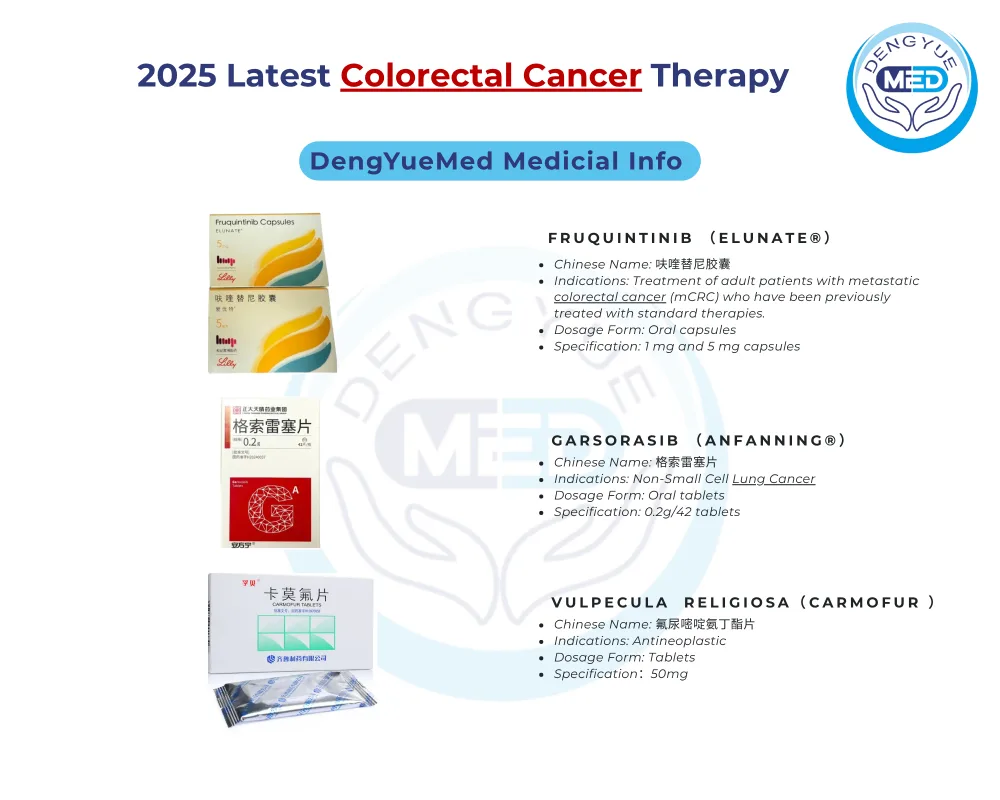
(Add specific drug names here, such as 5-FU, oxaliplatin, irinotecan, bevacizumab, cetuximab, pembrolizumab, etc.)
Some of these medications may not be available locally and could require international access.
Patients often explore options in Hong Kong, Europe, or the U.S. when treatments are not approved in their home country.
DengYueMed can assist you in finding the drugs you need globally. Please feel free to contact us at any time.
🩺 Colorectal Cancer Drug Comparison Table
| Drug Name | Chinese Name | Type / Class | Main Use | Mechanism of Action | Typical Use Stage | Form |
|---|---|---|---|---|---|---|
| Fruquintinib Capsules | 呋喹替尼胶囊 | Targeted Therapy (VEGFR Inhibitor) | Metastatic colorectal cancer (post-chemo) | Inhibits angiogenesis by blocking VEGFR | Third-line or beyond | Oral capsule |
| Carmofur Tablets | 卡莫氟片 | Chemotherapy (5-FU derivative) | Early/mid-stage colorectal cancer, adjuvant use | Inhibits DNA synthesis in tumor cells | First-line or maintenance | Oral tablet |
| Azathioprine Tablets | 硫唑嘌呤片 | Immunosuppressant / Antimetabolite | IBD-related colorectal cancer prevention | Suppresses immune activity, reduces inflammation | Maintenance/prevention (not primary cancer treatment) | Oral tablet |
| Compound Fluorouracil Oral Solution | 氟尿嘧啶合剂口服液 | Chemotherapy (5-FU-based) | Colorectal cancer (various stages) | Inhibits tumor cell DNA/RNA synthesis | First- or second-line therapy | Oral liquid |
| Garsorasib Tablets | 格索雷塞片 | Targeted Therapy (KRAS G12C Inhibitor) | KRAS G12C-mutant advanced colorectal cancer | Selectively inhibits KRAS G12C mutant signaling | Investigational / targeted treatment | Oral tablet |
✅ How to Choose (Patient-Friendly Guidance)
| Clinical Situation | Recommended Drug(s) |
|---|---|
| Need for oral chemotherapy | Carmofur, Compound Fluorouracil |
| Failed prior treatments / late-line targeted therapy | Fruquintinib, Garsorasib (if KRAS G12C-positive) |
| IBD-related colorectal risk or post-surgery maintenance | Azathioprine |
| KRAS G12C gene mutation present | Garsorasib (genetic testing required) |
⚠️ Important Notes for Patients
- Always consult your oncologist before starting or changing treatment.
- Genetic testing may be required for drugs like Garsorasib.
- Treatment choice depends on cancer stage, mutation status, past therapies, and overall health.
If you want to know more about the thrapy costs and other drugs for CRC, please contact HongKongDengYueMed.
Post-Treatment and Life After CRC
Lifestyle Adjustments
- 🍗 Nutrition: Eat high-fiber, low-processed food diets. Cut down on red and processed meat.
- 🏃 Exercise: Moderate activity 30 minutes daily supports gut motility and immune function.
- 🧐 Surveillance: Follow-up colonoscopies, CEA blood tests, and imaging are essential for detecting recurrence.
Psychological Support
Cancer doesn’t end with surgery. Many survivors face:
- 😨 Fear of recurrence
- 👸 Body image issues (especially post-surgery or ostomy)
- 😔 Fatigue and anxiety
Support groups, therapy, and patient communities offer crucial mental health resources.
Final Thoughts: Turning Fear Into Action
Colorectal cancer is one of the most preventable yet deadly cancers. Awareness, timely screening, and access to the right treatment can dramatically improve outcomes.
Whether you’re a patient, caregiver, or just someone trying to stay informed, remember: You have more control than you think.
Share this blog from Dengyuemedicine, you might just save a life.
FAQ about Colorectal Cancer?
Can Colon Cancer Be Cured?
The answer depends on how early it’s detected. If caught early, colon cancer can often be cured with surgery and additional treatments.
The chances of a complete recovery decrease if the cancer has spread to other organs.
Colorectal Cancer Survival Rate and Life Expectancy
When detected early, the colorectal cancer survival rate is high.
According to the American Cancer Society, the five-year relative survival rate for localized colorectal cancer is about 91%.
What is Life Expectancy for Colon Cancer?
Life expectancy for colon cancer varies greatly by stage. For localized cancers, the prognosis is excellent.
For advanced cancers, life expectancy depends on treatment response, overall health, and access to care.