
Iberdomide Approved in China: The World’s First CELMoD Drug for Multiple Myeloma
On September 30, 2026, information published on the official website of China’s NMPA showed that Bristol Myers Squibb (BMS) had received approval in China for its innovative drug, iberdomide hydrochloride capsules, for the treatment of multiple myeloma[1].
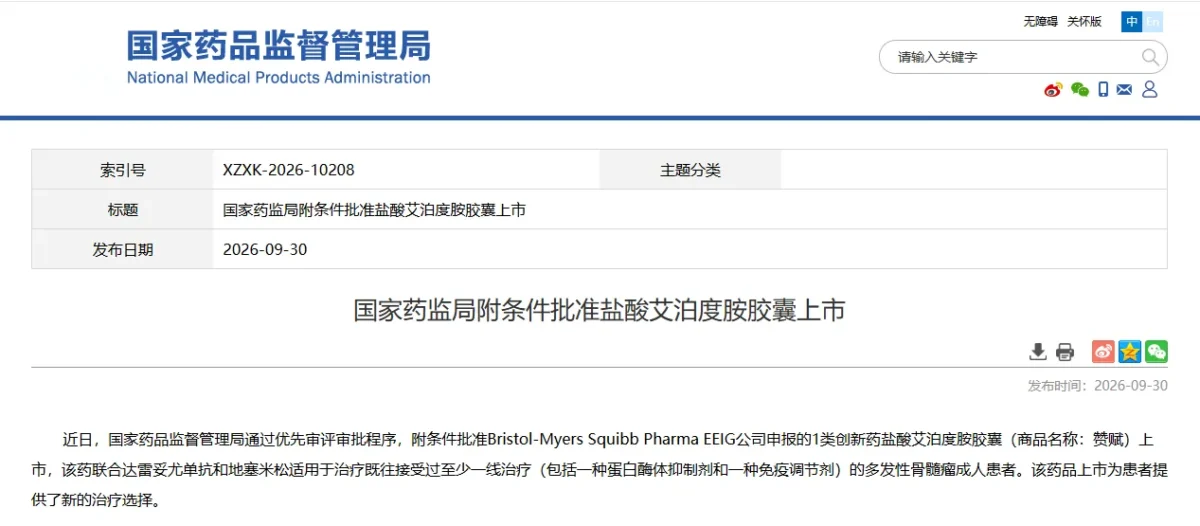
As the first approved CELMoD drug worldwide, iberdomide marks a new step in multiple myeloma treatment, with iberdomide approved in China advancing the clinical use of this emerging drug class.
In this article, DengYueMed explores iberdomide’s mechanism of action, key clinical data, and the significance of CELMoD technology, examining its potential impact on the development of multiple myeloma treatment.
Iberdomide: Basic Information and Mechanism of Action
Iberdomide hydrochloride capsules are an oral CELMoD drug developed by Bristol Myers Squibb, with clinical development primarily focused on multiple myeloma.
In August 2026, iberdomide received accelerated approval from the U.S. Food and Drug Administration (FDA), becoming the world’s first approved CELMoD drug[2]. It was subsequently approved in China in September.
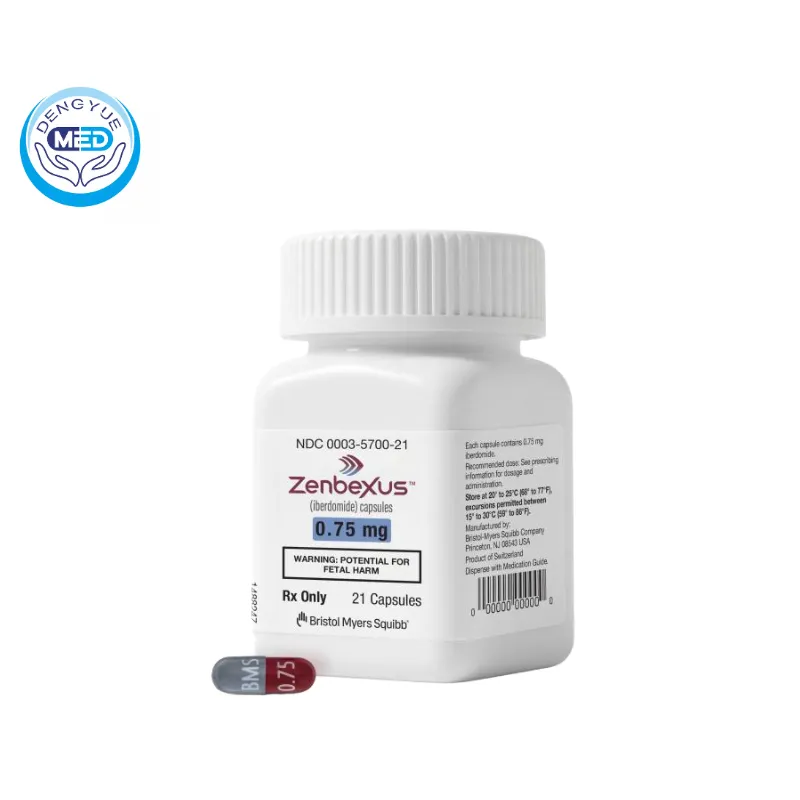
Basic Information About Iberdomide
| Item | Details |
|---|---|
| Generic name | Iberdomide |
| Brand name | Zenbexus®/赞赋® |
| Developer | Bristol Myers Squibb (BMS) |
| Drug class | Cereblon E3 ubiquitin ligase modulator (CELMoD) |
| Route of administration | Oral |
| Date of approval announcement in China | September 30, 2026 |
| Type of approval in China | Conditional approval |
| Approved indication | In combination with daratumumab and dexamethasone for adults with multiple myeloma who have received at least one prior line of therapy, including a proteasome inhibitor and an immunomodulatory agent |
How Does Iberdomide Work as a CELMoD Drug?
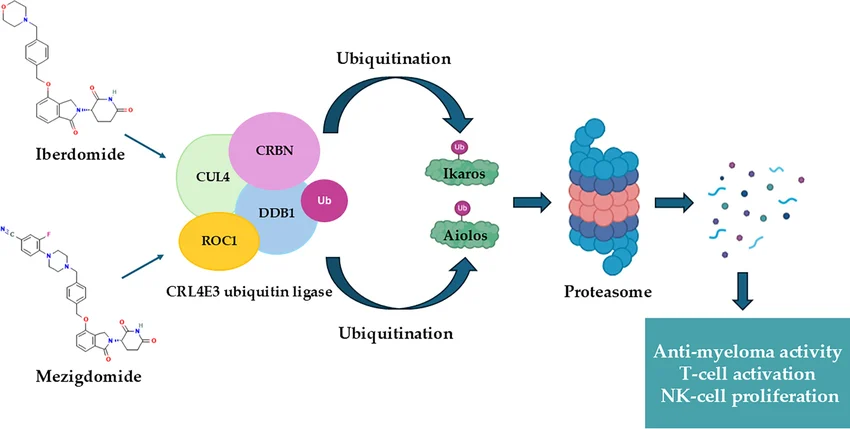
A key feature of iberdomide is its targeted protein degradation mechanism. Cereblon is an important component of the CRL4 E3 ubiquitin ligase complex and participates in the recognition and degradation of specific proteins within cells.
After binding to cereblon, iberdomide alters the recognition of relevant substrates, promoting the ubiquitination and subsequent proteasomal degradation of the transcription factors Ikaros (IKZF1) and Aiolos (IKZF3).
Ikaros and Aiolos are closely associated with lymphocyte function and the survival of multiple myeloma cells. By promoting the degradation of these proteins, iberdomide can exert antitumor effects and modulate immune cell function[3].
🎯 Compared with conventional immunomodulatory drugs such as lenalidomide and pomalidomide, iberdomide was designed to enhance cereblon-mediated degradation of specific target proteins.
Why Iberdomide Matters for Multiple Myeloma Treatment
Multiple myeloma (MM) is a hematological malignancy caused by the abnormal proliferation of plasma cells. Although a range of medicines and immunotherapies have advanced in recent years, disease relapse and treatment resistance remain important clinical challenges.
With iberdomide approved in China, a new therapeutic approach for multiple myeloma has emerged, with potential significance in three main areas.
1. Introducing a New Therapeutic Mechanism
Traditional medicines often act by inhibiting protein function. CELMoD drugs, by contrast, can harness the cell’s own protein degradation system to eliminate specific target proteins, offering a different approach to cancer treatment.
2. Clinical Research Shows Deeper Responses
The EXCALIBER-RRMM study showed that the combination of iberdomide, daratumumab, and dexamethasone achieved a higher rate of minimal residual disease (MRD)-negative complete response than the control regimen. This suggests that more patients achieved a deeper level of response.
3. Expanding Treatment Options
The combination of iberdomide with daratumumab and dexamethasone provides a new treatment option for eligible patients with previously treated multiple myeloma. It also reflects the broader development trend of combining medicines with different mechanisms of action.
Evidence for Iberdomide Approved in China: Phase III EXCALIBER-RRMM Trial
One of the key clinical evidence bases for iberdomide approved in China was the Phase III EXCALIBER-RRMM study[4].
The study compared the efficacy and safety of two treatment regimens in patients with relapsed or refractory multiple myeloma (RRMM): 🔽
- DVd group: Daratumumab + bortezomib + dexamethasone
- IberDd group: Iberdomide + daratumumab + dexamethasone
A total of 420 patients were included in the primary efficacy analysis. Of these, 207 received the IberDd regimen and 213 received the DVd regimen.
The study had two primary endpoints: the rate of MRD-negative complete response and progression-free survival (PFS). For the conditional approval of iberdomide in China, the MRD-negative complete response rate was a key supporting endpoint.
Key Finding: MRD-Negative Complete Response Rate Reached 41%
At a median follow-up of approximately 16 months, the MRD-negative complete response rate was 41% in the iberdomide combination group, compared with 21% in the control group. The difference was statistically significant (P < 0.0001).
| Key measure | Iberdomide combination group (IberDd) | Control group (DVd) |
|---|---|---|
| Number of patients | 207 | 213 |
| MRD-negative complete response rate | 41% | 21% |
| Patients achieving this endpoint | 85 | 44 |
MRD negativity means no residual disease is detected within the test’s sensitivity limits. It is an important indicator of response depth in multiple myeloma.
✨ The findings showed a substantial improvement in this measure with the iberdomide combination regimen, providing important clinical support for its approval.
Safety Results and Clinical Considerations
Neutropenia and infections were notable adverse events in the study. Publicly available data showed that neutropenia occurred in 90.2% of patients in the iberdomide combination group, while infections occurred in 78.9%. Approximately 7.8% of patients discontinued treatment because of adverse events.
Because neutropenia can increase the risk of infection, blood counts, infection risk, and adverse reactions require close monitoring during treatment. Clinical assessment should consider both treatment efficacy and safety.
The Innovation Significance of Iberdomide, the World’s First Approved CELMoD Drug
As the world’s first approved CELMoD drug, iberdomide marks the transition of this emerging drug class from research and development into clinical practice.
The milestone of iberdomide approved in China expands its regulatory reach and offers a new treatment option for eligible multiple myeloma patients.
- Technology: CELMoD drugs harness cereblon-mediated protein degradation to eliminate specific target proteins, offering a new approach to cancer treatment.
- Clinical development: Iberdomide improved MRD-negative complete response rates, supporting further research into combination therapies.
- Pharmaceutical industry: The first CELMoD approval may accelerate research and drug development, while further studies will clarify the class’s clinical potential.
The long-term efficacy and safety of CELMoD drugs, the patient populations most likely to benefit, and the differences between treatment regimens still require evaluation through further clinical research.

Conclusion
The milestone of iberdomide approved in China marks an important development in multiple myeloma treatment and targeted protein degradation research. As the world’s first approved CELMoD drug, iberdomide offers a new combination treatment option for eligible patients.
As further clinical data and long-term follow-up results become available, the drug’s long-term efficacy and clinical positioning will be assessed more fully. This development also highlights the continued global exploration of innovative medicines with novel mechanisms of action.
As a China pharmaceutical exporter, DengYueMed will continue to track China’s pharmaceutical innovations and global industry trends, connecting Chinese pharmaceutical resources with international markets.
FAQ about Iberdomide Approved in China
What is iberdomide?
Iberdomide is a cereblon E3 ligase modulator (CELMoD) designed to promote the degradation of specific proteins involved in multiple myeloma cell survival.
Has iberdomide been approved in China?
Yes, China’s NMPA approved iberdomide hydrochloride capsules in September 2026 for use with daratumumab and dexamethasone in eligible adults with multiple myeloma.
How does iberdomide work in multiple myeloma?
Iberdomide binds to cereblon and promotes the degradation of proteins such as Ikaros and Aiolos, helping inhibit myeloma cell growth.
What did the EXCALIBER-RRMM Phase III trial show?
The trial reported a higher rate of minimal residual disease (MRD)-negative complete response with the iberdomide combination than with the comparator regimen in the reported analysis.
What are the main safety concerns associated with iberdomide?
The key safety concerns include neutropenia and infections, which require appropriate monitoring during treatment.
References
[1] https://www.nmpa.gov.cn/zhuanti/cxylqx/cxypxx/20260930162132100.html
[2] https://www.fda.gov/drugs/resources-information-approved-drugs/fda-grants-accelerated-approval-iberdomide-daratumumab-and-hyaluronidase-fihj-and-dexamethasone
[3] https://pubmed.ncbi.nlm.nih.gov/39054911/
[4] https://pubmed.ncbi.nlm.nih.gov/42790445/