
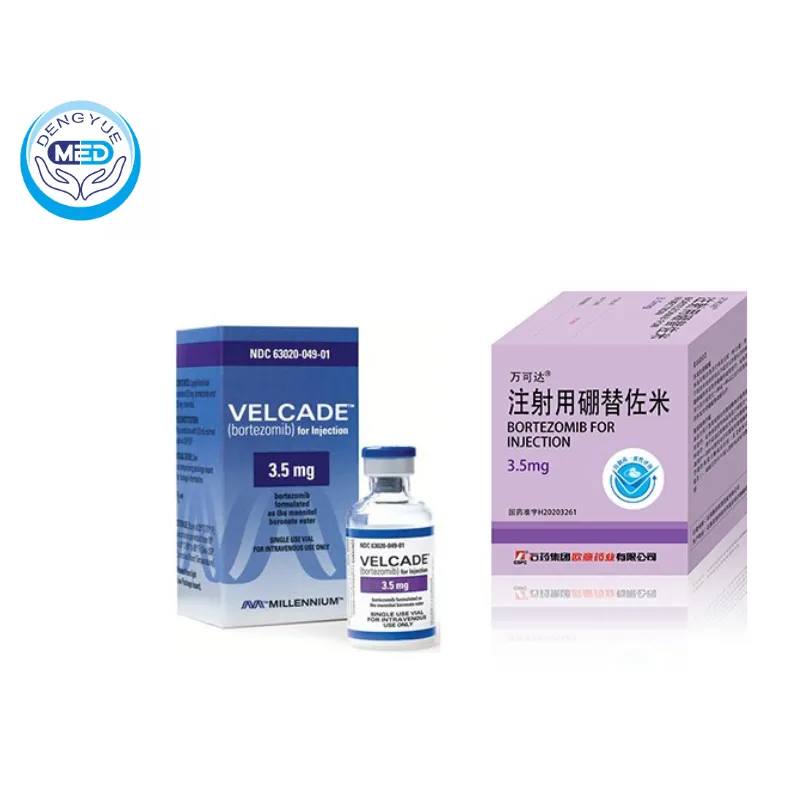
Velcade (Bortezomib) – Multiple Myeloma | HongKong DengYue Medicine
- Generic Name/Brand Name: Bortezomib/Velcade
- Indications: Multiple myeloma, relapsed or refractory mantle cell lymphoma
- Dosage Form: Lyophilized powder for injection
- Specification: 3.5 mg × 1 vial
Bortezomib Application Scope
Bortezomib is indicated for the treatment of adult patients with multiple myeloma (MM). Also approved for mantle cell lymphoma (MCL).
(In some regions) used for the re-treatment of multiple myeloma patients.

Bortezomib Characteristics
Ingredients: Bortezomib
Properties: A white to off-white cake or powder for reconstitution into a sterile solution
Packaging Specification: Single-dose vials containing 3.5 mg of bortezomib as a sterile lyophilized powder
Storage: Store in the original package at 25°C (77°F). Excursions are permitted between 15-30°C (59-86°F)
Expiry Date: As stated on the vial and outer packaging
Executive Standard: Complies with the specifications of the current approved product labeling
Approval Number: Specific to each country; see local product labeling
Date of Revision: For the latest version, check the official package insert
Manufacturer: Pfizer (Velcade)
Guidelines for the Use of Bortezomib
Dosage and Administration:
Recommended Dose:
The standard starting dose for many regimens: 1.3 mg/m² per dose.
Cycle scheduling depends on the treatment protocol (e.g., on days 1, 4, 8, and 11 in a 21-day cycle for some myeloma regimens).
Administration:
Intravenous (IV): Typically 3–5 second bolus injection.
Subcutaneous (SC): Alternative route; some regimens prefer SC because of lower neuropathy risk.
Reconstitution: e.g., for 3.5 mg vial, add 3.5 mL of 0.9% NaCl to make 1 mg/mL (for some Velcade formulations)
Missed Dose: If a dose is missed, the re-treatment or “catch-up” depends on the specific cycle schedule.
Adverse Reactions:
Common Adverse Reactions:
Based on clinical studies/prescribing information: Nausea
Diarrhea
Thrombocytopenia
Neutropenia
Peripheral neuropathy
Fatigue
Neuralgia
Anemia
Leukopenia
Constipation
Vomiting
Lymphopenia
Rash
Fever (pyrexia)
Anorexia
Serious Adverse Reactions:
Peripheral neuropathy, including severe sensory and motor neuropathy.
Cardiovascular: heart failure, pulmonary edema, QT-interval prolongation (isolated cases)
Pulmonary toxicity: acute respiratory distress syndrome (ARDS), interstitial lung disease, pneumonitis.
Hematologic toxicity: cyclic thrombocytopenia / neutropenia.
Thrombotic microangiopathy (per more recent label updates)
Tumor lysis syndrome in patients with high tumor burden.
Embryo-fetal toxicity: potential fetal harm; advise females of reproductive potential to avoid pregnancy.
Posterior Reversible Encephalopathy Syndrome (PRES) (in some reported cases)
Contraindications:
Hypersensitivity to bortezomib, boron, or mannitol (some formulations contain mannitol).
Intrathecal administration (into the spine) is absolutely contraindicated—fatal events have occurred.
Precautions:
Patients with pre-existing peripheral neuropathy should be monitored closely; dose modification or discontinuation may be required if neuropathy worsens.
Cardiac monitoring: patients with heart disease or risk factors may need close monitoring (risk of heart failure, fluid overload).
Pulmonary symptoms: new or worsening dyspnea/infiltrates → interrupt therapy and evaluate.
Hematologic parameters: frequent CBC monitoring because of thrombocytopenia/neutropenia.
Hepatic impairment: In moderate/severe liver dysfunction, dose adjustment may be needed.
Pregnancy: may cause fetal harm; counsel women of childbearing potential.
Hypotension: caution in patients with dehydration, those on antihypertensives, history of syncope.
Tumor lysis: monitor high-burden disease for tumor lysis syndrome.
Bortezomib Interactions
- CYP3A4 inhibitors (e.g., ketoconazole) can increase bortezomib exposure.
- PMCCYP3A4 inducers (e.g., rifampin) can decrease bortezomib exposure; use with caution/avoid.
- PMC: Because bortezomib is metabolized by multiple CYPs, other drugs affecting CYP pathways may interact.
- Proper handling: Cytotoxic drug handling procedures should be followed during preparation/administration.
Note:
- If there is a new packaging for the drug, the new packaging shall prevail. The above information is sourced from DengYue Medicine.
- This content is for reference only. Prescription drugs must be used under a doctor’s guidance and purchased from authorized sources.
Related products
Dotinurad|Hyperuricemia|HongKong DengYue Medicine
Proglycem Diazoxide | Hyperinsulinemic Hypoglycemia | DengYueMedicine
Cladribine Injection | Thrombocytopenia | HK DengYueMedicine
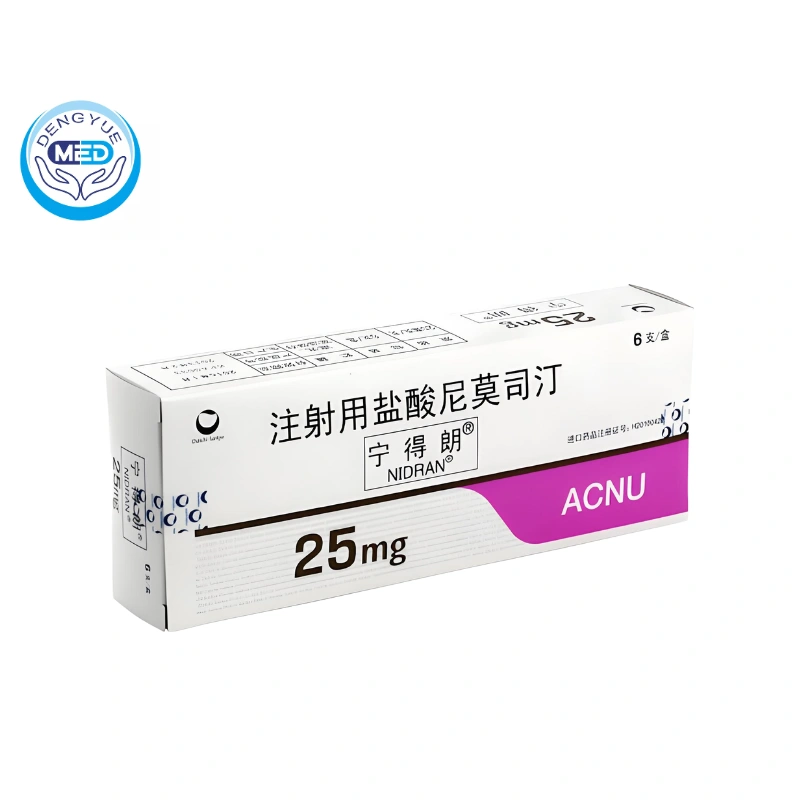
Nimustine Hydrochloride for Injection | Brain Cancer
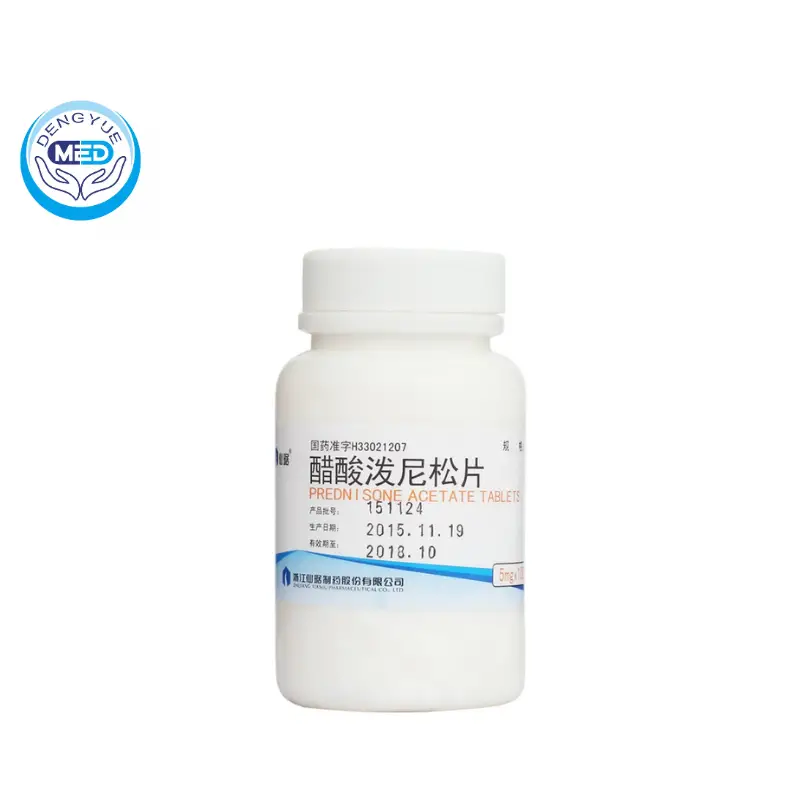
Prednisone Acetate Tablets|Immune Inflammatory Diseases
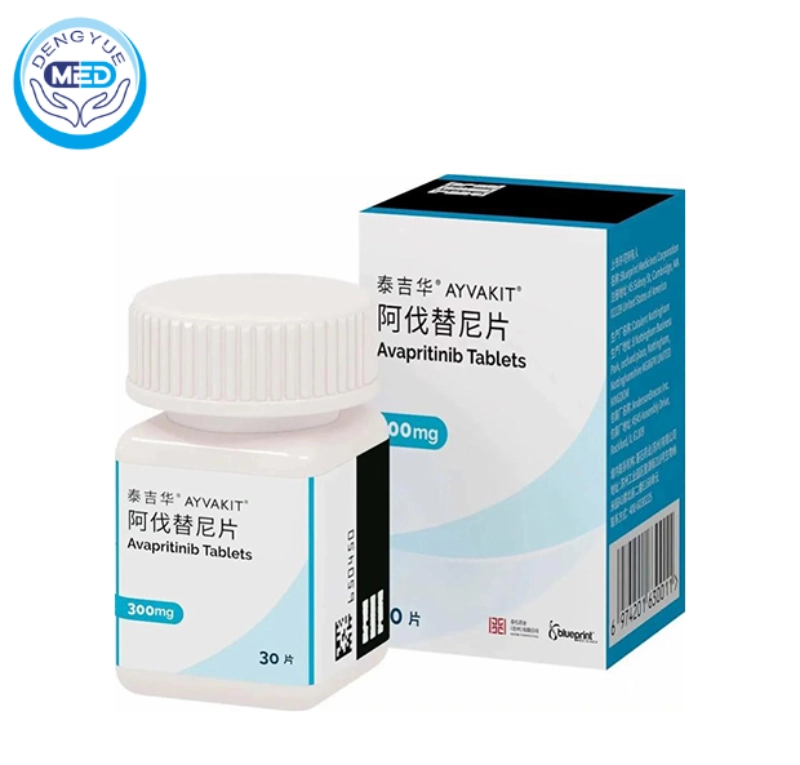
Ayvakit (Avapritinib) – Systemic Mastocytosis | HongKong DengYue Medicine

Fludarabine Phosphate For Injection | Chronic Lymphocytic Leukemia
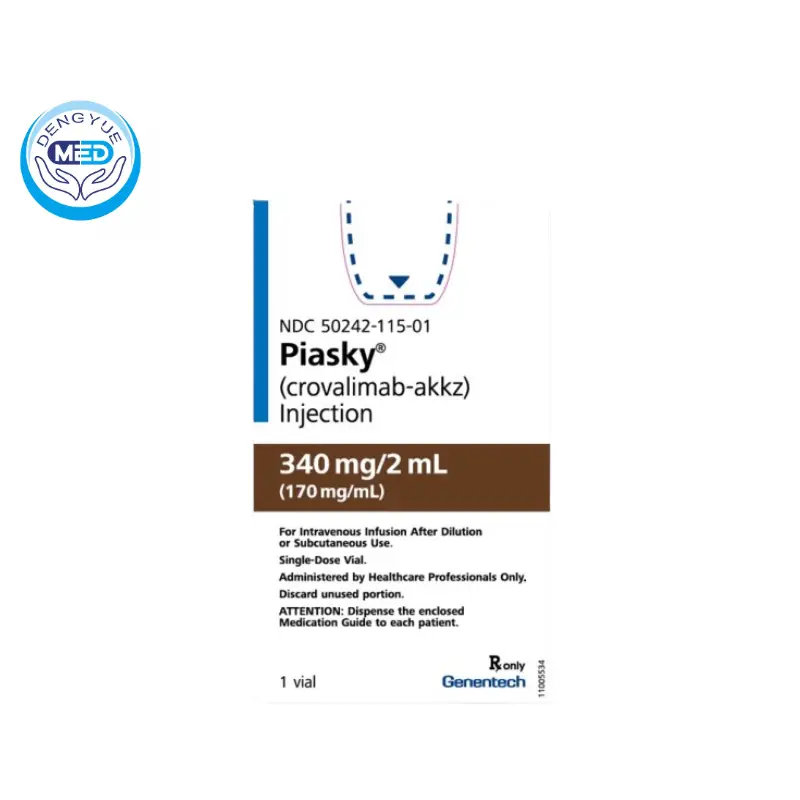
Piasky Crovalimab | Paroxysmal Nocturnal Hemoglobinuria
Reviews
There are no reviews yet.