
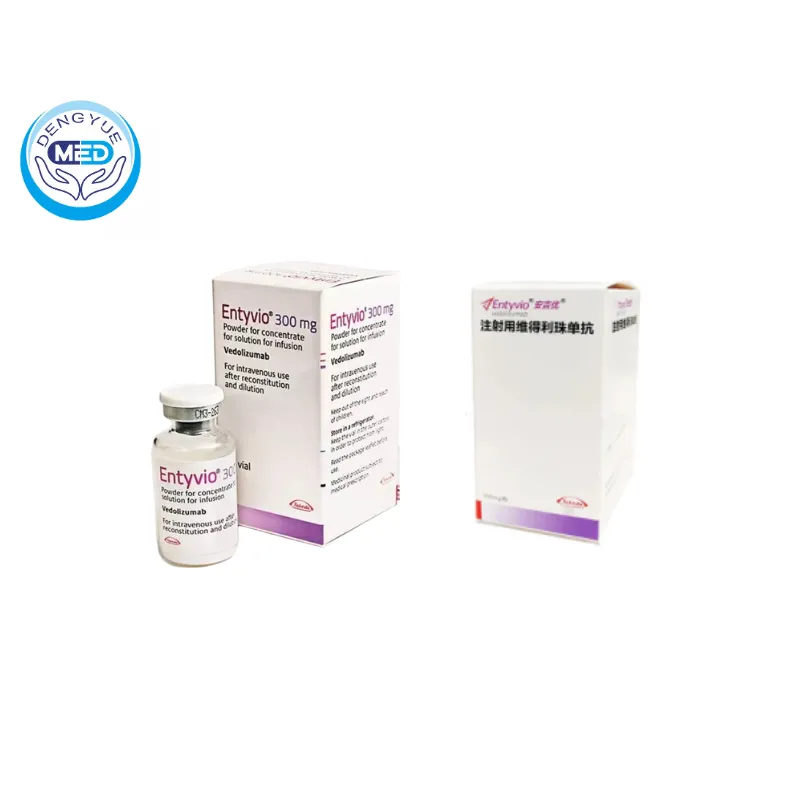
Entyvio (Vedolizumab) | Ulcerative Colitis | DengYue Medicine
- Generic Name/Brand Name: Vedolizumab/Entyvio
- Indications: Ulcerative colitis, Crohn’s disease
- Dosage Form: Powder for solution for infusion
- Specification: 300 mg x 1 vial
Vedolizumab Application Scope
Moderately to severely active ulcerative colitis in adults
Moderately to severely active Crohn’s disease in adults
Also used in some cases of pouchitis and checkpoint inhibitor–induced colitis
Characteristics
Ingredients:
Vedolizumab (300 mg/vial; 108 mg prefilled syringe or pen)
Excipients (IV vial): arginine HCl, histidine, histidine HCl, polysorbate 80, sucrose
Prefilled syringe/pen excipients: arginine HCl, citric acid monohydrate, histidine, histidine HCl, polysorbate 80, sodium citrate, water
Properties:
Humanized IgG₁ monoclonal antibody targeting α₄β₇ integrin on gut-homing T lymphocytes; blocks their GI tissue migration
Packaging Specification:
Intravenous: 300 mg lyophilized powder in single-dose glass vial (NDC 64764‑300‑20)
Subcutaneous: 108 mg/0.68 mL solution in single-dose prefilled syringe or pen
Storage:
Unopened vials, syringes, pens: refrigerate at 2–8 °C, protected from light
Prefilled syringe/pen may be at room temp (≤25 °C) up to 7 days if still in original carton
Reconstituted IV solution: vial refrigerated ≤8 hours; diluted infusion bag: 2–8 °C up to 24 hrs (≤12 hrs at room), or in Lactated Ringer’s: refrigerated ≤6 hrs
Expiry Date:
As indicated on packaging (see NDC carton) (typically ~2–3 years from manufacture)
Executive Standard:
FDA, EMA, Health Canada approved product; prescribing info per regulatory standards
Approval Number:
FDA Biologics License Application approved May 20, 2014
Date of Revision:
Latest prescribing info revision March 2020 (infusion guidance) and 2024 (label update)
Manufacturer:
Takeda Pharmaceuticals (marketed under Entyvio)
Guidelines for the Use of Vedolizumab
Dosage and Administration:
IV Infusion (adult UC, CD, pouchitis):
300 mg IV over ~30 minutes at weeks 0, 2, and 6, then every 8 weeks
If insufficient response in Crohn’s, a 4‑week dose may be given; discontinue if no benefit by week 14 (UC) or 14 (CD)
For pouchitis: 0, 2, 6 weeks then q8w; discontinue if no benefit by week 14
SC Injection (maintenance):
Prefilled syringe/pen: 108 mg every 2 weeks, can switch from maintenance IV
Preparation:
Reconstitute 300 mg vial with 4.8 mL Sterile Water for Injection; swirl gently, allow to stand ~15–20 min; withdraw 5 mL into infusion bag with 250 mL 0.9% NaCl or LR; do not freeze
Administration Environment:
IV infusions administered by healthcare professionals prepared for hypersensitivity management
Adverse Reactions:
Common:
Infusion site reactions, headache, nausea, fatigue, upper respiratory tract infection
Serious:
Infusion-related/hypersensitivity (anaphylaxis, dyspnea, bronchospasm, urticaria, flushing, BP/HR fluctuations)
Serious infections: sepsis, tuberculosis, Listeria meningitis, CMV colitis, pouchitis, etc.
Rare PML: one reported case in a high-risk patient; monitor neurological changes
Liver injury: elevated transaminases/bilirubin; monitor for signs of liver dysfunction
Contraindications: Known serious hypersensitivity to vedolizumab or any excipients
Precautions:
Screen/update immunizations before initiation; avoid live vaccines during therapy
Monitor for infections (tuberculosis, serious systemic infections)
Observe for infusion reactions; have emergency treatment available
Monitor liver function tests during treatment
For SC: rotate injection sites; only trained individuals should administer in upper arm
Interactions
- Drug Interactions:
No direct metabolic drug–drug interactions, but caution when using with other immunosuppressants (e.g., TNF blockers, rituximab, natalizumab) due to additive infection risk
Live vaccines contraindicated during treatment; risk of infection when administered concurrently
Note:
- If there is a new packaging for the drug, the new packaging shall prevail. The above information is sourced from DengYue Medicine.
- It is only for internal discussion among medical staff and does not serve as a basis for medication. For specific medication guidelines, please consult the attending physician.
Related products

Spesolimab Injection | Psoriatic Arthritis Treatment
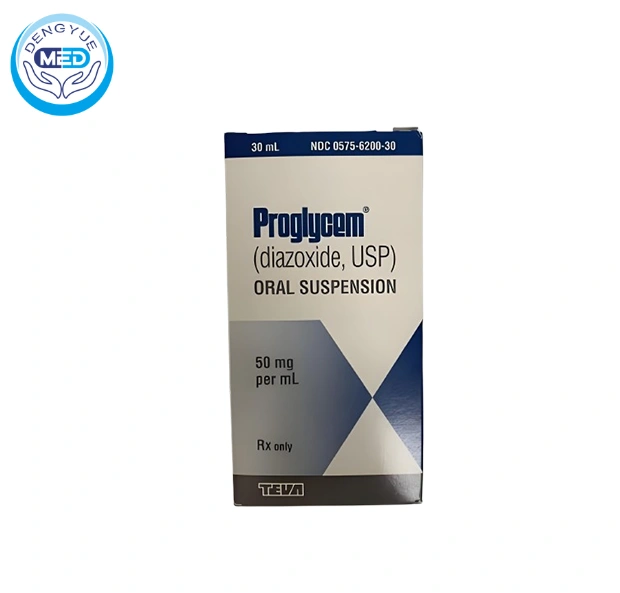
Proglycem Diazoxide | Hyperinsulinemic Hypoglycemia | DengYueMedicine
.webp "vimizim(elosulfase alpha)")
Vimizim Elosulfase Alpha | Mucopolysaccharidosis Type IV
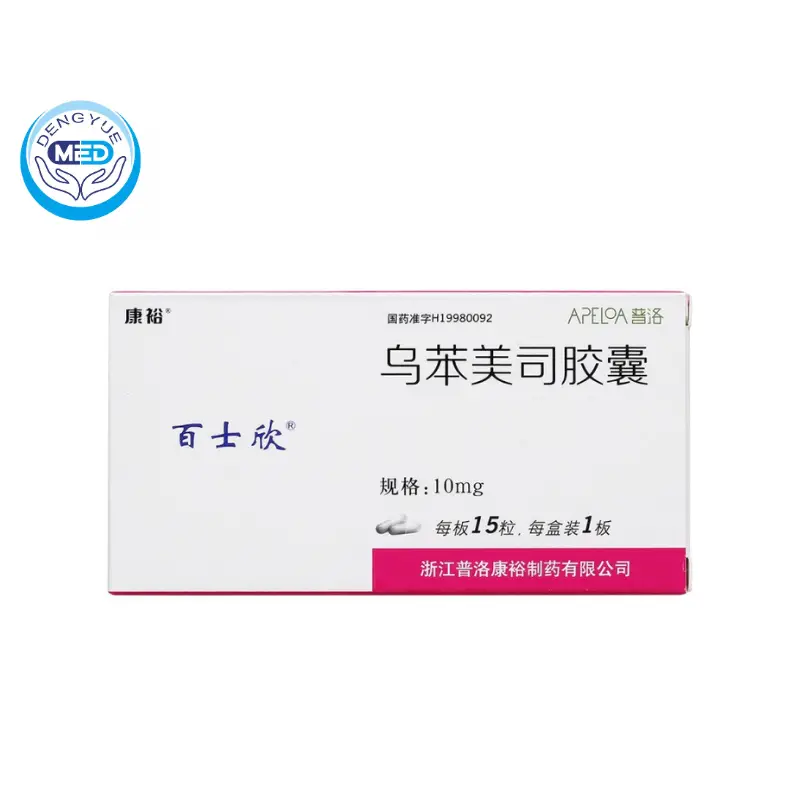
Ubenimex Capsules|Enhancement of immune function
Thiamazole Cream | Anti Hyperthyroidism

Nusinersen Injection – Spinal Muscular Atrophy
Hydroxycarbamide Tablets | Treatment of Leukemia
Sirolimus Gel | Facial Angiofibroma
Reviews
There are no reviews yet.